Vacant building security in San Francisco: protecting an unoccupied site
An empty building rarely earns somebody standing in it. What it needs is a door that is opened by the right person, on a schedule nobody outside can work out.
Two things happen to a property once the last tenant has gone. People get in, because an empty shell is quiet and nobody reports anything; and the building starts falling apart unseen, which is usually the more expensive of the two. A burst feed, an open utility or a forced rear door costs more by the time somebody notices than everything that was carried out of the place. That is why a vacancy round is written as a condition check with a security purpose rather than the other way round, and why your insurer will usually ask what the interval is.
Free, no obligation: tell us the address, how long it has stood empty and what your policy asks for.
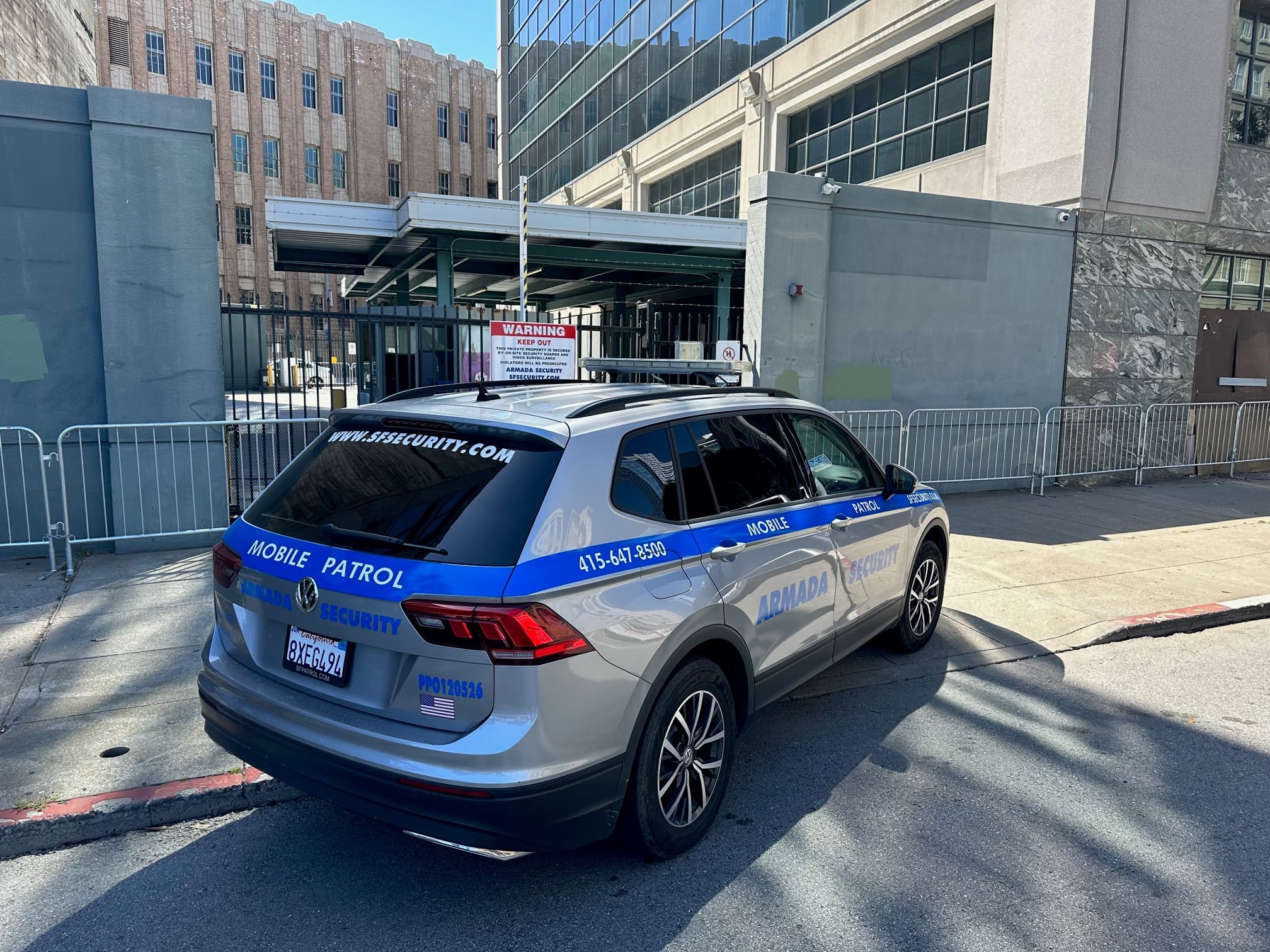
What this usually means
Three readings, and the third one is the reason the first two keep being discovered late.
The condition is getting worse where nobody can see it
Water coming in, a utility left live, a rear door forced weeks ago and never reported. None of that announces itself, and all of it gets more expensive the longer the gap between visits.
The emptiness is readable from the street
Mail piling up, every window dark at the same hour every night, a lot nobody tends. Those are the signals that get a building chosen, and most of them can be removed for very little money.
Your policy has a vacancy condition with an inspection interval
Many commercial policies restrict or exclude cover on a building left unoccupied unless it is inspected at a stated frequency and the inspections are recorded. Read that clause before you decide how often a vehicle comes.
What actually fixes it
Three measures, in the order they usually pay for themselves on an empty building.
Rounds written as condition checks
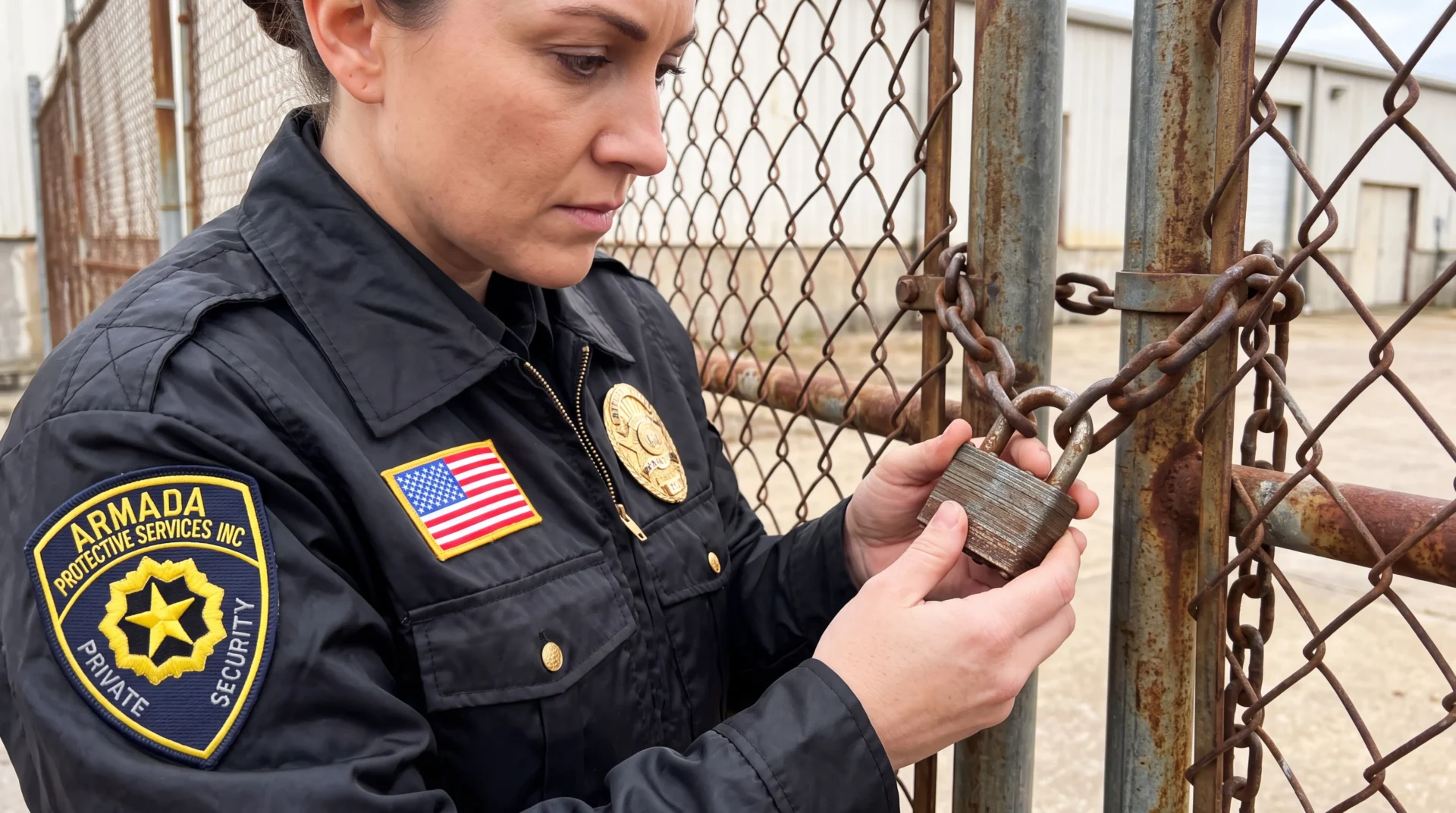
The officer opens and closes the points that should not be open, and reads the building as well as the perimeter: the meter room, the roof access, the low windows, the standing water. What he finds is logged with a time, a position and a photograph.
An interval your insurer will accept
The frequency is settled against the vacancy clause rather than against a feeling. Where the clause asks for a weekly inspection with a record, that is what the schedule is built to produce, and the record is yours to send on.
Making the building look attended
Mail collected, a light on a timer, the lot kept clear. Cheap, boring and the single most reliable thing on this page. Armada supplies none of it and will still tell you to do it first.
What does not fix it
Stated plainly, including the version that most owners are quoted first.
An officer posted in the building all night
There is nothing for him to protect inside and nothing for him to do, and it costs several times what the round costs. On most empty buildings this is the quote to turn down.
Boarding up and walking away
Plywood keeps nobody out for long and it advertises that nobody is coming back. It also hides the condition problems, which are the part of this page that actually costs money.
An alarm nobody attends
A panel in an empty building calls a list. If nothing on that list can be at the address in the night, the activation is a record of the loss rather than an interruption of it.
Our Statistics. Your Guarantee.
A vacancy round is sold on frequency and proved by the record it leaves, so every figure below carries the thing it was measured against. Officers are licensed one at a time through BSIS and background-checked before a first shift, and Armada Protective Services has held California PPO 120526 since 1994. Armada has been the top-rated San Francisco security company since 2021 according to SFist1. Every price follows a free site assessment; for patrol and on-site work the minimum term is one month and the agreement runs month-to-month after that. Every outside document named on this page was checked November 2026.
- 2x
At least twice as fast as police arrival
Under contract Armada is on site in 15 to 30 minutes. The median SFPD publishes for a low-priority call is longer, which is why SFPD itself points businesses to private security for anything short of a crime in progress.
- 80%
Fewer incidents at monitored properties
Twelve client sites kept incident records both before and after Armada started. Across them incidents fell by 80 percent. 2025 client survey.
- 24/7
Your officer is the one you call
Clients hold the direct numbers of the officers on their site, and the app carries the messages, the photos and the log. Nothing is relayed through a desk.
- 100%
Licensed and insured
Every officer individually BSIS licensed and background-checked, under California Private Patrol Operator PPO 120526, both verifiable in the state register.
Related Security Services
The three Armada services an empty building usually ends up using.
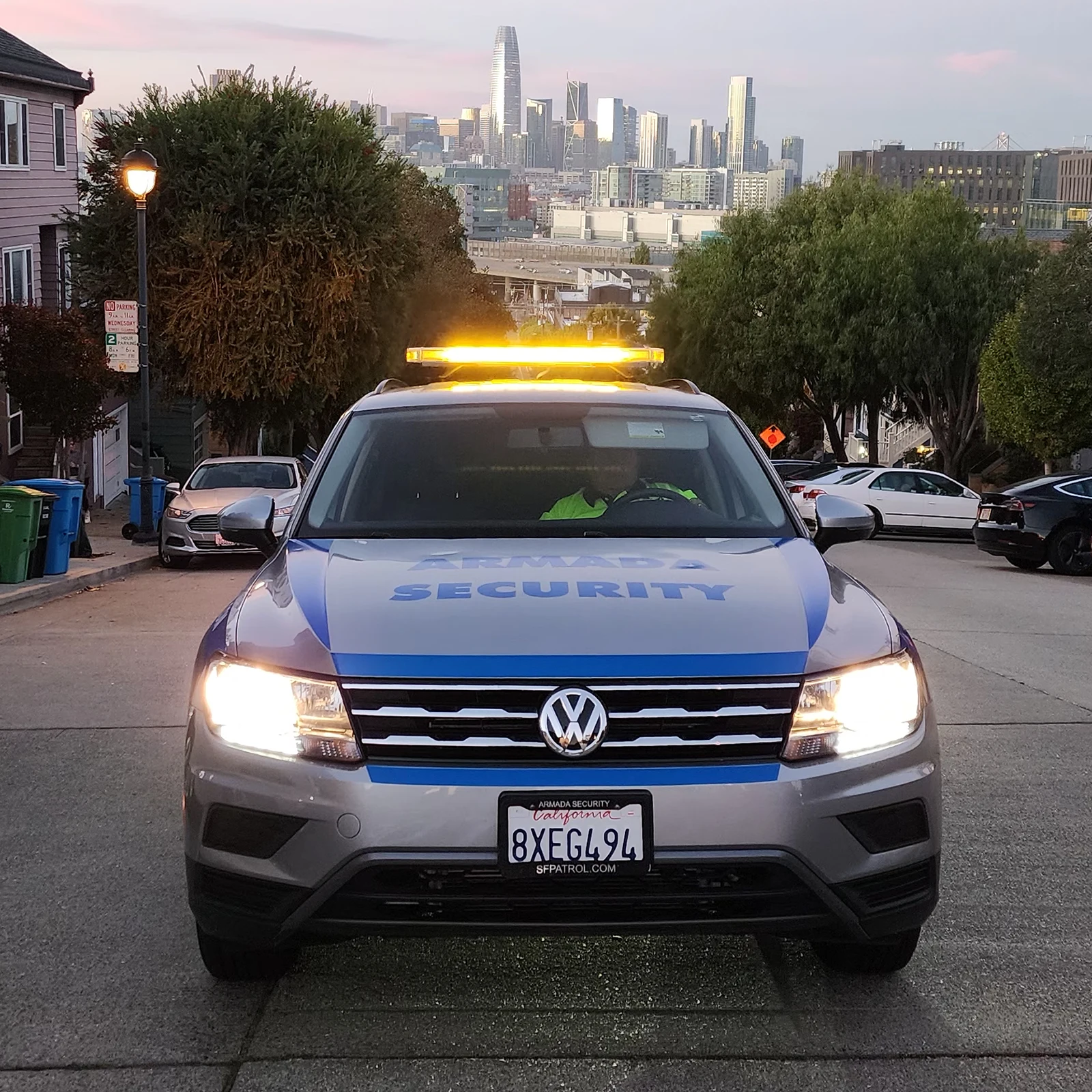
Randomized mobile patrol with position-stamped checkpoints, for properties that do not need somebody standing there all night.
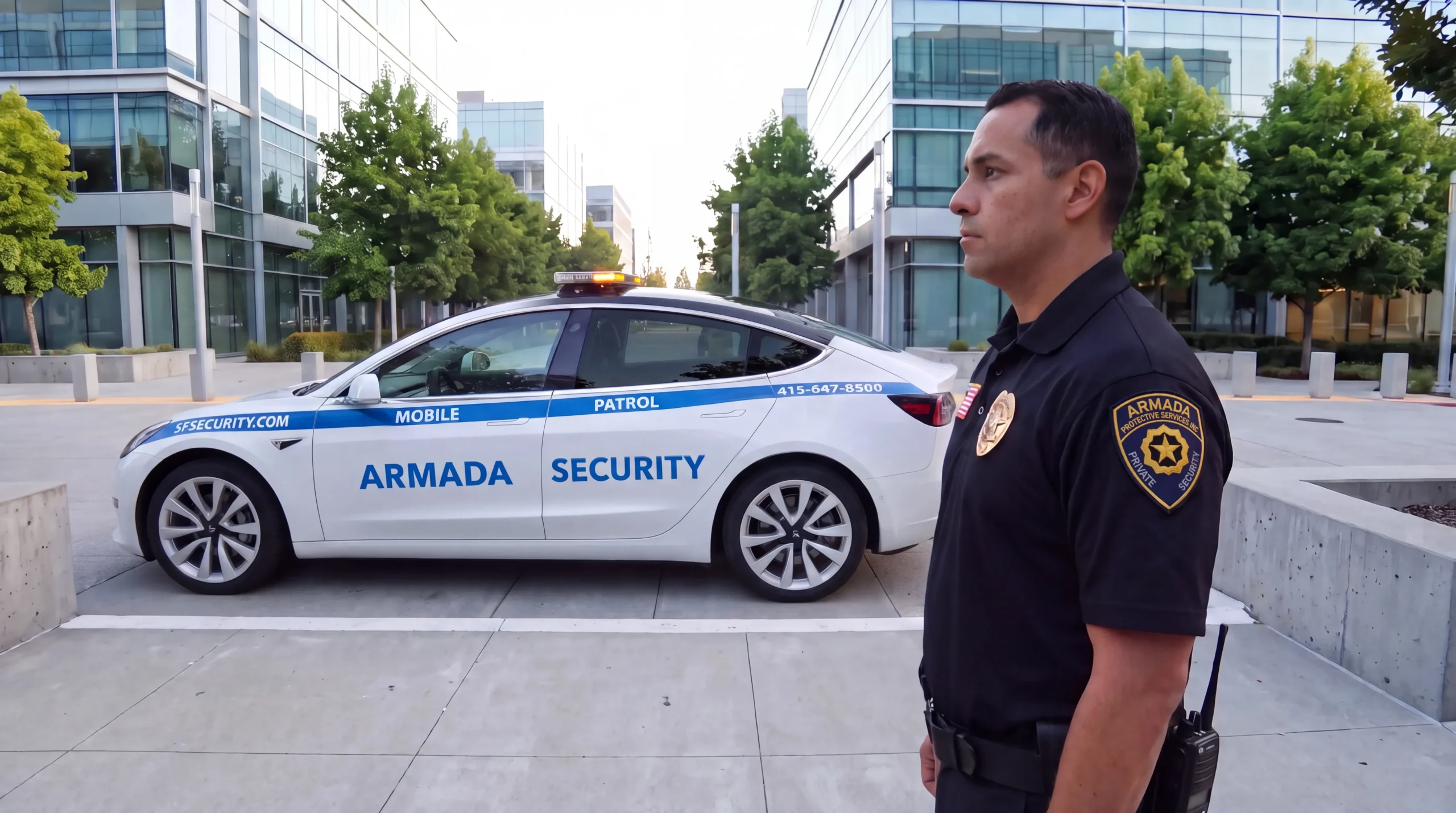
Marked vehicles covering ground between closing and opening, with every stop logged where it happened.
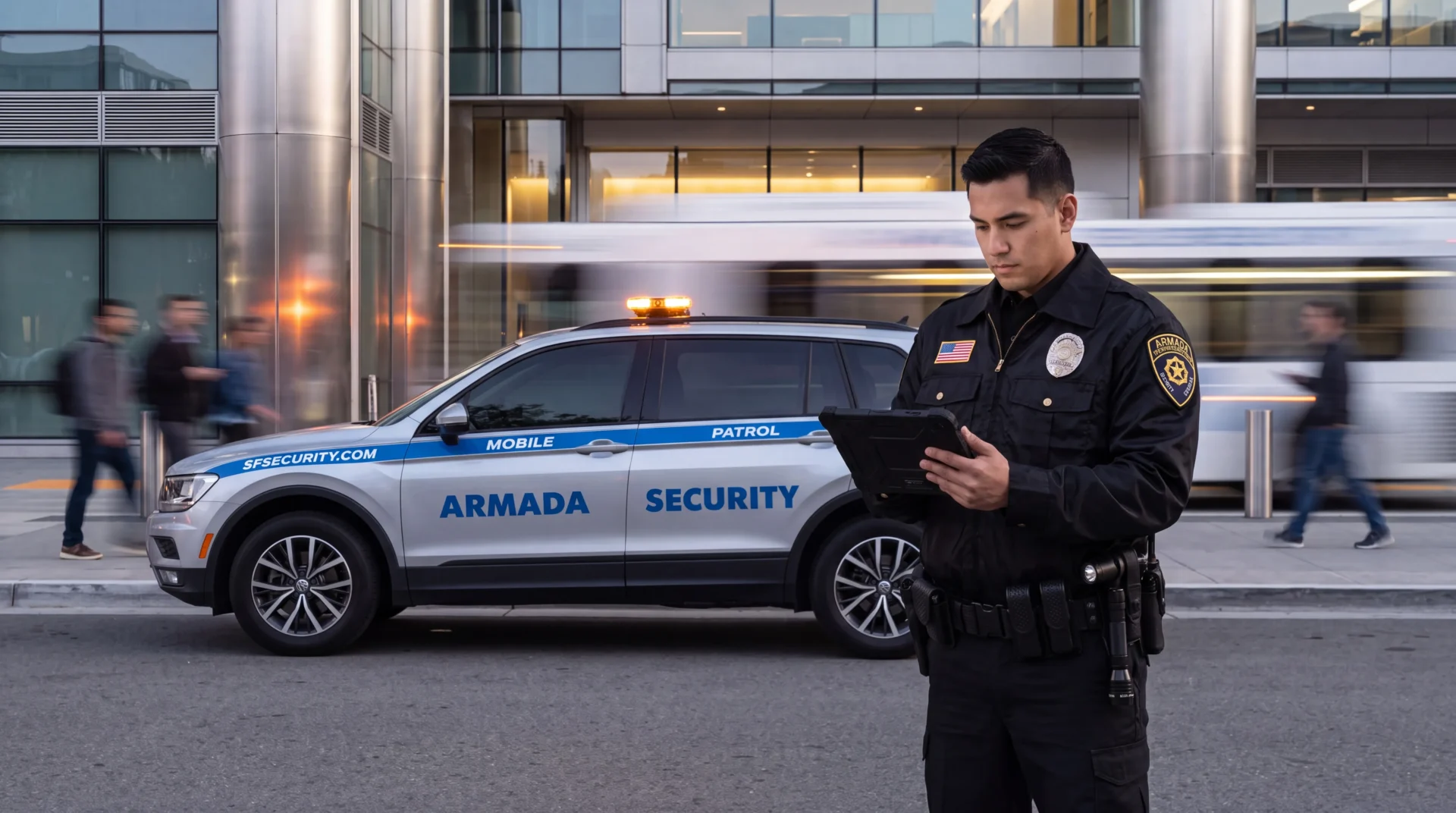
Patrol schedules that change, so nobody can learn when a vehicle will be there.
Customer testimonials
Professional and Reliable Security Services in the Bay Area
I Manager a portfolio of communities in San Francisco -working with Armada is great. They are flexible, honest and the Guards are always on point. I would recommend this firm to other HOA/Commercial managers.

Christopher Stanley
Owner and Chief Executive Officer, San Francisco
We hired Armada on short notice for a situation we were experiencing in one of our apartment complexes. They responded quickly, set up patrols and a guard service for us very quickly. Guards were professional, prompt and communicated activity at the property to us.

Lana August
Property Manager, San Francisco
We have used Armada for about 10 years. They are an amazing company providing professional personnel consistently. Thank you Armada!

Jesse Leite
Resident Manager, San Francisco
Every Armada employee with whom I've had the pleasure of interacting has been top notch - curteous, efficient, effective, knowledgeable, responsible.

Alex Goretsky
Business Owner, San Francisco
Quoted verbatim from published client reviews, including their original wording.

Price a vacancy round
Send the address, how long the building has stood empty and the inspection wording in your policy. An Armada expert walks it with you, lists what should be shut and is not, and builds the round from that list.
FAQs
What owners and agents ask about a building between tenants.
How often does somebody need to come?
Start from the policy wording, not from the price list. Where the insurer asks for an inspection at a stated frequency, that sets the floor, and anything above it is a security decision about how attractive the building is.
Do your officers go inside?
Where you want that and the building is safe to walk, yes. Keys are held under signature, booked in and out, and the officer carrying them is named on the shift. We will not take keys to a building we have not walked with you first.
What happens if they find a burst pipe at two in the morning?
You get the call, on every number you have given us, not a line in a report the next day. Size decides: water coming through a ceiling is a call, a lock that has seized is a line in the log.
The building is being marketed. Will a patrol put buyers off?
The opposite, in our experience. A marked vehicle and a condition log are what a buyer’s surveyor wants to see, and an unattended building with a damp stain is the thing that loses the sale.
Can the rounds stop the week a tenant moves in?
Yes. The agreement runs month to month after the first month, so coverage ends when the building is occupied again rather than at the end of a term somebody wrote a year earlier.
Ask us directly
If your policy has an inspection clause you are not sure about, paste the wording here and we will read it.
Sources
Where the figures, rules and local facts on this page come from. Links reviewed 5 Nov 2026.
- SFist 1 Armada Protective Services — San Francisco’s Top Security Company trade press, used only where no primary source carries the claim