Armed Security Officers in San Francisco
An officer who carries an exposed firearm on your post, under a state permit with his own name on it that you can look up before his first shift.
An armed post is not a larger version of an unarmed one. It is a second license on top of the guard card, a training cycle on a fixed clock, a uniform the law describes in detail, and a short list of events that must be put in writing to the state. This page sets out that machinery and says where an unarmed officer is the better answer.
Set aside half an hour to an hour and walk the property with us. By the end of it you will know which posts we think need an armed officer, which do not, and why.
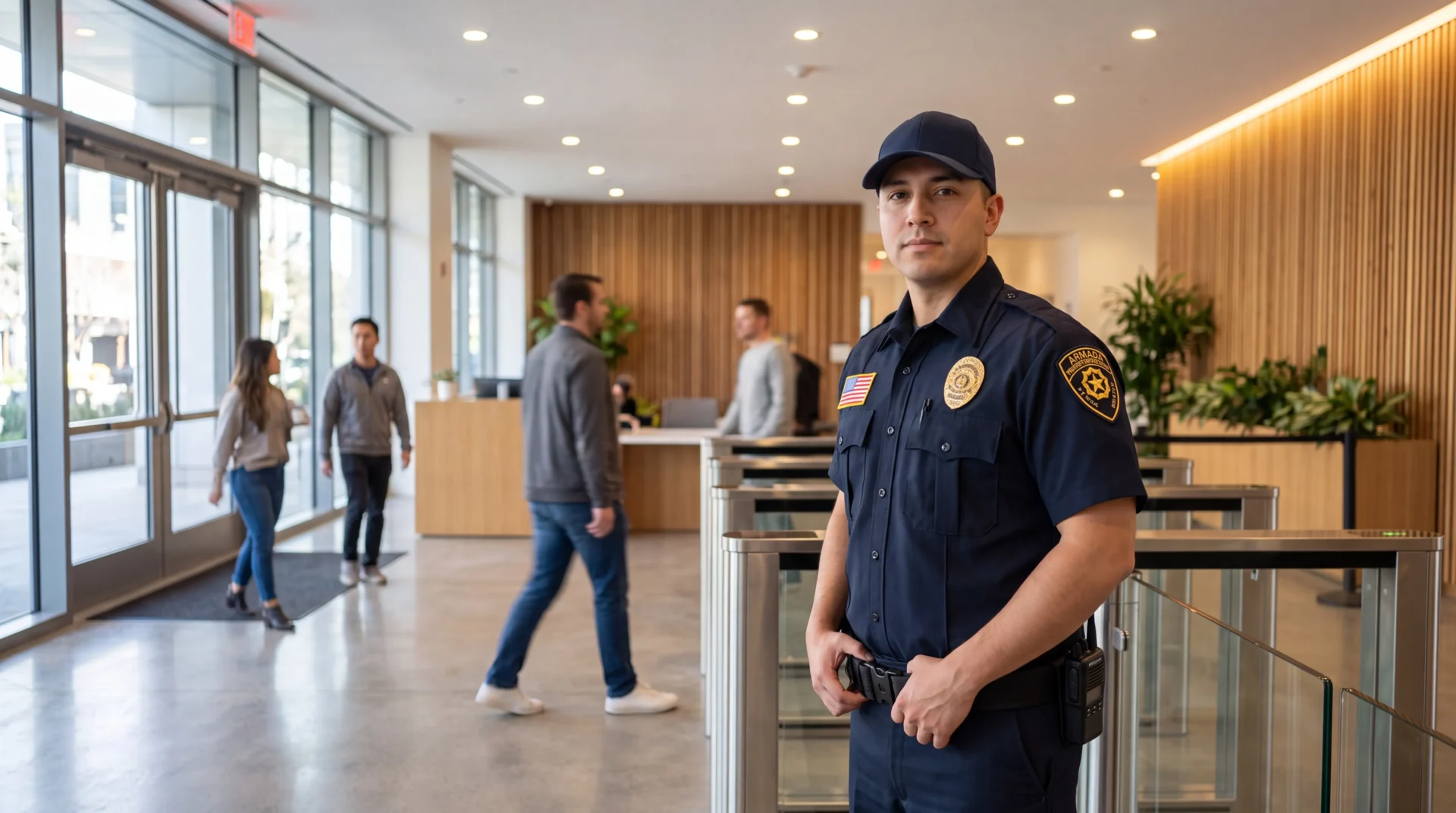

Where an armed officer belongs, and where he does not
Armed cover is asked for far more often than it is needed. The question that settles it is not how rough the block feels after dark. It is whether there is a particular thing on your floor that somebody would come for, and whether a firearm changes what happens when they do.
If nobody in your building can name what the officer would be standing between, the right answer is an unarmed post, better lighting and a door that locks. We say that at the site visit, before anything is priced.
What the holster actually changes
An armed officer is a deterrent that reads from across the street, and a responder equipped for the one scenario he was posted for. That is the whole of the difference. Everything else, the greeting, the log, the rounds, the call to the police, is the work an unarmed officer already does.
- A visible firearm changes the arithmetic for the person deciding whether to try your door
- The post is staffed by a smaller group of officers, so your site is covered by faces you already know
- Reports, patrol logs and access control run exactly as they do on an unarmed post
Where we will talk you out of it
Most of what makes a building feel unsafe does not improve when a firearm arrives, and some of it gets worse. Crowd pressure at a door, a parking dispute, somebody sleeping in a setback, packages going missing, an alarm that trips twice a week: none of those are problems an armed officer solves.
- Lobbies and receptions, where the job is to greet people, sign them in and write the day down
- Trespass and encampment work, where what you want is that somebody leaves quietly
- Events, where what is being managed is the crowd rather than the premises
Product, cash and the rooms that hold both
Sites that genuinely buy armed cover keep something on the floor that turns into money the moment it leaves the building. Cannabis retail is the clearest case in this city: a storefront retailer has to write a security plan, hire security personnel licensed by the Bureau of Security and Investigative Services, and tell the City whether those people will be armed or unarmed (San Francisco Office of Cannabis, Write your security plan1).
- Dispensaries, where the register, the vault and the public are all in one room
- Jewelry, where the stock is small, portable and worth more than the fixtures around it
- Industrial yards holding copper, tooling or fuel, where the theft is organized rather than opportunistic
The deposit run, and who may carry it
Armada does not move money, and California writes that line into the license itself: a private patrol operator is defined as a firm other than an armored contract carrier (Business and Professions Code section 7582.12). We hold a patrol operator license, so what an armed officer does on a banking day is cover the premises while somebody else does the carrying.
- The officer holds the door and the floor while your carrier makes the pickup
- The money stays in your custody or your carrier’s, and never in ours
- The pickup is moved around the week instead of repeating at the same minute
Where we can put an armed officer on a post
An armed post is staffed off the same roster as the rest of our work, which means it only holds together where a relief officer can reach the address without a long drive. San Francisco first, then the Peninsula as far as San Jose, and Sausalito over the bridge.
We serve: San Francisco, San Mateo, Brisbane, San Jose (see all locations)
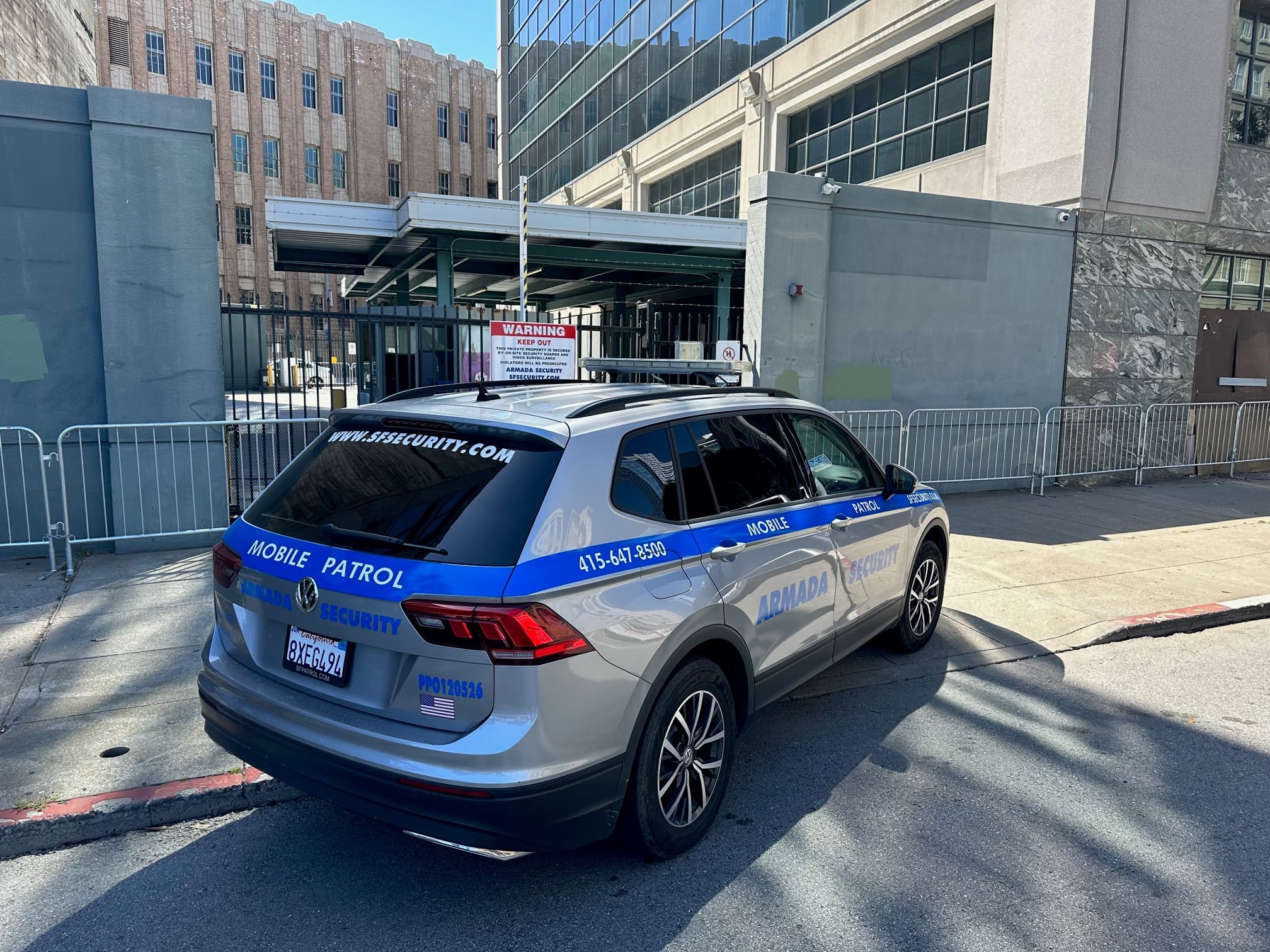

The permit behind the holster, and how you check it
Nothing here has to be taken on trust. The firm holds a state license, every officer holds a guard registration, and anyone carrying an exposed firearm holds a third document on top of those two. All three sit in the public register the Bureau of Security and Investigative Services keeps3.
What follows is not Armada policy but the state rulebook an armed post runs inside: who may hold the permit, what expires, and what has to be reported.
The exposed firearm permit
A guard card does not let anybody carry. The second document is a BSIS firearms permit, and the state decides who may hold one: at least 21 years old, not barred from possessing a firearm, cleared through both the FBI and the California Department of Justice, and assessed for judgment, restraint and self-control in the six months before the application goes in (BSIS Firearms Permit fact sheet4).
- The card names the calibers the officer may carry, and nothing outside that list comes to your site
- It is tied to the license types printed on it, so it does not travel into work it was not issued for
- It is not a concealed weapons license: that is a separate permit, issued locally, and this is not it
How he qualified in the first place
Before a permit is issued the applicant sits the state’s power to arrest course and a firearms course taught by a Bureau certified instructor at a Bureau certified range, ending in a written examination and a live fire qualification.
- Classroom instruction and live fire, both at a facility the Bureau has certified
- A written examination that has to be passed rather than attended
- The same power to arrest training every registered guard in California sits
Re-qualification, and a permit that lapses
A firearms permit runs for two years. Keeping it alive takes four range qualifications inside that term, two in each twelve month period, never two of them closer together than four months, and before every one of them a two hour review course on use of force and de-escalation (the BSIS fact sheet4). A permit allowed to expire cannot be renewed at all: the officer starts again as a new applicant.
- Renewal reaches the state well ahead of the expiry date instead of chasing it
- An officer close to expiry comes off armed posts, not off the schedule
- The current expiry date of the officer on your site is yours to ask for at any time
The uniform the law describes
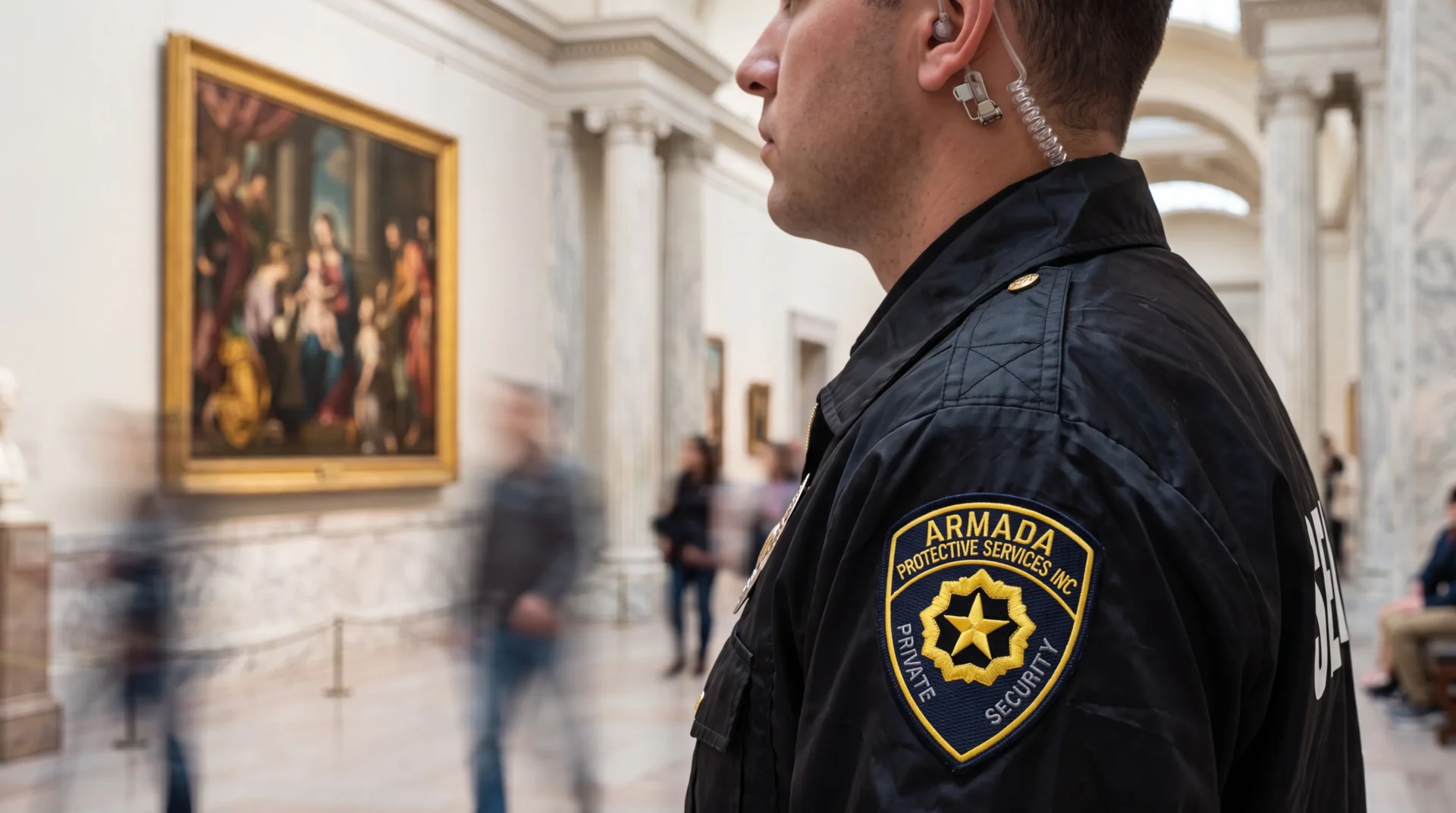
An armed officer cannot work your site in plain clothes. Anyone carrying an exposed firearm or a baton must wear a uniform with a patch on each arm reading private security and naming the company, clearly visible at all times, and the director may fine $250 for each violation (Business and Professions Code section 7582.275). The state answers the plain clothes question itself, in one word, and the word is no (BSIS uniform requirements for private security6).
- Company patch on both sleeves, so anyone walking up knows who is standing there
- Badge on the upper left breast of the uniform and nowhere else on it
- A client who wants cover nobody reads as security is buying an escort, and that work is unarmed
What is reported, and how fast
If an officer discharges a firearm on duty, or is in a physical altercation with a member of the public, the patrol operator has to send the state a written report within seven business days setting out the injuries, the damage, who was involved and whether the police investigated (Business and Professions Code section 7583.27). You hear it from us long before the state does.
- The supervisor phones you on the night. It does not wait for a morning email
- The written report, the photographs and the times reach you in one package
- Your insurer and your lawyer get that package from you with nothing taken out of it
Insurance, and the floor the state sets
Every private patrol operator in California has to carry commercial general liability cover of at least $1,000,000 for any one loss (Business and Professions Code section 7583.408), and BSIS accepts it only written on an occurrence basis. Armada carries $5M in aggregate liability, which comes from our own policy and from no public register, so ask any firm quoting you an armed post to show you theirs.
- A certificate naming you goes out before the first shift, not after the first incident
- Occurrence cover, so a claim raised later still sits with the policy that was live on the night
- License and insurance get checked together, because either one without the other means little
Our Statistics. Your Guarantee.
An armed post is the most expensive thing we sell, so the firm behind it should be the easiest part of the deal to verify. Armada has been the top-rated San Francisco security company since 2021 according to SFist9. Each figure below says what it is measured against.
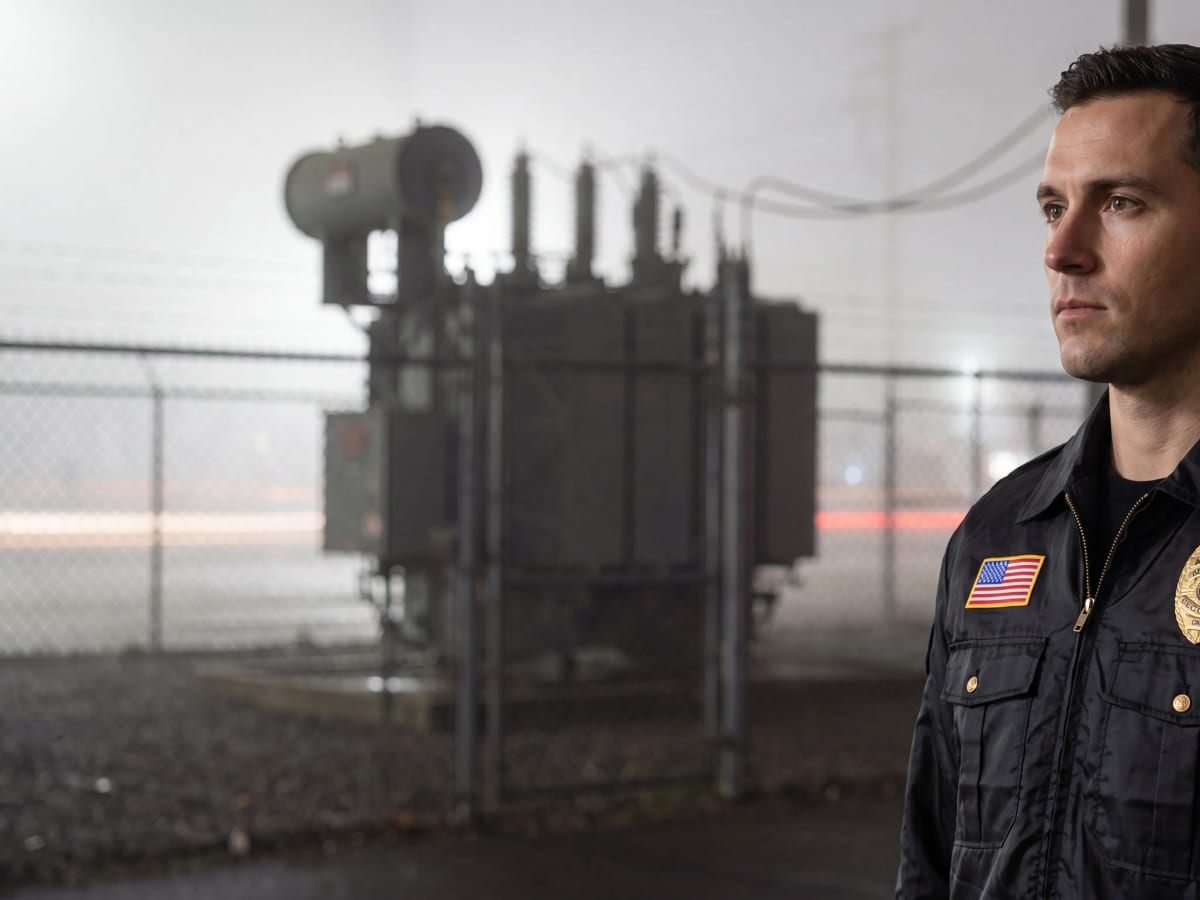
- 2x
At least twice as fast as police arrival
Under contract Armada is on site in 15 to 30 minutes. The median SFPD publishes for a low-priority call is longer, which is why SFPD itself points businesses to private security for anything short of a crime in progress.
- 80%
Fewer incidents at monitored properties
Weighted average across client sites, banks and hotels among them. It compares the incident records those clients kept before Armada covered the site with the records they kept after.
- 24/7
Your officer is the one you call
At two in the morning a client calls the officer who covers them, not a call center in another state. Clients hold those numbers from the first shift, and the app carries the messages, the photographs and the log.
- 100%
Licensed and insured
Every officer individually BSIS licensed and background-checked, under California Private Patrol Operator PPO 120526. Look the number up yourself in the state license record for PPO 12052610. Checked November 2026.
Related Security Services
Three Armada services that sit closest to an armed post.
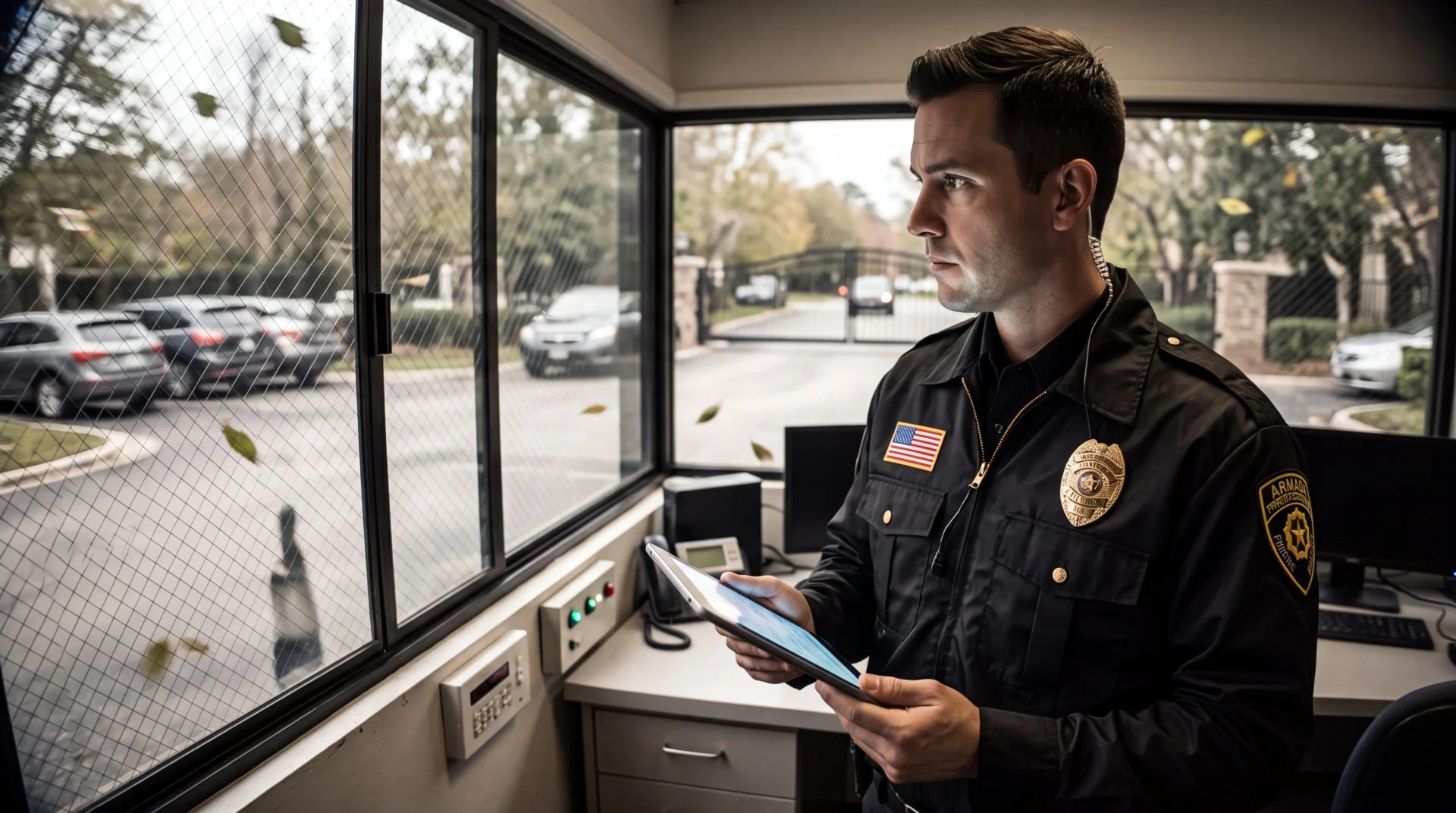
Uniformed officers who deter, control access, patrol and write the day down, with no firearm on the post.
An officer who travels with the person being protected: into the meeting, through the lobby, across the sidewalk and back into the car.

Trained officers stand between high-value inventory and equipment and the people who would take them.
Customer testimonials
Professional and Reliable Security Services in the Bay Area
We hired Armada on short notice for a situation we were experiencing in one of our apartment complexes. They responded quickly, set up patrols and a guard service for us very quickly. Guards were professional, prompt and communicated activity at the property to us.

Lana August
Property Manager, San Francisco
We have used Armada for about 10 years. They are an amazing company providing professional personnel consistently. Thank you Armada!

Jesse Leite
Resident Manager, San Francisco
Every Armada employee with whom I've had the pleasure of interacting has been top notch - curteous, efficient, effective, knowledgeable, responsible.

Alex Goretsky
Business Owner, San Francisco
I Manager a portfolio of communities in San Francisco -working with Armada is great. They are flexible, honest and the Guards are always on point. I would recommend this firm to other HOA/Commercial managers.

Christopher Stanley
Owner and Chief Executive Officer, San Francisco
Quoted verbatim from published client reviews, including their original wording.
Book the site visit
Send a time rather than a specification. The free site visit is where this gets decided: we walk the property with you, say which posts we think need an armed officer and which do not, and price only what survives that conversation. On-site cover carries a minimum term of one month and runs month to month after it.
FAQs
What owners and facility managers ask us before they put an armed officer on a post.
Can one post be armed while the rest of the site is not?
Yes, and it is the usual shape. The armed officer stands where the thing being protected is, the retail floor, the cash office, the receiving door, and the rest of the building runs on unarmed cover. Mixing them is cheaper than arming a whole roster and it keeps the firearm away from the posts where the work is greeting people.
Who decides whether the firearm comes out of the holster?
The officer, by himself, in the second it happens. No instruction from us and no clause in your post orders can authorize that decision in advance, and any firm that offers to write one for you is selling something it cannot deliver. What post orders do settle is everything before that second: which doors he holds, who he refuses, when he withdraws and when he calls the police.
Do you put armed officers on events?
Rarely, and only after a conversation about what the firearm is for. An event is crowd work, and a crowd is managed with numbers, sight lines and people who talk well, not with a holster. Where an event genuinely holds something worth taking, the armed post sits on that room rather than in the crowd.
Why does an armed post cost noticeably more?
Three reasons, none of them markup. The pool of officers who hold a current firearms permit is a fraction of the pool that holds a guard card. Keeping that permit alive costs range time and course time every year, paid for whether or not anything happens on your site. And the liability cover behind an armed post is priced differently from the cover behind an unarmed one.
What happens when my regular armed officer is sick?
A named relief covers him, and you meet that relief before you need him. Armed posts run off a short list of officers rather than an open roster, so the same two or three faces rotate through your site and all of them have read your post orders. If nobody on that list is available we tell you that the post will be unarmed for the shift instead of sending somebody who has not been there.
Ask us directly
Ask it here. The reply comes from an expert who assesses armed posts, not from a sales desk.
Sources
Where the figures, rules and local facts on this page come from. Links reviewed 13 Nov 2026.
- San Francisco Office of Cannabis 1 Cannabis security plan requirements storefront cannabis retailers must hire security personnel licensed by BSIS and state whether they will be armed or unarmed
- public.law 2 Business and Professions Code 7582.1 defines a private patrol operator as a firm other than an armored contract carrier, 5 Business and Professions Code 7582.27 uniform patch on each arm for anyone carrying an exposed firearm or baton, and the $250 fine per violation, 7 Business and Professions Code 7583.2 written report to BSIS within seven business days of a firearm discharge or a physical altercation with a member of the public, 8 Business and Professions Code 7583.40 minimum commercial general liability insurance of $1,000,000 for any one loss for a private patrol operator
- California Department of Consumer Affairs 3 Bureau of Security and Investigative Services guard card and private patrol operator licensing requirements, 4 Firearms Permit fact sheet who may hold an exposed firearm permit, the training, the two-year term and the four range qualifications, 6 Uniform, badge and patch answers BSIS answers on uniforms, badges and carrying an exposed firearm or baton in plain clothes
- SFist 9 Armada Protective Services — San Francisco’s Top Security Company trade press, used only where no primary source carries the claim
- California Department of Consumer Affairs license search 10 License record PPO 120526 Armada Protective Services, private patrol operator