Residential Security in San Francisco
Every residential property has the same fact at the middle of it: the people who see trouble first live there, and they do not work for you. A tower, an association, a gated street and an empty house differ in their doors and their paperwork, not in that. Armada covers all of them.
- A post, a patrol round or a call-out, decided on the property
- State-licensed officers, background-checked before a first shift
- A dated report for the owner or the board after every visit
The assessment comes first, costs nothing, and the findings are yours either way.
If it is urgent, call (415) 647-8500
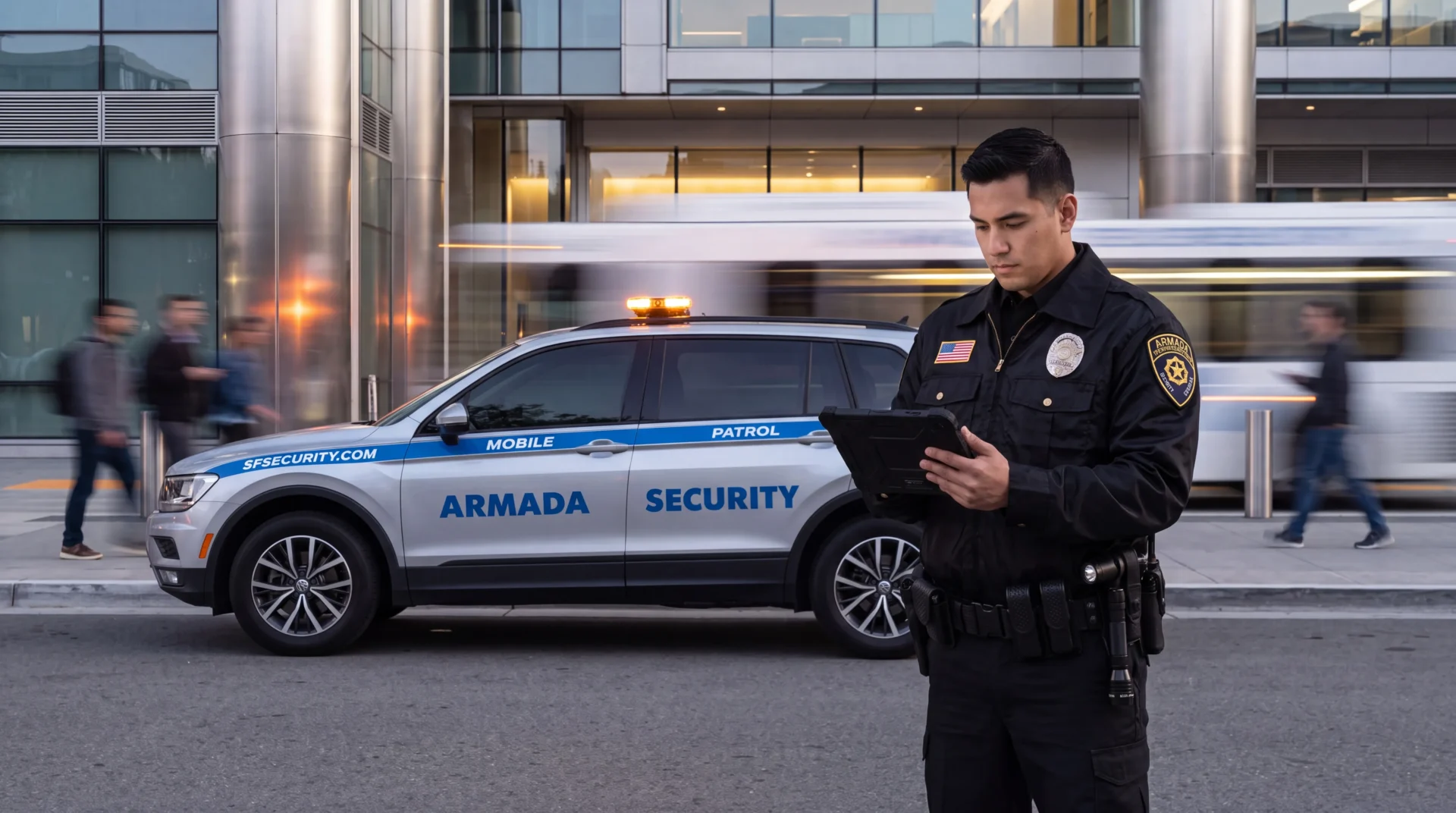
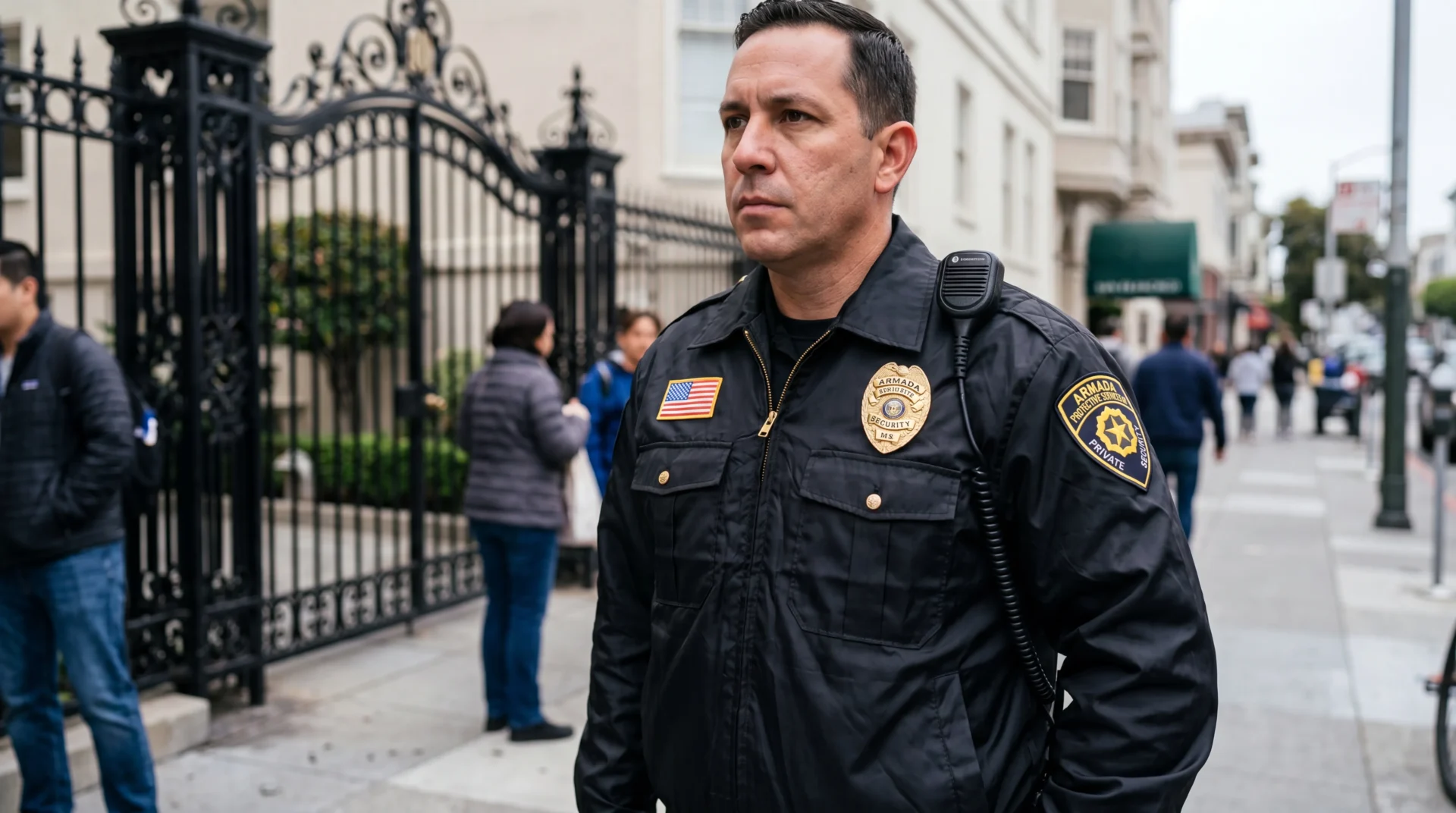
A building people live in is not a building people work in
An office empties at seven, and the people inside it are paid to notice things. A home never empties, and the people inside it are not. That one difference decides who reports a problem, how long the report takes to reach somebody who can act on it, and what an officer may do when he arrives. It holds in a high-rise lobby and on a gated street alike.
The first witness is a neighbor
In a commercial building the witness is staff. The report goes to a manager who can act on it, inside the same shift, in the words of somebody trained to write it down. In a residential building the witness is a neighbor on her way to work. She mentions it at the management office, the office passes it to the guard company, and by the time it lands nobody has a time, a direction or a description. The lost hours are in the route, not in the response.
- Residents given the number of the officer on the property, not of an office
- What was seen written down while the person who saw it is still standing there
- The same entry reaching the manager and the board in one document
- An answer back to the resident, so the next thing also gets reported
Nothing here closes for the night
A warehouse has an after-hours. A residential address does not. Somebody is home at every hour, so an officer works in front of his client all day and is judged by people who live with the result. It also means most of what he handles is not a crime at all. A propped fire door, a dog off the leash, a guest parked in a deeded space, a stranger holding the gate open: that is the daily business, and none of it brings a police car.
- Rounds walked at the hours the property itself shows are worst
- House rules applied the same way to every resident, in writing
- Disagreements between neighbors recorded rather than refereed
- Police called when it is a police matter, and only then
The duty lands on the owner or the board
Under California Civil Code 17141 everyone answers for an injury caused by want of ordinary care in the management of his property. On a commercial lease that duty is argued between a landlord and a tenant with counsel on both sides. On residential property it settles on one owner, or on a volunteer board that has to explain itself to the neighbors who elected it. That is why the paperwork counts for more here than anywhere else we work.
- Cover chosen from what the property records, not from a template
- Every visit dated and timed, so a decision can be defended a year later
- A named supervisor the owner or the board can reach directly
- Our license and our insurance open in the state register
Homes, buildings and streets we can reach in time
Armada works residential addresses across San Francisco and down the Peninsula. Distance is the whole argument here: an expert who can stand at your gate within the hour is worth more to an owner than a national brand whose nearest office is in another county.
We serve: San Francisco, San Mateo, Brisbane and San Jose (see all locations)

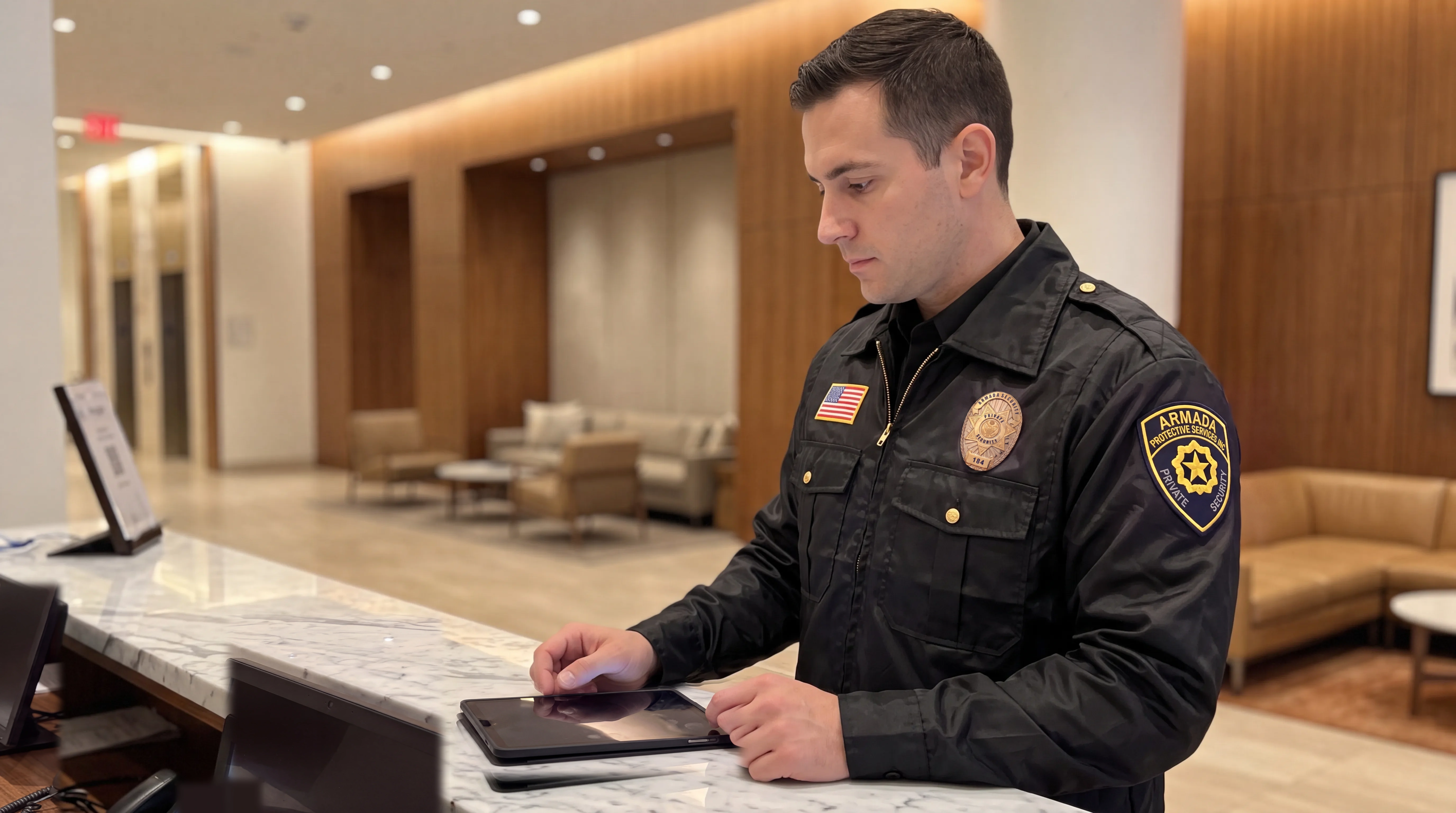
A post, a round or an answer when it happens
Cover comes in three shapes and they cost very differently. Most residential buyers are sold the dearest one, because it is the one that is easy to picture. Here is how the choice is actually made, and what the owner or the board holds in writing once it is running.
None of the three is better than the others. The question is where the property loses things and at what hours, which is what the free assessment is for.
A standing post, and when it earns the money
A post is a person at one point for a fixed stretch of hours, and it is the dearest line on any residential invoice because it is paid whether anything happens or not. It earns that money where a human has to decide who comes in: a lobby that signs for deliveries and sends guests up, a gate that opens for trades all day. It wastes that money when the thing you keep losing sits in the garage at three in the morning while the post stands at the front door.
A patrol round, and what makes one worth paying for
A round is a marked car and an officer who walks the parts of a property nobody owns: garage levels, stairwells, the service door, the ground behind the trash enclosure. It costs a fraction of a post because the hours are shared between addresses, and it covers ground a post never leaves. What makes it worth buying is that the times cannot be guessed from the curb and that every pass leaves a dated entry whether or not anything was found.
An answer when something actually happens
Call-out cover buys nothing standing on the property and everything arriving at it. An alarm, a resident on the phone in the small hours, a door a neighbor found open: an officer leaves for the address, deals with what he finds and writes it up. How long that takes is in the figures below, with the basis it was measured from. It suits addresses where incidents are rare enough that paying somebody to stand there every night would be paying for quiet.
What the owner or the board ends up holding
Whichever of the three is running, the same paperwork comes out of it. Post orders agreed in writing and reworked as the property changes, rather than signed once and filed. A dated entry for every visit, with photographs. A report sent when the work closes rather than a summary at month end. An incident write-up on the day. A year on, that file is what gets handed to an insurer, to an attorney or to an owner at an annual meeting, and it is the only part of security that still exists after the officer has gone home.
Our Statistics. Your Guarantee.
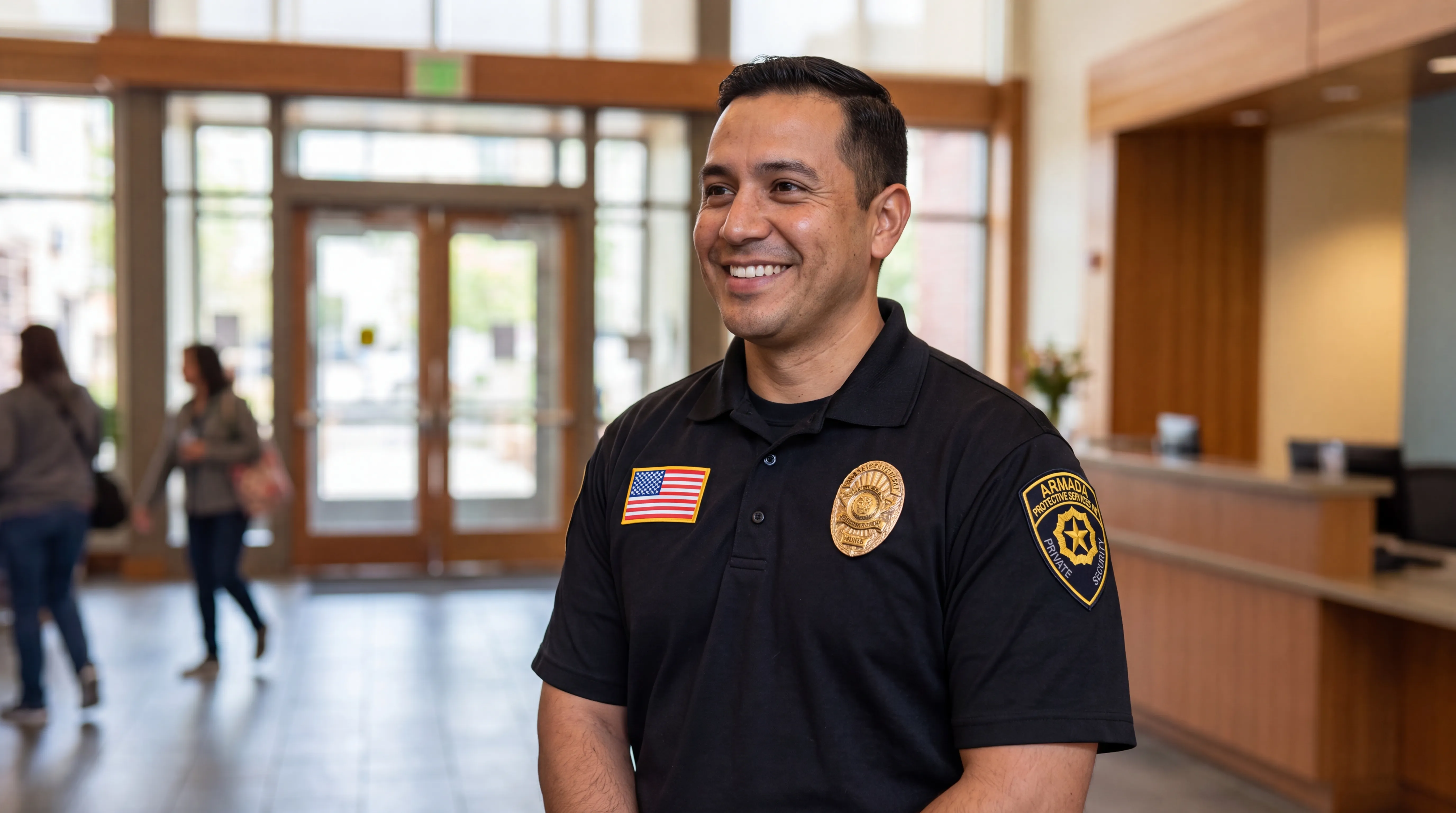
Four questions settle a residential contract before anyone signs it: how long help takes to arrive, whether the cover moves the incident count at all, who picks up the phone in the small hours, and whether the license holds up when somebody checks it. Below are the four figures Armada publishes, each with the basis it came from. Armada has been the top-rated San Francisco security company since 2021 according to SFist2.
- 2x
Faster to your site than a police response
Under contract an Armada officer reaches a client address in 15 to 30 minutes. The median SFPD publishes for a low-priority call is longer, which is why SFPD itself points businesses to private security for anything short of a crime in progress.
- 80%
Fewer incidents at monitored properties
Weighted average across the 12 client sites, banks and hotels among them, that kept incident records both before Armada covered them and after. Source: Armada annual client survey, 2025.
- 24/7
Your officer is the one you call
At two in the morning a site contact rings the officer standing on the property, not a call center in another state. Clients hold those numbers from the first shift. New address? (415) 647-8500, Mon to Fri, 9am to 5pm.
- 100%
Licensed & Insured
Every officer individually BSIS licensed and background-checked under California private patrol operator PPO 120526, and the company carries $5M in aggregate liability. Look the number up yourself in the state license record3, checked November 2026. The guard card itself is issued by BSIS4.
Related Security Services
Residential properties Armada covers, each with its own doors, its own paperwork and its own page. Besides the three below we work apartment complexes, homeowners associations and vacant residential property.
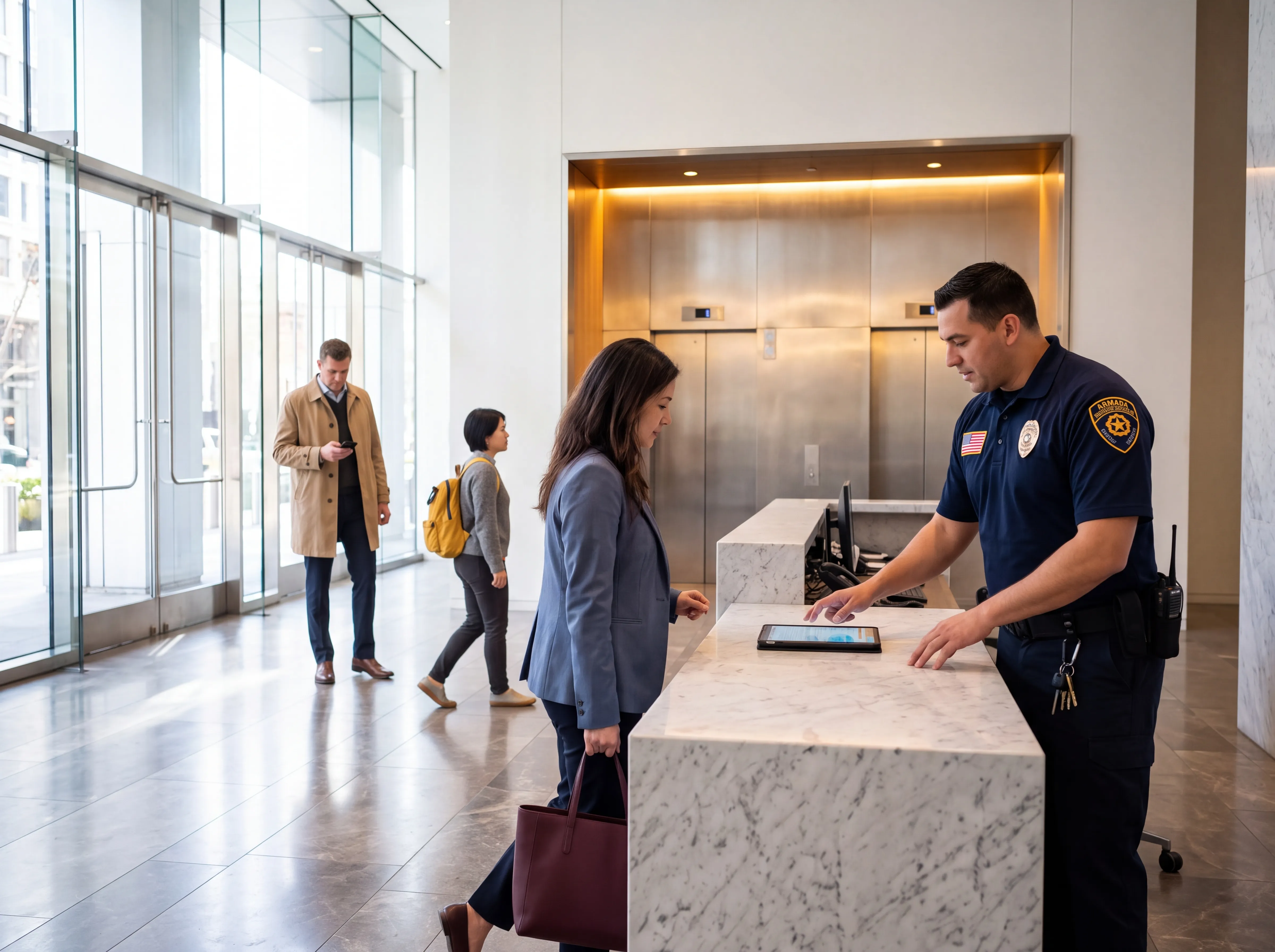
Armada staffs the front door, the garage gate behind it and the rounds of the common floors, with licensed officers who learn the building instead of rotating through it.
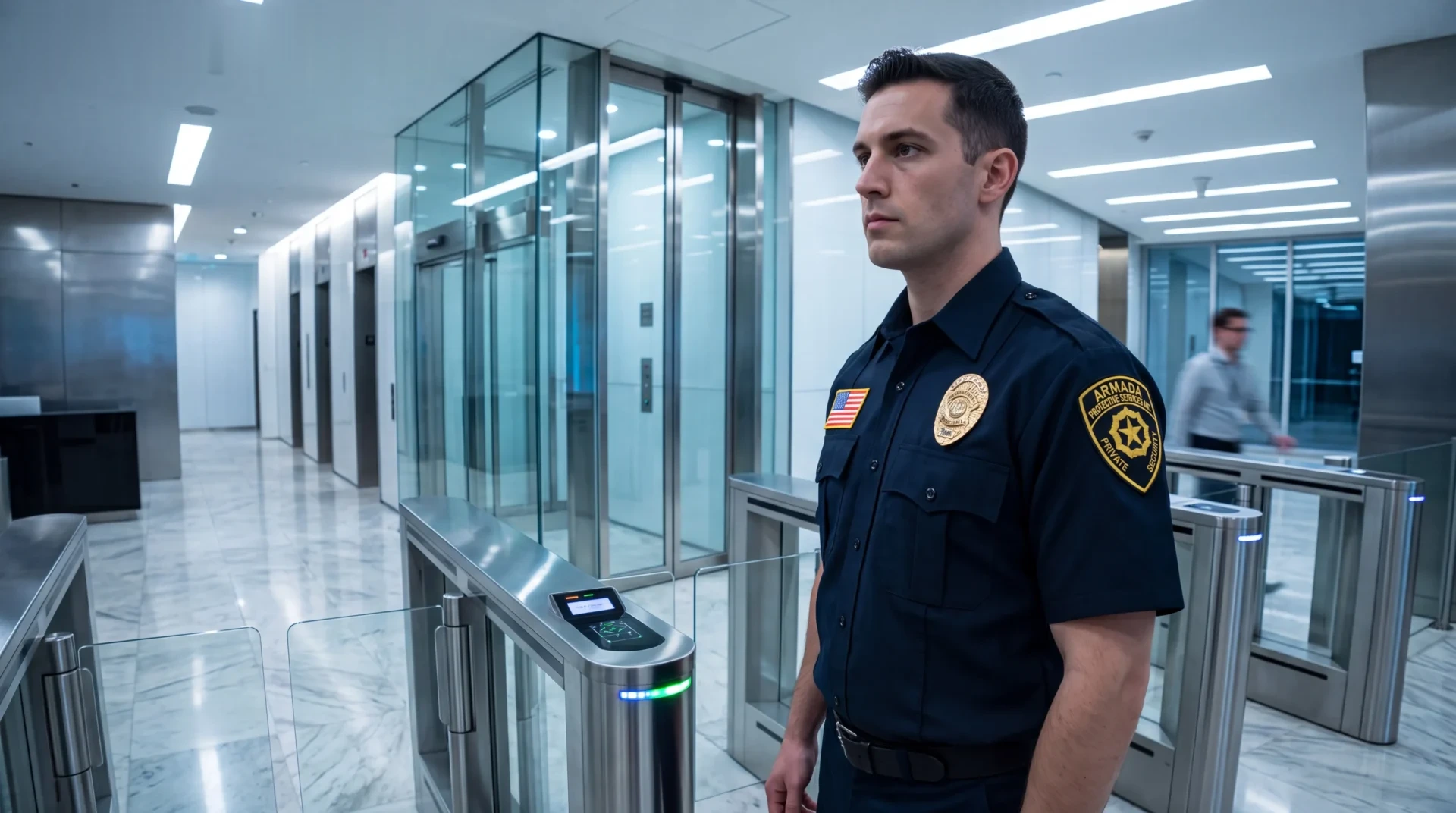
Licensed officers on the parts of the building the board and the management company are both responsible for, under post orders the board has read and the manager can change.
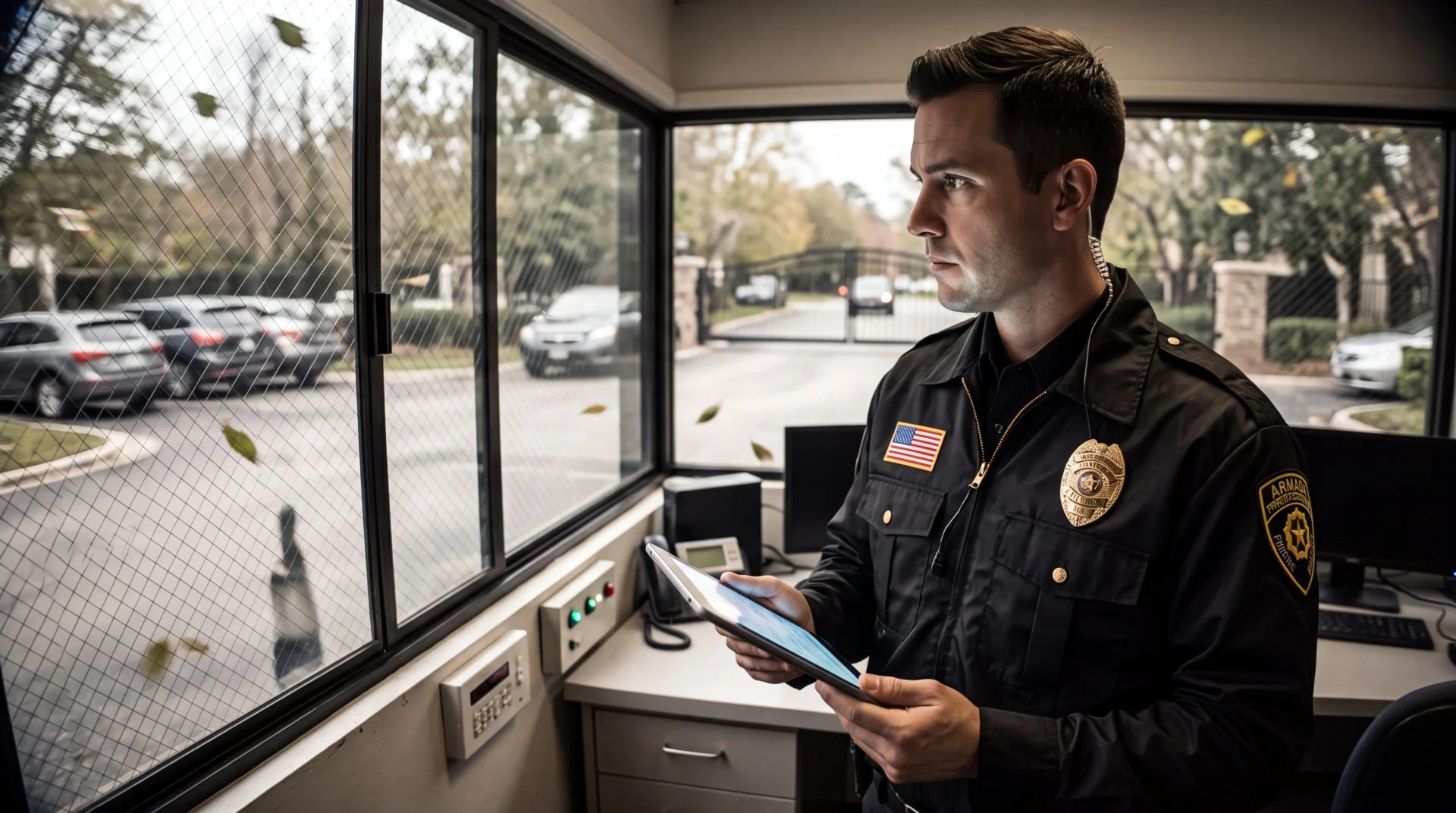
The officer in the booth is the one who decides who comes through the gate, in about twenty seconds, with a line of cars waiting behind.
Customer testimonials
Professional and Reliable Security Services in the Bay Area
We hired Armada on short notice for a situation we were experiencing in one of our apartment complexes. They responded quickly, set up patrols and a guard service for us very quickly. Guards were professional, prompt and communicated activity at the property to us.

Lana August
Property Manager, San Francisco
We have used Armada for about 10 years. They are an amazing company providing professional personnel consistently. Thank you Armada!

Jesse Leite
Resident Manager, San Francisco
Every Armada employee with whom I've had the pleasure of interacting has been top notch - curteous, efficient, effective, knowledgeable, responsible.

Alex Goretsky
Business Owner, San Francisco
I Manager a portfolio of communities in San Francisco -working with Armada is great. They are flexible, honest and the Guards are always on point. I would recommend this firm to other HOA/Commercial managers.

Christopher Stanley
Owner and Chief Executive Officer, San Francisco
Quoted verbatim from published client reviews, including their original wording.
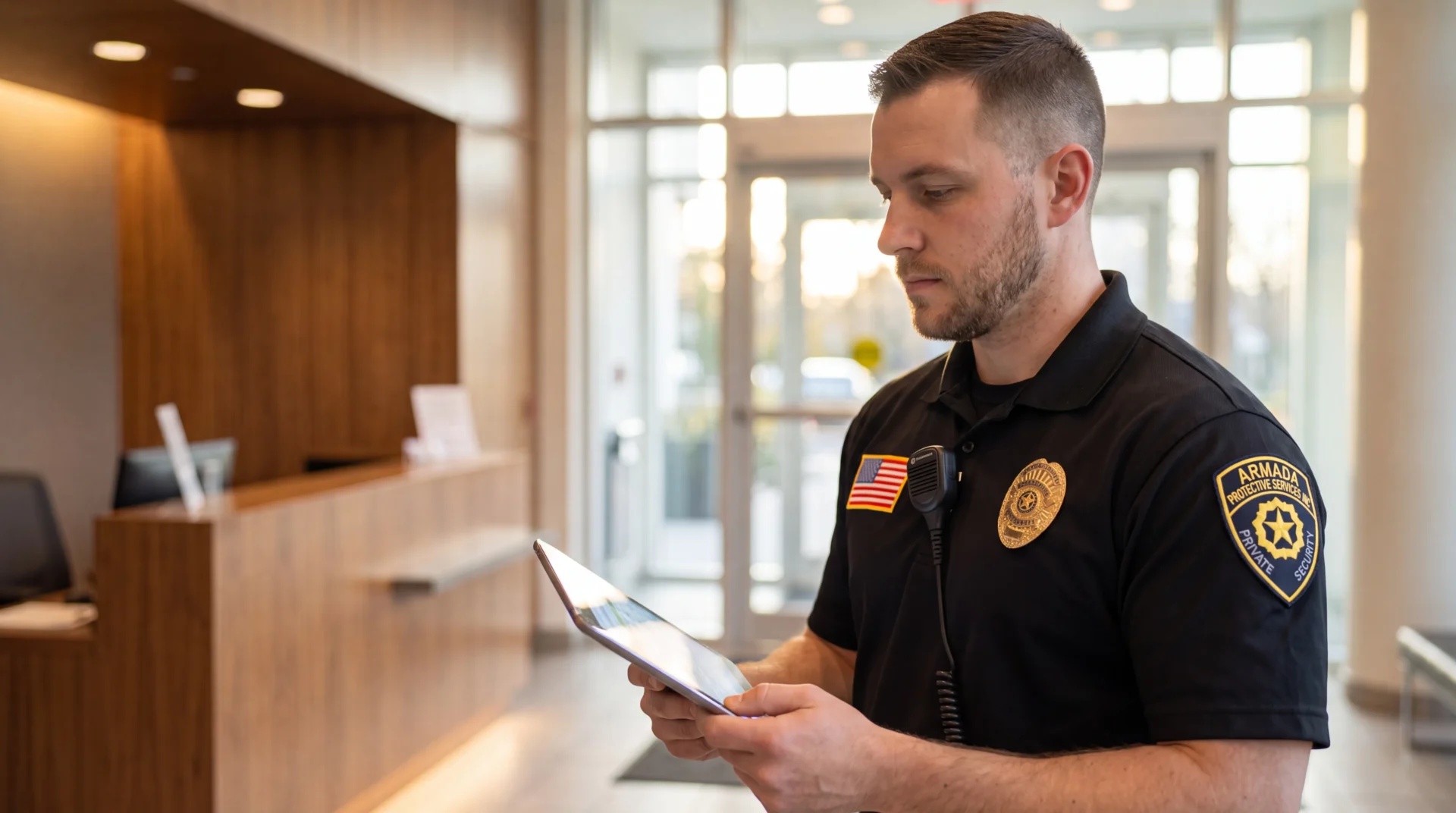
Walk the property before you buy hours
Send the address and a time somebody can meet us. An Armada expert walks the entrances, the garage, the common areas and the back of the property, says which of the three shapes of cover he would put on it and which he would leave off, and prices only that. You keep the written assessment whether or not you hire us. The minimum term is one month, month-to-month after that.
FAQs
What owners, boards and property managers ask before they put cover on a residential address.
We already have cameras and a fob system. What does an officer add?
Recording and interrupting are two different jobs. A camera tells you what happened after it happened, and it tells you accurately, which is why we ask boards to keep the ones they have. It does not ask the man carrying a box why he is in the mail room, it does not shut a fire door somebody propped at midnight, and it does not meet the police at the gate and point. Armada sells no cameras, no readers and no alarm panels and installs none of them, so there is nothing in it for us in telling you that hardware is not enough. Where an address plainly needs a reader more than it needs hours, that goes in the written assessment, with the name of an integrator we have worked with.
What does California require of a company that puts officers on a residential property?
Two licenses, and they are separate things. The firm has to hold a private patrol operator license: Business and Professions Code 7582.15 is the section that defines what such a firm is and what work it may contract for. Every officer it sends has to hold a guard card of his own, issued by the Bureau of Security and Investigative Services4 after a background check. Section 7583.406 puts the floor under the firm commercial general liability cover at $1,000,000 for any one loss, which is a floor and not a recommendation. Ask for the operator number and look it up yourself before you sign anything.
Does the officer report to the board or to the management company?
Whichever the agreement names, and in practice both. The management company gets the shift and round reports as they close, because it is the party that has to act on them during the week. The board gets the same documents unedited, plus an incident write-up on the day it happens, because it is the party that has to answer for the spend at a meeting. One named Armada supervisor is the contact for both, and the escalation list is agreed in writing before the first shift rather than worked out during the first emergency.
What happens if an officer has to put hands on somebody?
It is written down and filed with the state. Business and Professions Code 7583.27 requires the licensee to send the Bureau of Security and Investigative Services a written report within seven business days of a physical altercation with a member of the public, and within the same period of any discharge of a firearm. The property gets the same account on the day it happened, in the officer own words, with the time and the photographs. Nothing about a residential address changes that duty, and a company that treats such an incident as its internal business is telling you something.
Can an officer go into a unit, or stop a resident?
No on the first, and that limit is worth understanding before you buy. An officer works the common property: lobbies, corridors, garages, grounds, gates and the curb in front. A unit is private and he does not enter it without the resident or a lawful reason to be there. He can ask, record, photograph a condition, call the police and stand by until they arrive. He is not a landlord, a mediator or a code inspector. A good share of what residential boards bring to us turns out to need a repair or a notice from the manager rather than an officer, and we say so in the assessment instead of selling hours against it.
Ask us directly
If you don't see the answer you need, fill out the form and ask us directly: we are here to help.
Sources
Where the figures, rules and local facts on this page come from. Links reviewed 13 Nov 2026.
- public.law 1 Civil Code 1714 (a) everyone is responsible for an injury occasioned to another by want of ordinary care or skill in the management of his or her property or person; (b) to (d) are a separate matter, alcohol and social host liability, 5 Business and Professions Code 7582.1 defines private patrol operator and security guard work, including guarding persons in the company of persons being protected, 6 Business and Professions Code 7583.40 minimum commercial general liability insurance of $1,000,000 for any one loss for a private patrol operator, 7 Business and Professions Code 7583.2 written report to BSIS within seven business days of a firearm discharge or a physical altercation with a member of the public
- SFist 2 Armada Protective Services: San Francisco's Top Security Company trade press, used only where no primary source carries the claim
- California Department of Consumer Affairs license search 3 License record PPO 120526 Armada Protective Services, private patrol operator
- California Department of Consumer Affairs 4 BSIS-certified guards