#1 Alarm Response Service in San Francisco
Somebody looks at your door while the siren is still going
A panel can tell you a contact opened at ten past one. It cannot tell you whether that was wind, a cleaner or two people with a trolley. An Armada officer is on the way while the siren is still sounding. He walks the point that fired, says on the record what set it off, and stays with it until the building is shut again or SFPD takes it over.
Free, no obligation: the address, who monitors the panel and the hours you want covered are enough for a price.
If it is urgent, call (415) 647-8500
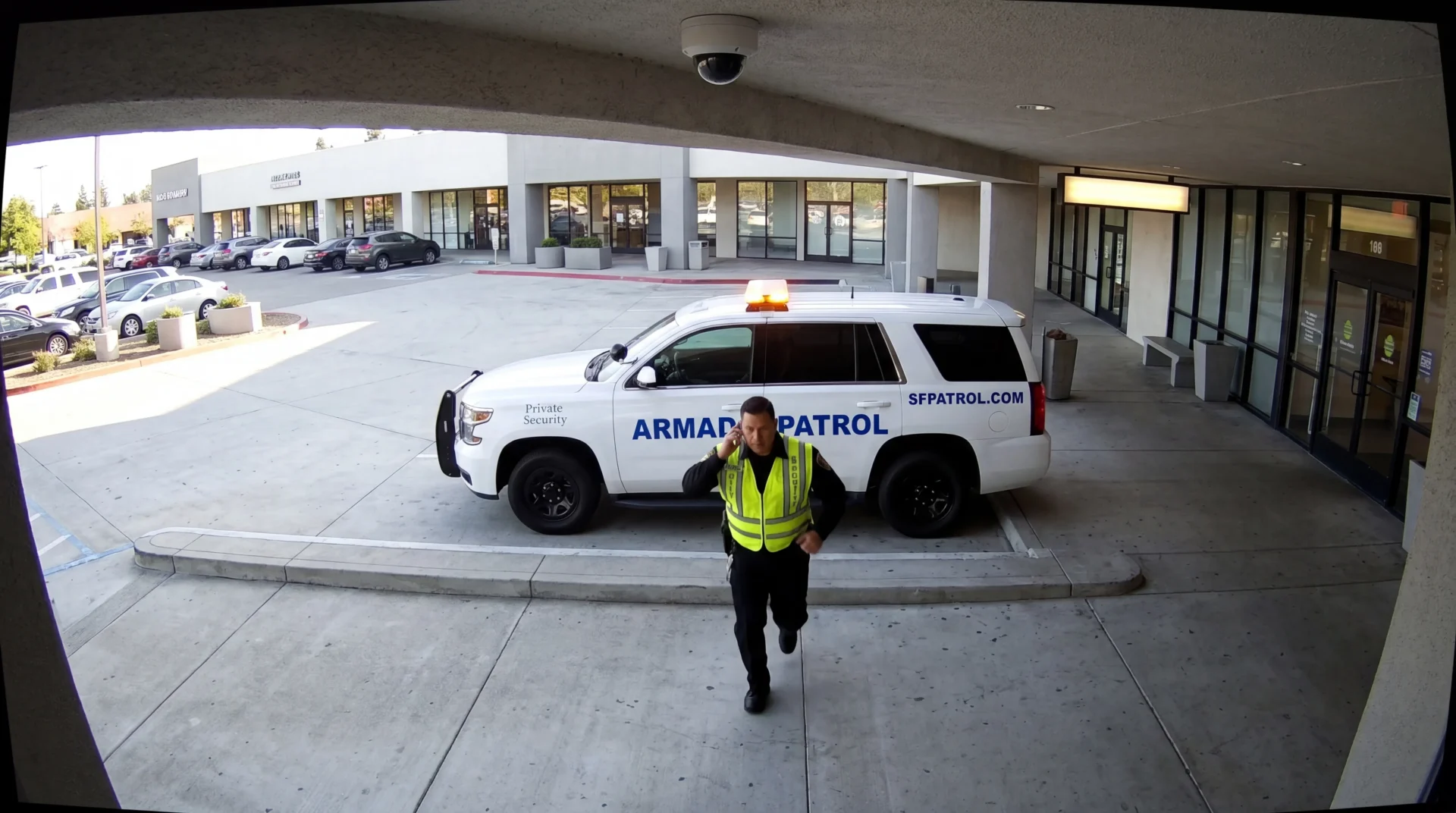
What happens between the siren and somebody arriving
Across San Francisco the median police response to an audible burglar alarm is 22 minutes, and the slowest tenth of those calls waits longer than 85 minutes, according to Law Enforcement Dispatched Calls for Service1, the city’s own file of closed dispatches, for the twelve months to September 2026. That gap is what a private response is bought to close.
An alarm plan is worth what it says about that gap: who verifies the alert, who is sent, how the officer gets in, and the point at which police are called rather than merely told. Three things go wrong inside it.

A panel reports, it does not look
A sensor says a contact opened. It cannot say whether the wind caught a roll-up door, a cleaner used a key, or somebody cut the hasp. On the screen all three read the same, so the decision to wake an owner at two in the morning is being taken on no information at all.
Somebody tries the door first and comes back later
On an unattended building a deliberate trip followed by a wait is an old method. If nothing moves outside for an hour, the second visit is the one that empties the place. A vehicle that arrives while the siren is still sounding changes the answer the watcher is waiting for.
What repeat activations cost the site
Most commercial activations turn out to be nothing, and a building that keeps producing them slides down the police priority list and starts collecting city fines. Every attendance we make is written up with what the officer found at the point that fired, so the pattern becomes something your alarm company can act on.
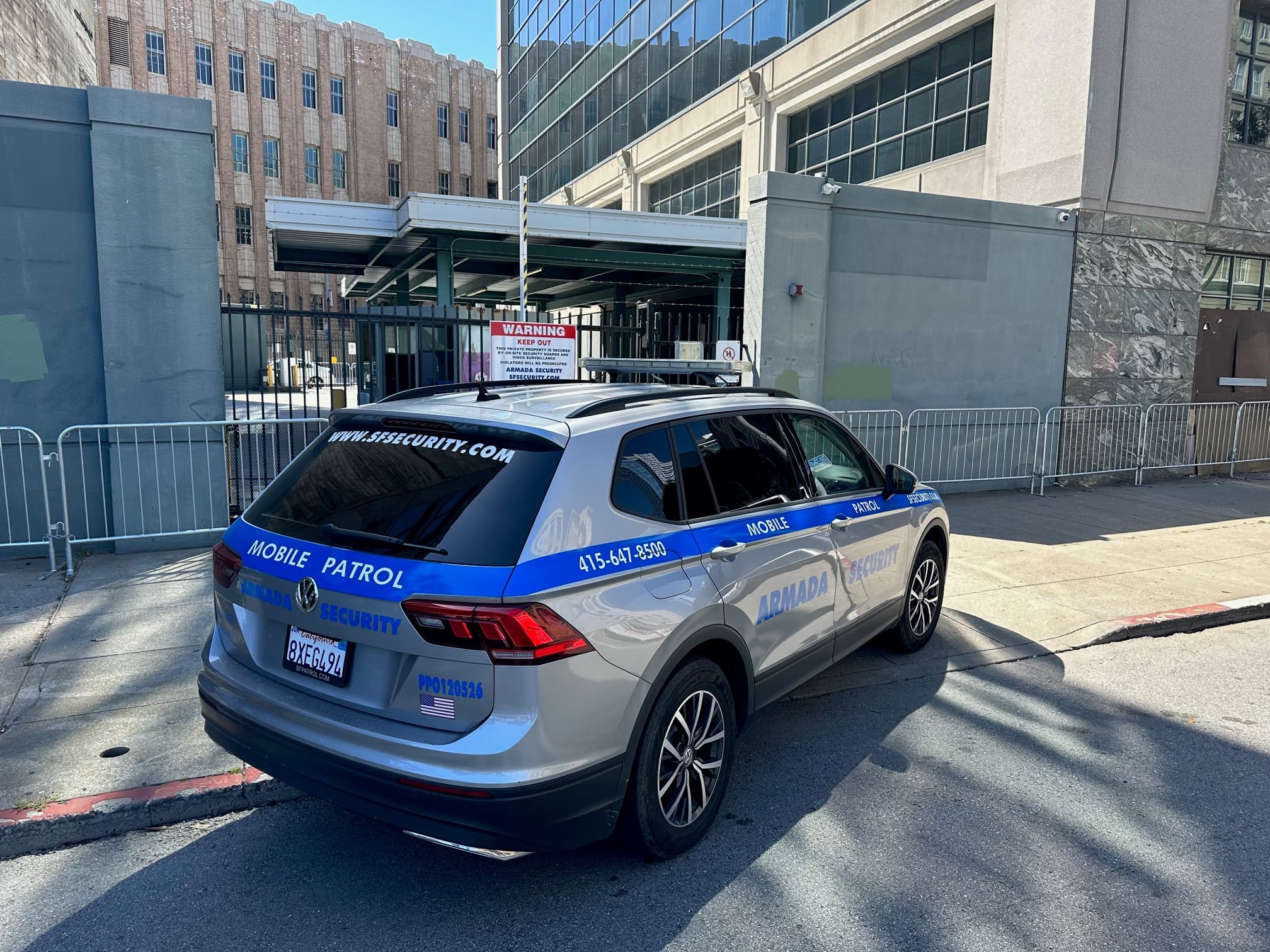
What our officer does when your panel trips
The call reaches the officer who covers your site, not a desk that passes it on. How fast a vehicle reaches an address under contract is the first figure in our record below. From the moment he arrives the order never changes: look before anybody escalates, write down what was there, then tell the people on your list.
Eyes on the point that fired, before police are called
The officer walks the elevation the sensor sits on and reads the contact, the glass and the frame for the thing that actually moved. Police are called when there is something to hand them, which is what keeps your address off the list of numbers that cry wolf. Where several sensors fired, he reads them in order instead of treating the first as the whole story, which is the sequence the ANSI/TMA AVS-01 alarm validation standard asks for. He wears a body camera on the attendance, so what reaches you is what he saw and not only what he wrote.
A record made where it happened
Arrival, departure and every point walked are logged on the spot with a time and a position, and whatever is found is photographed where it lies. A cut lock, a sprung frame or a shutter left half up goes into the same account as the reason the panel fired, so the write-up stands on its own in front of an insurer.
The call goes to the people on your sheet
Nobody sits in the middle relaying it. You hold the direct numbers of the officers who cover your address, and the app carries the messages, the photographs and the log, so the person who looked at your door is the person who tells you what he saw.
Four kinds of site that call us at night
The drive is the same everywhere; what changes is what the officer is looking for when he gets out of the car, and who has to be told. These four account for most of the after-hours calls we attend in San Francisco and down the Peninsula.
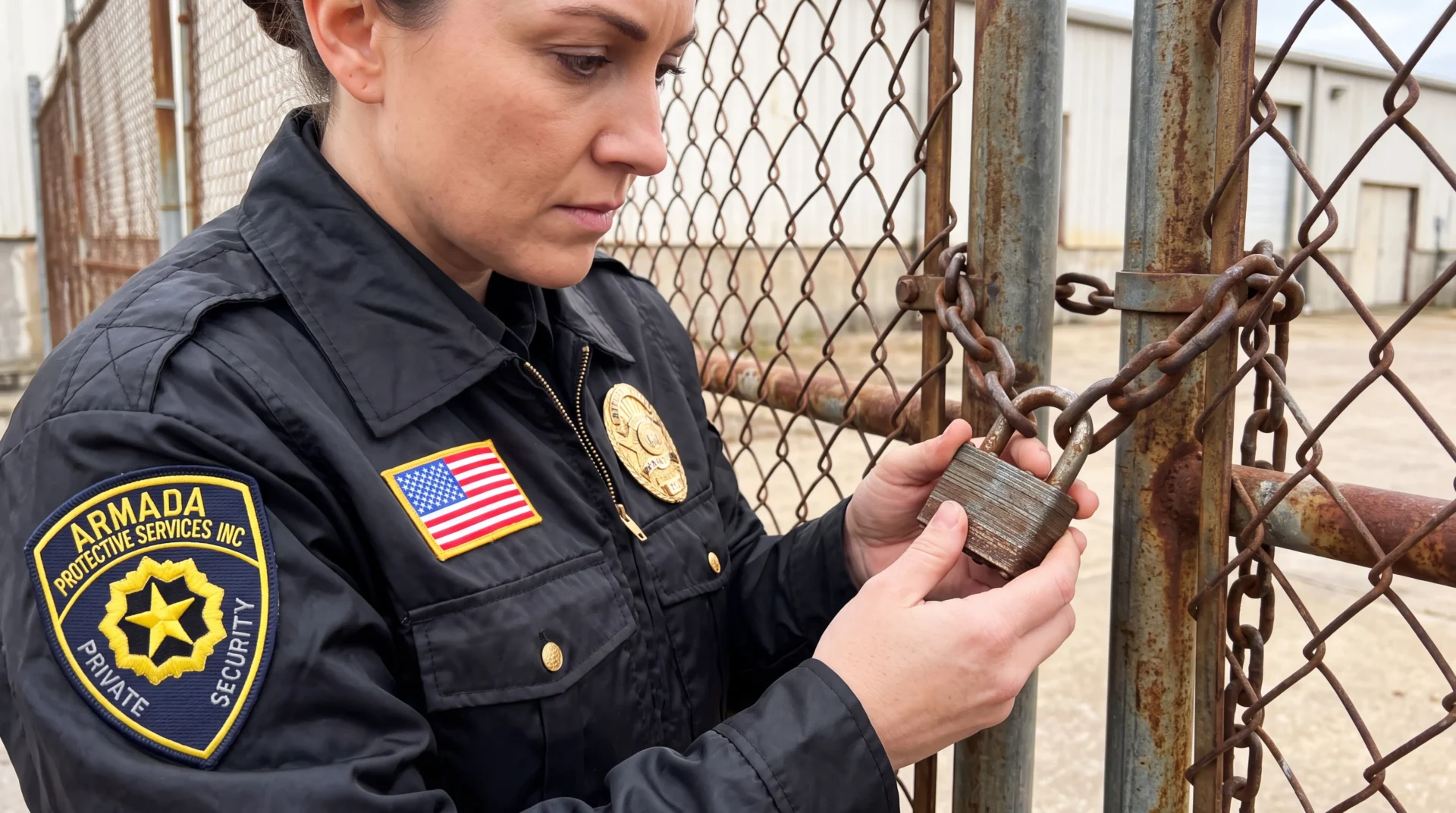
Bank branches and credit unions
On a robbery alarm the officer holds the outside and does not enter: the perimeter is kept, the police are met, and the branch official is seen away from the building, which is what the examiner expects of the branch. After hours it is the vault lobby, the machine vestibule and the tamper seals, each written up whether or not anything was wrong.
Hospitals and medical centers
Panic buttons come from emergency departments, pharmacies and psychiatric units, and they are attended first. After-hours perimeter alerts sit on medication stores, laboratories and restricted corridors, and on a life safety panel the officer keeps the evacuation route clear rather than wandering the building.
Construction sites and storage yards
A night alert at a South San Francisco yard means the fence line first, then the material store and the plant, with a count of what should still be standing in the open. On a large site an officer may put a thermal camera up on a drone to read the dark corners a torch will never reach.
Office buildings and corporate campuses
Here the first job is finding out which floor, which tenant and which door, because a zone map read in the lobby saves twenty minutes of walking. The officer checks the activation point, then the garage and the loading dock, and speaks to building management before anybody calls the police.
Our Statistics. Your Guarantee.
An alarm response is sold on a promise that is easy to make and awkward to check, so each figure below carries the thing it was measured against. Officers are licensed one at a time through BSIS and background-checked before a first shift, and Armada Protective Services has held California PPO 120526 since 1994. Armada has been the top-rated San Francisco security company since 2021 according to SFist2. Every outside document named on this page was checked November 2026.
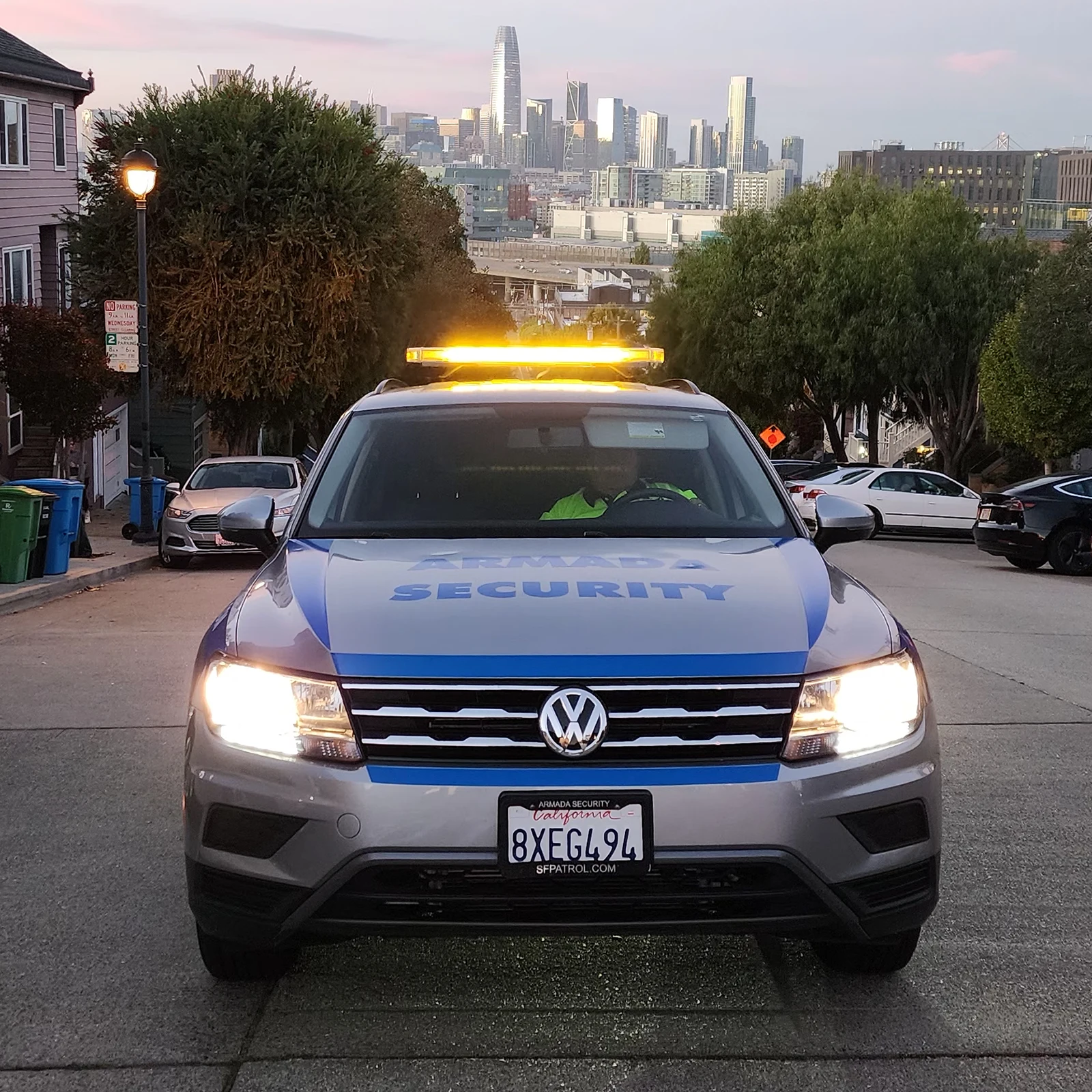
- 2x
At least twice as fast as police arrival
Under contract Armada is on site in 15 to 30 minutes. The median SFPD publishes for a low-priority call is longer, which is why SFPD itself points businesses to private security for anything short of a crime in progress.
- 80%
Fewer incidents at monitored properties
Twelve client sites kept incident records both before and after Armada started. Across them incidents fell by 80 percent. 2025 client survey.
- 24/7
Your officer is the one you call
Clients hold the direct numbers of the officers on their site, and the app carries the messages, the photos and the log. Nothing is relayed through a desk.
- 100%
Licensed and insured
Every officer individually BSIS licensed and background-checked, under California Private Patrol Operator PPO 120526, both verifiable in the state register.
Related Security Services
The other three ways Armada covers a property between closing and opening.
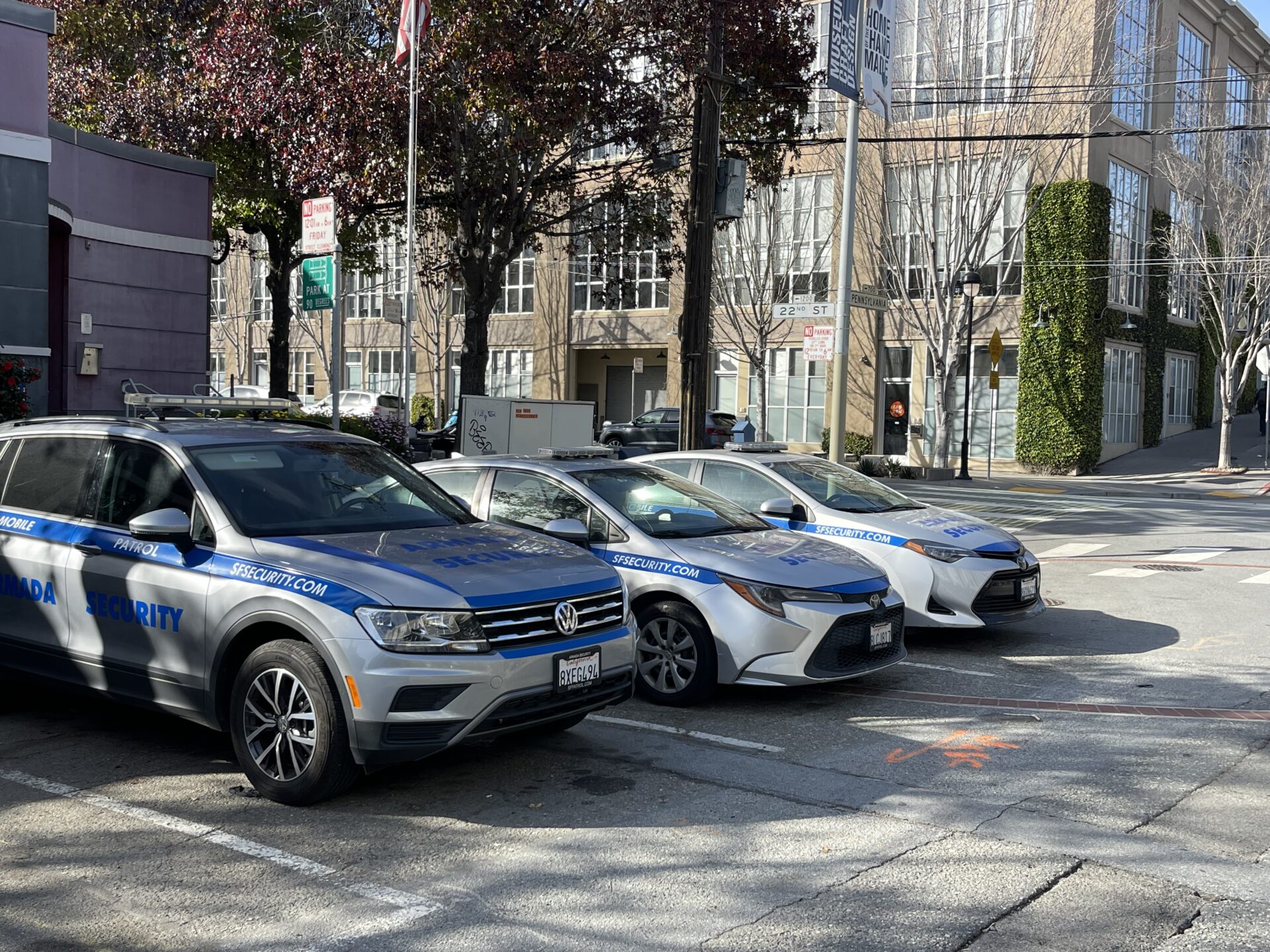
Mobile exterior monitoring and visible deterrence for large properties and after-hours operations.
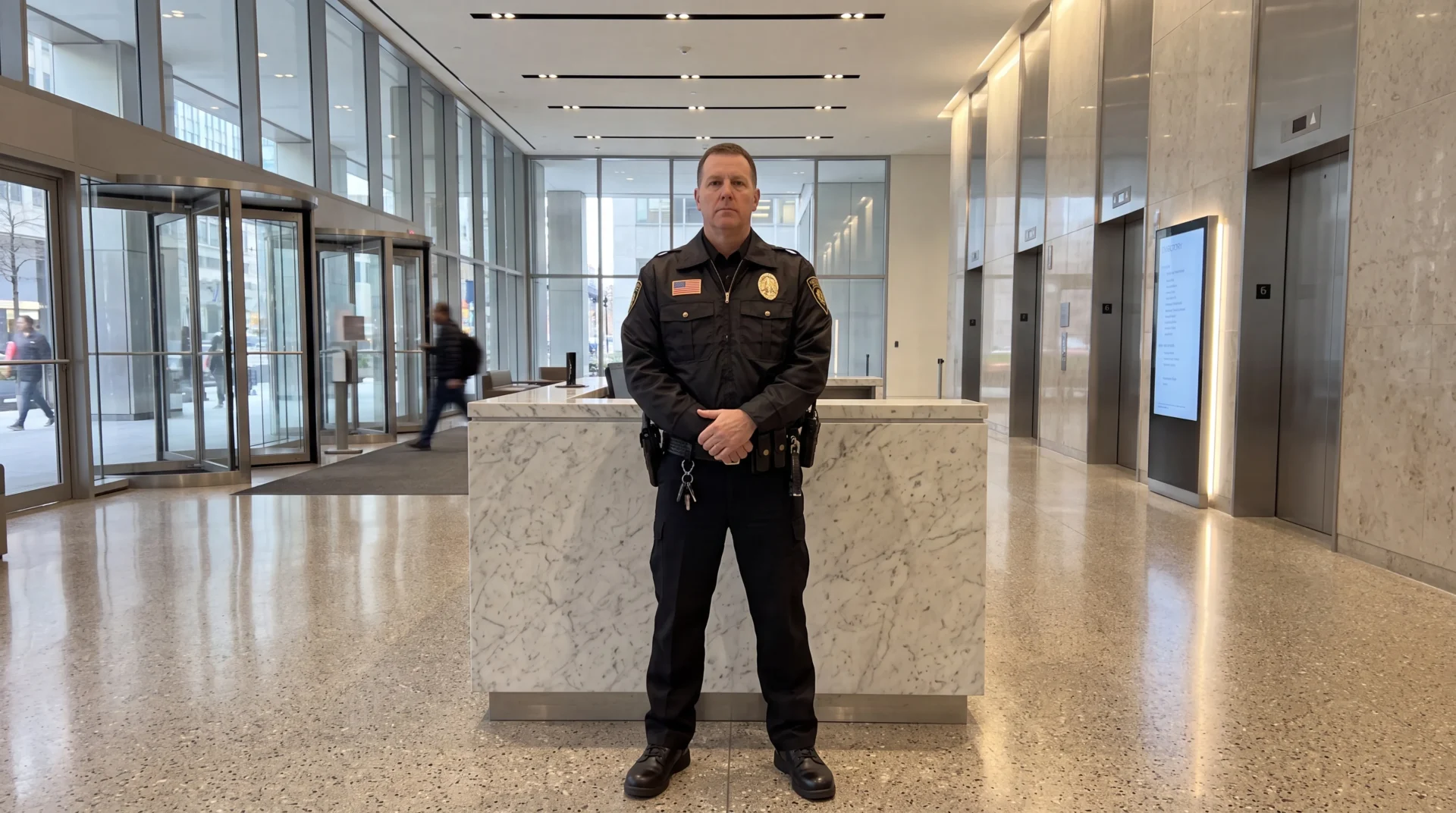
Our on-foot security patrols address specific threats faced by modern office buildings and apartment communities.
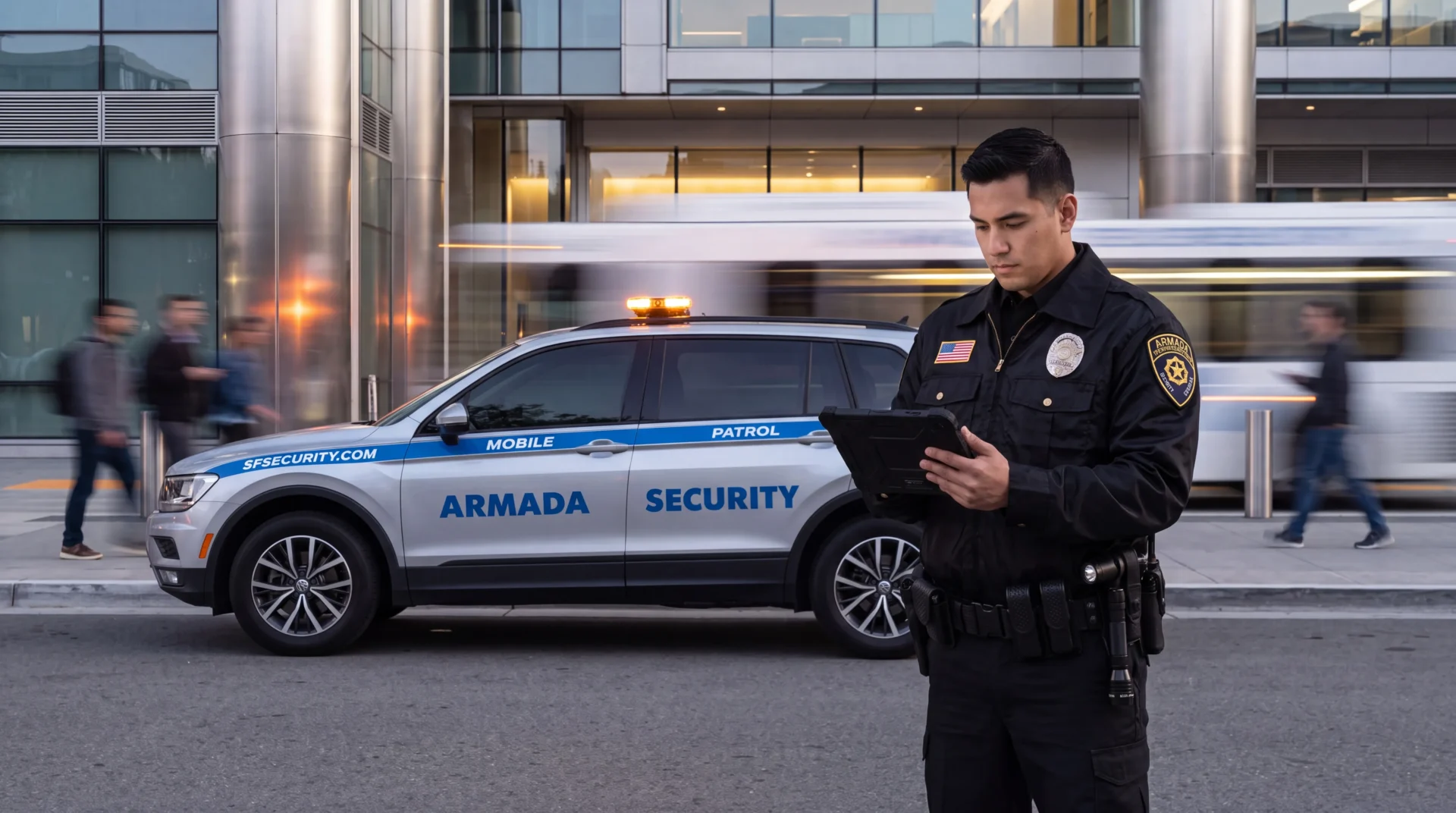
Patrol schedules that change, so no one can learn when a guard will be there.
Customer testimonials
Professional and Reliable Security Services in the Bay Area
We hired Armada on short notice for a situation we were experiencing in one of our apartment complexes. They responded quickly, set up patrols and a guard service for us very quickly. Guards were professional, prompt and communicated activity at the property to us.

Lana August
Property Manager, San Francisco
We have used Armada for about 10 years. They are an amazing company providing professional personnel consistently. Thank you Armada!

Jesse Leite
Resident Manager, San Francisco
Every Armada employee with whom I've had the pleasure of interacting has been top notch - curteous, efficient, effective, knowledgeable, responsible.

Alex Goretsky
Business Owner, San Francisco
I Manager a portfolio of communities in San Francisco -working with Armada is great. They are flexible, honest and the Guards are always on point. I would recommend this firm to other HOA/Commercial managers.

Christopher Stanley
Owner and Chief Executive Officer, San Francisco
Quoted verbatim from published client reviews, including their original wording.

Price an alarm response for your address
Send the address, the name of whoever monitors the panel, and the hours you want a vehicle on call. A free site visit comes first: an expert walks the building with you, finds out how an officer gets in at night, and leaves a written assessment that is yours whether or not you hire us. The minimum term is one month, and after it the agreement runs month-to-month.
FAQs
What buyers ask us once they have read how the attendance actually works.
How quickly does an officer reach my building after the alarm goes off?
The window Armada commits to is set out in the record block above, and it is a contract commitment rather than an average we measured. Holding it depends on the address sitting inside a route we already run, which is one of the things the site visit settles before anything is signed.
Do you call the police on every activation?
No, and that is the point of sending somebody. The officer looks at the point that fired first. Police are called when there is something to hand them: a forced door, a person inside, damage, anything in progress. Where the panel has simply misbehaved, the attendance is written up and the write-up goes to you and to whoever maintains the system.
Our alarm has gone off for nothing three nights running. What do you do about it?
Every one of them is attended, because the fourth is the one that will not be nothing. What changes is the paperwork: activations repeating on the same zone are collected into a single run showing what the officer found on each visit, and that run is what your alarm company needs to fix the cause. Armada neither sells nor fits alarm equipment, so there is no box of ours at the end of that advice.
Can your officers go inside the building, and do you hold keys?
Where you want that, yes. Keys are held under signature, booked in and out, and the officer carrying them is named on the shift. We will not take keys to a building we have not walked first, because an officer who does not know the floor plan is slower inside it than outside.
Do you work with the company that monitors our panel, or do we have to change it?
We work with whoever you already use. The monitoring station calls us the way it would call any keyholder, and your contact list decides who hears from the officer afterwards. Armada sells the attendance and the record, not the equipment or the monitoring.
Which cities do you answer alarms in?
San Francisco, and down the Peninsula through Daly City, Brisbane, Colma, South San Francisco, Millbrae, Burlingame and San Mateo. If the address sits outside a route we already run, we say so at the visit instead of promising a window we cannot hold.
Ask us directly
If you do not see the answer you need, send the question here. An officer who attends these calls will reply.
Sources
Where the figures, rules and local facts on this page come from. Links reviewed 5 Nov 2026.
- City and County of San Francisco open data 1 Law Enforcement Dispatched Calls for Service: Closed
- SFist 2 Armada Protective Services — San Francisco’s Top Security Company trade press, used only where no primary source carries the claim