Public Utilities Security in San Francisco and the Bay Area
Armada stands posts and runs marked patrol rounds at the substations, pump stations, reservoirs, yards and vaults that keep water, power and gas moving here. Officers are BSIS licensed, every gate check is logged with a time and a photograph, and your operations lead reads the night before the first crew clocks on.
This guide sets out the access and reporting rules that your California Public Utilities Commission (CPUC) obligations and Senate Bill 699 place on the site, and how we staff and patrol to them: layered defenses, mobile patrols, documented risk assessments. The obligations are yours, not ours. What they require of the site is written down in CPUC Decision D.19-01-0181 for the electric distribution grid and in AWIA section 20132 for drinking water systems.
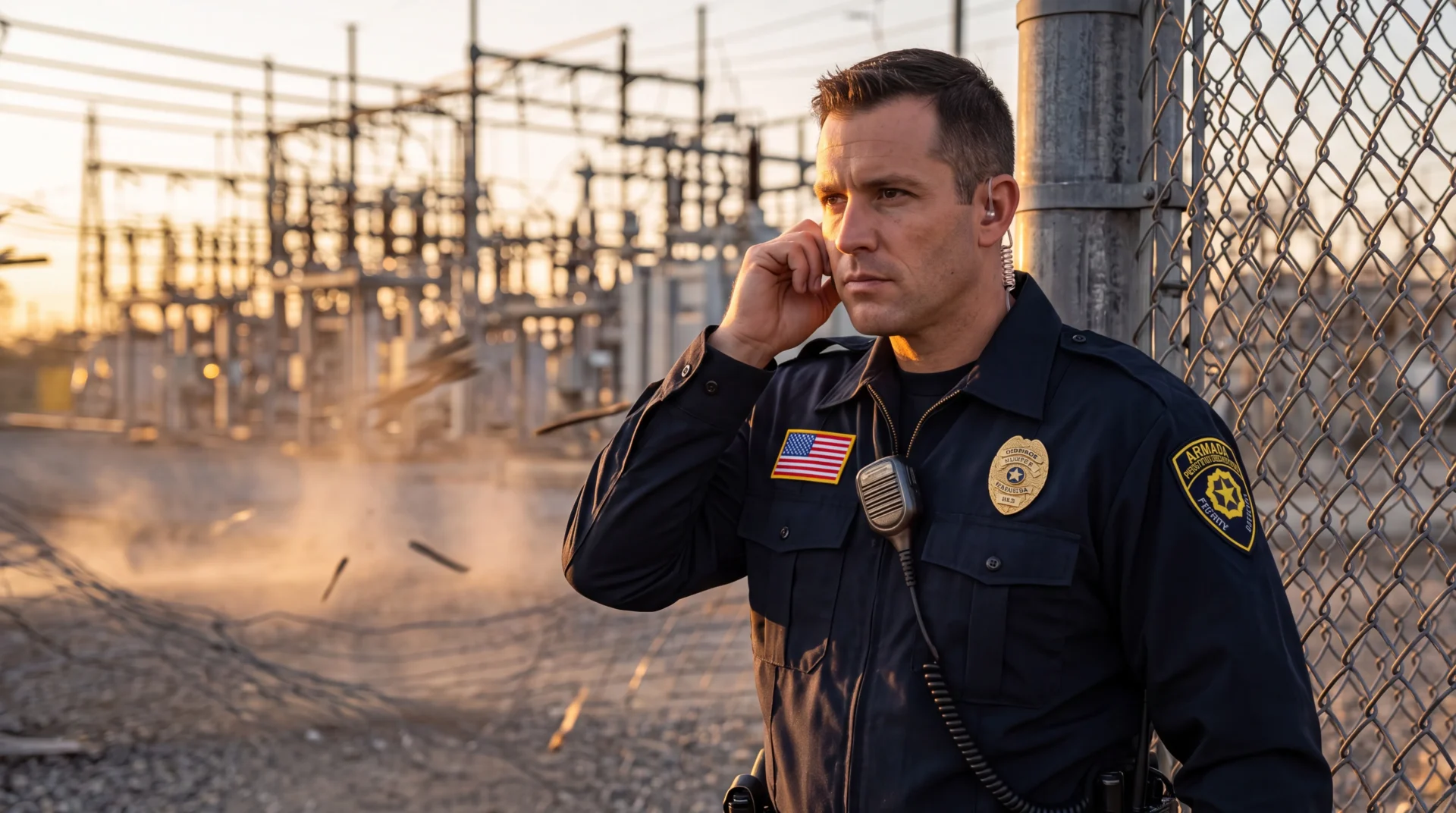
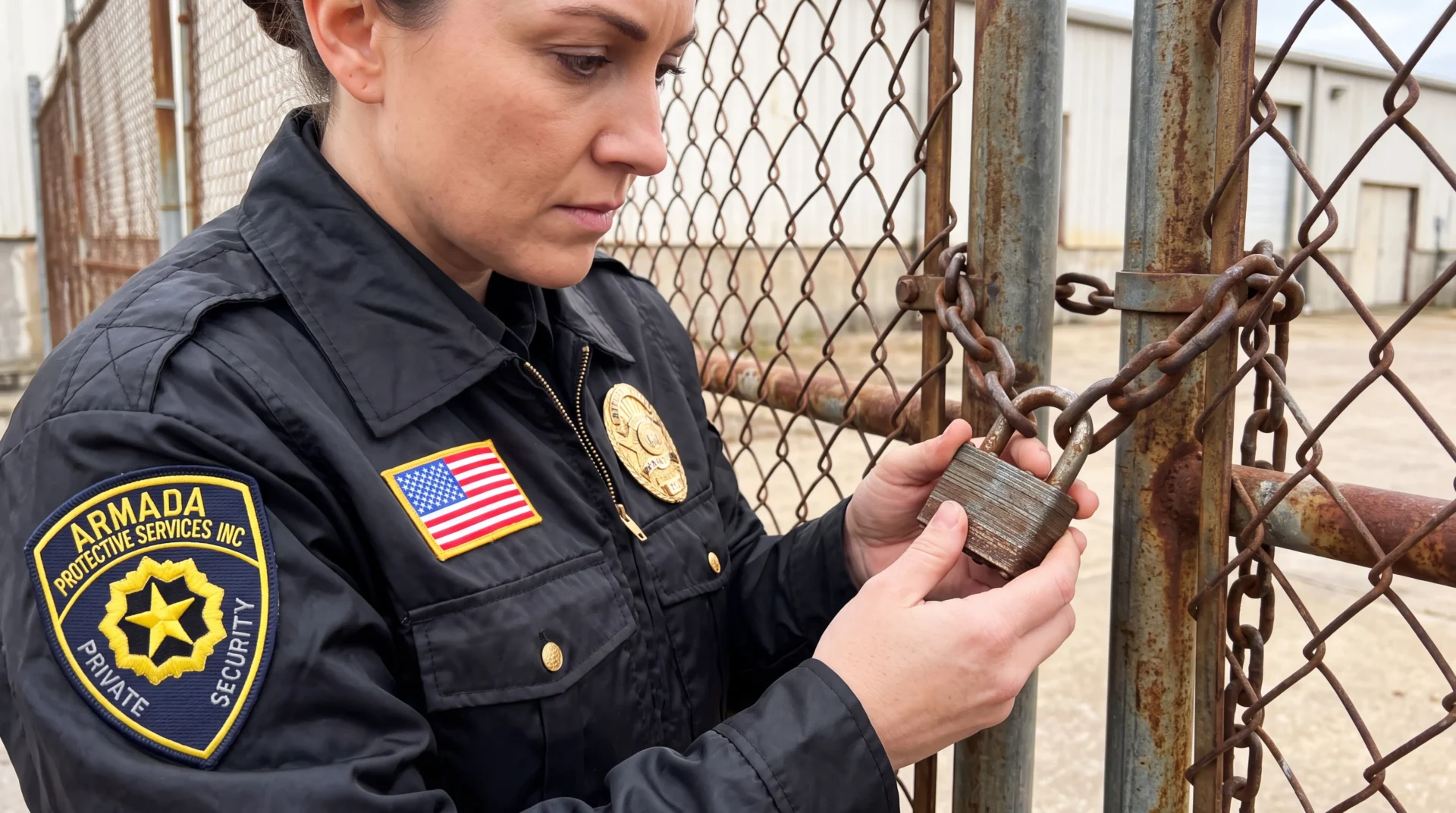
The loss is metal, and the repair outlasts it
Between June and December 2024 the telecom industry reported nearly 6,000 copper theft and infrastructure vandalism incidents nationwide, 1,805 of them in California, in a press release from the California Attorney General3.
Putting it back is the slower half. The City of Long Beach4 told the Legislature that 76 of its 427 streetlight work orders between October and December 2025 involved copper theft or vandalism, and that restoring a stripped run can take 90 days or longer.
What a thief comes for
The shopping list barely changes from one utility site to the next, because what sells by the pound is the same everywhere.
- Transformers and electrical components
- Copper wiring and piping
- Specialized tools and machinery
What the loss costs after the metal is gone
The scrap value is the smallest number in the file. The rest arrives later, from the insurer, the regulator and the customers who were in the dark.
- Higher insurance premiums after a theft or an injury on the site
- Fines where the safety measures in place were found inadequate
- Outages, lawsuits and the reputation damage that follows a disruption
Where the metal goes next
California requires a junk dealer or recycler to make sure that whoever sells wire or copper that ordinarily belongs to a public utility has the right to sell it, to report the day’s records to the police or the sheriff by the next business day, and it lets an officer place a hold of 90 days on suspect metal, in the Attorney General’s metal theft bulletin5. All of that needs a report first.
- Reel markings and serial numbers photographed before material is moved
- The police report raised the same night, because a hold needs a case number
- The officer’s written log handed over in the form an investigator can use
Where our officers reach your sites
Armada has worked out of one San Francisco office since 1994, so the car that covers a pump station covers the yard four blocks from it, and a call does not start with a drive over a bridge. Generating and transmission plant has its own page, Energy Facilities Security; a counter the public walks up to is on Government Buildings Security; the cities we cover are listed under Service Areas.
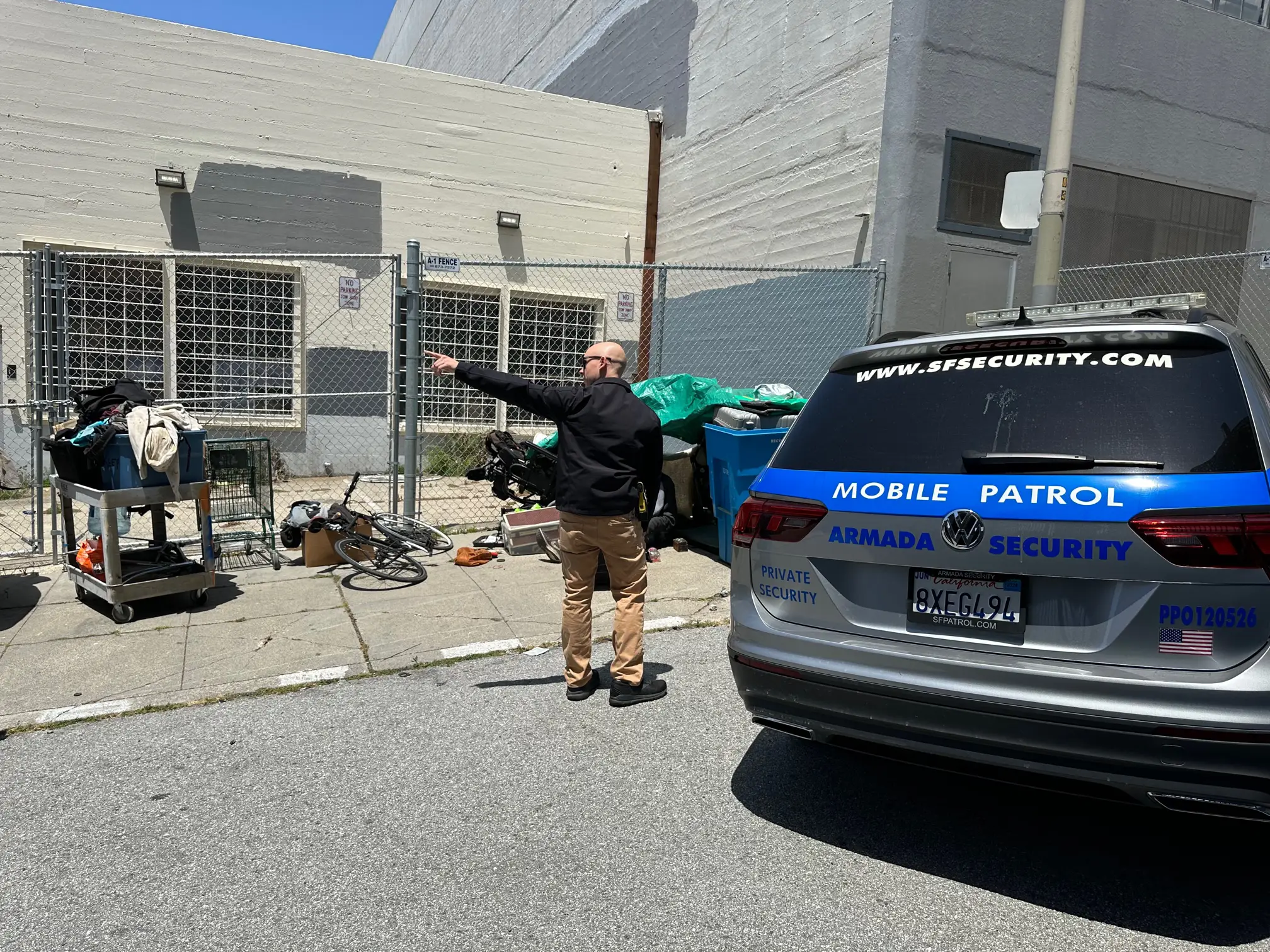
Who gets through the gate, and what the log has to show
Access here is not ours to define. Your regulator decides what the site has to be able to show after the fact, and the gate log is where that evidence is made: times, names, plates, photographs, and who on your side was told.
Entry and exit point monitoring
Everything above turns into one practical question at the gate: who came in, when, and who wrote it down.
- Manned checkpoints with ID verification
- Visitor logs kept by the officer on the gate, not by the visitor
- Vehicle inspections at entry points
Trespass, and what it costs you when it happens
An intruder on a utility site is rarely only a trespasser. Live equipment turns a shortcut across the yard into your liability.
- A trespasser hurt on the site becomes a claim against the operator
- Intruders interrupt work schedules and damage property
- Unwatched corners are where the first theft is tried
What makes a site easy to walk into
Three conditions account for most of the unauthorized entries we are called to, and all three are visible on a walk of the boundary in daylight.
- Perimeter fencing or barriers missing along part of the boundary
- Lighting that goes dark outside operating hours
- No signage warning against trespassing
A standing post, a patrol round, or both
Utility assets are scattered and they are not alike: a reservoir, a yard full of spools and a vault the size of a cupboard do not take the same cover. What follows is how we put officers on them in the Bay Area.
The choice is normally made site by site on the first walk, and it is written into the cover plan with the hours, the round frequency and the named people an officer calls.
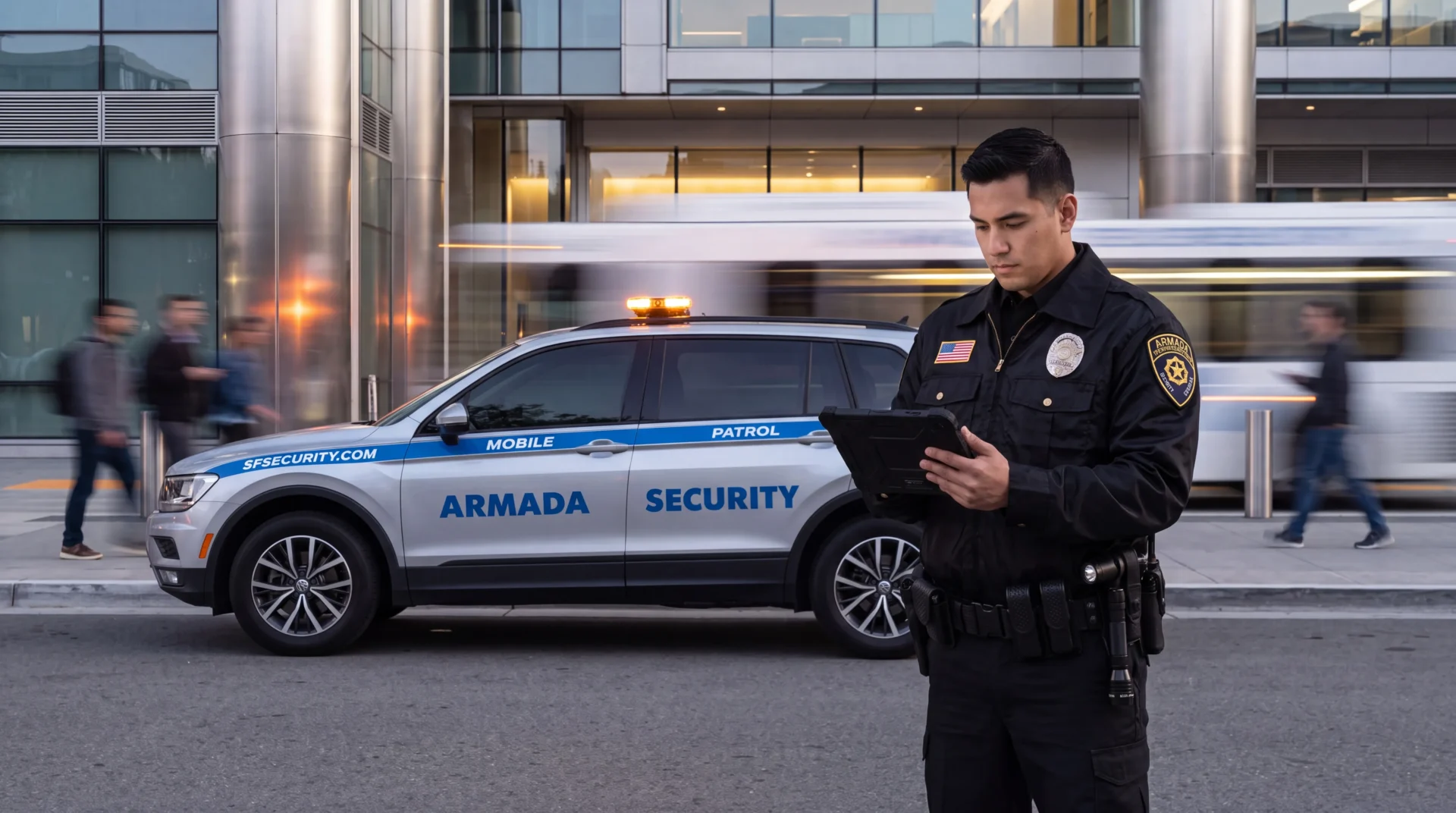
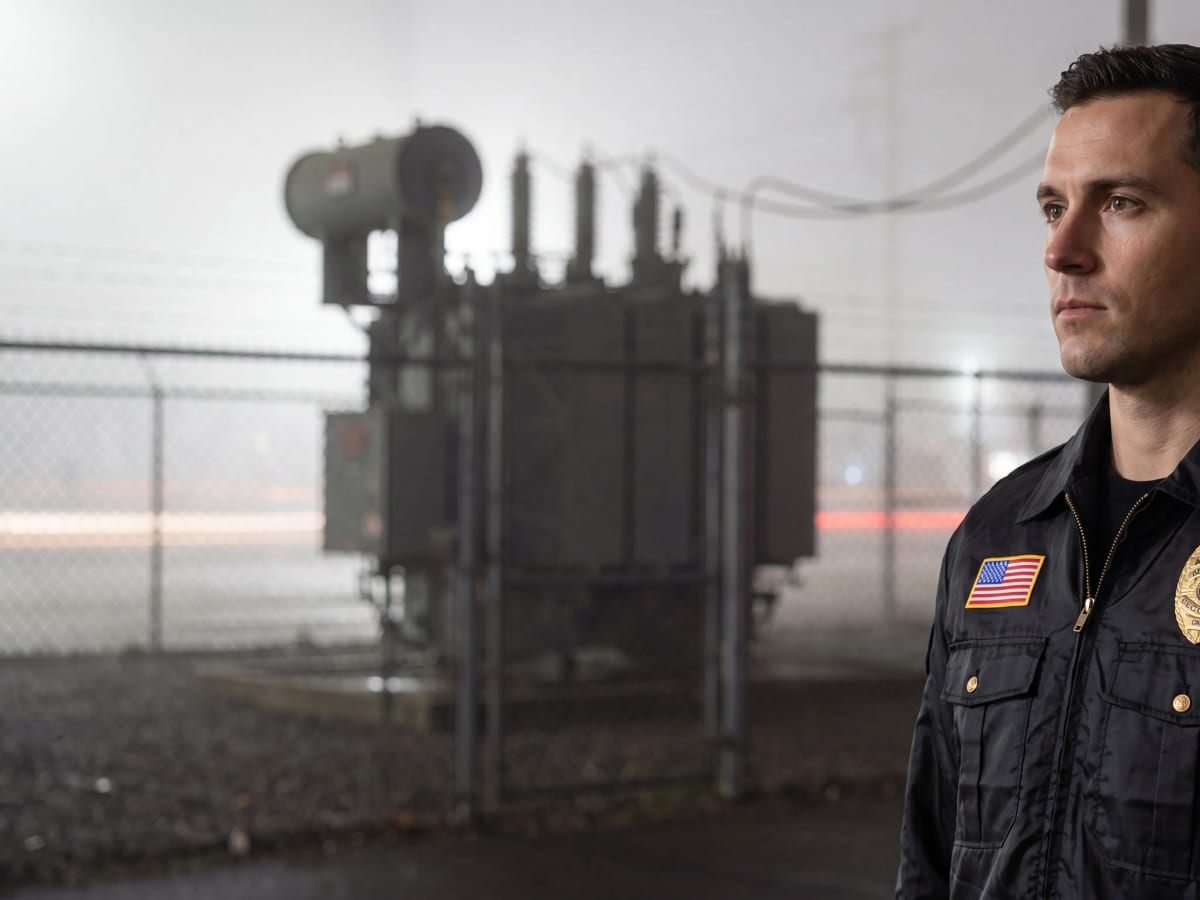
What a posted officer does on a utility site
Round-the-clock cover is what the high-value and high-risk sites ask for: the presence itself deters, and somebody is already on the ground when something happens.
- Patrolling the perimeter and the interior areas
- Monitoring access points
- Documenting incidents in detailed reports
- Responding immediately to emergencies
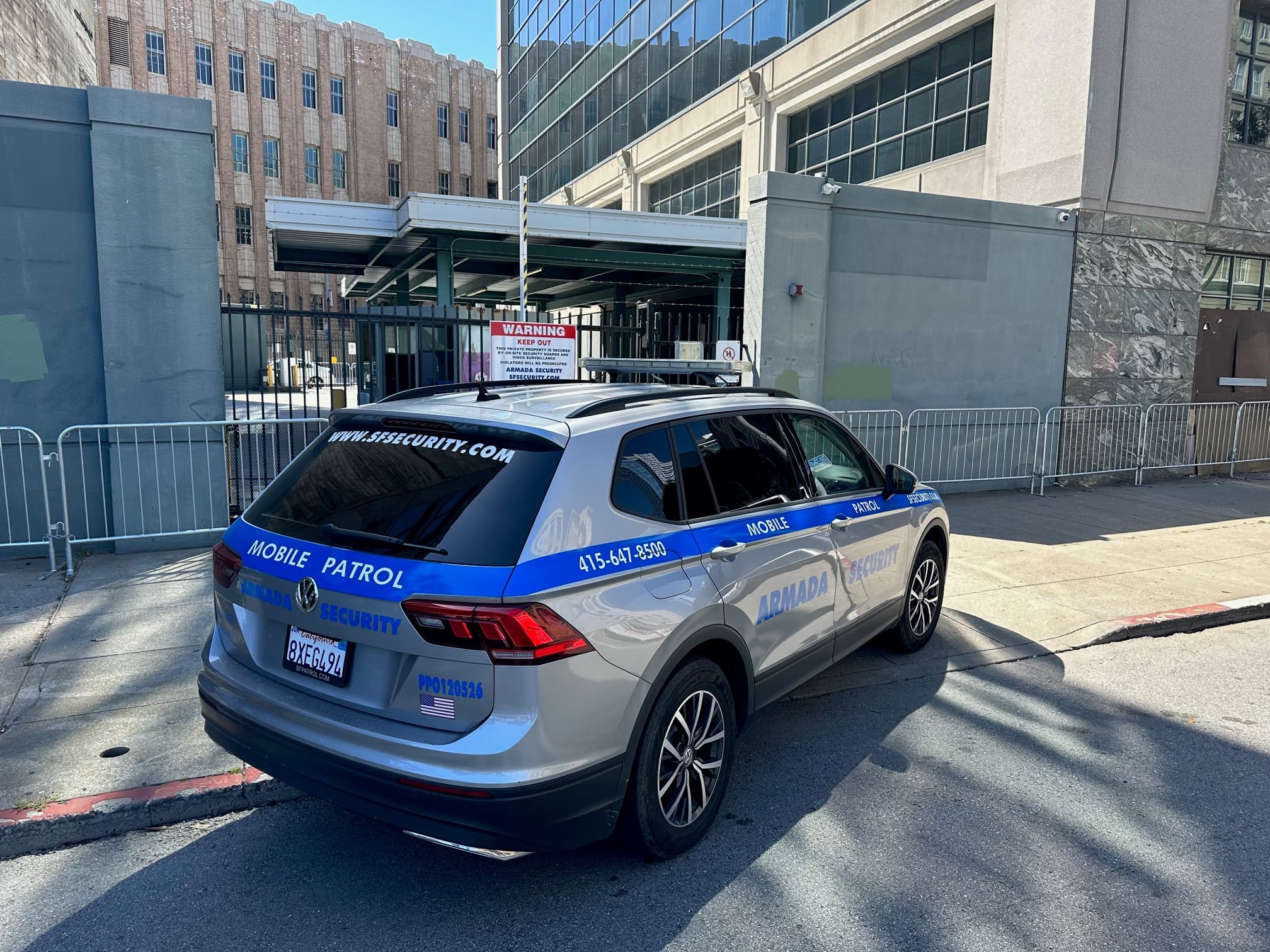
Mobile patrol across sites that are far apart
One car working a list of addresses often buys more cover than a guard standing at each of them, which is what makes it the usual answer for a dispersed network.
- Patrol routes randomized, so the gap between two visits cannot be timed
- Rapid response from the car already working the district
- Cost-effective coverage instead of a stationary guard at every location
Why a staffed post rather than a sign
Security that is staffed and documented the way your regulator expects helps you meet local and federal requirements and reduces liability.
- A visible officer discourages theft, vandalism and sabotage
- Equipment that is not damaged or taken keeps the service running
- Officers enforce the site rules and respond at once, so downtime stays short
Our Statistics. Your Guarantee.
An operations lead buying cover for a utility site can check every claim here before signing anything. Every officer is individually BSIS licensed and background checked, and the officers covering your address are reachable directly at any hour. Armada has been the top-rated San Francisco security company since 2021 according to SFist6.
- 2x
At least twice as fast as police arrival
Under contract Armada is on site in 15 to 30 minutes. The median the city publishes for a low-priority call is longer, which is why the police themselves point businesses to private security for anything short of a crime in progress.
- 80%
Fewer incidents at monitored properties
Weighted average across client sites that kept incident records both before Armada covered them and after. It compares those clients with themselves, not with any city average.
- 24/7
The number you call at night reaches the site
There is no call center in another state. Clients hold the direct numbers of the officers who cover their own address, and the guard app carries the messages, the photographs and the log.
- 100%
Licensed and insured
Every officer individually BSIS licensed and background checked, under a California private patrol operator license anyone can look up: License record PPO 1205267 in the California Department of Consumer Affairs register. Checked November 2026.
Related Security Services
The three Armada services a utility operator asks for most often once the first walk of the site is done.
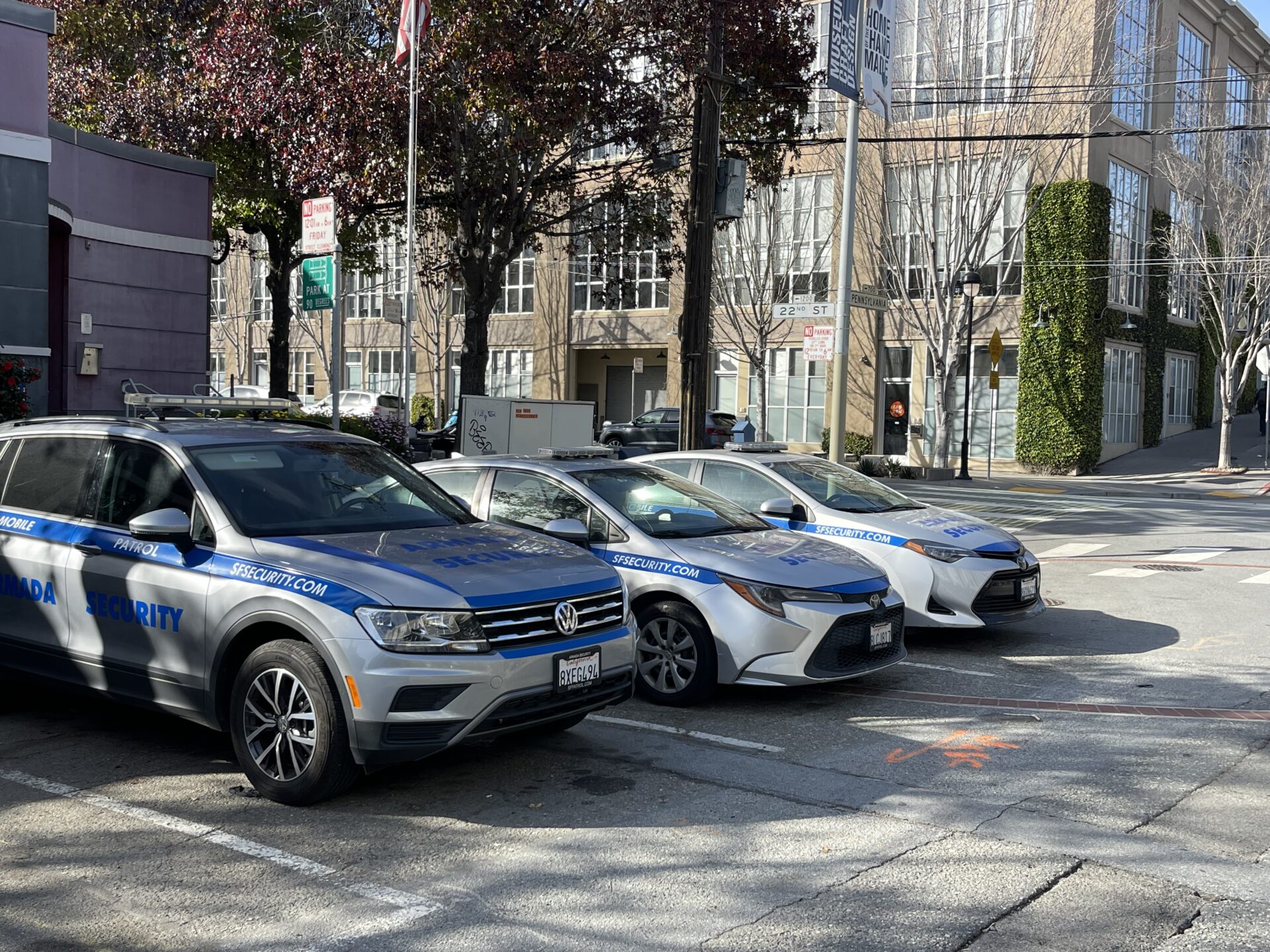
A network of small sites is covered by a car working a list of addresses at hours nobody on the outside can time.
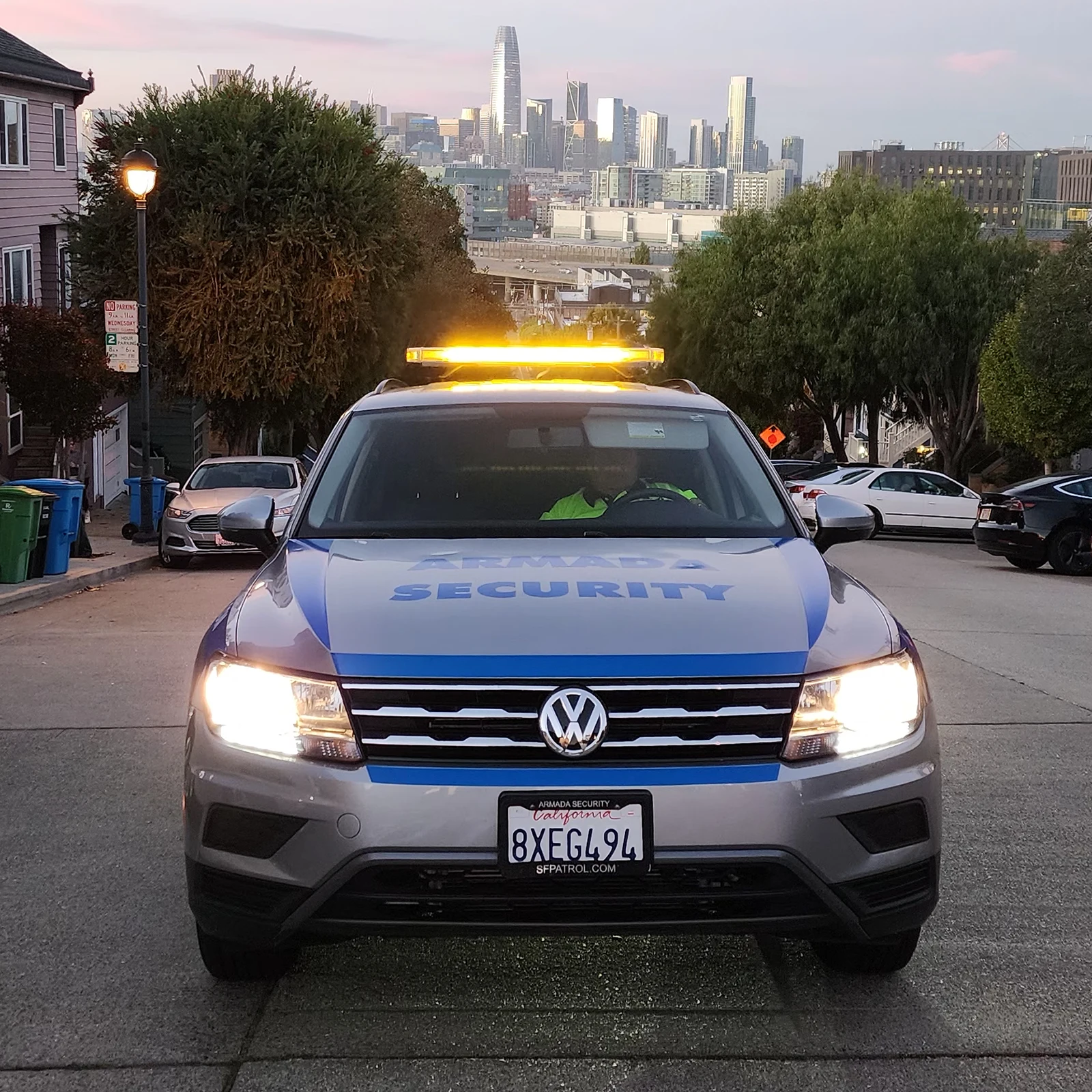
A fence alarm at two in the morning needs somebody to drive to it, look, and write down what was there.
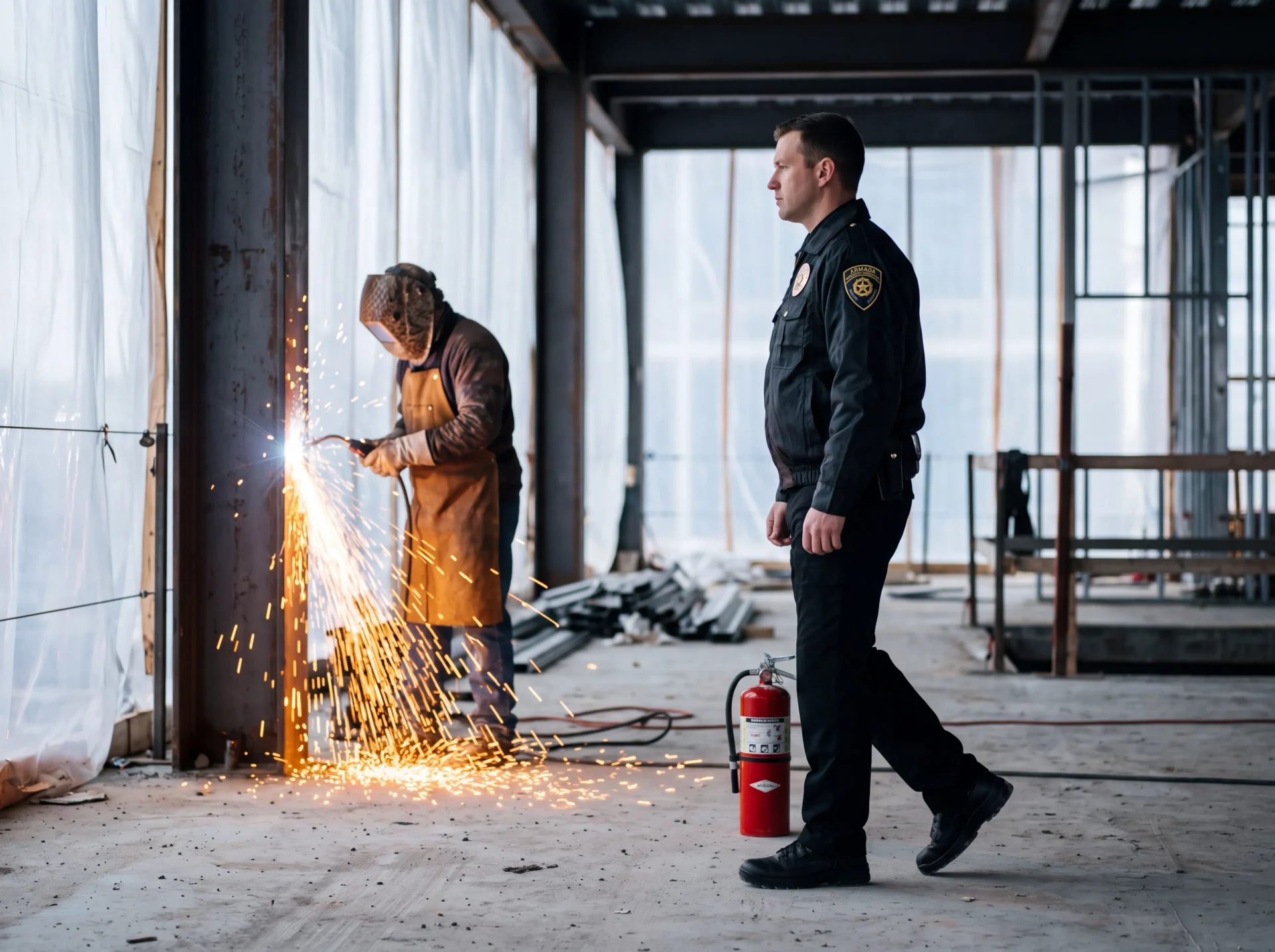
Once an alarm panel, a sprinkler loop or a standpipe is out of service, the fire code puts a person on the floor until it is signed back on.
Customer testimonials
Professional and Reliable Security Services in the Bay Area
We hired Armada on short notice for a situation we were experiencing in one of our apartment complexes. They responded quickly, set up patrols and a guard service for us very quickly. Guards were professional, prompt and communicated activity at the property to us.

Lana August
Property Manager, San Francisco
We have used Armada for about 10 years. They are an amazing company providing professional personnel consistently. Thank you Armada!

Jesse Leite
Resident Manager, San Francisco
Every Armada employee with whom I've had the pleasure of interacting has been top notch - curteous, efficient, effective, knowledgeable, responsible.

Alex Goretsky
Business Owner, San Francisco
I Manager a portfolio of communities in San Francisco -working with Armada is great. They are flexible, honest and the Guards are always on point. I would recommend this firm to other HOA/Commercial managers.

Christopher Stanley
Owner and Chief Executive Officer, San Francisco
Quoted verbatim from published client reviews, including their original wording.

Walk the boundary with us
Pick a time and set aside 30 to 60 minutes to walk the site together: the gates, the fence corners, the lighting, the spools and the cable runs, and the hours when nobody is there. You are told what is open to a stranger tonight and what your own reporting duties will ask you to show afterwards. The visit is free, the written version is yours either way, and cover starts at one month, month-to-month after that.
Public Utilities Security FAQs
What utility operators in San Francisco and the Bay Area ask us before the first shift.
Why is physical security important for public utilities?
Because the asset stands outdoors, the people who depend on it are not on the site, and the loss is never only the metal. A stripped run is an outage, a liability and a reporting exercise at once. A visible officer removes the easy attempt, and the written round is what you hand to an insurer, an investigator or a regulator afterwards.
How quickly can you put officers on a utility site?
We do not put an hour on standing up a new site. The walk-through comes first and it is free: it decides how the post is covered, which officers are briefed on what, and the date they start.
How do you handle trespassing incidents at utility sites?
The officer gives a warning first, by voice-down system or face to face, and writes the incident up in a report that can stand up later for legal or regulatory purposes. Law enforcement is called in where the situation needs it, and the same night, because a police case number is what every later step hangs on.
Who sets physical security rules for electric distribution substations in California?
The California Public Utilities Commission, not the federal grid standards. Local distribution substations sit outside those standards and under state utility regulators, in the Congressional Research Service8 note on substation attacks. California adopted its own rules in CPUC Decision D.19-01-0181, and utilities file annual reports each 31 March.
What does a water system have to keep on file about security?
Under AWIA section 20132 a community water system serving more than 3,300 people certifies a risk and resilience assessment covering malevolent acts and natural hazards, prepares an emergency response plan within six months of certifying, and keeps copies of both for five years. The gate logs and patrol reports we produce are written so they can go straight into that file.
What are the most common threats to public utilities?
Theft of material that sells by weight, copper above all; vandalism that damages equipment the service depends on; unauthorized access that interrupts work and creates liability; and, on the larger sites, deliberate attack on the asset itself. The first three are what our officers meet in a normal month.
Ask us directly
Send the address of the site. An expert answers with what we would put on it and what it would cost, before anyone visits.
Sources
Where the figures, rules and local facts on this page come from. Links reviewed 13 Nov 2026.
- California Public Utilities Commission 1 Physical Security of Electric Infrastructure, Decision D.19-01-018 the rules the CPUC adopted on 22 January 2019 for the electric distribution grid under Senate Bill 699; assessments, security plans and annual reports due 31 March
- U.S. Environmental Protection Agency 2 (EPA) the mandatory risk and resilience assessments and emergency response plans for drinking water systems; replaced /watersecurity, which returned 404
- California Department of Justice, Office of the Attorney General 3 Copper wire theft leaves Californians in the dark press release 5 June 2025: nearly 6,000 copper theft and infrastructure vandalism incidents reported by the telecom industry nationwide between June and December 2024, 1,805 of them in California, 5 Information Bulletin 2025-DLE-12 on metal theft bulletin of 5 June 2025: Penal Code 487j, 496a dealer due diligence, the 90-day police hold under Business and Professions Code 21609
- City of Long Beach 4 City of Long Beach letter supporting AB 1941 letter of 22 April 2026: 76 of 427 streetlight work orders between 1 October and 31 December 2025 involved copper theft or vandalism, restoration can take 90 days or longer
- SFist 6 Armada Protective Services — San Francisco’s Top Security Company trade press, used only where no primary source carries the claim
- California Department of Consumer Affairs license search 7 License record PPO 120526 Armada Protective Services, private patrol operator
- Congressional Research Service 8 CRS Insight IN12074 on attacks against electric substations updated 7 February 2023: local distribution substations sit outside NERC standards and under state utility regulators