Reliable Security for Car Dealerships in San Francisco
Licensed officers on the lot and marked patrol rounds for dealerships across San Francisco and the Bay Area, with the keys, the service bays and the display rows each written into the post order.
Inventory worth six figures a row stands outdoors, in the open, with nobody near it for fourteen hours a day. San Francisco police recorded 3,036 vehicles stolen in the city in the twelve months to 1 October 2026, counting completed thefts only and leaving out attempts and vehicles stolen elsewhere and recovered here, in the SFPD Police Department Incident Reports1 dataset. This page sets out what a dealership here is exposed to after closing, what an officer standing on the lot actually does about it, and what the shift leaves behind in writing.
The free walk of the lot comes first: the shift plan and the price both come out of what the expert sees on it.
If it is urgent, call (415) 647-8500

Why Car Dealerships Need On-Site Security
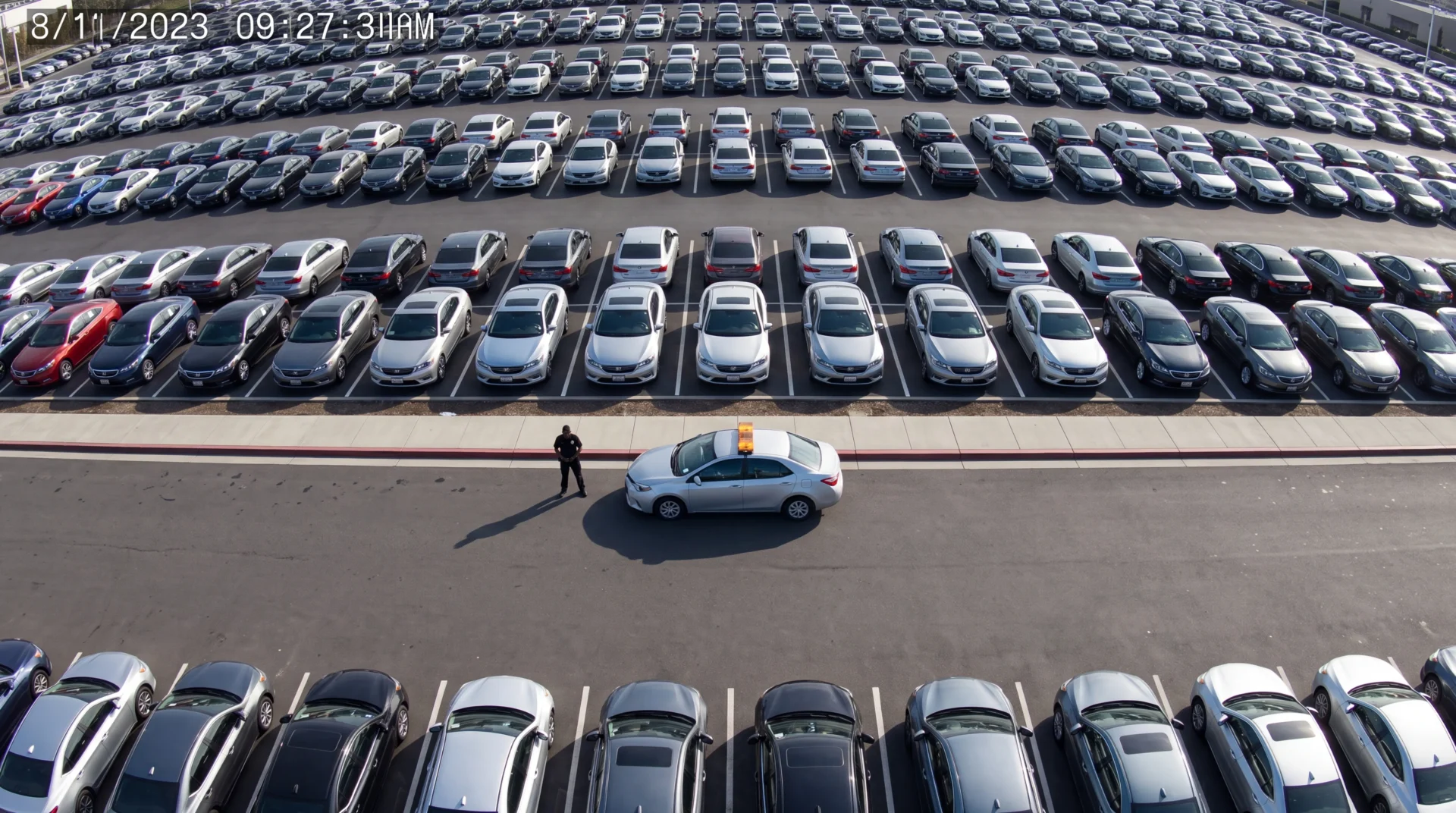
A dealership lot is open by design: wide frontage, no fence worth the name, and stock that can be driven away. Large-scale theft, vandalism and fraud are the three that keep returning, and all three turn on who can reach the vehicles, the keys and the service area once the doors are shut.
Cameras, alarms and access control are worth having, and none of them can walk over and ask a question. A dealership's real weakness is not the crime itself, it is the gap between the alert and somebody arriving, which is why the answer is an officer on the property, with a mobile patrol covering the larger lots and the secondary parking. The three situations below are the ones we are called about, written out as they actually play.
Trespassers Triggering Alarms
After hours, somebody cuts across the open lot on their way home. The motion sensor fires and the alert goes out.
What happens with nobody on the lot:
- Somebody at the dealership, or an operator in another building, has to decide from a camera whether to call the police.
- For a minor trespass the police may take a long time to arrive, or not arrive at all, as ABC7 News2 has reported for small crimes in the city.
- A police call that turns out to be nothing can bring a false alarm fine, reported by CBS News3.
What happens with an officer on the lot:
- The officer walks over, reads the situation, and sends the person off the property.
- If there is nothing in it, the alarm never becomes a police call.
- If there is something in it, the officer takes the details and decides what the night needs.
- A mobile patrol checks the far end of the lot for anyone else.
Theft or Vandalism Attempt
A group shows up on camera trying door handles and looking around. It may be an attempt, it may be nothing, and the footage cannot tell you which.
What happens with nobody on the lot:
- Staff or a remote operator have to act on a camera picture alone.
- An alarm may scare off a chancer and will not stop somebody who came to open a car.
- Police response to vehicle tampering is hard to predict.
What happens with an officer on the lot:
- The officer approaches and establishes what they are there for. Passing through, and they move on. Working on a car, and the officer acts and collects what the police will need.
- A mobile patrol sweeps the perimeter for lookouts or a second group.
- The damage is stopped rather than recorded for review in the morning.
People Sheltering on the Property
Open parking, deep overhangs and a quiet corner make a dealership an obvious place to sleep, and by morning that has become somebody's problem.
What happens with nobody on the lot:
- Someone sleeping between the rows can damage stock without meaning to, and becomes your liability if they are hurt.
- Some will not leave when a salesperson asks at eight in the morning, and a few turn aggressive.
- A police call for a non-emergency can take hours, and repeated non-urgent calls are chargeable in some cities.
What happens with an officer on the lot:
- The officer deals with it early and calmly, and the person leaves without a confrontation.
- Repeat visits are written down, so a pattern becomes visible and can be designed out.
- A mobile patrol covers the remote parking where nobody would be seen.
Threats to Dealership Security
Beside the three situations above, four things turn up on dealership incident reports in the Bay Area that do not turn up on other kinds of site.
What is particular to this trade
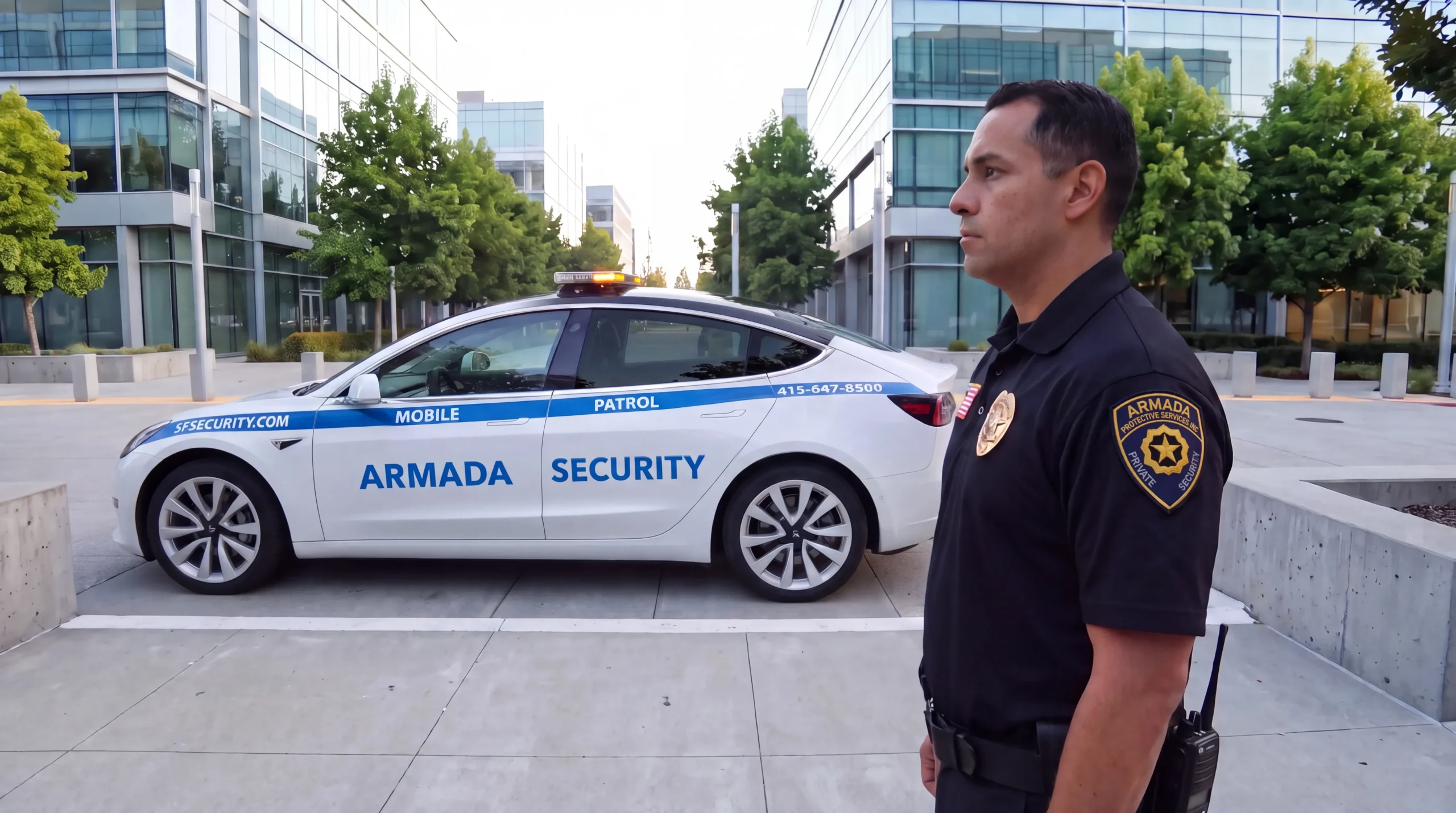
Four of them, and none is answered by a camera on its own:
- Fraudulent financing, where a false identity is used to take out a vehicle loan.
- Cyber-enabled vehicle theft, where a wireless key signal is relayed to get past the car's own security.
- Catalytic converter theft, which hits the service center and the cars parked waiting for it.
- After-hours trespassing, which is a risk to employees and customers before it is a risk to stock.
What good cover does for the business
The return shows up in three places that a general manager can see:
- An officer on the lot and a marked car on the round deter the attempt before it is made.
- Liability drops along with the incidents, and inventory and customer trust are protected together.
- A site that feels safe shows up in customer satisfaction and in how the staff feel about closing up.
Protecting high-value inventory
Open layouts and expensive stock are what make a dealership different from any other business on the same street:
- The inventory is high in value and standing in the open, which is a combination almost no other trade has.
- Organized groups target dealerships for key fob theft and for unauthorized test drives that end in vehicle fraud.
Where our officers reach your lots
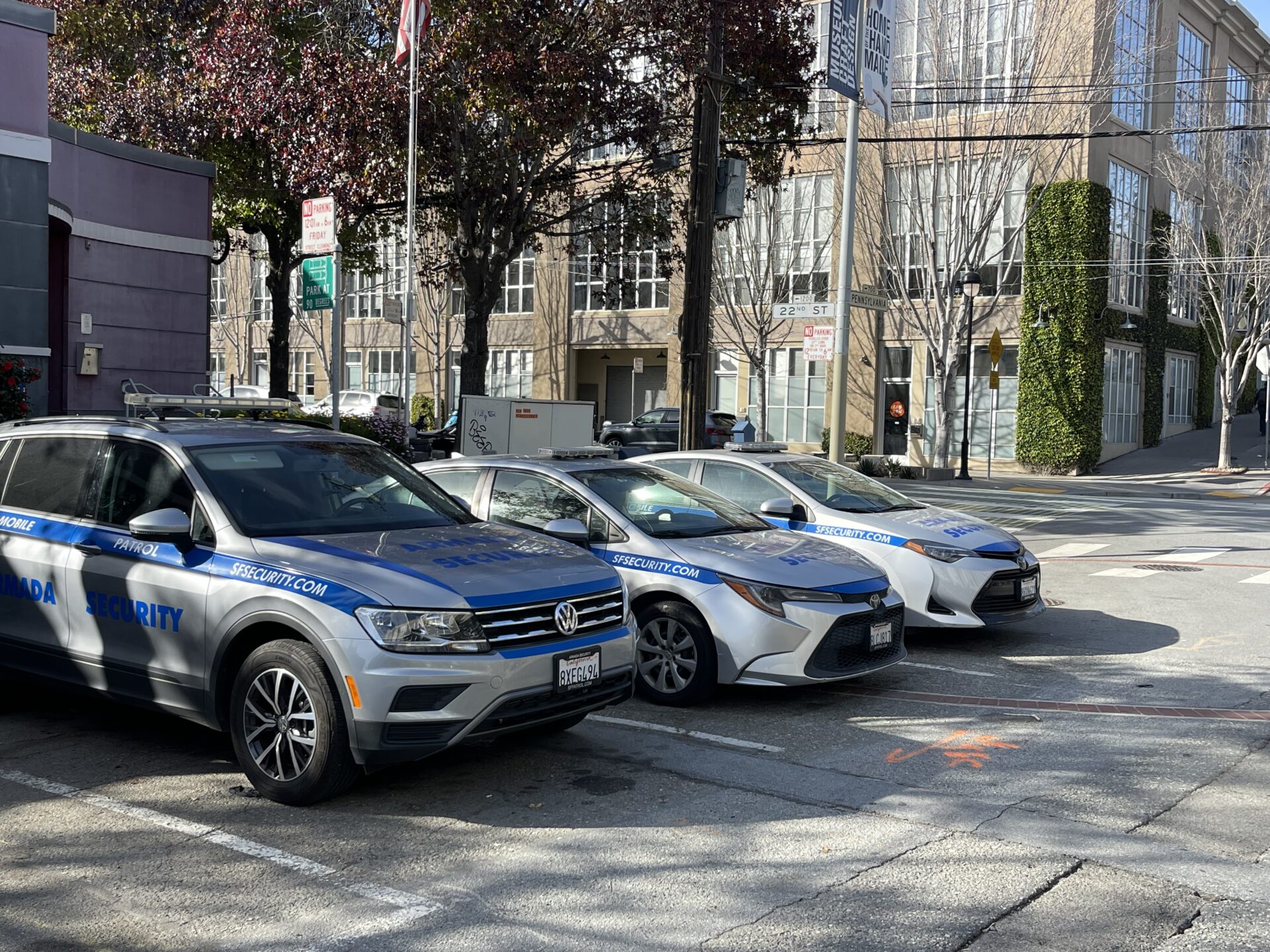
Armada has worked out of one San Francisco office since 1994, so the car that covers your showroom covers the overflow lot on the next block on the same round, and the officer who answers at two in the morning is already in the district. Tell us the address and we will say what we can hold there.
We serve: San Francisco, San Mateo, Brisbane, San Jose (see all locations).
The Smart Approach to Dealership Security
Security on a dealership lot is a staffing question before it is a technology question. Cameras, alarms and access control work best with an officer beside them who can read a situation, step in and bring it down before it becomes an incident.
A posted officer is the visible part of it: the deterrent against theft and vandalism, the person customers see when they arrive, and the one who writes the night up. Mobile patrol covers the rest of the property. Every officer holds an individual BSIS guard card and is background checked before a first shift.
What cameras and alarms leave undone
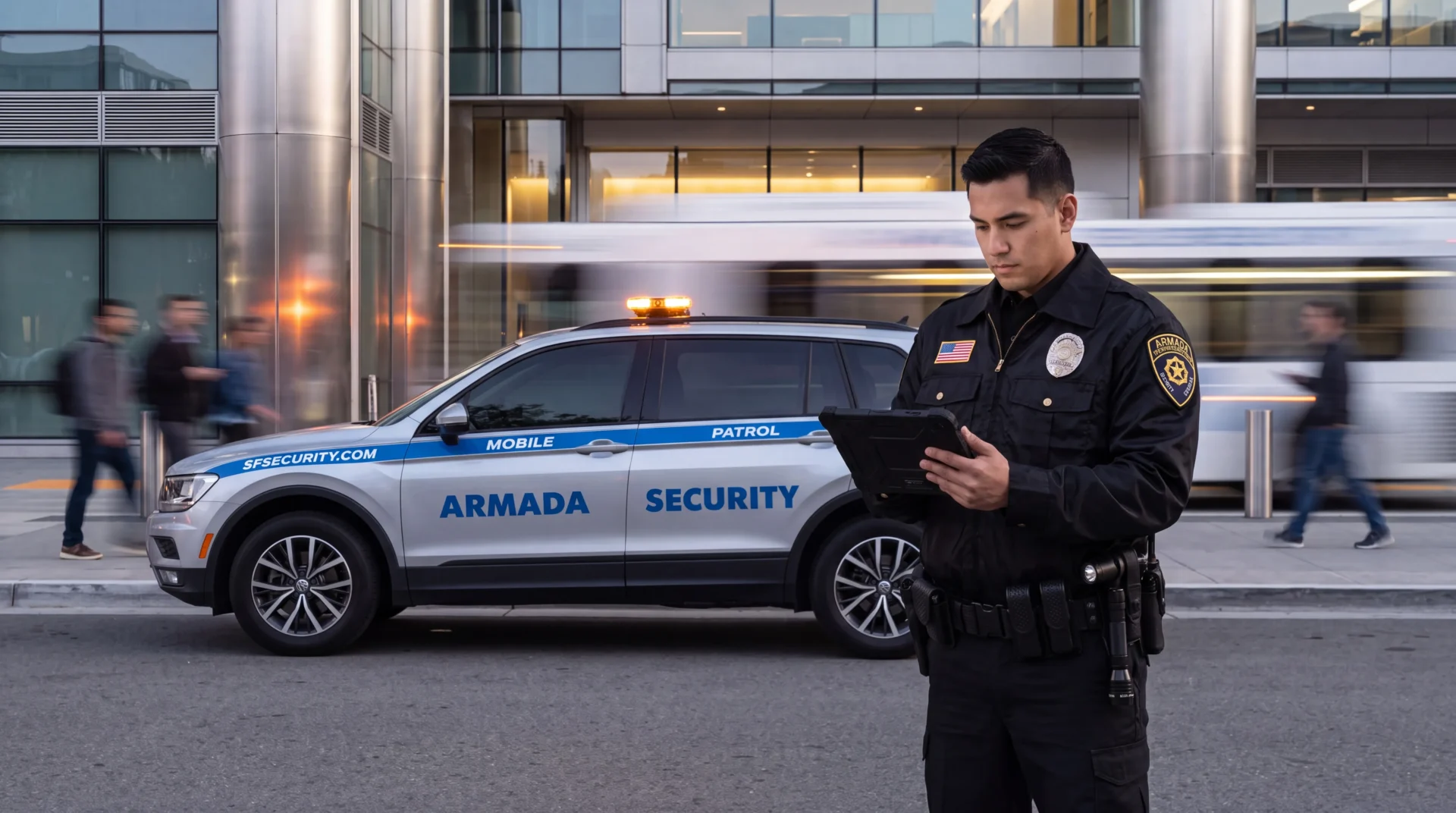
Electronics report; they do not intervene. Without somebody on the property three costs follow:
- False alarm fines: repeated police turnouts to nothing are chargeable, as CBS News3 reported for San Francisco businesses.
- Slow police response: for non-violent incidents the wait can be hours, and sometimes nobody comes, reported by ABC7 News2.
- Prevention missed: a camera records the theft and an alarm announces it, and neither stops it.
What Armada puts on the property
Four things, and the first one is the whole point of the other three:
- Intervention on the spot: a trained officer is there to read the situation and handle it.
- Patrol for the big lots: the marked car covers the far corners that a static post never sees.
- Fewer false alarm fines: the officer verifies first, so the unnecessary police call is not made.
- Deterrence: a visible presence prevents instead of reacting.
Guards trained for this trade
An officer posted to a dealership is briefed on the trade, not moved across from another kind of site on the morning of the shift:
- Trade knowledge: what a dealership holds, where it holds it, and which parts of the day are exposed.
- Conflict resolution: bringing a confrontation down while customers and staff are watching.
- Emergency protocols: fire suppression and first aid, so the first minutes are not spent waiting.
What an officer on the lot is worth
The same three answers come back from general managers when we ask what changed:
- Visible deterrent: the presence discourages the attempt, especially in the hours the business is closed.
- Confidence: customers and staff behave differently on a site that is obviously watched.
- Response on the spot: a breach, a medical emergency or an accident is dealt with as it happens.
Key features of the on-site service
Three things are written into the post order for a dealership and are checked on the first visit:
- Armed or unarmed officers, trained in conflict resolution and emergency response, with the choice made against your own risk profile.
- Real-time incident logging: the officer writes the incident on a tablet as it happens, so the police get it while it still matters.
- Secure key storage: lockboxes and controlled access, because the key-swap scam is the cheapest way to steal a car off a lot.
What you get in writing
Three documents, produced whether or not anything went wrong, which is what makes them worth anything to an insurer:
- A post order written for your address before the first shift.
- A daily activity report from every shift, with the rounds and their times.
- An incident report on the night, in the form an investigator can use.
Our Statistics. Your Guarantee.
A dealer principal can check every claim below before signing anything, and each figure says what it is measured against. Armada has been the top-rated San Francisco security company since 2021 according to SFist4.

- 2x
At least twice as fast as police arrival
Under contract Armada is on site in 15 to 30 minutes. The median the city publishes for a low-priority call is longer, which is why the police themselves point businesses to private security for anything short of a crime in progress.
- 80%
Fewer incidents at monitored properties
Weighted average across client sites that kept incident records both before Armada covered them and after. It compares those clients with themselves, not with any city average.
- 24/7
The number you call at night reaches the site
There is no call center in another state. Clients hold the direct numbers of the officers who cover their own address, and the guard app carries the messages, the photographs and the log.
- 100%
Licensed and insured
Every officer individually BSIS licensed and background checked, under a California private patrol operator license anyone can look up: License record PPO 1205265 in the California Department of Consumer Affairs register. Checked November 2026.
Related Security Services
The other commercial properties Armada covers in San Francisco, besides car dealerships.
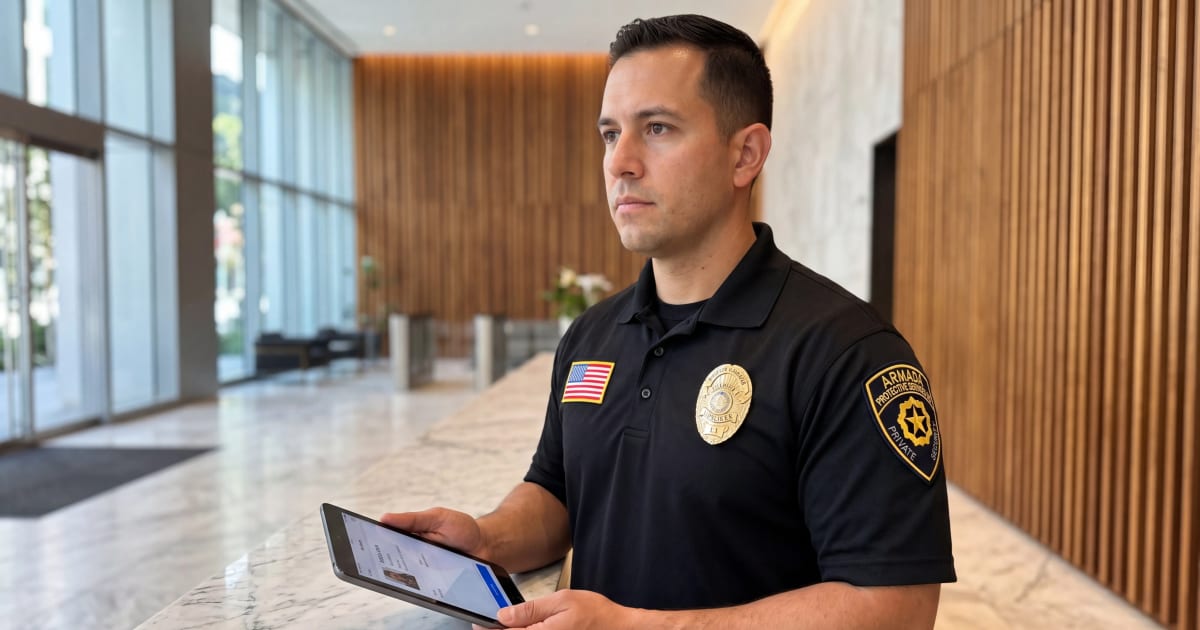
Lobby posts, access control and after-hours rounds, with the tenants rather than the stock as the thing being protected.

Server rooms and data halls, where the risk is somebody reaching a machine rather than driving something away.
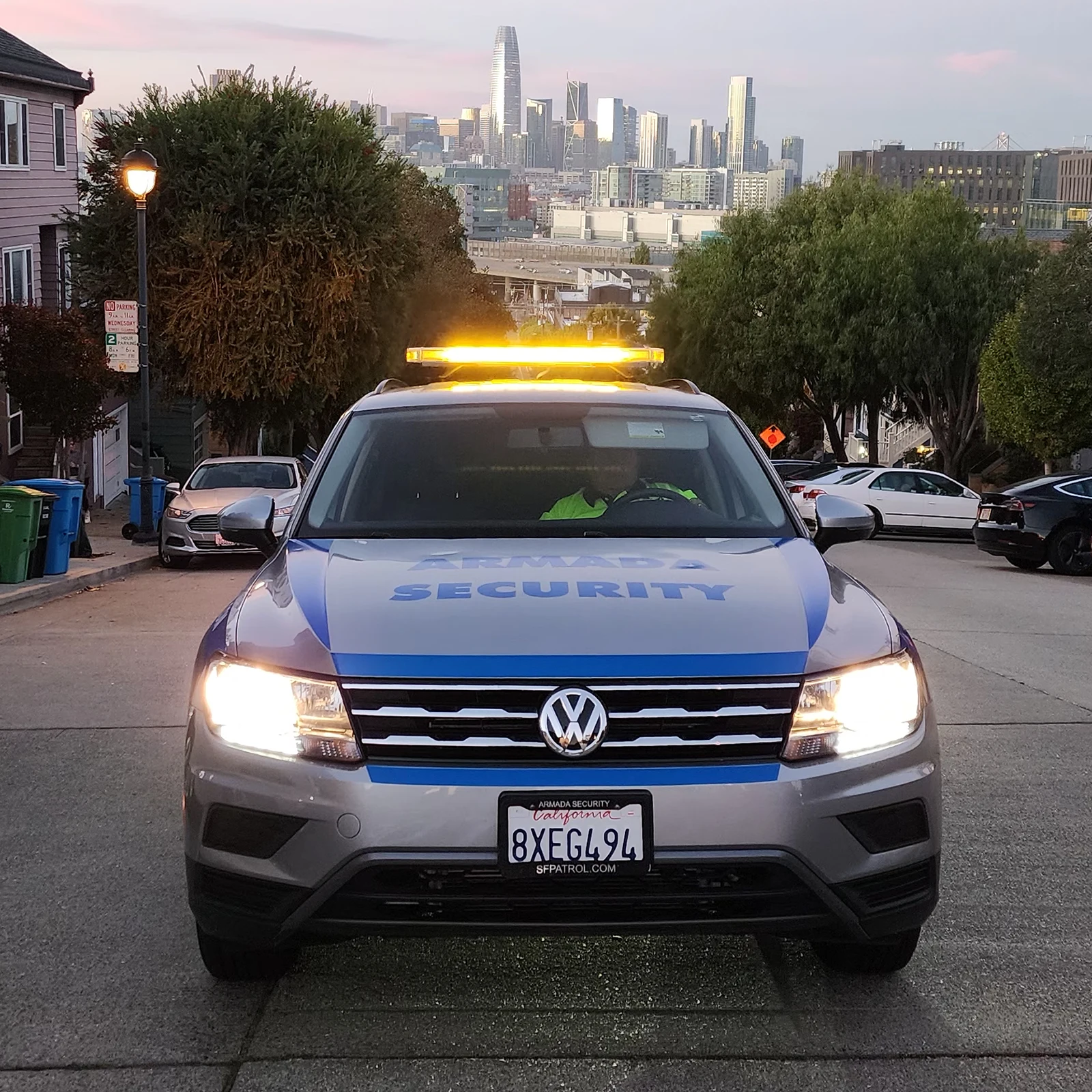
A marked car working a list of addresses at hours nobody on the outside can time, for the overflow lots a post cannot reach.
Customer testimonials
Professional and Reliable Security Services in the Bay Area
We hired Armada on short notice for a situation we were experiencing in one of our apartment complexes. They responded quickly, set up patrols and a guard service for us very quickly. Guards were professional, prompt and communicated activity at the property to us.

Lana August
Property Manager, San Francisco
We have used Armada for about 10 years. They are an amazing company providing professional personnel consistently. Thank you Armada!

Jesse Leite
Resident Manager, San Francisco
Every Armada employee with whom I've had the pleasure of interacting has been top notch - curteous, efficient, effective, knowledgeable, responsible.

Alex Goretsky
Business Owner, San Francisco
I Manager a portfolio of communities in San Francisco -working with Armada is great. They are flexible, honest and the Guards are always on point. I would recommend this firm to other HOA/Commercial managers.

Christopher Stanley
Owner and Chief Executive Officer, San Francisco
Quoted verbatim from published client reviews, including their original wording.
Walk the lot with us
Pick a time and set aside 30 to 60 minutes to walk the property together: the display rows, the overflow parking, the service bays, where the keys are kept and the hours when nobody is on site. You are told what is open to a stranger tonight and what it would take to close it. The visit is free, the written version is yours either way, and cover starts at one month, month-to-month after that.
Car Dealership Security FAQs
What dealer principals and general managers in San Francisco ask us before the first shift.
Why is on-site security essential for car dealerships?
Because the stock is expensive, it stands outdoors, and the lot is open by design. A continuous on-site guard presence takes away the easy attempt, puts somebody on the spot when an alarm goes off, and keeps the place looking run rather than left.
How do mobile patrols benefit my dealership?
Mobile patrols cover the parts of the property a posted officer cannot watch at the same time: the overflow lot, the storage rows and the service yard. Each visit is logged with its time, the timetable is irregular so nobody outside can learn it, and the car answers an alarm from inside the district.
What is included in a risk assessment for a car dealership?
An expert walks the site with you and writes down the layout, the ways in and out, the parking structures and the places people gather, then says what we would put on it and where. You get that in writing whether or not you go ahead, and the local rules that apply to your address are named in it.
How do security guards handle emergency situations?
Trained security officers work to a written protocol for a break-in, a confrontation or a medical incident: contain it first, call the authorities where the situation needs them, and work with your staff so that employees and customers are accounted for. The incident is written up the same night.
Will having guards on-site disrupt day-to-day operations?
No. Professional security personnel are briefed on how the floor runs before the first shift. They greet and direct customers, walk the perimeter on a round, and stay out of the way of a sale or a service booking.
Ask us directly
If the answer you want is not above, send the question with the address of the dealership. An expert replies with what we would put on it.
Sources
Where the figures, rules and local facts on this page come from. Links reviewed 6 Nov 2026.
- City and County of San Francisco open data 1 SFPD Police Department Incident Reports
- ABC7 News 2 Police response times for small crimes October 2024
- CBS News 3 False Alarm Fines: If police respond to a false alarm multiple times, the dealership will be fined.
- SFist 4 Armada Protective Services: San Francisco's Top Security Company trade press, used only where no primary source carries the claim
- California Department of Consumer Affairs license search 5 License record PPO 120526 Armada Protective Services, private patrol operator