Specialized Security Guards in San Francisco
A guard posted to one kind of building, trained on the rulebook that building runs under, and briefed on what your floor expects him to write down.
A specialized post starts from the floor it stands on. A branch lobby, a hospital emergency department, a server hall and a plant yard each put a different problem in front of the officer, and each arrives with its own rules about who may pass, what has to be recorded and who is called first. This page sets out the four industries we staff in San Francisco, what the post covers on each of them, and how the officer is picked, trained and supervised once he is standing there.
The visit costs nothing. We walk the floor with you, write down what the post has to do under your own rules, and price it after that.
If it is urgent, call (415) 647-8500
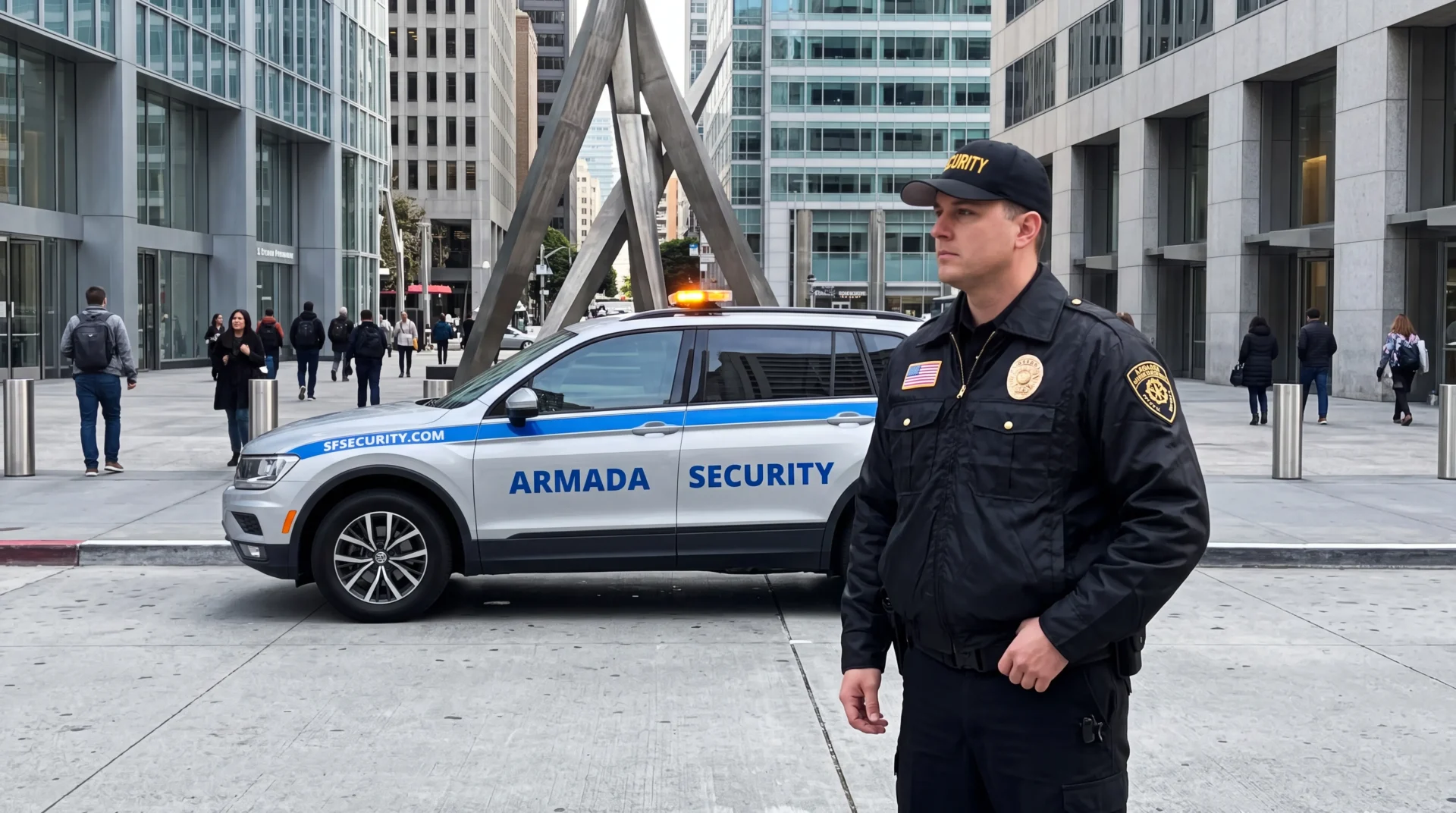
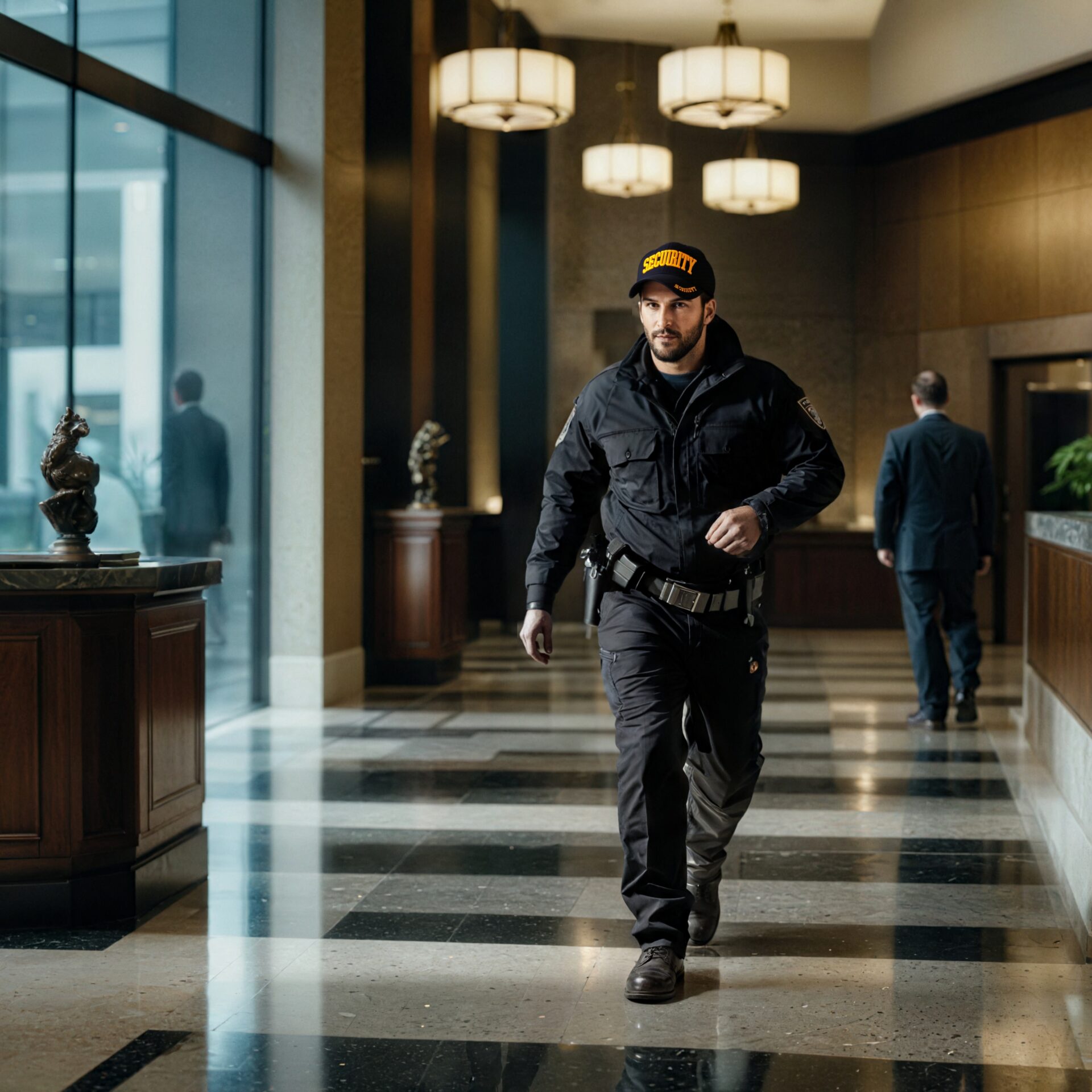
What each industry asks of the officer at the door
Four industries, four different rulebooks. A branch answers to its examiner, a ward answers to patient privacy law, a server hall answers to the customer audit, and a plant yard answers to the shift schedule. The post is written from that rulebook first and from the floor plan second.
Each card says what the officer does on that kind of site and what the manager holds afterwards. The link at the foot of the card opens the full scope for that industry.
Financial Services
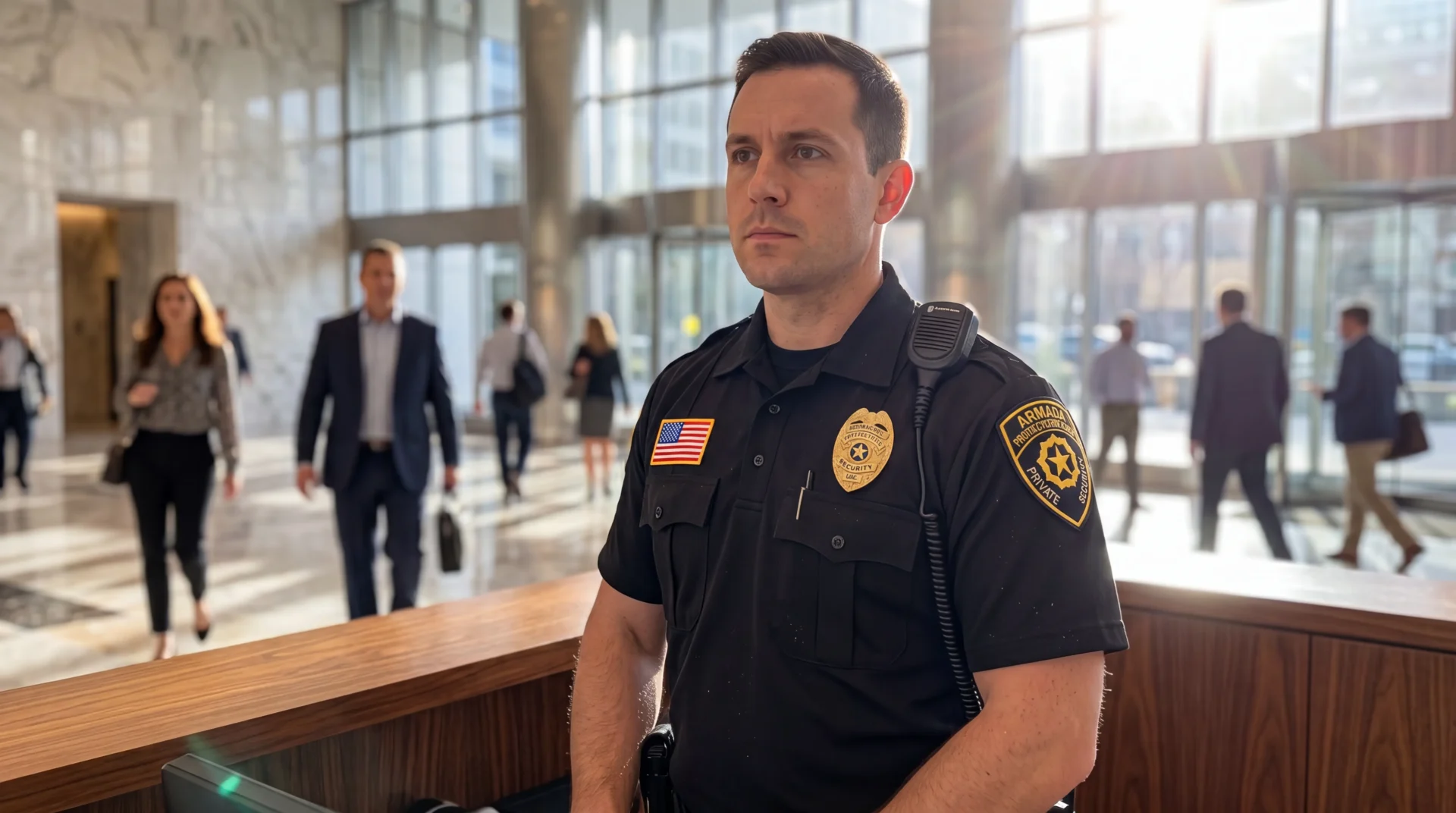
A branch is a public room with money behind it, and whoever audits it later will ask what was written down at the time. The officer stands where the teller line can see him, deals with the person who is shouting before a cashier has to, and keeps the vault door and the ATM vestibule on a record that survives an examination.
- Teller line and the waiting customers held in view from one fixed post
- Vault and back-office doors opened against a name every time
- ATM vestibule locked and walked once the branch has closed
- Handover to the armored carrier escorted and timed by the officer
- Alarm walked and verified by the officer before police are dialed
- Shouting or distressed customers taken out of the line, not out of the door
- Night-drop box cleared on a written round
What the branch manager holds afterwards:
- Post orders written against your own branch procedure
- A shift record an examiner can read without translation
- Officers who have stood a teller line before this one
- One named supervisor for the branch, reachable by name
Technology Sector
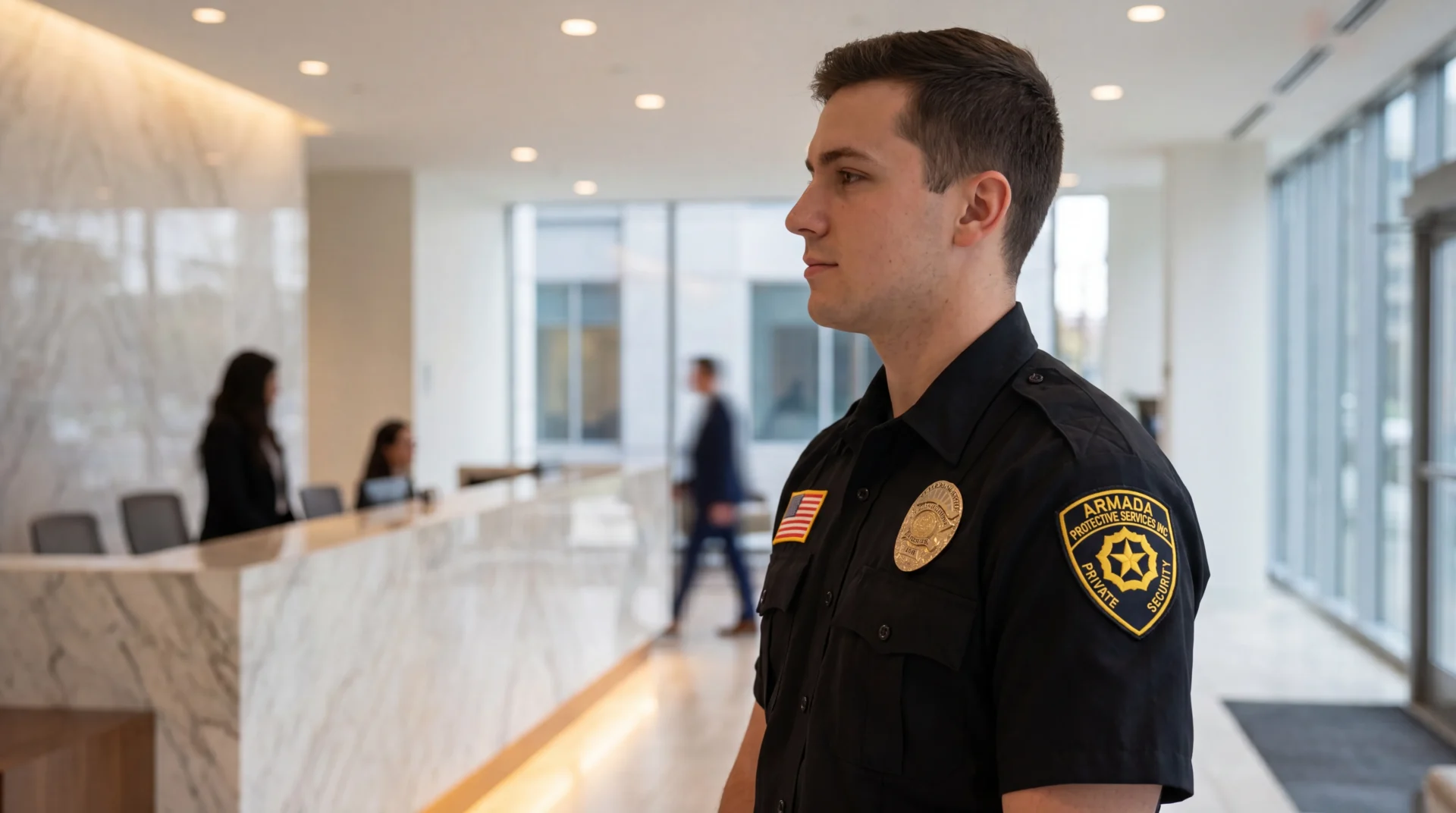
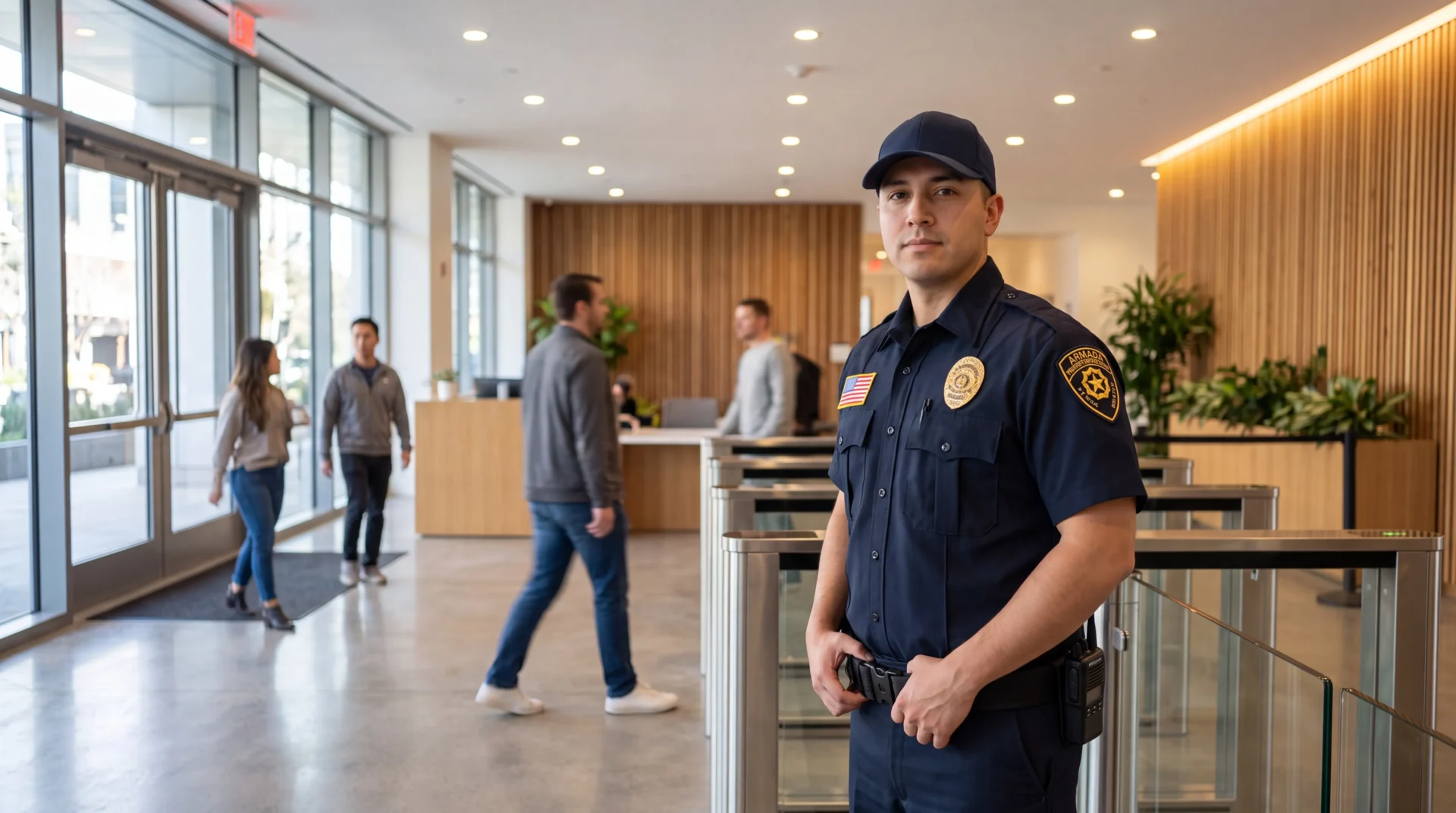
On a tech floor the valuable thing sits on a disk or a bench, and it leaves through the same door the visitors use. The officer runs the badge desk, watches the loading bay while the roller door is up, and makes sure a contractor credential expires on the day the contract does.
- Badge desk run against the roster your own people publish
- Contractor credentials issued with an expiry date rather than open-ended
- Loading bay watched for as long as the roller door stands open
- Lab and server hall entry limited to the names on the list
- Prototype benches checked once the last engineer has gone
- Tailgating into a stairwell stopped at the stairwell
- Overnight alarms answered by somebody walking the floor
What the facilities lead holds afterwards:
- A badge desk procedure drafted with your own IT team
- Escort rules covering visitors, couriers and trades separately
- Officers briefed on the questions your customer audit asks
- A written handover between shifts, never a verbal one
Healthcare Industry
A hospital cannot lock its front door, so the officer works inside a building that stays open. Much of the shift goes on talking somebody down in the emergency department, and the rest goes on keeping drugs, records and the maternity floor behind a door that remembers who opened it.
- Emergency department covered by an officer who can calm a room
- Pharmacy and drug storage opened against a name and a time
- Maternity and pediatric floors held on controlled entry
- Rooms holding patient records kept to clinical staff only
- Night rounds walked on a pattern the nurses can rely on
- Wheelchairs, pumps and carts counted at handover
- Violent incidents escalated down a path the charge nurse agreed
What the facility manager holds afterwards:
- Security procedures written to your HIPAA privacy rules
- A calming protocol built around patients rather than trespassers
- Officers who know where to stand in a full waiting room
- Drug and equipment checks recorded against each shift
Industrial & Manufacturing Guarding
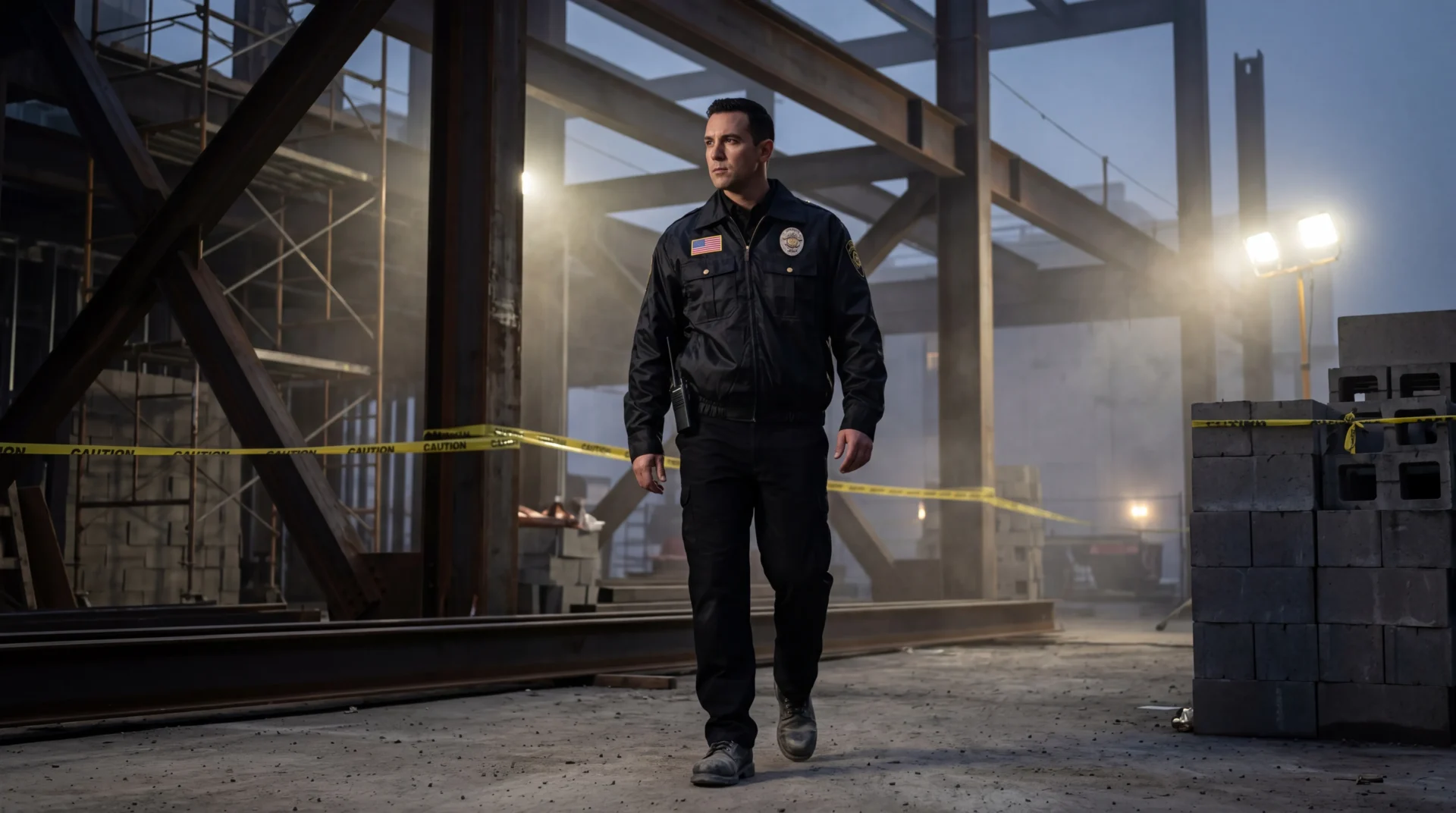
A plant runs around the clock and its gate is the one narrow place in a wide fence. The officer matches trucks to the day’s schedule, keeps the yard walked while the line is running, and learns which valve, panel or hoist nobody outside the crew is allowed to touch.
- Trucks matched to the shipping schedule before the barrier opens
- Driver and load written down inbound and written down again outbound
- Yard and fence line walked while the line is still running
- Contractor sign-in held at one point instead of three
- Tooling, copper and spare parts counted at shift change
- Restricted plant marked so a relief officer cannot miss it
- Shift handover done face to face at the gate house
What the plant manager holds afterwards:
- A gate procedure built around your own delivery window
- Officers briefed on your lockout and permit rules
- Round-the-clock cover with the relief officer named in advance
- An account of any incident before the next shift starts
Serving the San Francisco Bay Area and Surrounding Cities
Relief is what makes a specialized post worth buying. An officer who has learned your rulebook has to be replaceable by another officer who has learned it too, and that only works where our own roster already reaches. So we sell these posts in San Francisco first, then down the Peninsula as far as San Jose, and north over the bridge into Marin. Ask us about an address outside that line and we will say plainly whether we can hold the post or only visit it.
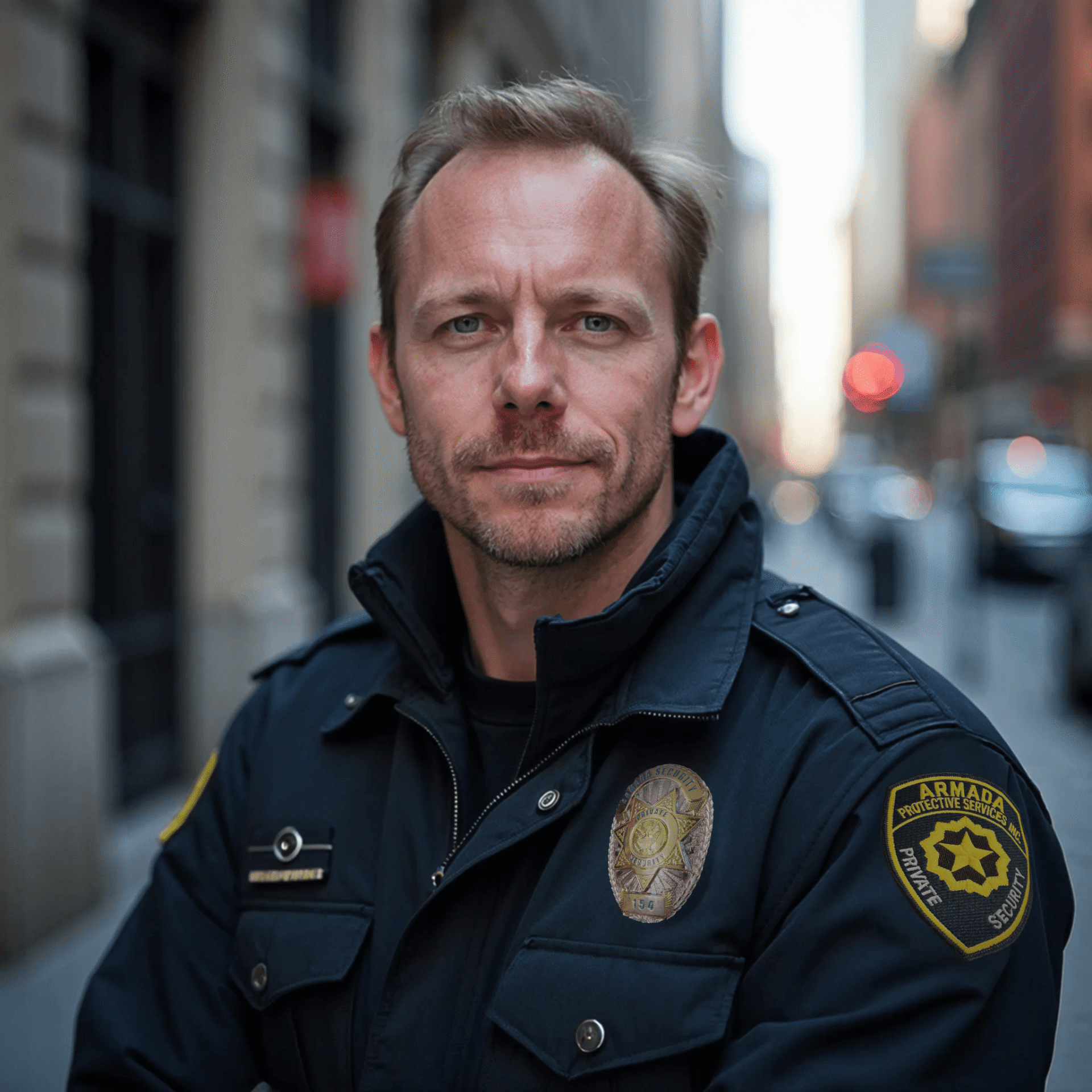
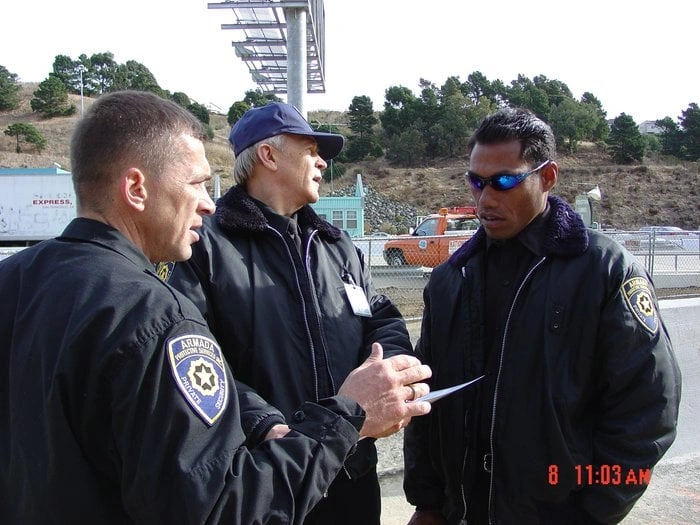
Who stands the post, and who stands behind him
A specialized post is worth exactly as much as the person on it and the person checking on that person. The six cards below say how an officer reaches your floor, what he is taught before he gets there, and what happens through the long stretches when nothing goes wrong.
The industry writes the rulebook. The roster decides whether that rulebook is actually followed on a wet Tuesday night in February, which is the part worth asking about.
Trained for the floor, not for a shift
- A walk of your building with your manager before anybody is rostered
- Post orders written for your address and read through on day one
- Your own procedure taught as the rulebook instead of a generic deck
- A fresh briefing every time that procedure changes
Vetting before the badge is printed
- State guard registration looked up by us in the public register
- Background screening closed out before anybody joins the roster
- References taken from the last site rather than from a form
- Drug testing wherever your own policy asks for it
Relief that keeps the same face at your desk
- A named second officer who already knows the building
- Sickness and vacation covered from inside the same small crew
- Holiday and overnight cover agreed in writing ahead of the date
- No stranger sent from an agency who has never seen your lobby
What gets written down every shift
- A log kept during the shift by the officer who is standing there
- Anything broken, propped open or unlit noted the night it is found
- A short written account of any incident, in your hands the same night
- Photographs attached wherever a photograph says it faster than a sentence
When we tell you to buy something else
- Sites where a patrol visit covers the risk better than a standing post
- Floors where an armed officer is the honest answer and we say so
- Hours where a camera does the work and a body would only stand in it
- All of it said on the walkthrough, before any quote is written
Supervision you can see in the log
- Unannounced field checks on nights and on weekends
- A supervisor who has stood your post himself at least once
- Complaints answered by the person who can actually move the roster
- A read-through of the logs with your manager once a month
Our Statistics. Your Guarantee.
Specialized guard posts depend on people who can be verified. Armada has been the top-rated San Francisco security company since 2021 according to SFist1. Each figure below says what it is measured against.
- 2x
At least twice as fast as police arrival
Under contract Armada is on site in 15 to 30 minutes. The median SFPD publishes for a low-priority call is longer, which is why SFPD itself points businesses to private security for anything short of a crime in progress.
- 80%
Fewer incidents at monitored properties
Twelve client sites kept incident records both before and after Armada started. Across them incidents fell by 80 percent. 2025 client survey.
- 24/7
Your officer is the one you call
Clients hold the direct numbers of the officers on their site, and the app carries the messages, the photos and the log. Nothing is relayed through a desk.
- 100%
Licensed and insured
Every officer individually BSIS licensed and background-checked, under California Private Patrol Operator PPO 120526, both verifiable in the state register.
Related Security Services
Other Armada services that sit closest to specialized security guards.
Highly trained armed officers for high-risk environments across San Francisco and the Bay Area.
Customer testimonials
Professional and Reliable Security Services in the Bay Area
We hired Armada on short notice for a situation we were experiencing in one of our apartment complexes. They responded quickly, set up patrols and a guard service for us very quickly. Guards were professional, prompt and communicated activity at the property to us.

Lana August
Property Manager, San Francisco
We have used Armada for about 10 years. They are an amazing company providing professional personnel consistently. Thank you Armada!

Jesse Leite
Resident Manager, San Francisco
Every Armada employee with whom I've had the pleasure of interacting has been top notch - curteous, efficient, effective, knowledgeable, responsible.

Alex Goretsky
Business Owner, San Francisco
I Manager a portfolio of communities in San Francisco -working with Armada is great. They are flexible, honest and the Guards are always on point. I would recommend this firm to other HOA/Commercial managers.

Christopher Stanley
Owner and Chief Executive Officer, San Francisco
Quoted verbatim from published client reviews, including their original wording.
Tell us about your site
Tell us the address and the posts you need covered. We visit the site, write down the guard duties and price them before you commit.
FAQs
Have questions about specialized security guards? Find answers below.
How do I know if my San Francisco site actually needs a specialized security guard instead of a general patrol guard?
Use a specialized guard when the site has known risks that need trained judgment, not just a walk-through. That includes multi-tenant buildings, active construction sites, venues, warehouses, and corporate or institutional properties where access control, incident logs, and clear reporting matter. For HOA, condo, and apartment communities, this still applies when the site is managed through a board or property manager, not a single homeowner.
What should I ask a security company about licensing and legal compliance before I put them on our property?
Ask for the California BSIS Private Patrol Operator license number and verify that the firm is licensed. Armada Security is licensed in California as PPO 120526, and that is the kind of proof you should request from any provider. Also ask how they train guards for the site type, how they document incidents, and who is responsible for supervision and follow-up.
If a guard is needed at our building or job site, what usually drives the cost and what should we compare?
Do not compare by hourly rate alone. Site risk, post duties, location, coverage hours, reporting needs, access control, and the level of site-specific training all affect the real cost. Ask for a clear scope so you can compare what the guard is expected to do, what reports you will get, and whether the provider can support recurring coverage across your Bay Area locations.
What can go wrong if the guard is not a fit for a Bay Area property, venue, or construction site?
The most common failures are weak access control, poor incident reporting, missed site rules, and slow handoff when an issue needs management or police attention. That can create safety gaps, tenant complaints, project delays, or avoidable liability. A good provider should match the guard to the site type and set clear post orders before they start.
Ask us directly
If you don’t see the information you’re looking for, fill out the form and ask us directly. We’re here to help!
Sources
Where the figures, rules and local facts on this page come from. Links reviewed 5 Nov 2026.
- SFist 1 Armada Protective Services — San Francisco’s Top Security Company trade press, used only where no primary source carries the claim