Vacant Residential Property Security in San Francisco
An empty house says so by itself. The blinds never move, the bin goes out for nobody, the flyers build up behind the glass. Armada puts a marked patrol on that address at hours nobody can guess, and sends the owner photographs of what the officer found at the door.
What follows is the empty-house part of the job: the weeks between a sale and a move, a home held in an estate, the man who lets himself in and says he lives there, copper leaving through a side window, water running where nobody hears it, and the report that reaches an owner two time zones away.
An expert walks the house and the lot with you, your agent or the executor, and writes down what he found. The notes are yours either way.

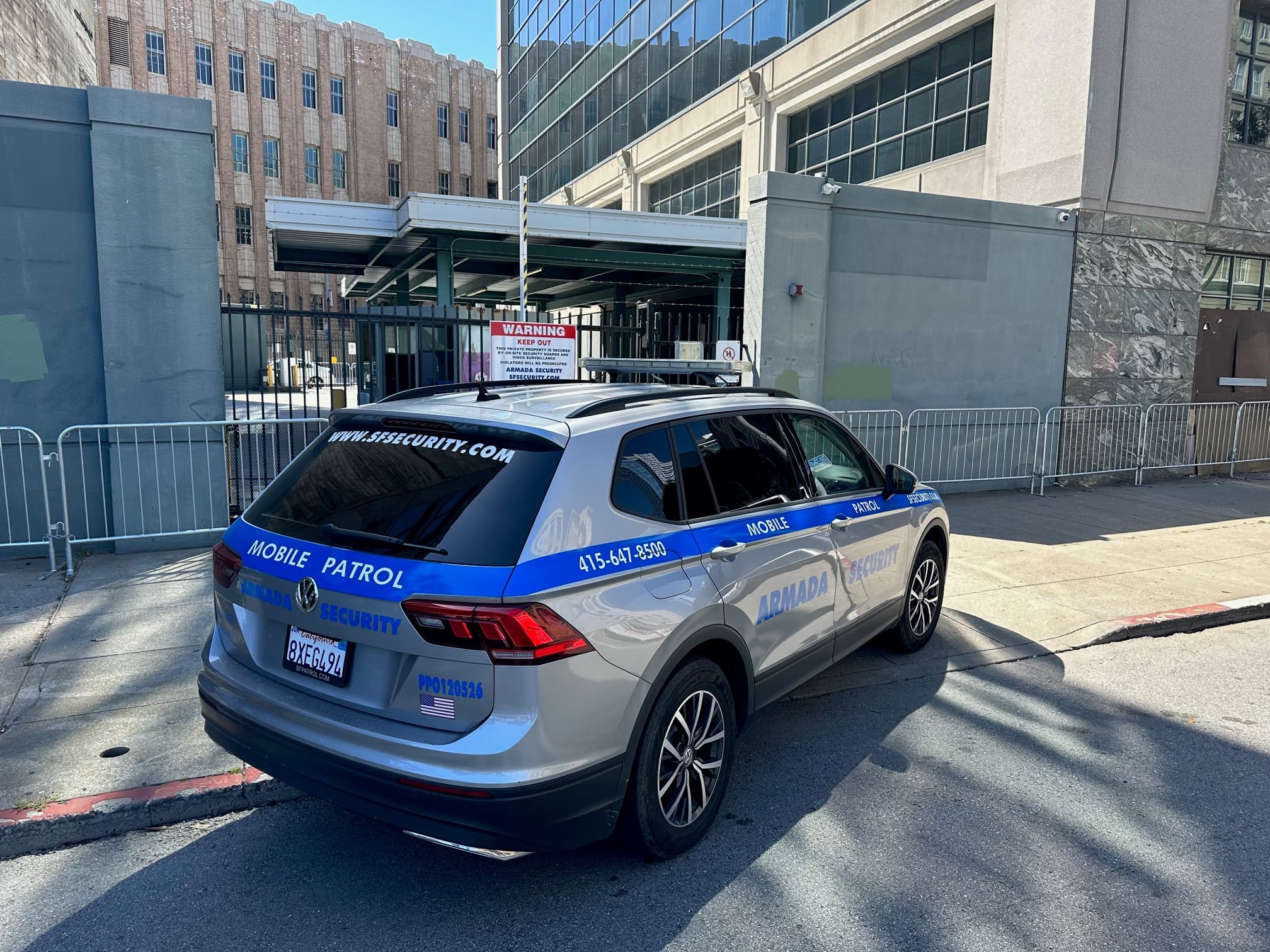
Nothing here is stolen in a hurry
Somebody notices the dark windows in week one, tries the side gate in week three, and comes back with a van once he is sure nobody is coming. The loss builds quietly for a month before anyone opens the door on it.
In the twelve months to 30 September 2026 San Francisco police recorded 117 burglaries of houses, flats and apartments whose incident description says the building was under construction, counted in the city’s own SFPD Police Department Incident Reports1. A building with people in it fails elsewhere: that job sits on the residential tower and condominium pages, under residential security.
Between a sale and a move
The sale closed, the furniture went into storage, and the house now belongs to a calendar: a stager on Tuesday, the painter who said Thursday, an agent with a lockbox code, a buyer who wants one more look. Four people hold a key and none of them knows who else was there yesterday.
- A list naming every person who holds a key or a code, with the date each one stops working
- Showing hours and trade hours written down, so an arrival outside them is visible on paper
- The lockbox found, tried and photographed on each round
- A door found unlocked reported to the owner and the agent the same day
A home held in an estate
A house in probate is the quietest property on its street. The heirs live in three cities, nobody has slept there since the funeral, and the furniture, the tools and the car in the garage are still exactly where they were. The executor carries the duty for all of it under Probate Code section 96502, which asks the personal representative to take every step reasonably necessary to manage, protect and preserve what is in the estate.
- A dated photograph of each entrance on every round, the record an executor can show the court
- Contents checked against a list the family agreed, not against a memory of the hallway
- One named contact who hears from us, however many heirs there are
- Mail and notices gathered to one place instead of lying inside the door
Somebody moves in
A person who climbs in and stays is a different problem from one who carries out a radiator. There is a mattress, sometimes a dog, usually a story about a lease. From that hour the house is a legal matter, and everything the officer does is aimed at your attorney’s work rather than at winning an argument on the step.
- A forced door, a cut lock or an unfamiliar padlock reported the hour it is found, with photographs
- The police called for the entry itself, because an arrest is theirs to make and never ours
- Nobody put out by an officer, and nothing said at the door for a lawyer to explain later
- Every visit logged with its time, so the owner’s case rests on dates instead of impressions
Copper, the furnace and the appliances
The scrap value of a house is in its pipework, its wiring and whatever is bolted to the floor. A crew that has done it before pulls copper out of a crawl space in an evening, and the repair costs several times what the metal was worth. None of it shows from the street until a ceiling comes down.
- Make and serial number of the furnace, the water heater and the appliances recorded before the house empties
- Meter cupboards, crawl space hatches and the side gate tried by hand on every round
- A theft in the report that closes the shift, with photographs and the hour the officer found it
- Standing water or a smell of gas treated as stripped pipework until a plumber says otherwise
The empty addresses we can reach in time
Armada keeps one office, in San Francisco, and the patrol that checks your empty house is dispatched out of it. Addresses under contract are reached in 15 to 30 minutes, timed in our own dispatch log from the call until an officer is standing at the door.
We serve: San Francisco, San Mateo, Brisbane, San Jose (see all locations)


How an empty house is actually watched
An owner out of town buys two things: a person who turns up at hours nobody can predict, and a written record of what he found. Four parts decide whether that is worth paying for: the round, what the sidewalk can read about the house, what reaches you afterwards, and the paper the city and the insurer ask for.
Officers are licensed individually by BSIS and cleared before a first shift, and the company works under California PPO 120526. Alarms, cameras and lock hardware are a different trade, and an owner hears that from us before spending anything on our advice.
The round, and when it happens
A patrol that arrives at eleven every night teaches the street when the house is unwatched. The hour and the order change, the officer leaves the car, and the round ends at the back of the property rather than at the easy front step.
- No two visits at the same hour, so the gap between them cannot be timed from the street
- Doors, windows, the side gate, the garage and the crawl space hatch tried by hand, not looked at
- Checkpoints scanned where they stand, which is what makes a round provable a year later
- The water shutoff, the meter and the utility cupboard checked on every visit
What the sidewalk says about the house
What a burglar reads is free to collect: paper on the step, a bin at the curb for two weeks, a parcel nobody took in, a lawn going brown, a window open since the rain. Clearing that is cheap, and it is the part an owner in another state cannot do.
- Mail, flyers and newspapers taken off the step and logged, because a pile is an advertisement
- Bins put back, and the owner told when a neighbor has started using them
- Lighting checked after dark, a dead lamp named by its position rather than as broken lighting
- Graffiti, a dumped mattress and an overgrown front written up before the city does it for you
What reaches an owner in another city
The point of a round is the paper it produces. A report that arrives a week later, with no photographs and no times, is worth nothing to a buyer, an executor or an adjuster, so it is written as the shift closes.
- A written report when the shift closes, about an hour after the round ends
- Photographs of every entrance, and of anything that changed since the last visit
- A call at the time for a forced door, a fire or a person inside, on every channel we hold
- A month-end summary short enough to forward to an agent, an heir or an insurer
The paper the city and the insurer ask for
An empty house makes paperwork for three audiences: the city, the insurer, and whoever finally buys or inherits it. None of them takes a recollection. All three take a dated record with photographs, and that record is a by-product of the round.
- Rounds recorded in a form an adjuster or an attorney can still read a year later
- The posted owner sign checked on the round and photographed when it is damaged or gone
- The date the house became empty written down, because the policy is counted from that day
- Findings sent to the person who signs, not to an inbox nobody opens
Our Statistics. Your Guarantee.
An owner who is not in the city cannot stand on the sidewalk and check any of this, so each of the four below is checkable from where he is. Every officer is individually BSIS licensed and background checked, and the owner holds the direct number of the supervisor who runs the patrol. Armada has been the top-rated San Francisco security company since 2021 according to SFist3.
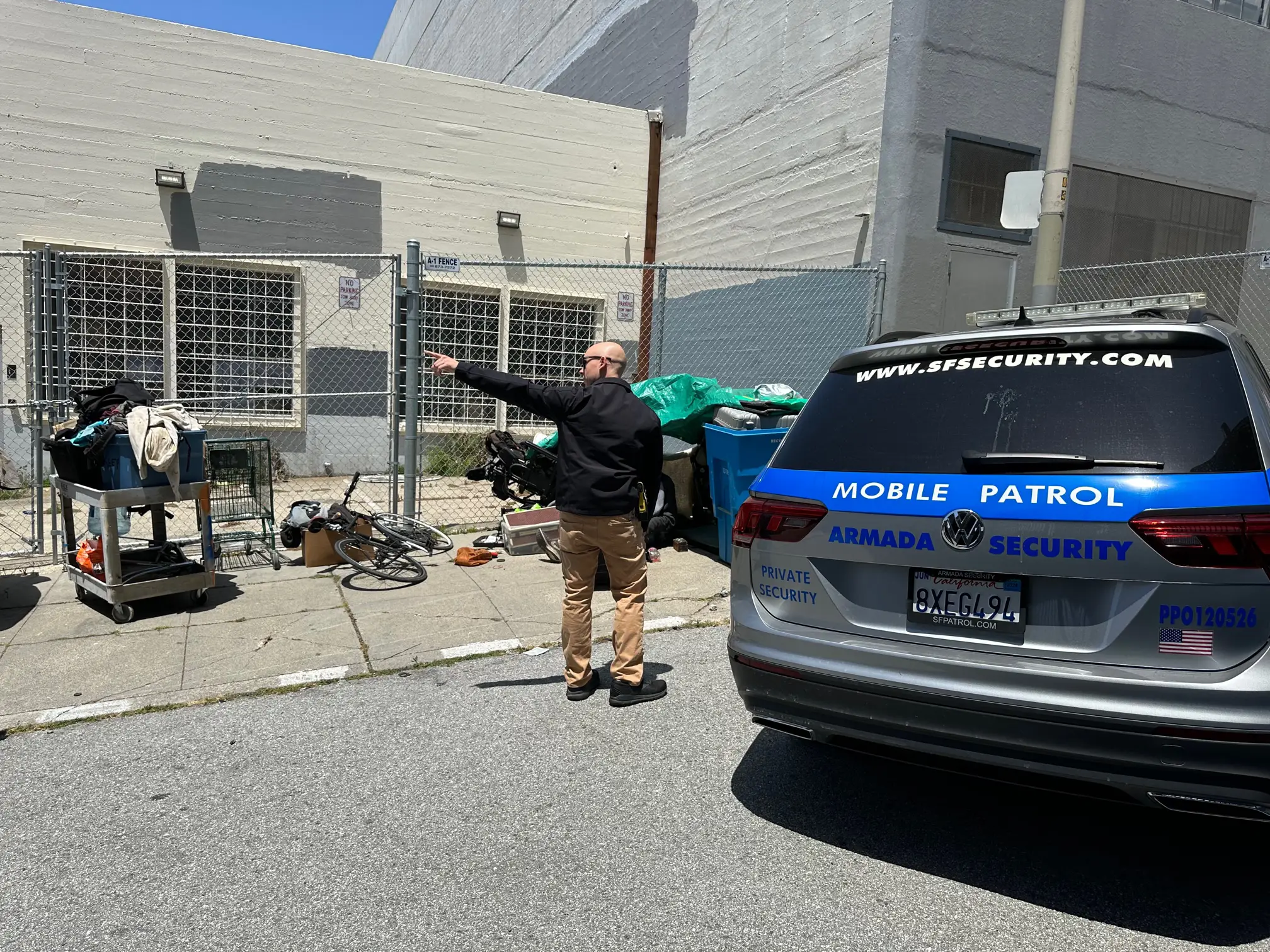
- 2x
At least twice as fast as police arrival
Under contract Armada is on site in 15 to 30 minutes. The median SFPD publishes for a low-priority call is longer, and an empty house is a low-priority call, which is why SFPD itself points property owners to private security for anything short of a crime in progress.
- 80%
Fewer incidents at monitored properties
Weighted average across client sites, empty residential addresses among them. It compares the incident records those clients kept before Armada covered the property with the records they kept after.
- 24/7
Somebody answers at the hour it happens
A forced door is found at three in the morning or not at all. The owner reaches the officer on his property and the supervisor behind him, not a call center in another state, and the app carries the photographs and the log.
- 100%
Licensed and insured
Every officer individually BSIS licensed and background-checked, under California Private Patrol Operator PPO 120526, and the company carries $5M in aggregate liability. Look it up yourself: License record PPO 1205264 in the California Department of Consumer Affairs register. Checked November 2026.
Related Security Services
The occupied kinds of home Armada covers, for owners and managers who hold more than one address.
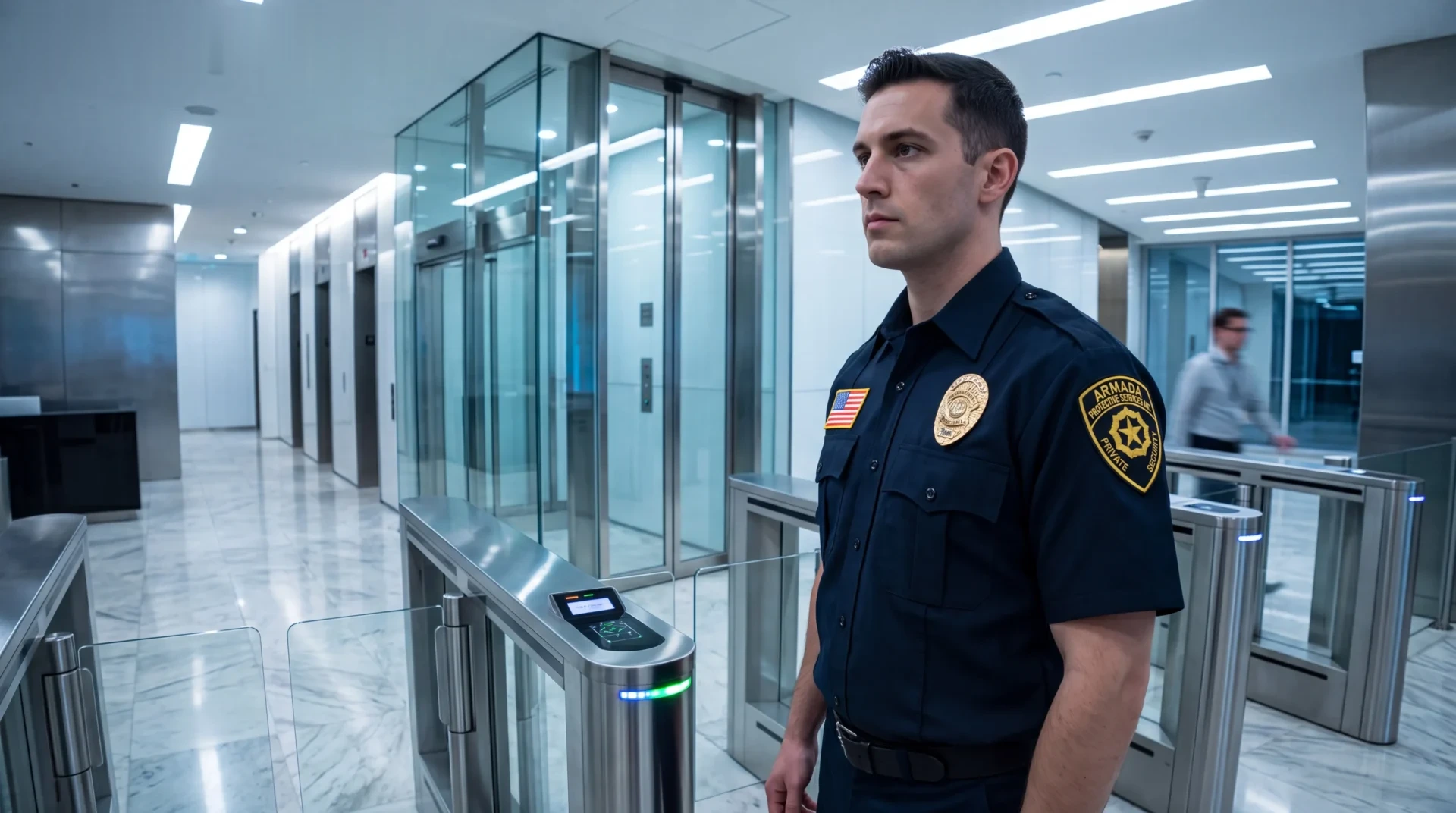
A front desk, a garage gate and nightly rounds of the common floors in a high-rise.
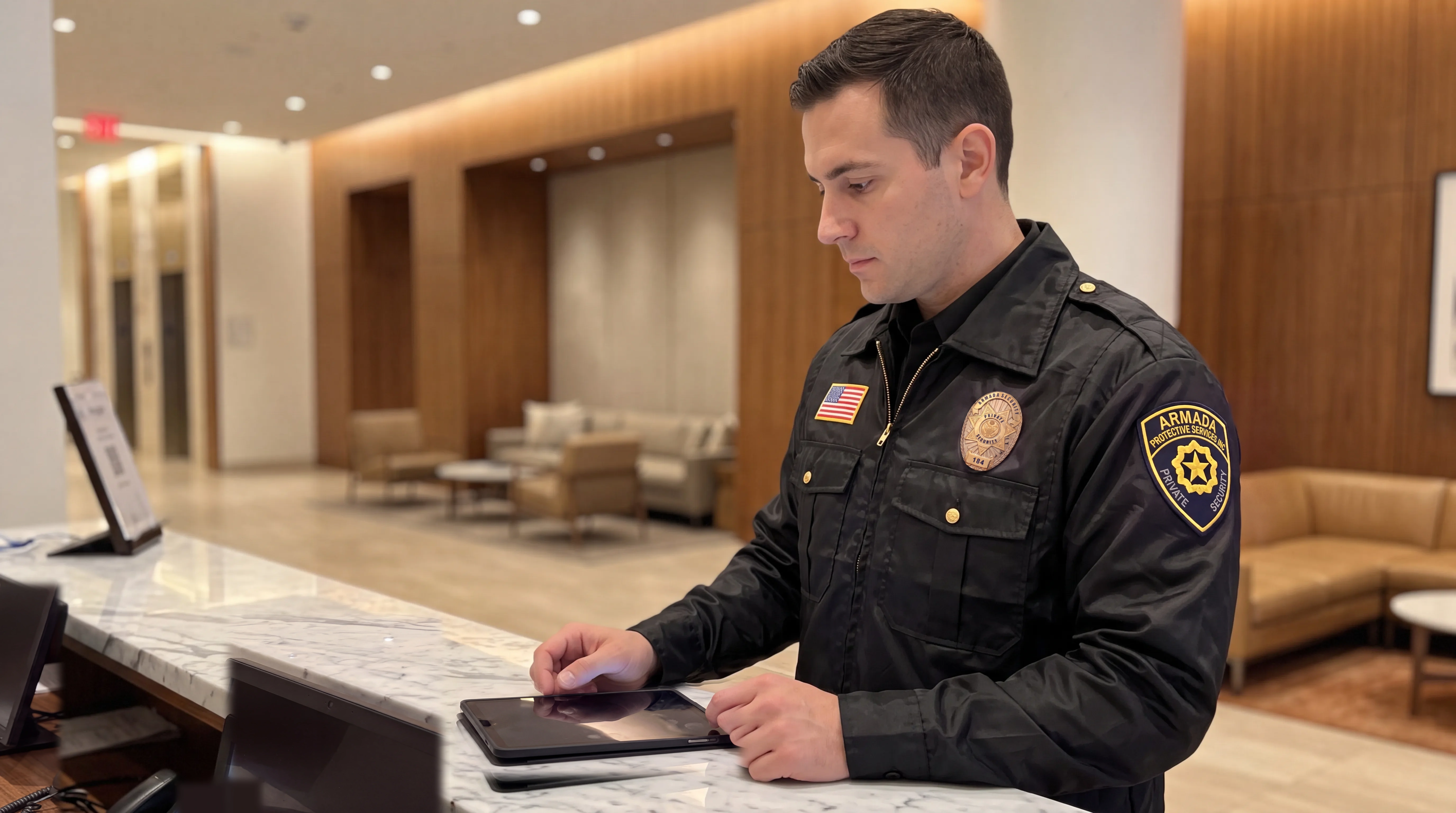
Lobby and access control for multi-unit condominium buildings and the boards that run them.
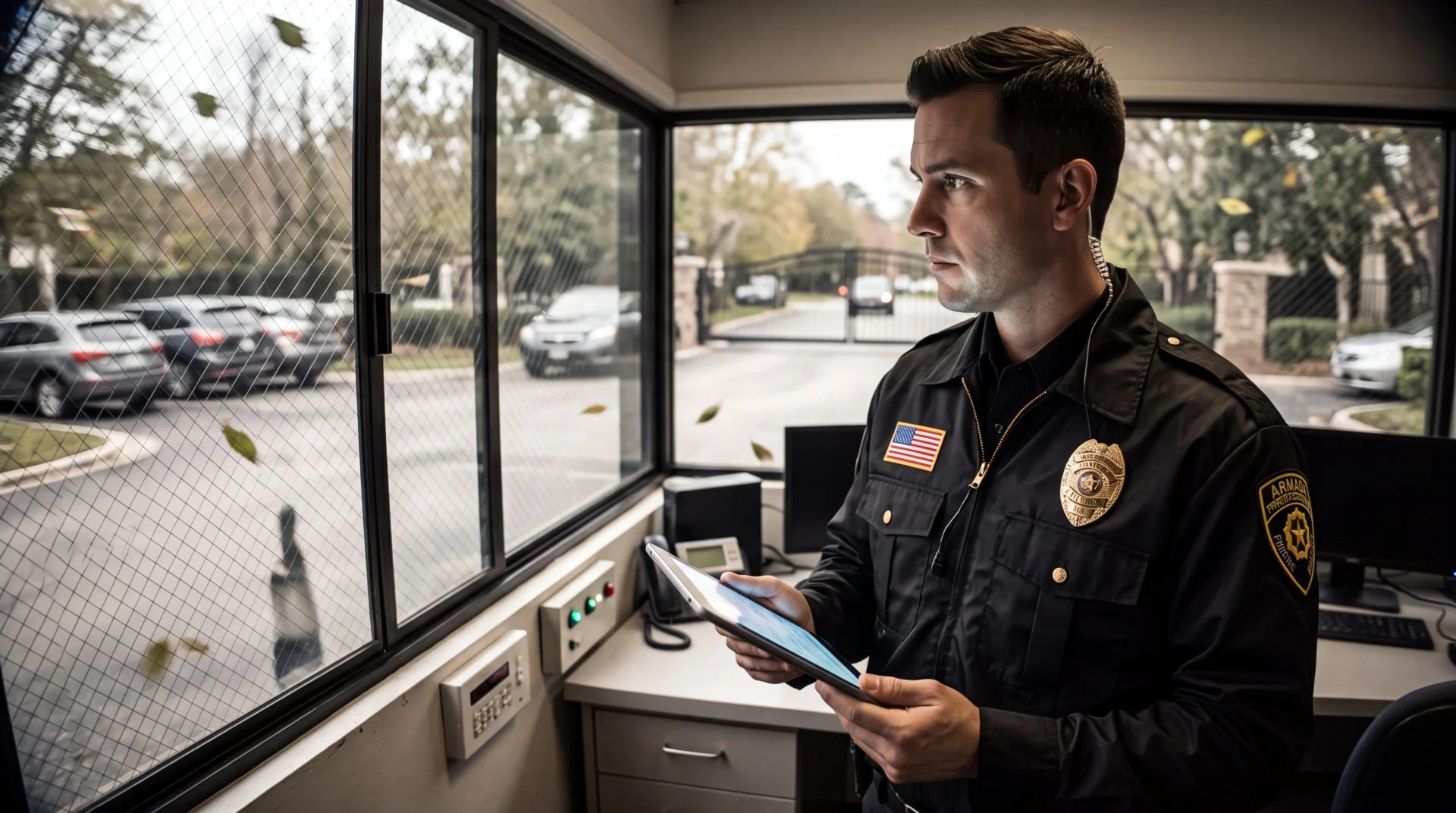
Gate cover, vendor control and street patrols behind the fence of a gated community.
Customer testimonials
Professional and Reliable Security Services in the Bay Area
We hired Armada on short notice for a situation we were experiencing in one of our apartment complexes. They responded quickly, set up patrols and a guard service for us very quickly. Guards were professional, prompt and communicated activity at the property to us.

Lana August
Property Manager, San Francisco
We have used Armada for about 10 years. They are an amazing company providing professional personnel consistently. Thank you Armada!

Jesse Leite
Resident Manager, San Francisco
Every Armada employee with whom I've had the pleasure of interacting has been top notch - curteous, efficient, effective, knowledgeable, responsible.

Alex Goretsky
Business Owner, San Francisco
I Manager a portfolio of communities in San Francisco -working with Armada is great. They are flexible, honest and the Guards are always on point. I would recommend this firm to other HOA/Commercial managers.

Christopher Stanley
Owner and Chief Executive Officer, San Francisco
Quoted verbatim from published client reviews, including their original wording.

Walk the empty house with us
Send the address and an hour when you, your agent or the executor can meet, or tell us where the key is kept. An expert walks the house, the lot, the side gate and the garage, and prices only the rounds the address needs. The walk costs nothing, the written findings are yours whether or not you hire us, and a contract opens at one month and runs month-to-month after that.
FAQs
What owners, agents and executors ask before they put a patrol on a house that nobody is living in.
Do we have to tell the city the house is empty?
In San Francisco, yes, and sooner than most owners expect. The Department of Building Inspection asks for a vacant building to be registered within 30 days of the vacancy and re-registered every year, at $1,190 a year, under Ordinance 0194-09 (Register your vacant building5). You do not have to register while a lease or a sale is pending, but you do have to show it, with an MLS number or a copy of the lease. The application asks how the property has been secured against unauthorized entry, what you plan to do with it, and the name of your fire and liability insurer.
Does our insurance still cover the house while it stands empty?
Read the policy before you assume it does. The standard form fire policy adopted for California in Insurance Code section 20716 says that, unless something else is provided in writing, the company is not liable for loss occurring while the described building, whether it was meant to be lived in by an owner or by a tenant, is vacant or unoccupied beyond a period of 60 consecutive days. Insurers write vacancy endorsements that change it, and they price them on what the owner does about the risk. A dated round with photographs is evidence an underwriter and an adjuster both read, which is why cover usually starts on the day the last tenant hands back the keys.
Somebody is living in our empty house. Can your officer put him out?
No, and an officer who tried would hand the other side the one thing it needs. Deciding on an arrest is a police matter, and anybody who claims to be a resident is put out through the courts, by your attorney. The ground you stand on is Penal Code section 602.57, which makes it a misdemeanor to enter or remain in a house or apartment without the consent of the owner or the person in lawful possession, and aggravated trespass where a resident or anybody else authorized to be in the dwelling is there at the time. Our part of it is to be the witness who can say in writing what the building looked like, and on which night that changed.
What does the city expect us to keep up while the house is vacant?
More than locking it. The city asks an owner to keep the property secured so that only authorized people can get in, to prevent damage from rain and plumbing leaks, to clear garbage and debris inside and out, to keep pests out, to shut off utilities that are not needed to maintain the building, to keep the landscaping and the paint, roof, gutters and windows in order, to clean up graffiti, and to post a sign at least 8.5 by 11 inches, visible to the public and protected from the weather, carrying the name, address and phone number of the owner of record (Vacant building requirements8). A property that is registered can still be cited for blight. Most of that list is visible from the sidewalk, which is why it is on the round sheet.
The house stands empty through the winter. What does the officer actually check?
Water first, because water is what empties a bank account in a building nobody enters. Pipes almost never freeze in San Francisco, so the failure is slower: a supply line under a sink lets go, a roof hatch or a window stays open through a month of rain, a gutter blocks and sends the water down a wall instead of away from it. The round covers the main shutoff and its position, the ceilings, the basement floor and the space under the sinks, and the officer goes back the morning after a storm rather than on his usual schedule. The city asks for the same thing in its own words, telling owners to prevent damage from rain and plumbing leaks and to shut off utilities that are not needed to maintain the building (Vacant building requirements8). A stain or a damp smell goes into the report the night it is found, because a month of it is a renovation.
The pipework and the appliances were taken. What actually helps us get them back?
Speed and detail, in that order. A junk dealer or recycler in California may not release payment for nonferrous material before the third business day after the sale, and has to take a photograph of the seller and a copy of the identification, under Business and Professions Code section 21608.59. That window closes while an owner is still deciding whether to drive over, and an address nobody has looked at since August gives the police neither a night to ask about nor a description to circulate.
Ask us directly
If the question is about your own address, put it in the form. The answer comes from the expert who would assess the site, not from a brochure.
Sources
Where the figures, rules and local facts on this page come from. Links reviewed 13 Nov 2026.
- City and County of San Francisco open data 1 SFPD Police Department Incident Reports
- public.law 2 Probate Code 9650 the personal representative takes possession of estate property and takes all steps reasonably necessary for its management, protection and preservation, 6 Insurance Code 2071 the standard form fire policy: no liability for loss occurring while the described building is vacant or unoccupied beyond 60 consecutive days, unless otherwise provided in writing, 7 Penal Code 602.5 entering or remaining in a noncommercial dwelling without the consent of the owner or the person in lawful possession is a misdemeanor; aggravated trespass when a resident is present, 9 Business and Professions Code 21608.5 a junk dealer or recycler may not hand over payment for nonferrous material before the third business day after the sale, and must photograph the seller and copy the identification
- SFist 3 Armada Protective Services — San Francisco’s Top Security Company trade press, used only where no primary source carries the claim
- California Department of Consumer Affairs license search 4 License record PPO 120526 Armada Protective Services, private patrol operator
- City and County of San Francisco, Department of Building Inspection 5 Vacant building registration registration within 30 days of vacancy and every year after, $1,190 a year under Ordinance 0194-09; no registration while a lease or sale is pending and documented, 8 Vacant building requirements secure the property, prevent damage from rain and plumbing leaks, shut off utilities not needed for maintenance, post an owner sign at least 8.5 by 11 inches