Construction Site Security in San Francisco, 24/7
A site is an open yard of equipment that drives away on its own wheels and is hard to trace afterwards. Armada puts a BSIS-licensed officer on it, walks the fence line on a pattern nobody can predict, and writes down what was found with a time and a photograph, so the record exists before the insurer asks for it.

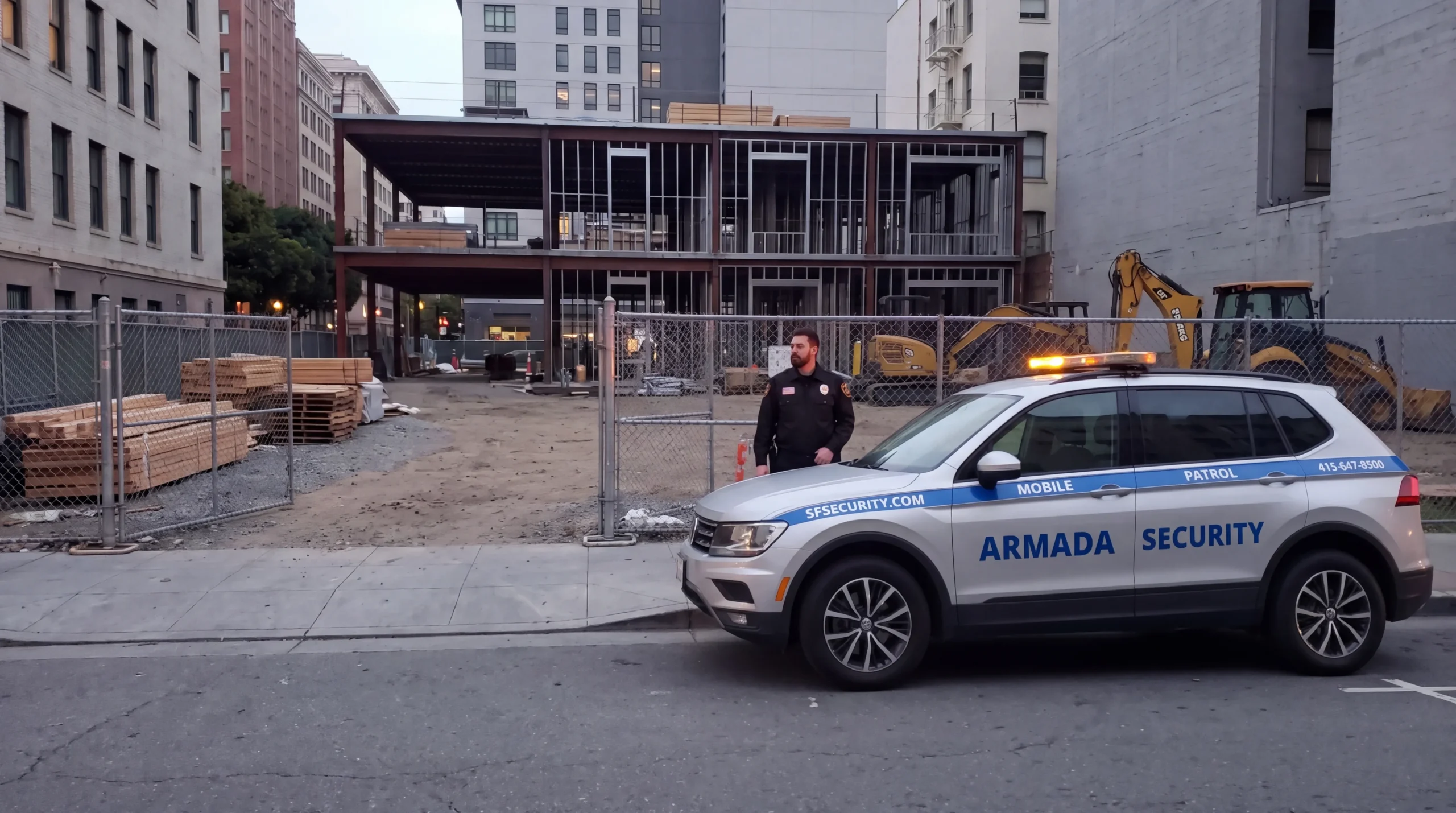
What a Bay Area construction site actually loses
Three machines in four never come back: the share of stolen construction equipment ever recovered is 23 percent (National Insurance Crime Bureau, quoted by LoJack1).
Three losses repeat on Bay Area sites, and each is answered differently. The first is a vehicle problem, the second a fence problem, the third a liability problem. Two of them have a page of their own: theft and break-ins and trespassing and encampments.
Equipment that drives away
Loaders, skid steers and towable generators leave on their own wheels, usually between Friday evening and Monday morning. A machine without a recorded serial number and an owner mark is effectively anonymous the moment it reaches a yard two counties away.
- Serials and marks photographed and held off site before the first delivery arrives
- Gate times logged, so a departure outside working hours is a question that night
- Keys and fobs held by one named person per shift
Materials that fit in a pickup
Copper, cable drums, hand tools and finish materials go in small loads and often repeatedly, by people who have seen the site in daylight. The loss shows up as a schedule slip before it shows up as an insurance claim.
- Storage closed and sealed at end of shift, with the seal checked on each round
- Deliveries met and counted, not left at the curb
- Repeat approaches written up with the time, so a pattern is visible in a week
People on site after hours
An intruder who is hurt on your site is your liability, and an encampment at the fence line turns into a tenancy question rather than a security one. Both are cheaper to prevent than to resolve.
- Lighting and sightline gaps noted on the first walk-through
- Trespass notices posted where the code requires them
- Each contact recorded with time, place and photograph for your file
Where our construction crews work
Armada has worked out of one San Francisco office since 1994. The same crew covers the next site over, so a call does not start with a drive across the bay, and an officer reaches a site under contract in 15 to 30 minutes, measured from our own patrol log for 2026.
We serve: San Francisco, San Mateo, Brisbane, San Jose (see all locations)
Three ways a site is covered
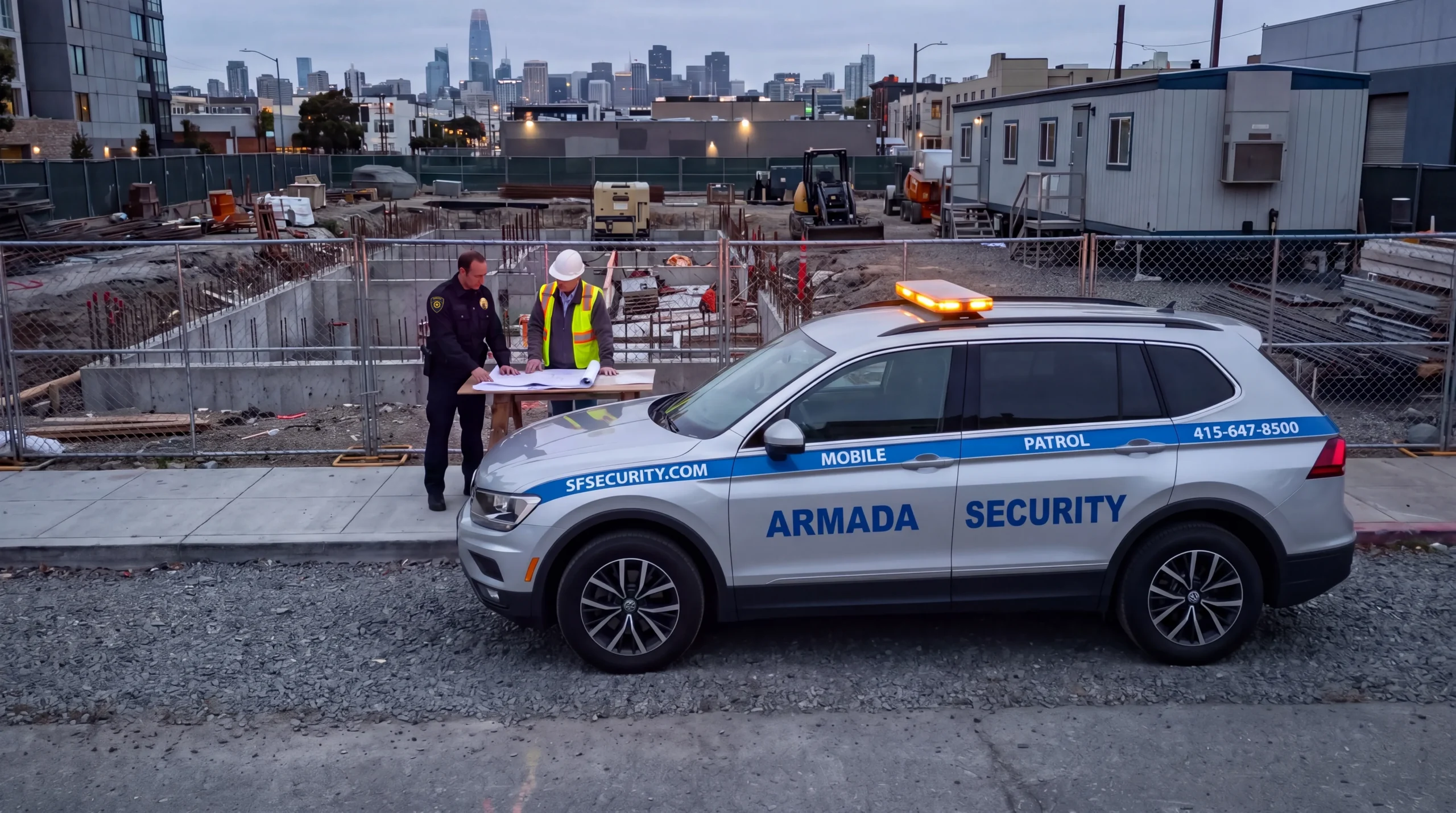
A construction site rarely needs one of these for its whole life. Most start with patrol during the slab stage, add a posted officer once finishes arrive, and keep response on the contract throughout.
Every officer is individually BSIS licensed and background-checked, and the company holds California PPO 120526. The minimum term is one month, month-to-month after that.
A posted officer
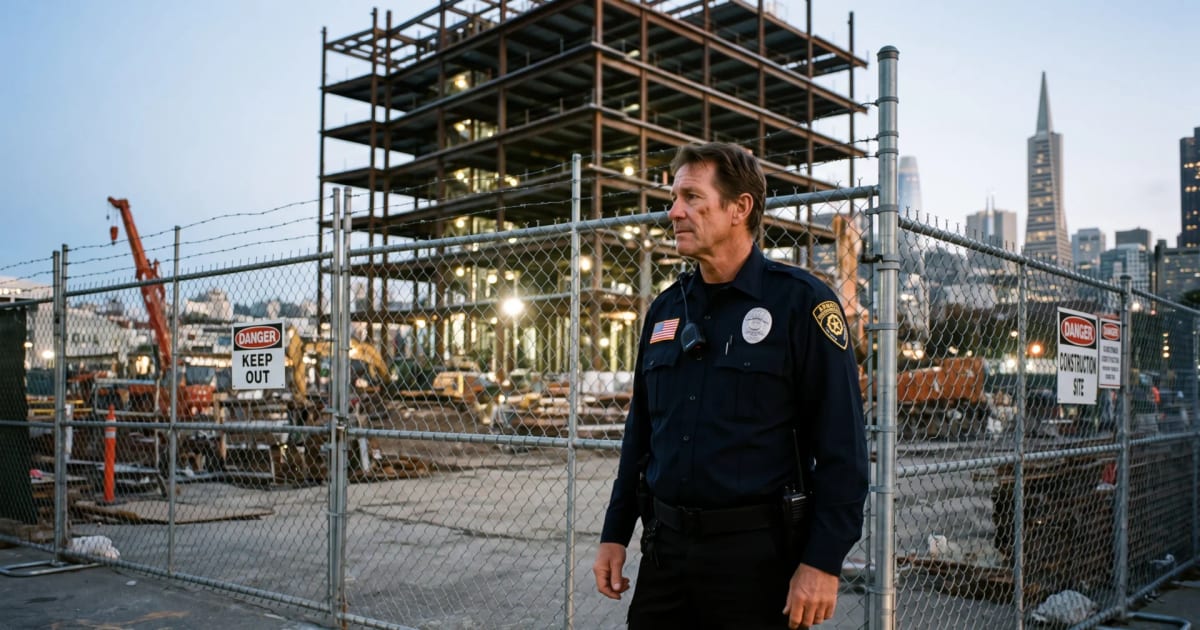
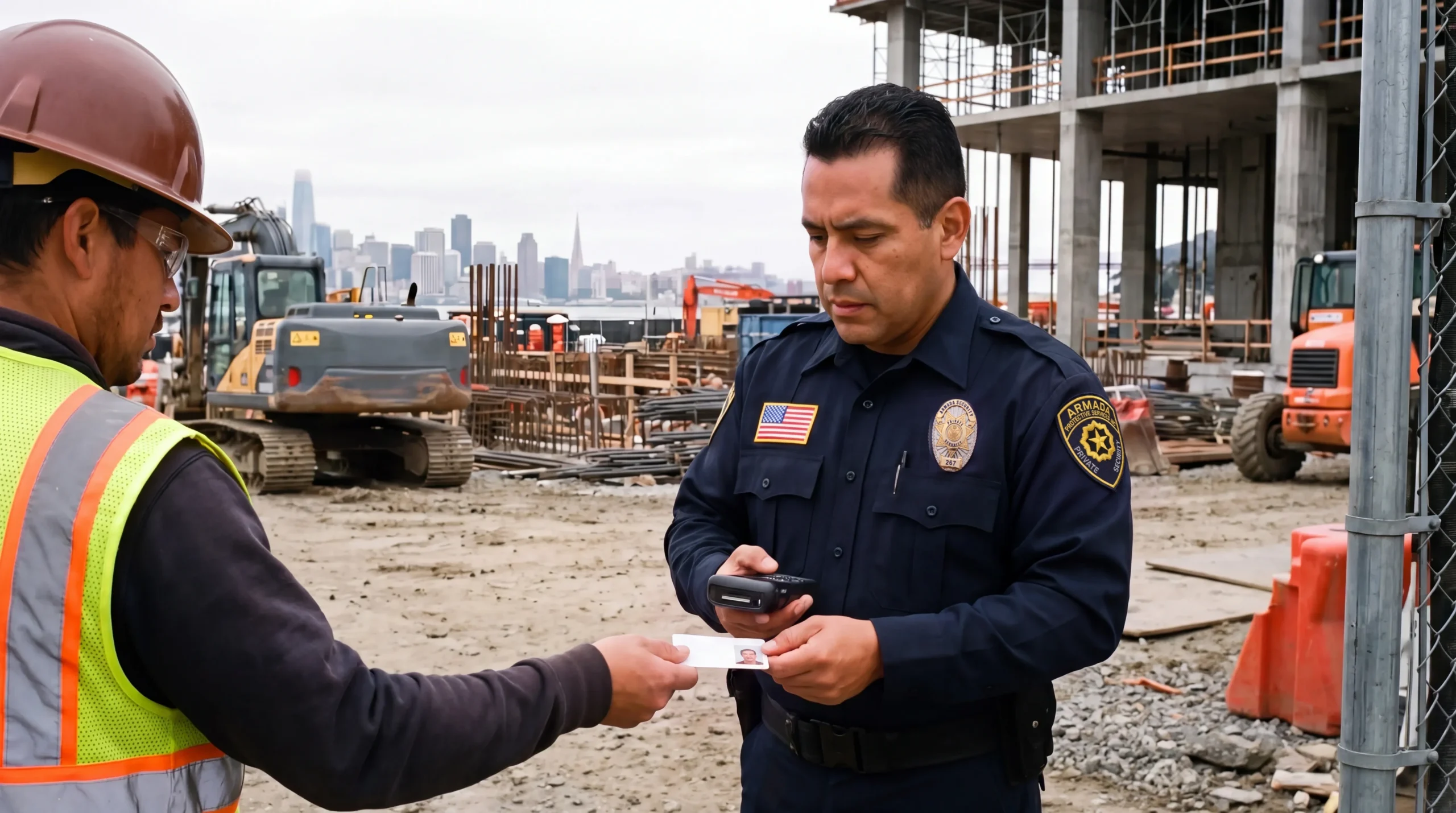
One officer on the gate for the hours the site is live or empty, with written post orders for that address: who may enter, what is checked, what is done when something is wrong. Used where deliveries are constant or the equipment on site is worth more than the fence.
- Access list and deliveries checked at the gate, not after the fact
- Fixed hours, including the handover between shifts
- Report filed at the end of every shift, whether or not anything happened
Mobile patrol
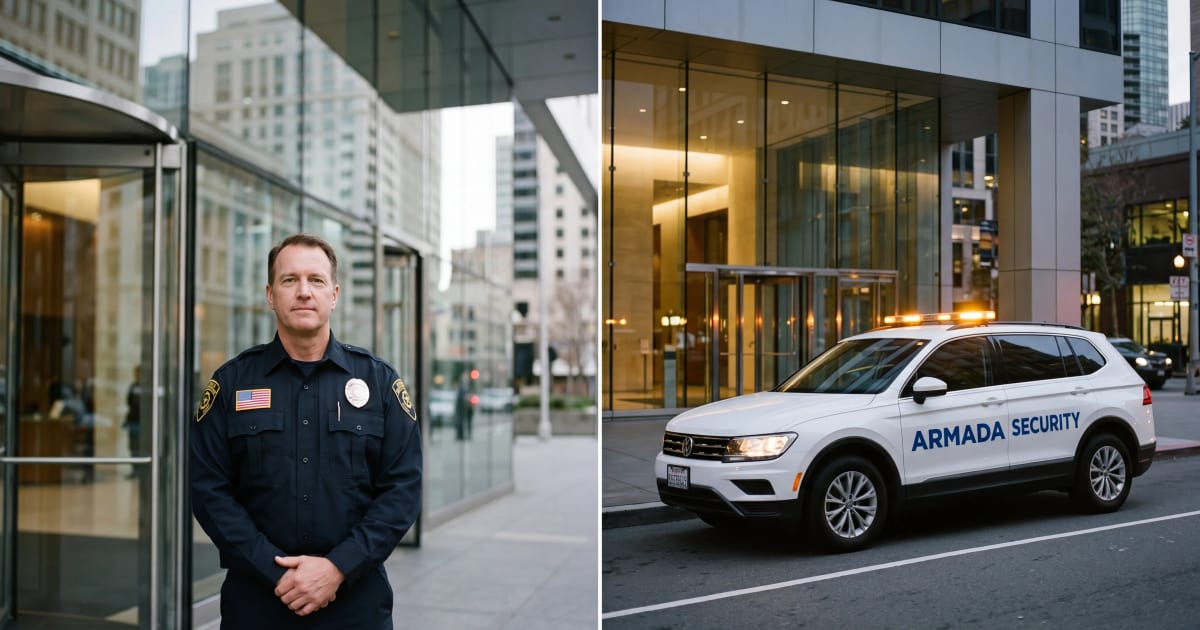
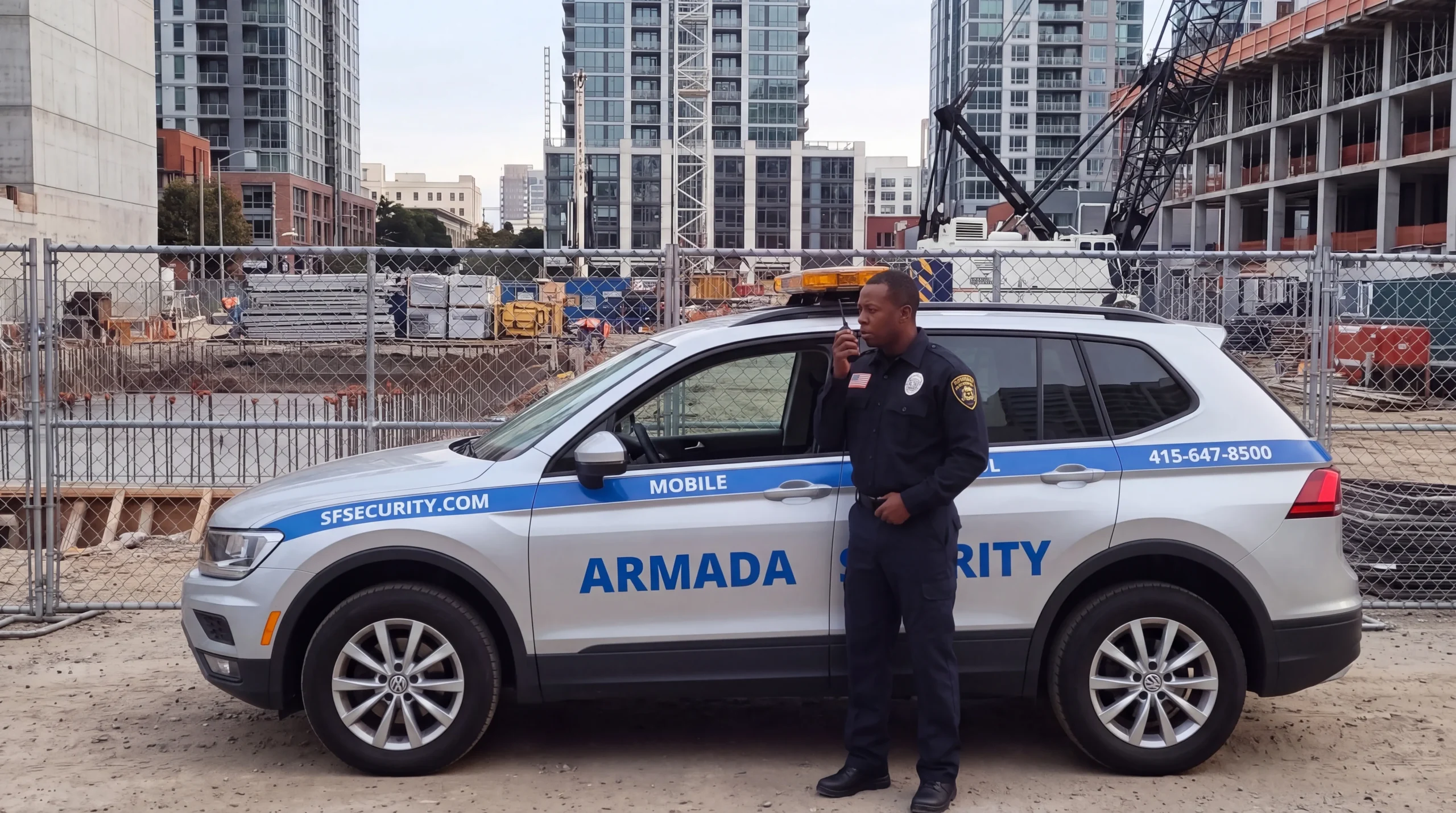
A marked vehicle covers several sites on a round that changes every night, so the pattern cannot be learned from the street. Chosen where a full post is more cover than the site needs.
- Rounds logged by GPS, not by memory
- Interior and perimeter checkpoints scanned on each visit
- Photographs attached to anything that changed since the last round
Alarm and emergency response
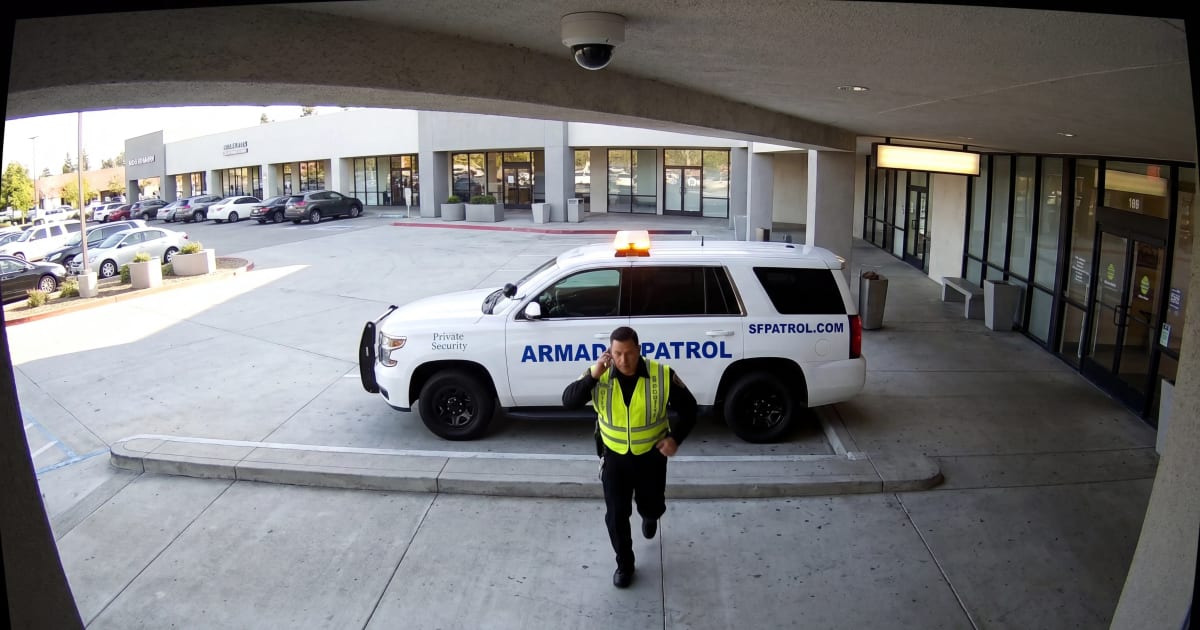
When a sensor, a neighbor or a site manager calls, the officer covering your site attends, writes what was found and escalates to SFPD2 when a crime is in progress. Armada does not install cameras or sensors; we bring contractors and supervise the work to our own requirements.
- Named escalation contact per site, agreed before the first shift
- Written incident report when the shift closes, with photographs
- Follow-up round after any confirmed incident
What changes with the kind of build
The same three losses look different on a tower, on a roadway and on a tract of houses, and the cover is priced from that difference, not from square footage.
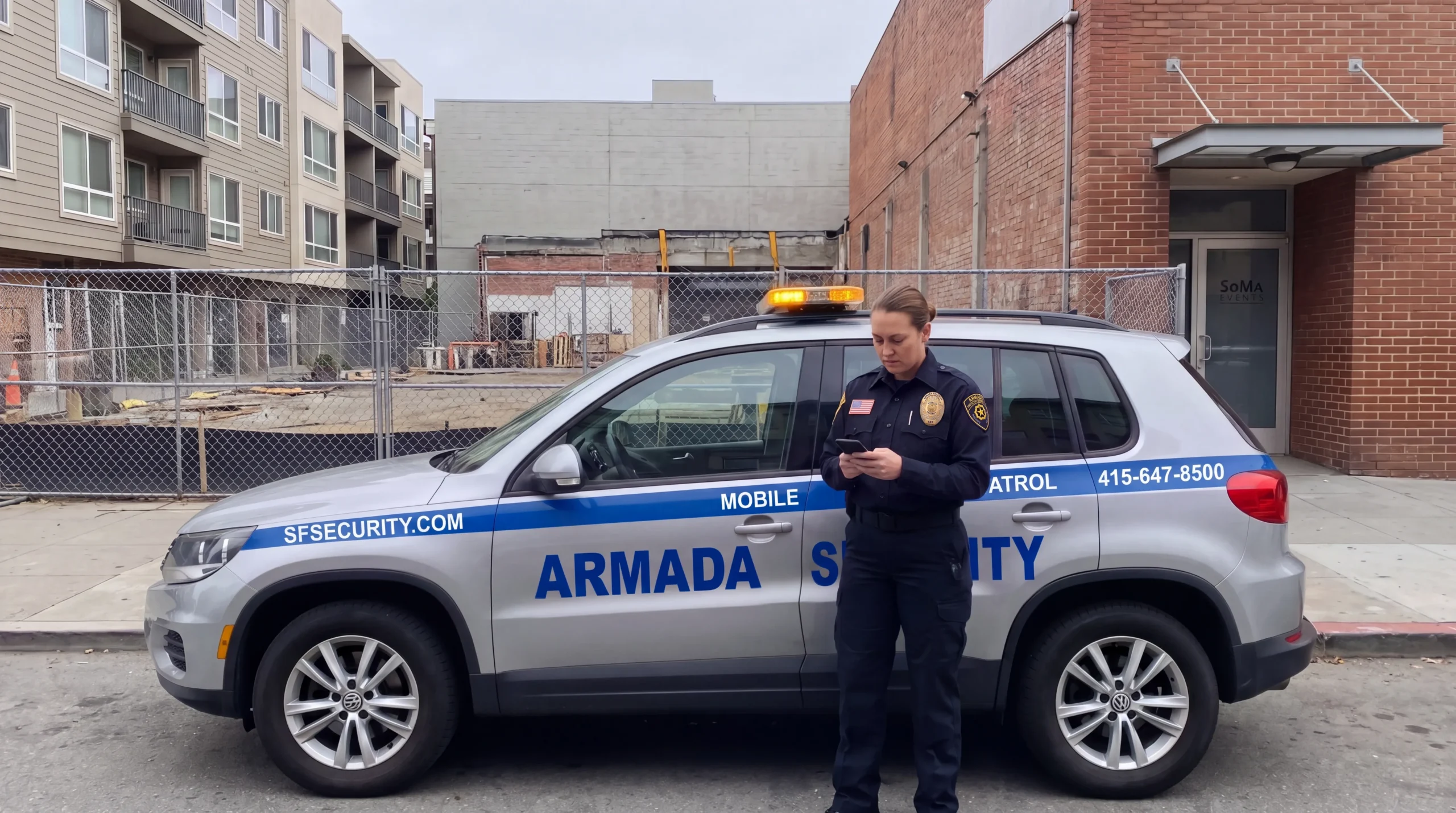
Commercial and mixed-use
Value arrives late and all at once: elevators, switchgear, glazing and finishes land in the last third of the schedule on a site that already has dozens of trades through it daily.
- Access list kept per trade, not per company
- Floor-by-floor sweep at the end of the working day
- Finish materials kept in a separate locked area
Infrastructure and road work
The site is a line, not a square. Equipment is left at the working face overnight, the public walks past it, and the perimeter changes every week as the works move.
- Patrol route rewritten whenever the working face moves
- Equipment parked in one lit place at shift end, not where it stopped
- Public interface treated as part of the brief, including the walkway
Residential developments
Model homes and sales offices are open to strangers by design, while twenty unfinished units behind them hold appliances and copper.
- Sales hours and build hours covered as two different jobs
- Appliance deliveries met and signed for
- Night check of unoccupied units once the first buyers move in

What the city expects to see at the fence
Chapter 33 of the building code as adopted in San Francisco, Safeguards During Construction3, is what an inspector reads on your site. It is also the cheapest security checklist you will get, because the city has already decided what has to be there.
Our officers walk that barrier line on every round and photograph any section that is down, so a gap that cannot wait reaches your emergency contacts right away and is in the report either way, instead of surfacing at the next inspection.
The barrier and the walkway
The code sizes the barrier between the work and the sidewalk by how close the work sits to the lot line and how tall the building is, and it requires a covered walkway where the public has to pass. A fence that is down is both a security hole and a code finding.
- Barrier line checked on every round, with photographs of any gap
- Walkway lighting and obstruction noted in the same report
- Gates logged as they are opened and closed
Working with SFPD
For a crime in progress the police are the right call, and SFPD2 itself points businesses to private security for everything below that line. We make the call, stay on scene and hand over what we recorded.
- Named escalation contact for your site agreed in advance
- Time-stamped notes and photographs handed over with the report
- Follow-up round on the same shift after any police attendance
Protecting the equipment and the materials
What is recovered after a theft is not evenly spread across machine types, and the mix is the part a site owner can act on.
What the recovery figures actually show
| Equipment type | Share of recoveries |
|---|---|
| Wheeled and tracked loaders | 36% |
| Towables: generators, compressors, mixers, welders | 35% |
| Skid loaders | 15% |
| Everything else | 14%, not broken down in the source |
These are machines that were stolen and then recovered while fitted with a LoJack unit, so the shares describe the recoveries, not everything that was stolen.
Source: LoJack 2016 Construction Equipment Theft Report1. Figures checked November 2026.
Storage that is actually locked
Space is the scarcest thing on a San Francisco site, so containers end up wherever they fit and stay unlocked, because closing one takes a few minutes at the end of a long day. A sealed container checked on every round is the cheapest thing on this list.
- Container seals numbered and checked on each round
- Tools checked out to a named person, not to a trade
- Deliveries into the storage, never left at the gate
A register that exists before the theft
Recovery depends on a serial number somebody wrote down. We record make, model, serial and owner mark during the first walk-through and keep a copy with the patrol log, so a report filed at three in the morning already has the numbers in it.
- Register built on the first visit and updated as equipment arrives
- Owner mark applied in a second, less obvious place
- Copy held off site, so the paperwork does not burn with the job shack

Knowing what is on site tonight
Rented equipment comes and goes weekly. The list that matters is not the procurement schedule but what stood on the site at the end of today, which is the list the officer checks against on the night round.
- End-of-day list confirmed with the site manager
- Returns to the rental yard checked off the register
- Anything unaccounted for raised before the shift closes
Our Statistics. Your Guarantee.
Anyone can put a body on a gate. These four numbers are what a site manager can check before signing: how fast someone actually gets there, whether the cover changes anything, who picks up at two in the morning, and whether the license is real. Armada has been the top-rated San Francisco security company since 2021 according to SFist4.

- 2x
At least twice as fast as police arrival
Under contract Armada is on site in 15 to 30 minutes. The median SFPD publishes for a low-priority call is longer, which is why SFPD itself points businesses to private security for anything short of a crime in progress.
- 80%
Fewer incidents at monitored properties
Weighted average across client sites, banks and hotels among them. It compares the incident records those clients kept before Armada covered the site with the records they kept after.
- 24/7
Your officer is the one you call
At two in the morning a site manager calls the officer standing on the site, not a call center in another state. Clients hold those numbers from the first shift, and the app carries the messages, the photos and the log. New site? (415) 647-8500, Mon-Fri 9am-5pm.
- 100%
Licensed and insured
Every officer individually BSIS licensed and background-checked, under California Private Patrol Operator PPO 120526. Look the number up yourself in the California Department of Consumer Affairs license search5. Checked November 2026.
Related Security Services
The Armada services that sit closest to construction site security.

Protecting your assets and safeguarding your future at warehouses and distribution centers.
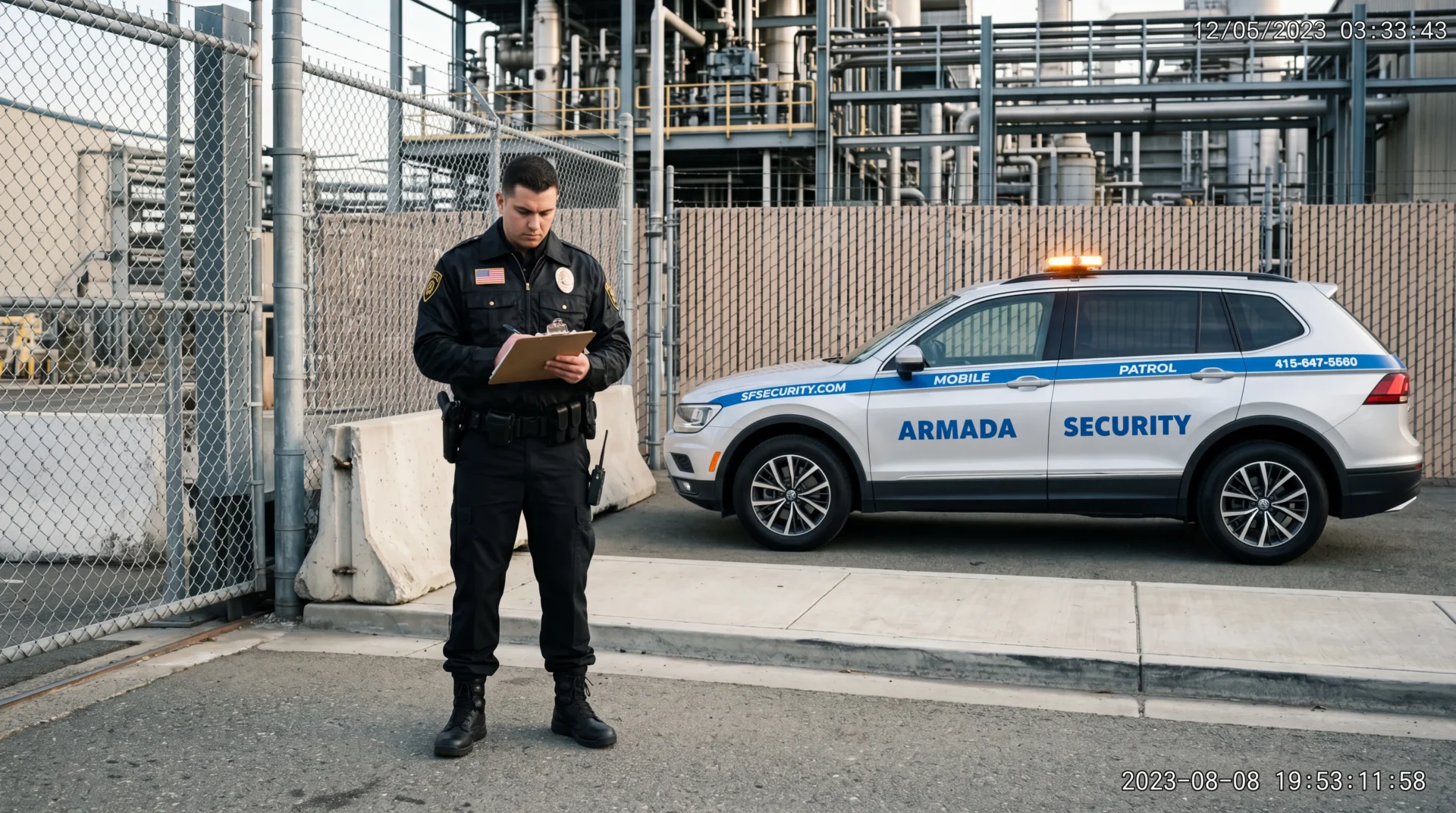
Safeguarding Bay Area manufacturing operations, from the production line to the loading bay.
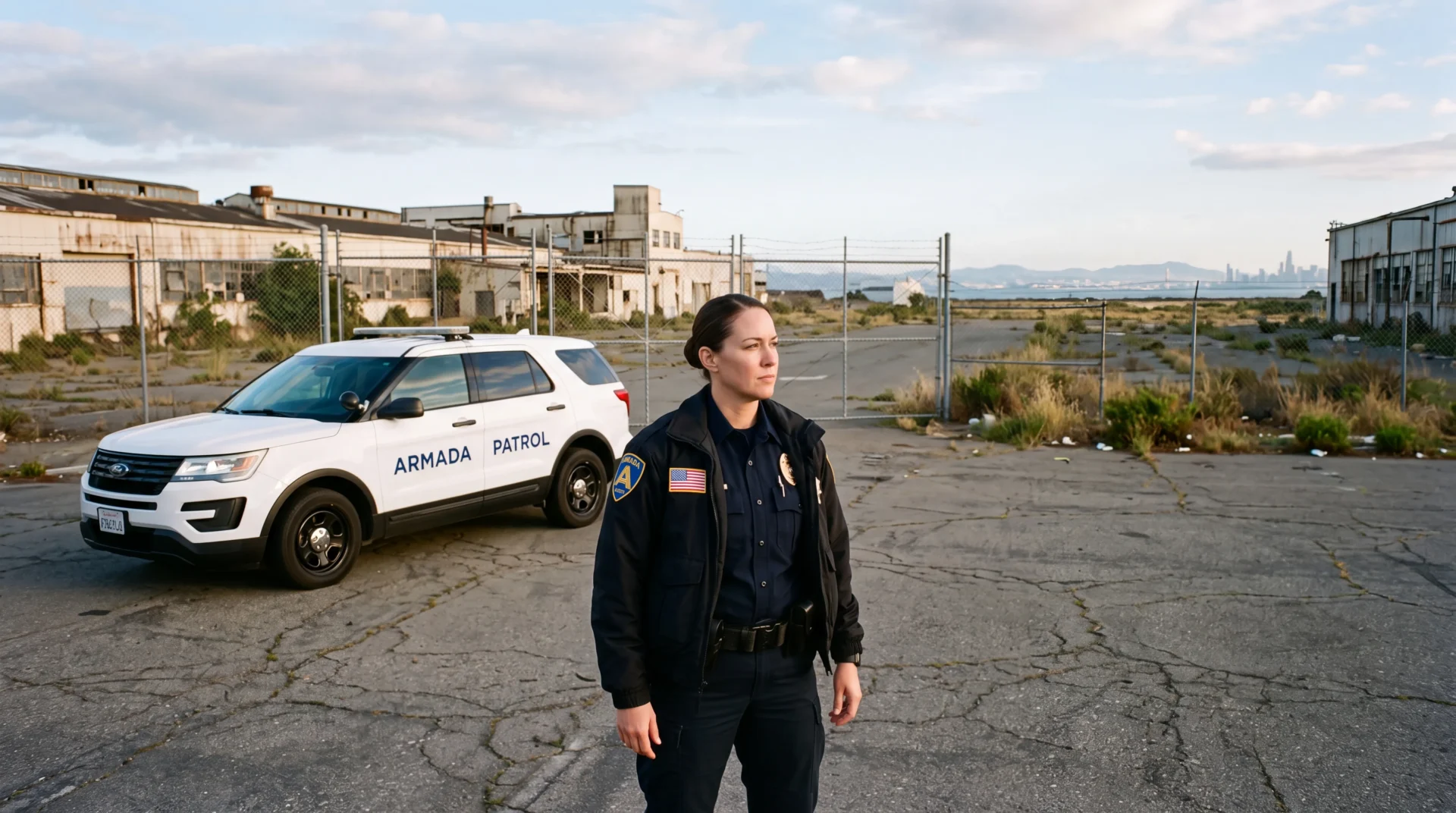
On-site personnel, mobile patrols and surveillance for industrial property standing empty.
Customer testimonials
Professional and Reliable Security Services in the Bay Area
We hired Armada on short notice for a situation we were experiencing in one of our apartment complexes. They responded quickly, set up patrols and a guard service for us very quickly. Guards were professional, prompt and communicated activity at the property to us.

Lana August
Property Manager, San Francisco
We have used Armada for about 10 years. They are an amazing company providing professional personnel consistently. Thank you Armada!

Jesse Leite
Resident Manager, San Francisco
Every Armada employee with whom I've had the pleasure of interacting has been top notch - curteous, efficient, effective, knowledgeable, responsible.

Alex Goretsky
Business Owner, San Francisco
I Manager a portfolio of communities in San Francisco -working with Armada is great. They are flexible, honest and the Guards are always on point. I would recommend this firm to other HOA/Commercial managers.

Christopher Stanley
Owner and Chief Executive Officer, San Francisco
Quoted verbatim from published client reviews, including their original wording.
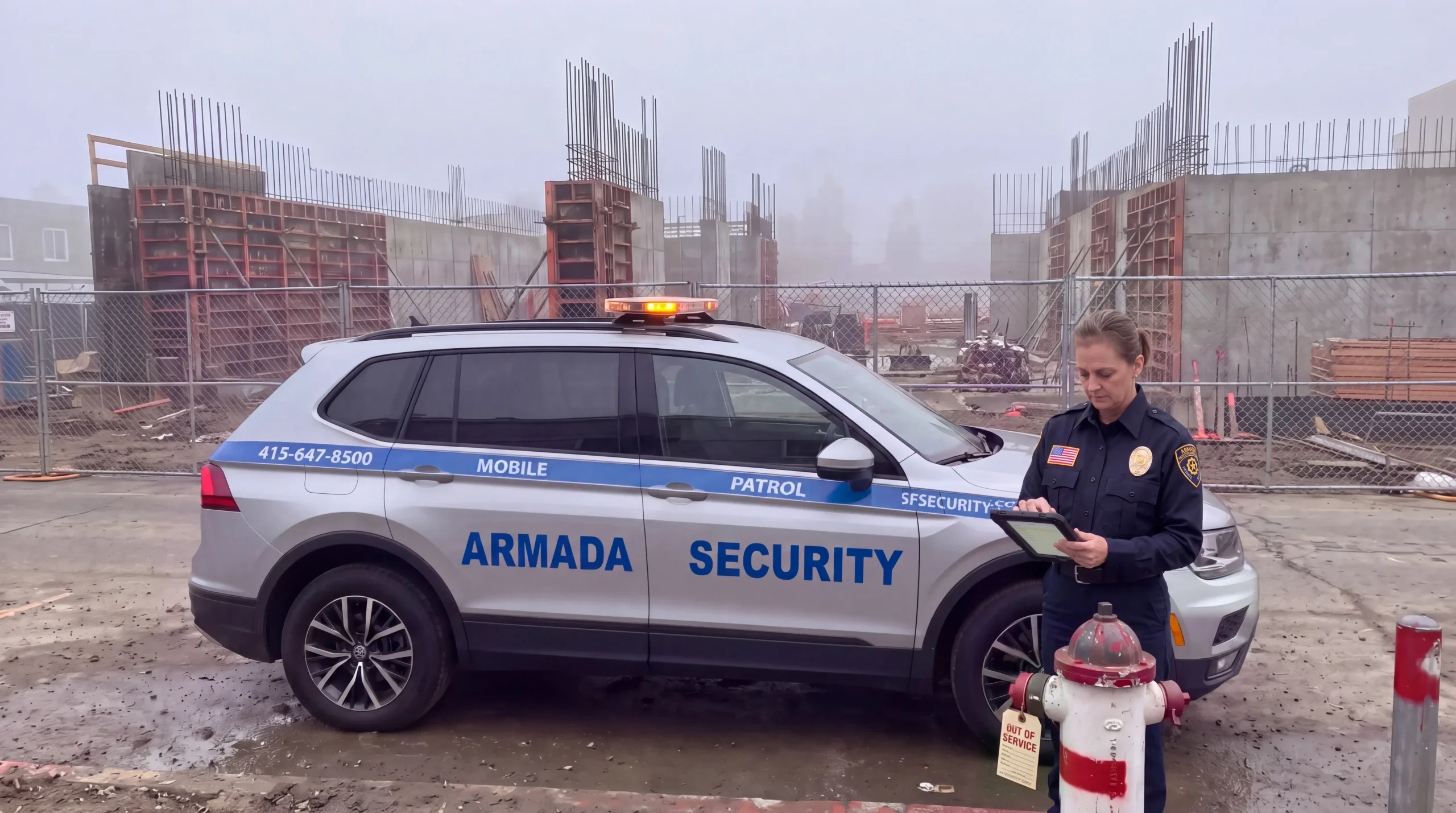
Find out what your jobsite is exposed to
Pick a time and give us 30 to 60 minutes on site. You walk the jobsite with an Armada expert who shows you what is open to a stranger now, and what changes after dark: the fence line, the storage, the gate list, what sits out overnight. You are told what to do about each one. The assessment costs nothing, and the written version is yours whether or not you hire us.
FAQs
Questions site managers and developers ask us about construction site security in San Francisco.
How quickly can you put a guard on a San Francisco construction site?
Four to six hours for an unplanned start, measured from our own patrol log for 2026, and we ask for 48 hours where the start is planned, because that is the difference between sending whoever is free and sending an officer briefed on your address.
What stops equipment theft in practice, rather than on paper?
Parking the equipment in one lit place at shift end, keeping the gate list short enough that the officer knows every face on it, and running the round at an hour nobody can predict. The paperwork matters as much as the fence: a machine with no written serial number is anonymous the moment it leaves the street.
Do you install cameras and sensors on the site?
No. Armada guards and responds. Where a site needs cameras or sensors we bring the contractor, specify what we need from the system and supervise the installation to our own requirements, so the equipment serves the patrol rather than the other way round.
Who is responsible when the site fence is down at two in the morning?
You are, both to the city and to anyone who walks through the gap, which is why we treat it as an incident rather than a note for the morning: the officer photographs it, calls the site contact and stays until it is closed or made safe. The requirement itself is in Chapter 33 of the building code3.
Can one contract cover several sites across the Bay Area?
Yes, and each address still gets its own paperwork: its own report, its own visit times and its own line on the invoice, so a project manager who only runs one of your sites is not reading someone else's night. The term is one month minimum, month-to-month after that.
What do we actually get after a shift?
A written report when the shift closes, which reaches you about an hour after the officer goes off: what was checked, what was found, the time of each round and photographs of anything that changed. Officers work different shifts, so the report follows the shift rather than the clock. Anything that cannot wait for it goes out at once to every emergency contact you have given us, on every channel at once: phone, email, messenger and the guard app. That is the document your insurer and your contract administrator will ask for, and it is the reason the record is kept whether or not anything happened.
Ask us directly
If you don't see the information you're looking for, feel free to fill out the form and ask us directly: we're here to help!
Sources
Where the figures, rules and local facts on this page come from. Links reviewed 5 Nov 2026.
- PR Newswire 1 National Insurance Crime Bureau, quoted by LoJack
- San Francisco Police Department 2 SFPD
- UpCodes 3 Safeguards During Construction
- SFist 4 Armada Protective Services: San Francisco's Top Security Company trade press, used only where no primary source carries the claim
- California Department of Consumer Affairs license search 5 California Department of Consumer Affairs license search