Hotel Security in San Francisco
A hotel sells a door that locks for the night and keeps its own front doors open to the street the whole time it is selling. The post that works here can tell a guest from somebody who walked in off the sidewalk, at three in the morning, and settle it without the check-in line turning around to look.
What follows is the hotel part of the job: the audit hour at reception, who may sit in the lobby and for how long, the function rooms on the nights they are let out, the driveway and the garage, the people working in your building for somebody else, and how a person who should not be there is walked out quietly.
An expert walks the property with you and writes down what he found. The notes are yours either way.
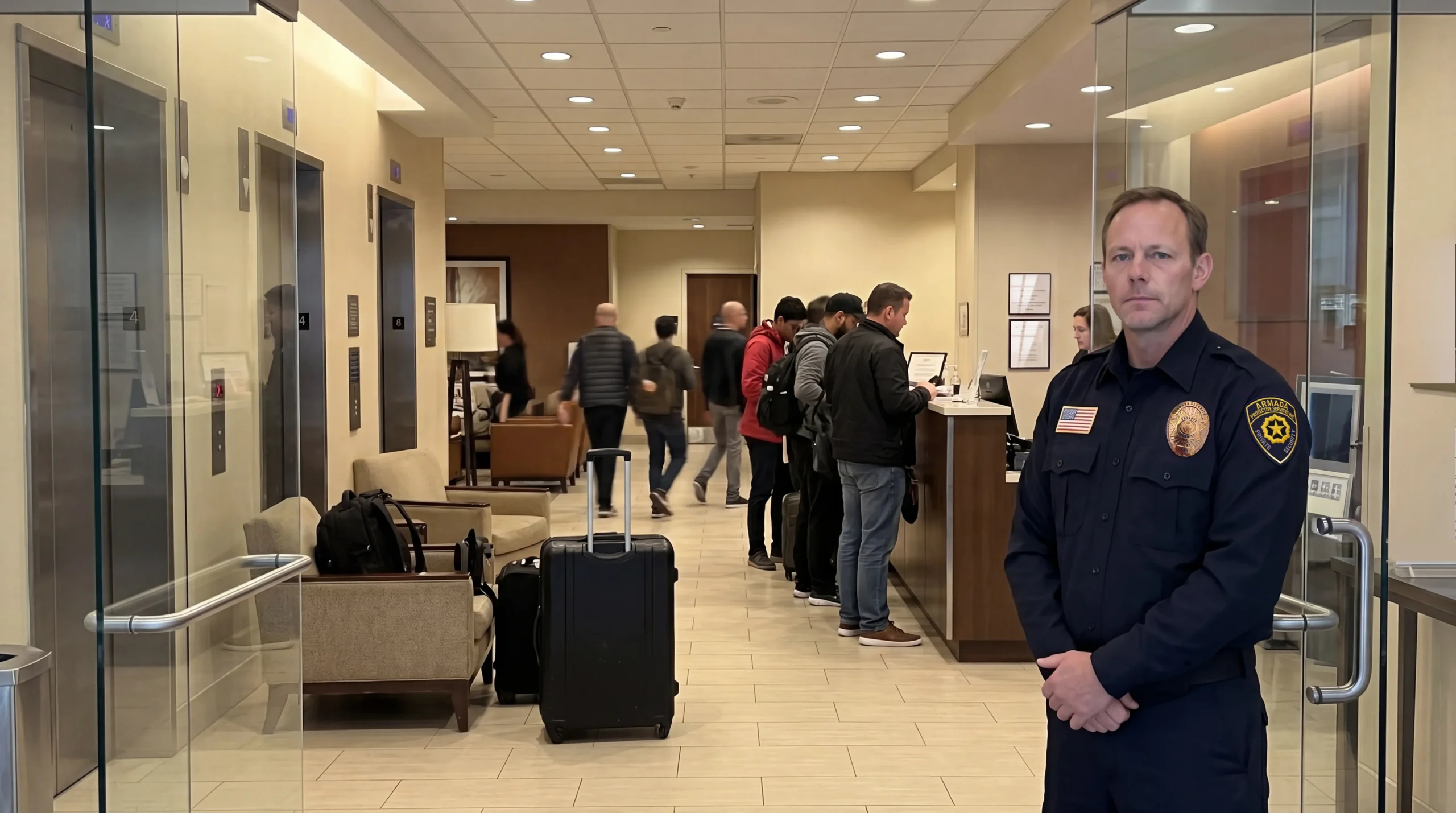
A hotel never closes, and the post has to live with that
An office empties at seven and gets locked. A hotel is still selling rooms at two, still has one person behind the desk, still has its doors open, and every day it takes in a crowd that nobody at the counter has ever met.
Four of these belong to hotels and to almost nothing else, and they are the four worth settling before anyone writes a shift plan. The part a hotel shares with every other address that has a desk sits on the commercial and corporate security page, next to the office building version of the same questions.
Three in the morning at the front desk
The night audit is the hour the day is closed off in the accounts, and it is also the hour one clerk stands alone with the doors unlocked, a drawer under the counter and a lobby anyone on the sidewalk can walk into out of the rain.
- A second person on the floor through the audit, not only at the busy end of check-in
- The street door watched while the clerk is counting, because that is exactly when it is not
- Everyone who comes in after midnight logged with the time, instead of recalled at breakfast
Everyone in the lobby looks like a guest
In an office the stranger stands out and the officer knows the faces inside two weeks. A hotel is the reverse: almost every face is new, a suitcase explains anything, and the man asleep in the lobby chair at four is either a tired guest off a red-eye or the reason you called us.
- A lobby rule agreed with you first: who may sit, for how long, and what the officer asks
- Name and room checked at the elevators on the nights the guest floors are closed off
- The same words used for every refusal, so nobody can say they were picked out
The function rooms are a separate building for a night
A wedding, a sales conference or a December party puts a few hundred people on your street level who are not staying with you, along with outside caterers, a band and an audiovisual crew who come in through the service door and prop it open for the afternoon.
- The event written as its own post, with its own doors, its own hours and its own orders
- Load-in and load-out covered, because that is when the service door stands open to the alley
- Event guests kept to the event floors, so a party does not drift upstairs into the bedrooms
The driveway and the garage
A hotel entrance is also a road. Cars stop under the canopy, bags stand on the curb while their owner is at the desk, drivers double-park in the lane, and the garage below holds other people's property all night with nobody living next to it.
- Bags watched while they stand at the curb and their owner has gone inside
- Garage levels walked at the hours your own loss reports name, not at tidy ones
- Pickups and deliveries kept moving, so the entrance does not become a parking lot
The hotels we can reach in time
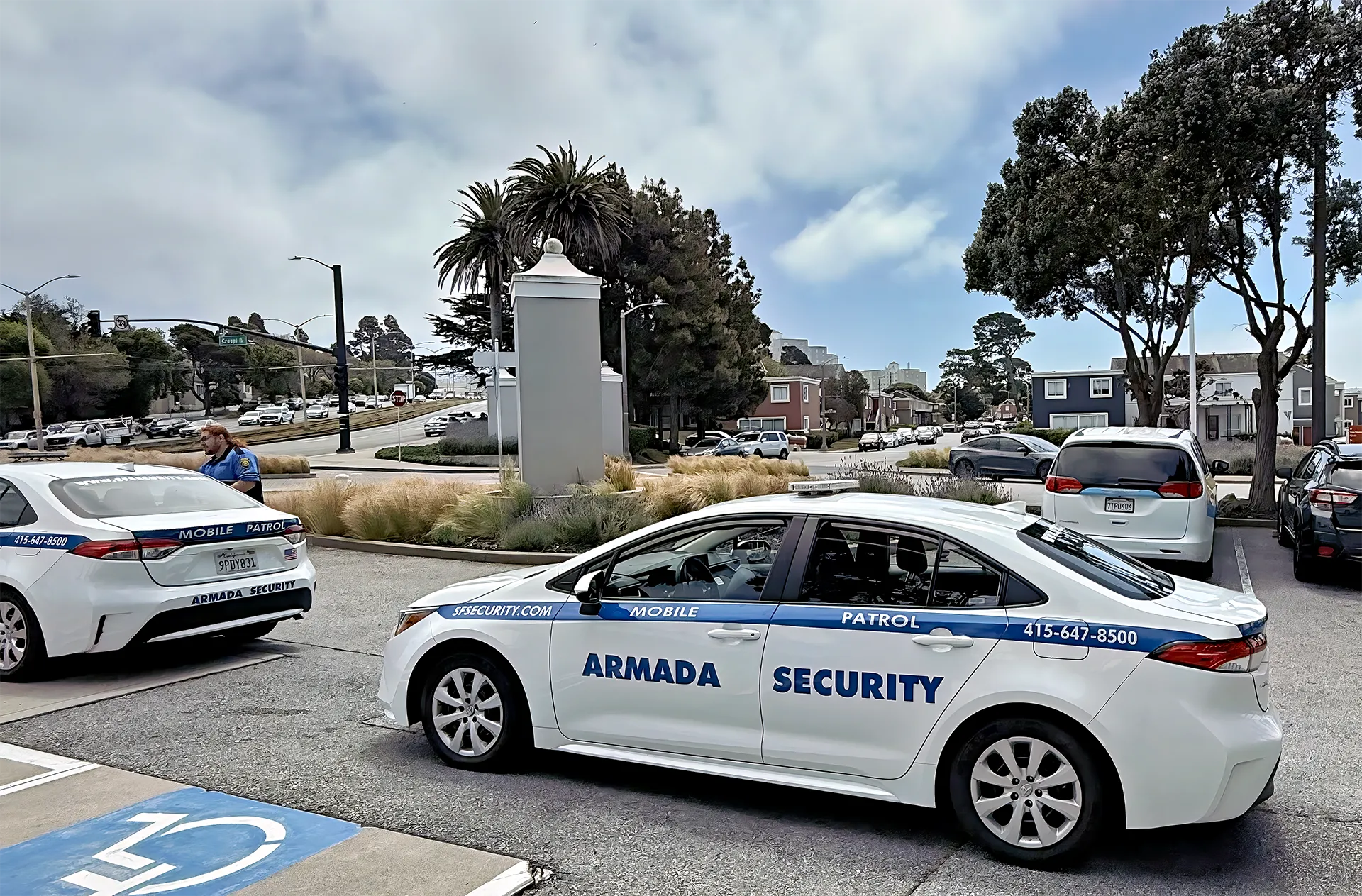
One office in San Francisco runs the whole company, so the officer in your lobby and the supervisor who picks up at four in the morning work out of the same room. A hotel under contract is reached in 15 to 30 minutes, measured in our own dispatch log from the call to the officer being on the property.
We serve: San Francisco, San Mateo, Brisbane, San Jose (see all locations)
How the hotel post is actually run
What a hotel buys is a person who can hold a door, hold a conversation and leave both in writing. Four things decide whether that is worth the money: the night, the function space, the people in your building who work for somebody else, and the minute someone has to be asked to leave.
Officers are licensed individually by BSIS and cleared before a first shift, and the company works under California PPO 120526. Locks, key cards and cameras are another trade altogether, and a hotel hears that from us before it spends anything on our advice.
The night, hour by hour
The overnight officer is not a watchman in a dark chair. He holds the desk through the hours the desk is thinnest, and between those hours he walks the guest floors, the stairwells, the pool deck, the laundry, the loading area, the garage and the roof door.
- Separate orders for the desk hours and the walking hours, inside the one shift
- The order of the rounds changes nightly, so nobody on the sidewalk can time them
- Each checkpoint scanned at the point itself, which is what makes a round provable
A banquet is a job of its own
One night, one guest list, one organizer with a phone in her hand, and a room that empties into your lobby at eleven. We write the function as a post in its own right: where its guests come in, which doors stay shut, who is allowed behind the stage, and who gets the call when the bar closes and two people are still arguing.
- One named contact on the hotel side and one on ours, agreed before the doors open
- The difference between an invited guest and a hotel guest settled at the door, not upstairs
- The last hour staffed, because a function goes wrong at the end and not at the start
The people who work here and are not yours
Agency housekeepers, the outside laundry, the kitchen delivery, the elevator engineer, the contractor rebuilding floor six. Every one of them belongs in the building and none of them is on your payroll. At the service door a list of company names settles nothing; a name, a trade and the hour he was expected settles it.
- Signed in and signed out by name, so a quiet second visit after hours shows up on paper
- Keys and passes handed back at the end of the job and counted against the list
- Work on guest floors told to the desk the day before, not discovered by a guest
Asking someone to leave, in front of paying guests
This is the piece hotels buy and rarely describe. Somebody has to be told that the lobby is for guests, at a conversational volume, away from the check-in line, with no hand on anyone and nothing a phone camera would enjoy.
- Spoken to away from the desk line, and given the chance to walk out on his own
- Police called when the man will not go or there is a crime in front of us, never as the opening move
- Written up the same shift: the time, what was said, what was done and who was told
Our Statistics. Your Guarantee.
A hotel can check all of this before it signs anything. Every officer is individually BSIS licensed and background checked, and the duty manager holds the direct number of the officer who is standing in the lobby tonight. Armada has been the top-rated San Francisco security company since 2021 according to SFist1.

- 2x
At least twice as fast as police arrival
Under contract Armada is on site in 15 to 30 minutes. The median SFPD publishes for a low-priority call is longer, which is why SFPD itself points businesses to private security for anything short of a crime in progress.
- 80%
Fewer incidents at monitored properties
Weighted average across client sites, hotels and banks among them. It compares the incident records those clients kept before Armada covered the site with the records they kept after.
- 24/7
Your officer is the one you call
At two in the morning a duty manager calls the officer standing in the building, not a call center in another state. Clients hold those numbers from the first shift, and the app carries the messages, the photos and the log.
- 100%
Licensed and insured
Every officer individually BSIS licensed and background-checked, under California Private Patrol Operator PPO 120526. Look it up yourself: License record PPO 1205262 in the California Department of Consumer Affairs register. Checked November 2026.
Related Security Services
The three services a hotel asks for most often, each with a page of its own.
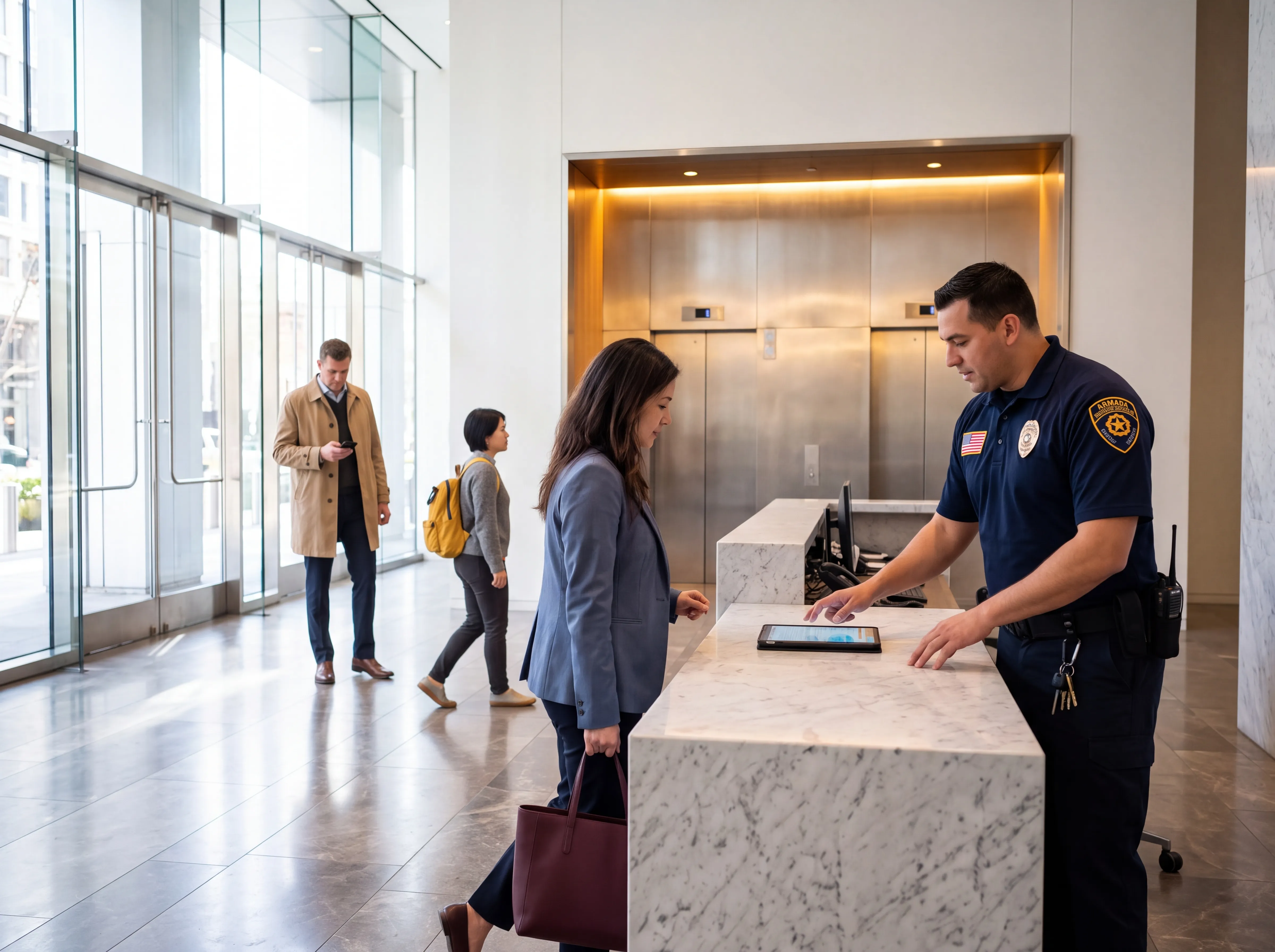
A uniformed officer on a fixed post at the desk, checking arrivals in and writing the shift down.
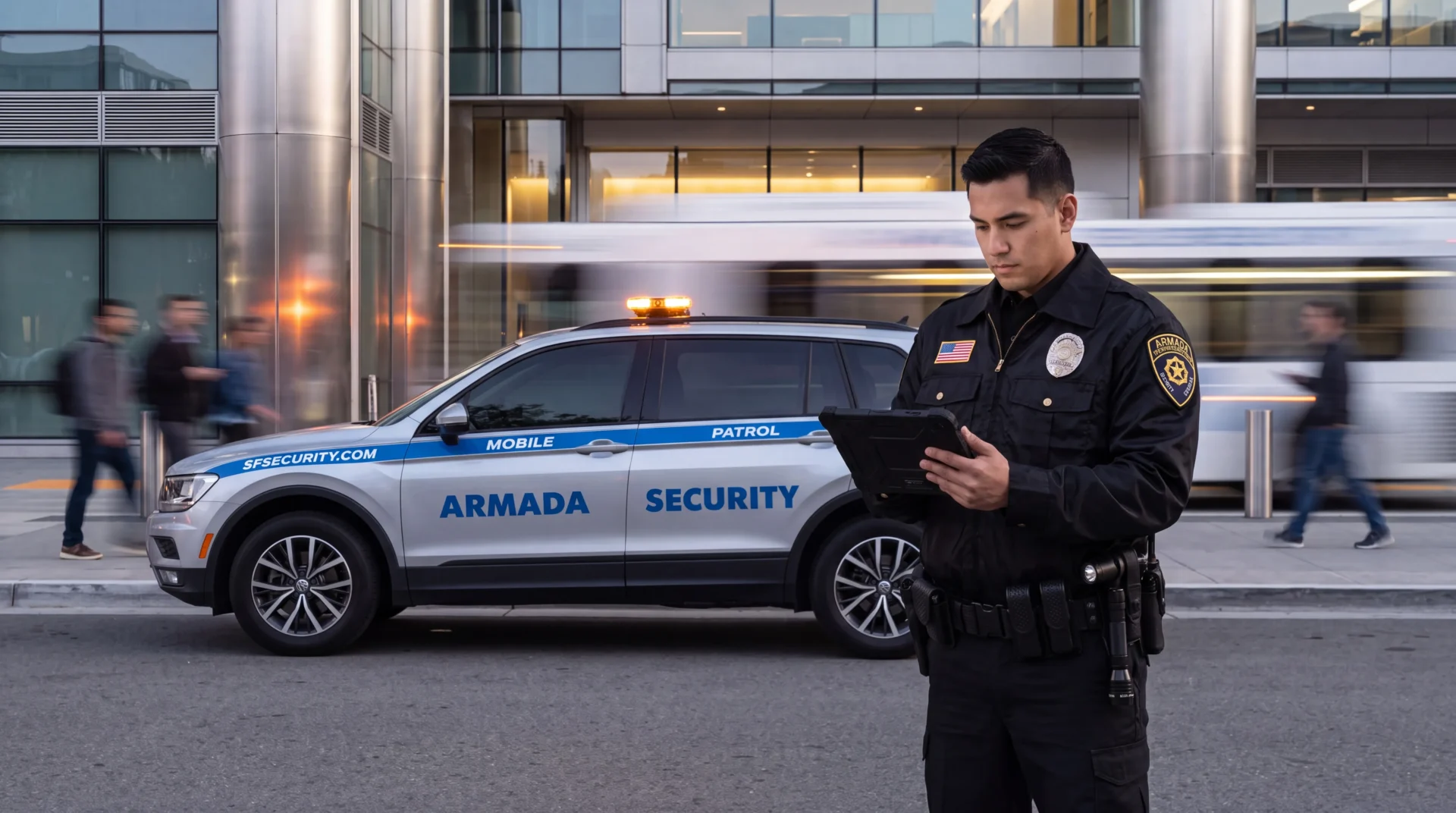
Guest floors, stairwells and back of house walked on foot, on rounds that are never in the same order twice.
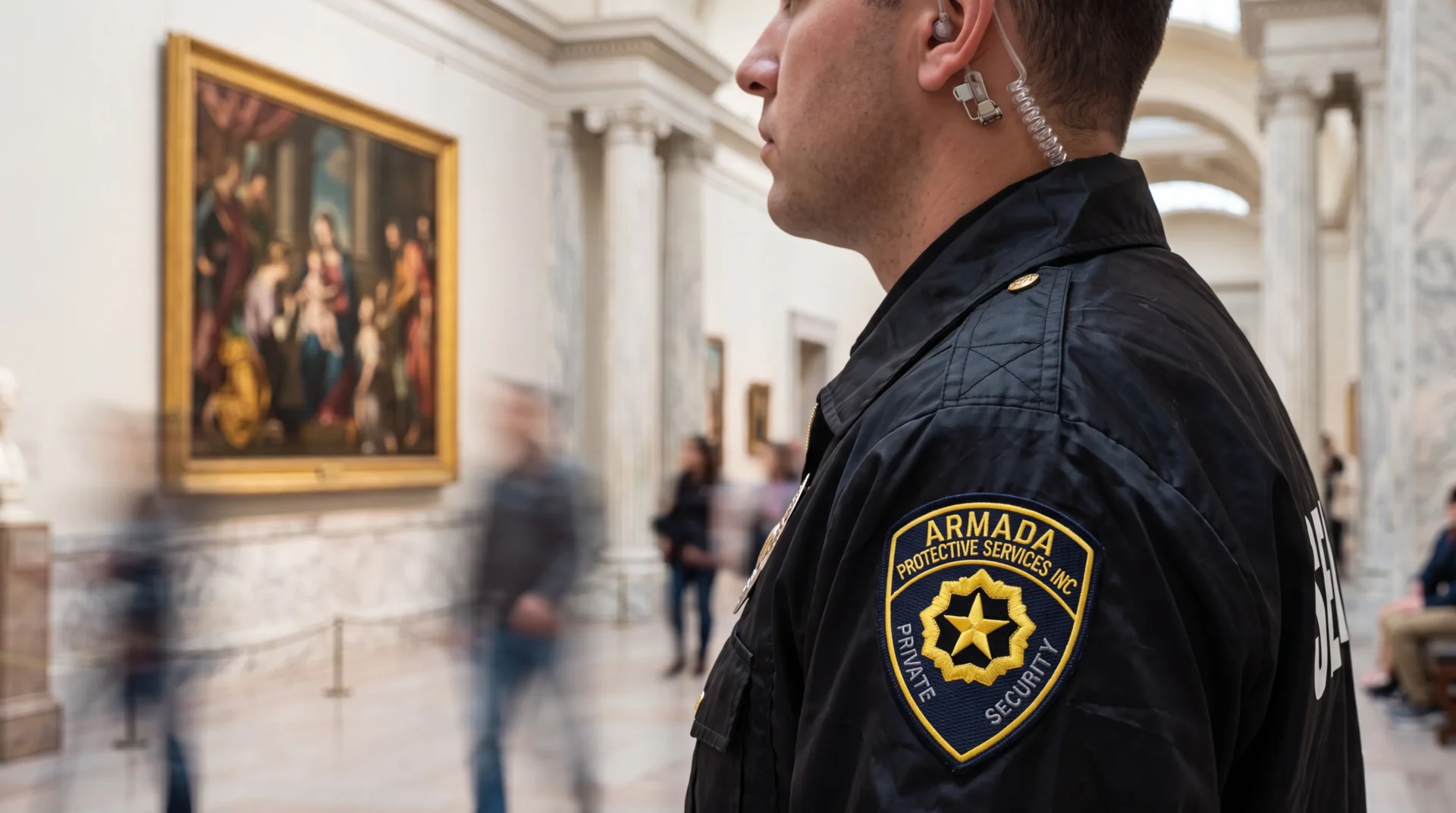
Door lists, entrances and the flow of a private function, from load-in to the last guest leaving.
Customer testimonials
Professional and Reliable Security Services in the Bay Area
We hired Armada on short notice for a situation we were experiencing in one of our apartment complexes. They responded quickly, set up patrols and a guard service for us very quickly. Guards were professional, prompt and communicated activity at the property to us.

Lana August
Property Manager, San Francisco
We have used Armada for about 10 years. They are an amazing company providing professional personnel consistently. Thank you Armada!

Jesse Leite
Resident Manager, San Francisco
Every Armada employee with whom I've had the pleasure of interacting has been top notch - curteous, efficient, effective, knowledgeable, responsible.

Alex Goretsky
Business Owner, San Francisco
I Manager a portfolio of communities in San Francisco -working with Armada is great. They are flexible, honest and the Guards are always on point. I would recommend this firm to other HOA/Commercial managers.

Christopher Stanley
Owner and Chief Executive Officer, San Francisco
Quoted verbatim from published client reviews, including their original wording.
Walk the hotel with us after dark
Pick a night and walk the property with an expert: the driveway, the garage, the function floor, the back of house and the roof door. You get shown what the building gives away at that hour, such as the service door propped open for the laundry, the stair that reaches a guest floor without passing a desk, and the hour the garage has nobody near it. The free site visit costs nothing, the written notes are yours whether or not you hire us, and a contract opens at one month and runs month-to-month after that.
FAQs
What general managers and directors of operations ask before a hotel contract opens.
How fast does a California hotel have to report suspected sex trafficking?
Within 24 hours, and California Civil Code 52.653 sets the penalties at $3,000 for a first violation, $10,000 for a second inside 24 months and $15,000 after that, sought by the Attorney General or a city attorney. The section bites when the activity happened at the hotel, a supervisory employee knew of it or acted in reckless disregard, and nobody told law enforcement or the National Human Trafficking Hotline in time. What an officer adds is the timed record: who was seen, when, at which door, written the same shift, so the hotel knows what it holds and when its day started.
How much human trafficking training does California require of hotel staff?
At least 20 minutes of interactive training for employees likely to come into contact with victims, reception and housekeeping among them, with new people in those roles trained inside six months and everyone repeating it every two years, under California Government Code 12950.34. That duty is the hotel's, for its own employees, and no guard company discharges it for you. Our officers work to the reporting line the hotel has already written, and they put what they saw in the shift report rather than deciding what it was.
A guest's property is stolen from a room. What is the hotel liable for?
California Civil Code 18595 caps an innkeeper's liability for a guest's lost property at $1,000 in total, with item limits such as $250 for a bag or a package, unless the hotel has agreed in writing to carry more. The cap is not a defense on its own. What usually decides the argument is whether anybody can say who went onto that floor and when, which is what a logged post answers and a camera nobody reviews does not.
What are hotel employees required to do when they find a fire, and how often are drills?
On discovering a fire or a suspected fire they activate the alarm where there is one, call the public fire department and do what they were instructed to do beforehand, under 2025 California Fire Code section 403.9.1.26. Hotels and motels are Group R-1, and section 405, Table 405.37 asks for an evacuation drill every quarter on each shift. When the alarm or sprinkler system is out of service, the fire department can require a fire watch until it is back, and that is a separate post with its own log.
Does any California city make a hotel keep a guard on duty for housekeeper panic buttons?
Los Angeles does. Its hotel worker ordinance, Los Angeles Hotel Worker Protection Ordinance8, requires a free personal security device for any worker assigned alone to a guest room or restroom, and a designated security guard who can take the alert and give help on the spot at all times; a hotel with fewer than 60 guest rooms may use a manager who has had at least three hours of training a year. San Francisco hotels should check what applies to them rather than assume the same rule, and whoever answers that alert, and how quickly, is worth putting in writing before a shift is staffed.
Ask us directly
If the question is about your own building and it is not answered here, put it in the form. The answer comes from the person who would run the post, not from a brochure.
Sources
Where the figures, rules and local facts on this page come from. Links reviewed 13 Nov 2026.
- SFist 1 Armada Protective Services: San Francisco's Top Security Company trade press, used only where no primary source carries the claim
- California Department of Consumer Affairs license search 2 License record PPO 120526 Armada Protective Services, private patrol operator
- public.law 3 Civil Code 52.65 a hotel that does not report sex trafficking activity within 24 hours, and the civil penalties for it, 4 Government Code 12950.3 human trafficking awareness training a hotel owes employees likely to meet victims, 5 Civil Code 1859 the cap on an innkeeper's liability for a guest's lost property
- UpCodes Codebook 6 Fire Code, section 403 2025, 7 Fire Code, section 405 2025
- Office of the Los Angeles City Clerk 8 LA hotel worker ordinance 2022 personal security devices for lone hotel workers and the designated guard who answers the alert