Residential Tower Security in San Francisco
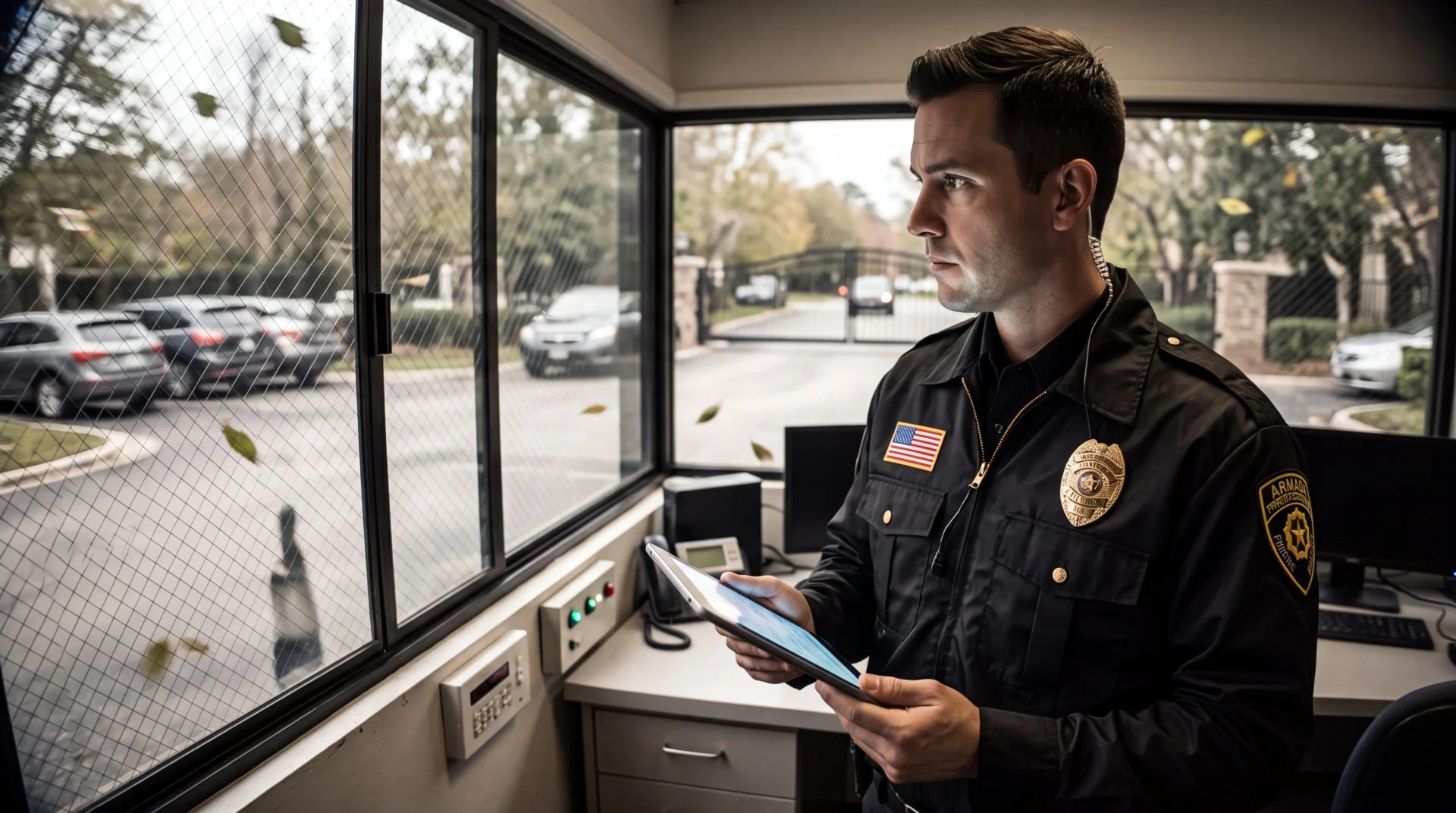
One door in a high-rise carries everyone: residents, their guests, the courier with an armful of boxes, the contractor whose fob should have been switched off in March. Armada staffs that door, the garage gate behind it and the rounds of the common floors, with licensed officers who learn the building instead of rotating through it.
- Front desk, garage gate and nightly rounds of the common floors
- The same officers week after week, briefed on your resident list
- A written shift report after every shift closes
The assessment before the quote is free, and the written assessment is yours either way.
If it is urgent, call (415) 647-8500
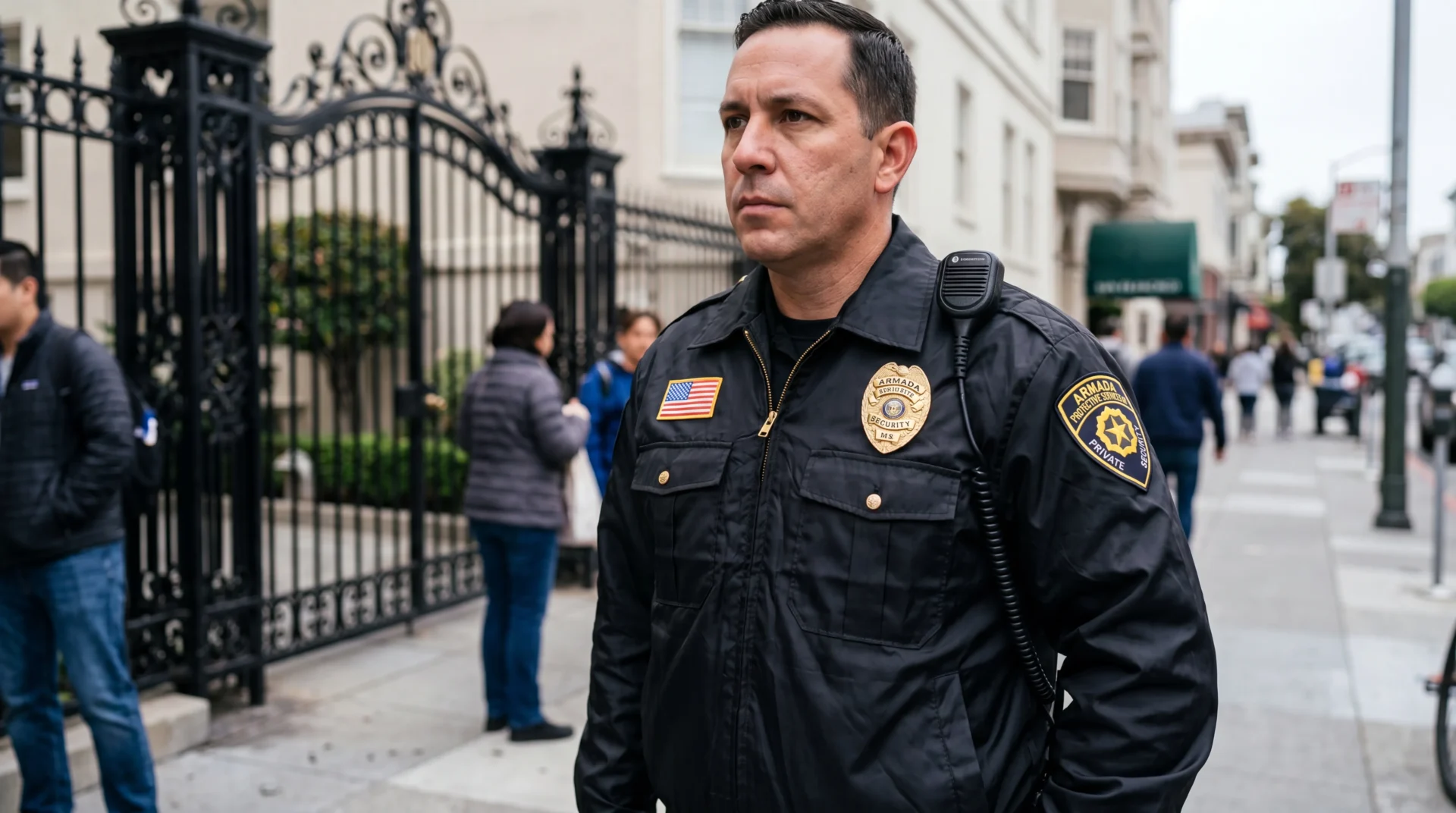
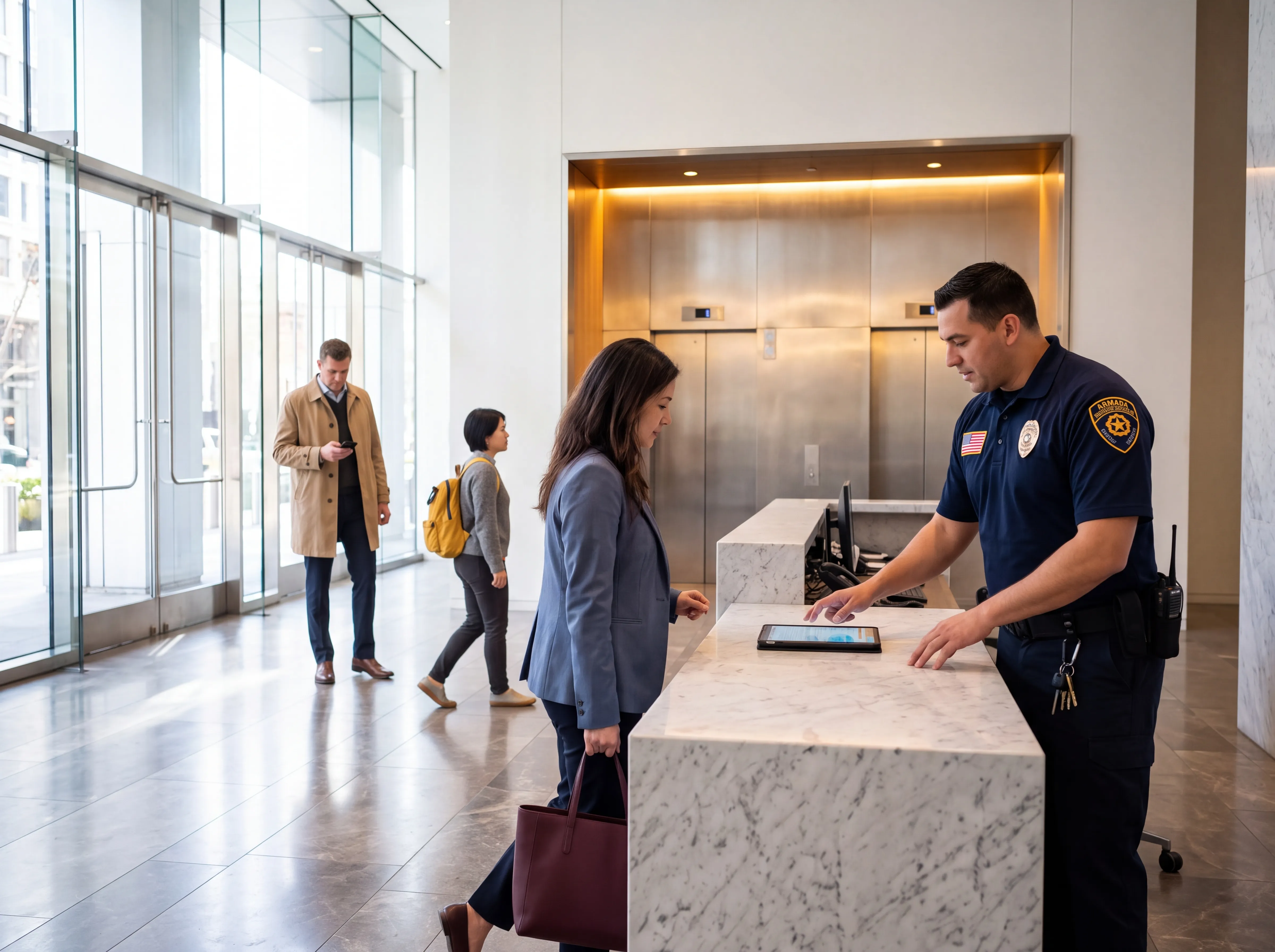
Where a tower actually leaks
A high-rise does not fail in the middle, it fails at its seams. The seams are the front door, the parcel room, the garage gate and the service elevator, and each of them stands open for a few seconds at a time, hundreds of times a day. Cameras record all of it and stop none of it. The three cards below are what an officer is standing there to catch.
The front door and the desk
Nobody forces the door of a staffed tower. They walk in behind a resident, with a box in their hands or a dog on a leash, and the resident holds the door because that is what polite people do. The officer at the desk is the only person in the building whose job is to ask the question, and the only one who can ask it without making an enemy of a neighbor.
- Guests named by the resident before they arrive, not signed in afterwards
- Contractors and cleaners held at the desk until the unit answers
- Fobs and keys collected when a tenancy or a job ends
- A quiet word with the resident who props the door, the same week it happens
The parcel room and the mail wall
A tower funnels every delivery in the building into one room whose door stands open all day, and somebody who gets past the lobby once can empty a wall of boxes in under a minute. Nothing else in a residential building generates as much mail to the board, and almost none of it is about the camera that filmed it.
- Couriers walked to the parcel room rather than buzzed through
- The parcel room on the round, not left to the camera
- Residents told in writing the same day a package goes missing
- Mailbox damage photographed and logged, so a pattern becomes visible
The garage, the elevators and the back of the house
The garage gate stays up long enough for two cars and the second one is not always a resident. From the garage a stairwell reaches the storage cages, the bike room and, in plenty of towers, an elevator car that never asks for a fob. This is the half of the building the board never sees and the officer walks every night.
- The gate watched at the hours the building itself says are worst
- Storage cages, bike room and trash room on the night round
- The service elevator released for a move only when the move is booked
- Roof hatch and stair doors checked shut on every round
Towers we reach, from the waterfront to the Peninsula
Armada stands posts in high-rise residential buildings across San Francisco and down the Peninsula. A tower is a local job: the officer who knows which garage gate sticks is worth more than a national brand two counties away.


How a tower post runs once it starts
Guard cover in a residential building rarely fails on the first night. It fails in month four, when the roster thins, the reports stop arriving and the board hears nothing until something is already broken. What follows is how an Armada post in a tower is kept from drifting.
Two things belong in the agreement rather than in a conversation. The term is one month minimum and month-to-month after that, so a board can end it without a fight. And the written post orders are reworked as the building changes, out of what the shift reports carry and what the manager asks for, not once at signing.
Who stands your desk
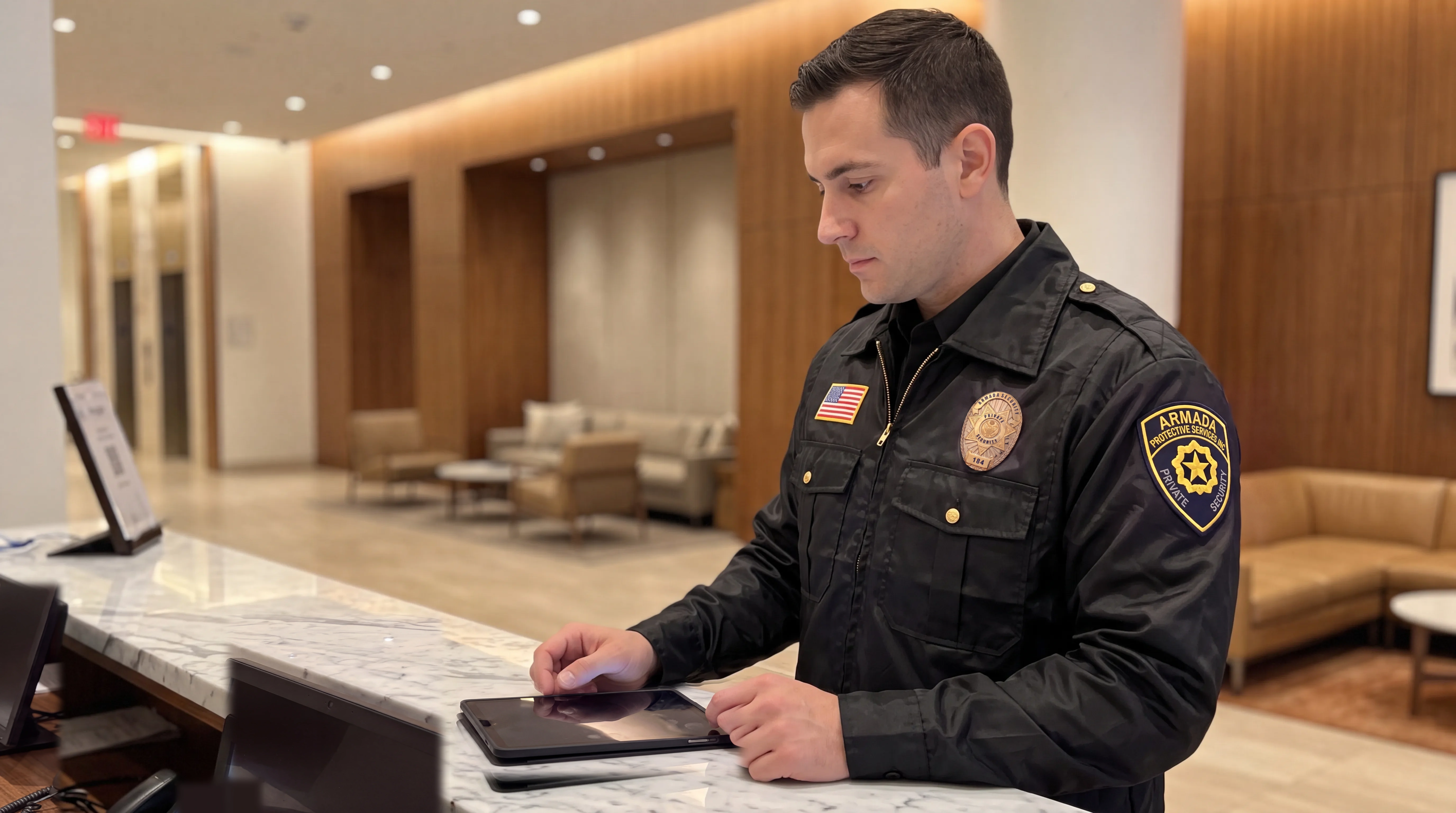
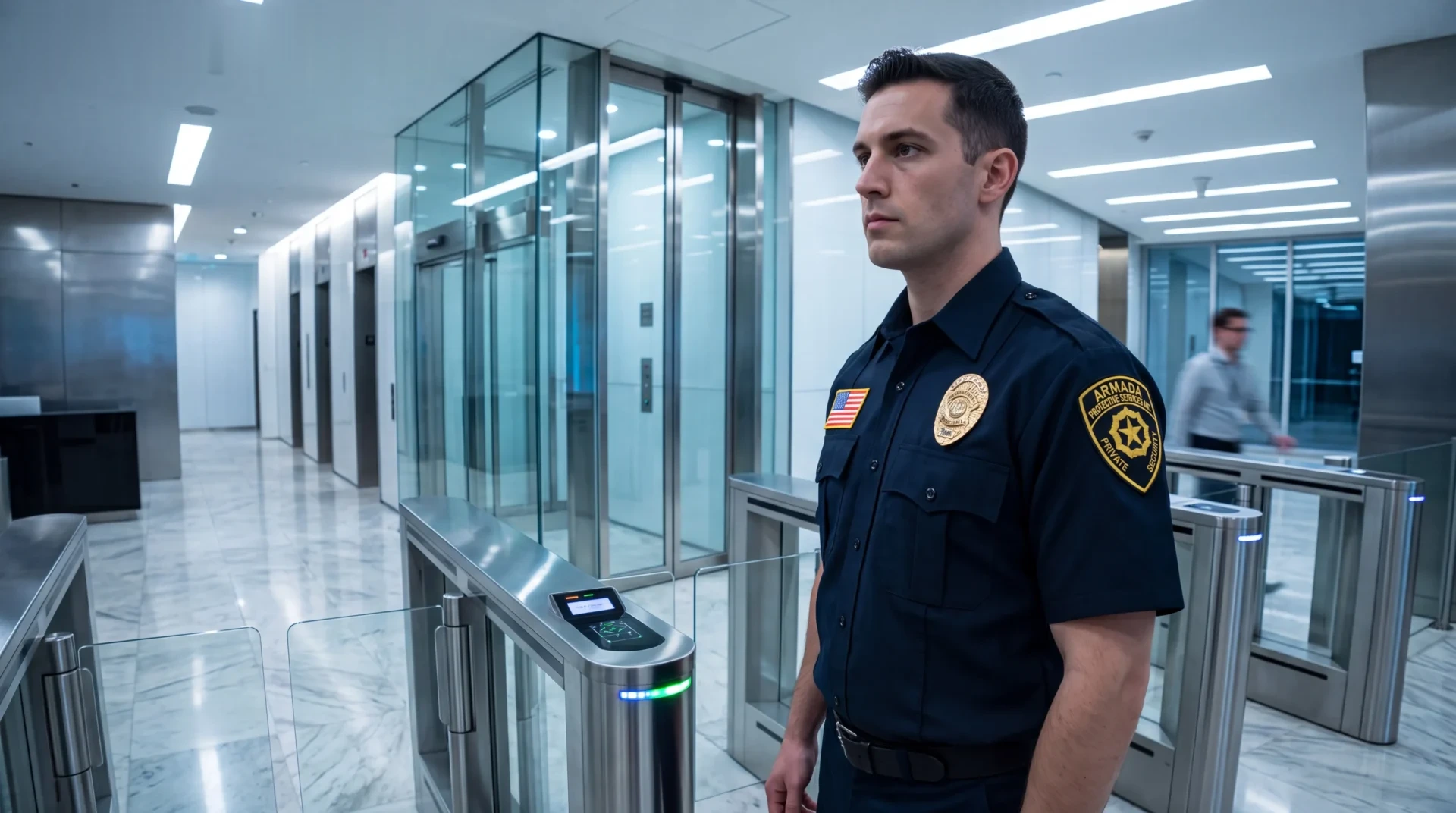
Every officer holds a current California guard card and has been background-checked before a first shift. A tower is staffed out of people who already know the address, so the face at the desk in month six is the face the board met in week one. Residents end up learning a name rather than a uniform, which is most of why a staffed lobby works at all.
Filling the shift
The roster is built a week ahead with a named relief against every slot. An officer who calls in sick before dawn is replaced by somebody who has stood that lobby before, or by the supervisor in person. The hours worked sit on the invoice beside the hours booked so a board can check one against the other.
What the board gets after a shift
The shift report goes out when the shift closes, about an hour after it ends, so a post finishing at eight reaches the manager around nine. It carries what was found, what was done about it and the photographs. A year later it is the same record a board can hand to an insurer, an attorney or an owner who wants to know why the garage gate was replaced.
The call at two in the morning
Whether a finding is called in at the time or waits for the report depends on its size. A fire or a break-in is a call. A tent pitched against the garage door is a line in the report. When it is a real emergency the notice goes out at once on every channel we hold, phone, email, messenger and the officer app, to all of the contacts the building has given us, rather than to one person who may be asleep.
When a fire system is out of service
An impaired alarm loop or a sprinkler riser taken out of service puts a person on the floors until it is signed back on, and Armada can hold that watch at a day’s notice: rounds on the hour, a written log an inspector can read on arrival, and cover that ends the day the system is restored rather than at the end of a billing month.
What Armada does not sell
No cameras, no card readers, no alarm panels. Armada supplies officers, patrol and response, and says so on the first call. Where a tower plainly needs hardware we will name an integrator we have worked with and tell them what the officer needs to see on the screen at three in the morning. The purchase stays the building’s, and so does the warranty.
Our Statistics. Your Guarantee.
A board signing for a lobby post wants four things settled before the first shift: how fast help reaches the address when the officer calls for it, whether the cover actually moves the incident count, who answers at two in the morning, and whether the license is real. Armada has been the top-rated San Francisco security company since 2021 according to SFist1.
- 2x
Faster to your site than a police response
Under contract an Armada officer reaches a client address in 15 to 30 minutes. The median SFPD publishes for a low-priority call is longer, which is why SFPD itself points businesses to private security for anything short of a crime in progress.
- 80%
Fewer incidents at monitored properties
Weighted average across the 12 client sites, banks and hotels among them, that kept incident records both before Armada covered them and after. Source: Armada annual client survey, 2025.
- 24/7
Your officer is the one you call
At two in the morning a site contact rings the officer standing on the property, not a call center in another state. Clients hold those numbers from the first shift. New address? (415) 647-8500, Mon to Fri, 9am to 5pm.
- 100%
Licensed & Insured
Every officer individually BSIS licensed and background-checked under California private patrol operator PPO 120526, and the company carries $5M in aggregate liability. Look the number up yourself in the state license record2, checked November 2026. The guard card itself is issued by BSIS3.
Related Security Services
Other residential properties Armada covers, besides high-rise towers.

Customer testimonials
Professional and Reliable Security Services in the Bay Area
We hired Armada on short notice for a situation we were experiencing in one of our apartment complexes. They responded quickly, set up patrols and a guard service for us very quickly. Guards were professional, prompt and communicated activity at the property to us.

Lana August
Property Manager, San Francisco
We have used Armada for about 10 years. They are an amazing company providing professional personnel consistently. Thank you Armada!

Jesse Leite
Resident Manager, San Francisco
Every Armada employee with whom I've had the pleasure of interacting has been top notch - curteous, efficient, effective, knowledgeable, responsible.

Alex Goretsky
Business Owner, San Francisco
I Manager a portfolio of communities in San Francisco -working with Armada is great. They are flexible, honest and the Guards are always on point. I would recommend this firm to other HOA/Commercial managers.

Christopher Stanley
Owner and Chief Executive Officer, San Francisco
Quoted verbatim from published client reviews, including their original wording.
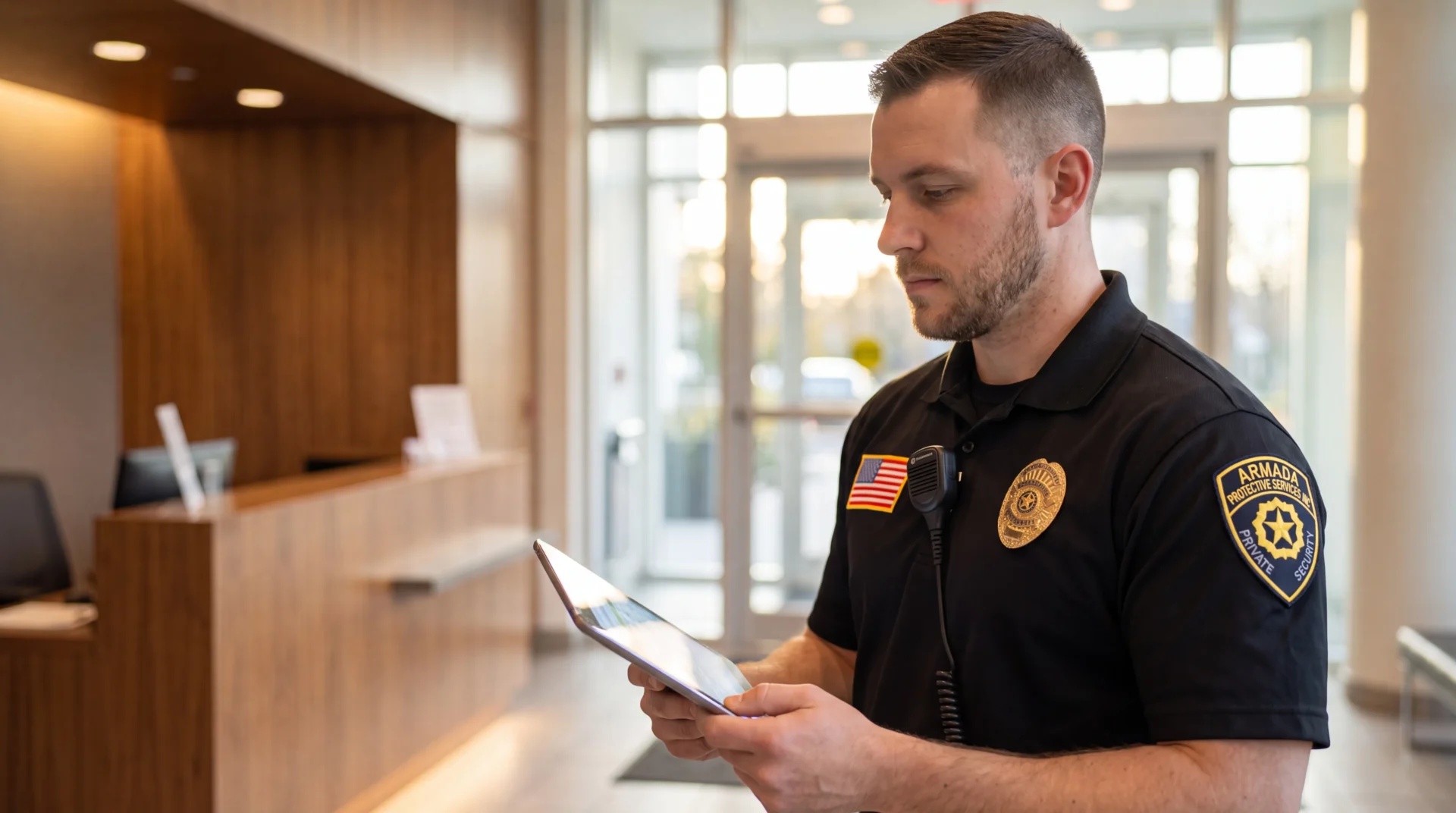
Start with a walk of the building
Send the address and a time the manager can meet. An Armada expert walks the lobby, the parcel room, the garage and the back doors with you, says plainly what he would change and what he would not bother with, and prices only what the building needs. You keep the written assessment whether or not you hire us. The term is one month minimum, month-to-month after that.
FAQs
What boards, owners and building managers ask before they put an officer in a tower lobby.
Does a San Francisco residential high-rise have to employ a fire safety director?
Yes, once floors used for human occupancy sit more than 75 feet above the lowest level of fire department access. Section 404.2.3.1 of the 2025 San Francisco Fire Code4 makes the owner responsible to provide or employ a fire safety director, who has to hold a current certificate of completion from an approved training program, valid for no more than five years. The rule covers any building with occupied floors that high, not only residential ones, and the director is a role the owner appoints rather than a post a guard company fills.
Does San Francisco require a doorman or front-desk staff in a residential tower?
Nothing in the city’s apartment-house security standards asks for one. Section 706(b) of the San Francisco Housing Code5 runs to 13 numbered items, covering exterior doors, the main entrance, unit entry doors, glazing, roof openings, garage doors, parking areas, metal gates and the building address, and not one of them is about lobby staff or patrols. Section 705 calls those standards minimum ones, particularly regarding point of entry. A staffed desk is what an owner or a board adds on top, usually after an incident the hardware did not prevent.
What does the city charge to inspect a residential high-rise?
Section 108.8 of the San Francisco Fire Code4 sets the fee at $15.67 per 1000 square feet of gross floor area for the high-rise inspections made under section 13217 of the California Health and Safety Code. Gross floor area there means the whole area of each floor, attic, basement and shaft inside the exterior walls, plus the covered parts outside them. The figure sits in the code text and the city can amend it, so check the current edition before you budget.
What must a tower owner tell residents about fire safety every year?
Section 409 of the San Francisco Fire Code4 asks owners of buildings with three or more dwelling units to hand residents written fire safety information, updated and delivered on or before January 31 each year, and to keep a copy for at least two years. New residents get an oral explanation before they move in. A sign at the main point of entry has to carry a phone number that gets the fire department prompt access, and section 409.5 of the same code4 gives an owner 30 days to correct a notice of violation before penalties start.
How common is parcel and mail theft in buildings like this?
The USPS Inspector General report of 19 May 20266 reports that the Postal Inspection Service received over 800,000 mail theft complaints from fiscal year 2023 through 2025, and opened 6,510 mail theft cases and 1,903 robbery cases in the same period. Read that as a national picture over three years, not as evidence about your address: a complaint is not a proved theft. What it does explain is why a parcel room with an unwatched door is the subject residents write to a board about more than any other.
Ask us directly
If you don’t see the answer you need, fill out the form and ask us directly: we are here to help.
Sources
Where the figures, rules and local facts on this page come from. Links reviewed 12 Nov 2026.
- SFist 1 Armada Protective Services — San Francisco’s Top Security Company trade press, used only where no primary source carries the claim
- California Department of Consumer Affairs license search 2 License record PPO 120526 Armada Protective Services, private patrol operator
- California Department of Consumer Affairs 3 BSIS-certified guards
- San Francisco Fire Department 4 Fire Code, 2025 edition 2025 edition, effective 1 January 2026
- City and County of San Francisco 5 Housing Code, 2025 edition 2025 edition, operative 1 January 2025
- U.S. Postal Service Office of Inspector General 6 Mail theft report 25-137-R26 May 2026, fiscal years 2023 to 2025