Manufacturing Plant Security in San Francisco
A plant stands open twice a day at the gatehouse, when one shift walks out through the door the next walks in through and the contractor vans arrive in the same half hour. It stands open again at night, when the line stops and a fenced site full of tools, spares and finished pallets is left with nobody on it. An Armada officer stands that gate and walks that fence.
- An officer on the gatehouse through shift change and the contractor window
- The tool crib, the maintenance store and the scrap bins on the round, not just the fence
- Night rounds of the perimeter and the finished goods store once the line stops
Nothing is priced before the walk: we see the gate, the stores and the fence line first, and the shift plan is written from that.
If it is urgent, call (415) 647-8500
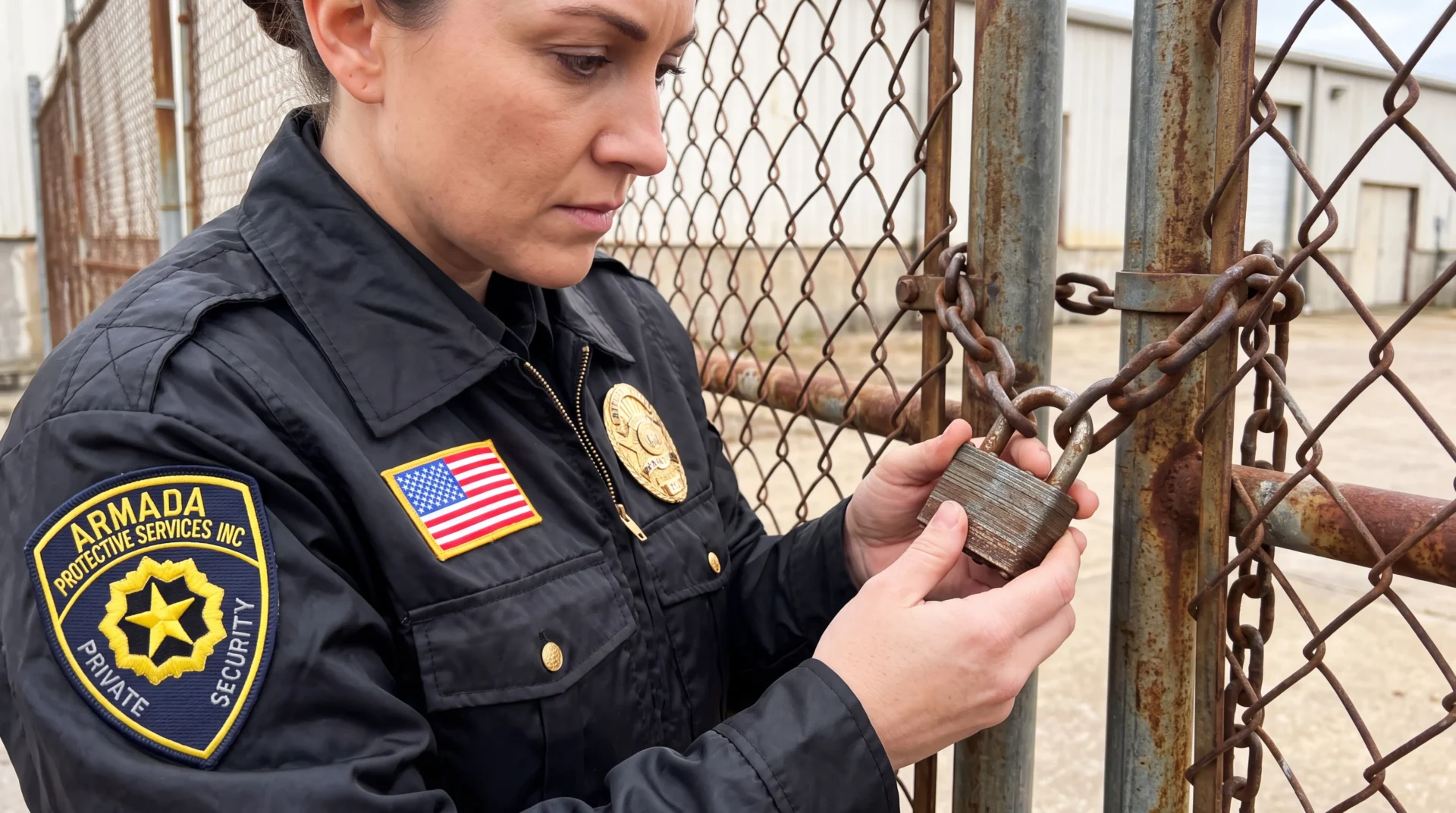

A plant is held at the gate and lost in the yard
The production floor is rarely where a plant loses anything. It goes where people and vehicles cross the boundary: the gatehouse in the quarter hour when two shifts pass each other, the contractor called in for one job who walks three buildings, and the hours after the line stops. The three cards below are where an officer is posted, in the order a working day reaches them.
Shift change, when the gate stops reading badges
A shift does not arrive one person at a time. It arrives inside a quarter of an hour, in two streams, with the outgoing shift pushing out through the same doors. That is the window in which a badge gets waved past and a van follows a car through on one opening of the gate, and it is when tools leave in a backpack, because everybody is watching people come in and nobody is watching what goes out.
- An officer on the gatehouse at both ends of every shift change, badges read at the door rather than counted
- What leaves the building looked at on the way out, which is the direction nobody watches
Contractors, and the three buildings they were not called to
A plant runs on people who are not on its payroll: a maintenance firm on the compressors, agency packers for a seasonal run, a calibration engineer, the shutdown crew that appears when a line is down. Each has a reason to be on site and a reason to be in one place, and the second half is what nobody checks. A pass written on Monday for the boiler house still opens the gate on Saturday.
- Contractor arrivals checked against the day’s work orders, by name and by the area they were called to, with an escort into process areas where your plant asks for one
- A contractor coming back after hours held at the gate until a named site contact answers
Tools, spares and the metal with a street price
What walks out of a plant is seldom the product it makes. It is cordless tools from the crib, bearings and motors off the maintenance shelf, copper and brass offcuts in the scrap skip, the cable drum left by the switch room after a refit. All of it sells the same week, none of it is marked in a way anybody can trace, and it is missed at the next stock check, not on the night it went.
- The tool crib, the maintenance store and the non-ferrous bin on the round, not the fence line alone
- Anything that has moved since the last round written up that night, not at the next stock count
The plants and yards we already drive to
One San Francisco office covers the whole manufacturing belt: the food and drink plants around Islais Creek, the biotech and device floors in South San Francisco, and the fabrication shops down the Peninsula. From your call to an officer at the gate is 15 to 30 minutes under contract, measured from our own dispatch log.
We serve: San Francisco, South San Francisco, San Mateo, San Jose (see all locations)
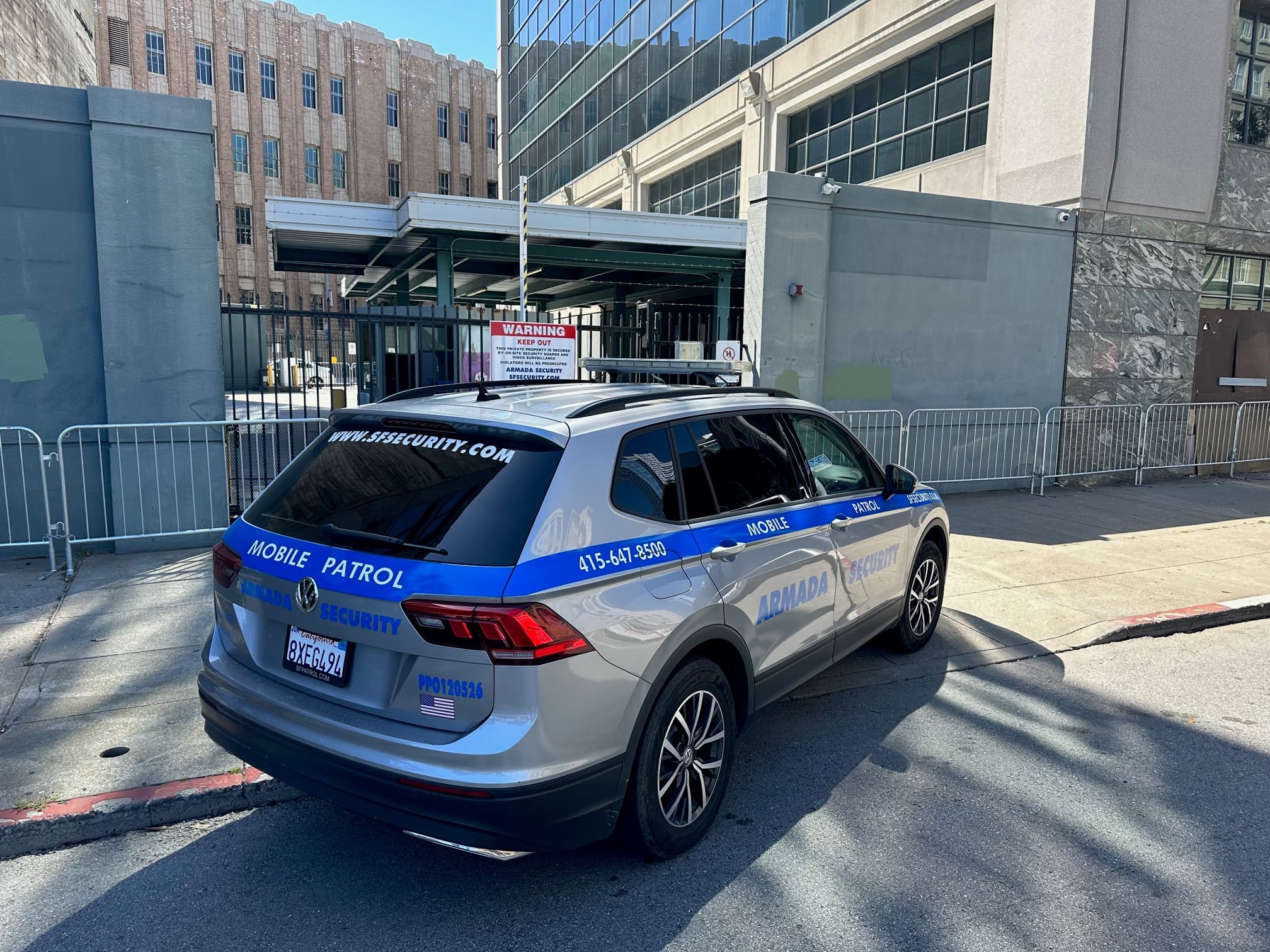
What a post on a plant does after the first week
Cover on a plant does not fail on night one. It fails in month four: the gate log thins to a signature, the round settles into the same hour, the shift report stops arriving, and the first sign of it is a maintenance store two drills short. What follows is how a post here is kept honest, one part of the site at a time.
Two things belong in the agreement and not in a conversation. Cover opens at one month and renews month to month, so a plant that takes a line down for retooling is not paying for a year it cannot use. And the post orders are rewritten as the operation changes, out of the shift reports and whatever the plant manager asks for, rather than once at signing. What every industrial property has in common, and how to choose between a posted officer, a patrol round and response on call, is argued on the industrial security page above this one; a vehicle passing several times a night instead of somebody at the gate is mobile patrol. One more thing is said on the first call rather than discovered at the quote: Armada guards and responds, and sells no equipment at all. A plant that needs hardware gets the name of an integrator we have worked with and the thing installers are rarely told: what an officer has to be able to see from the gatehouse at three in the morning; where the panels are already in, attending them is alarm response.
Who stands your gatehouse
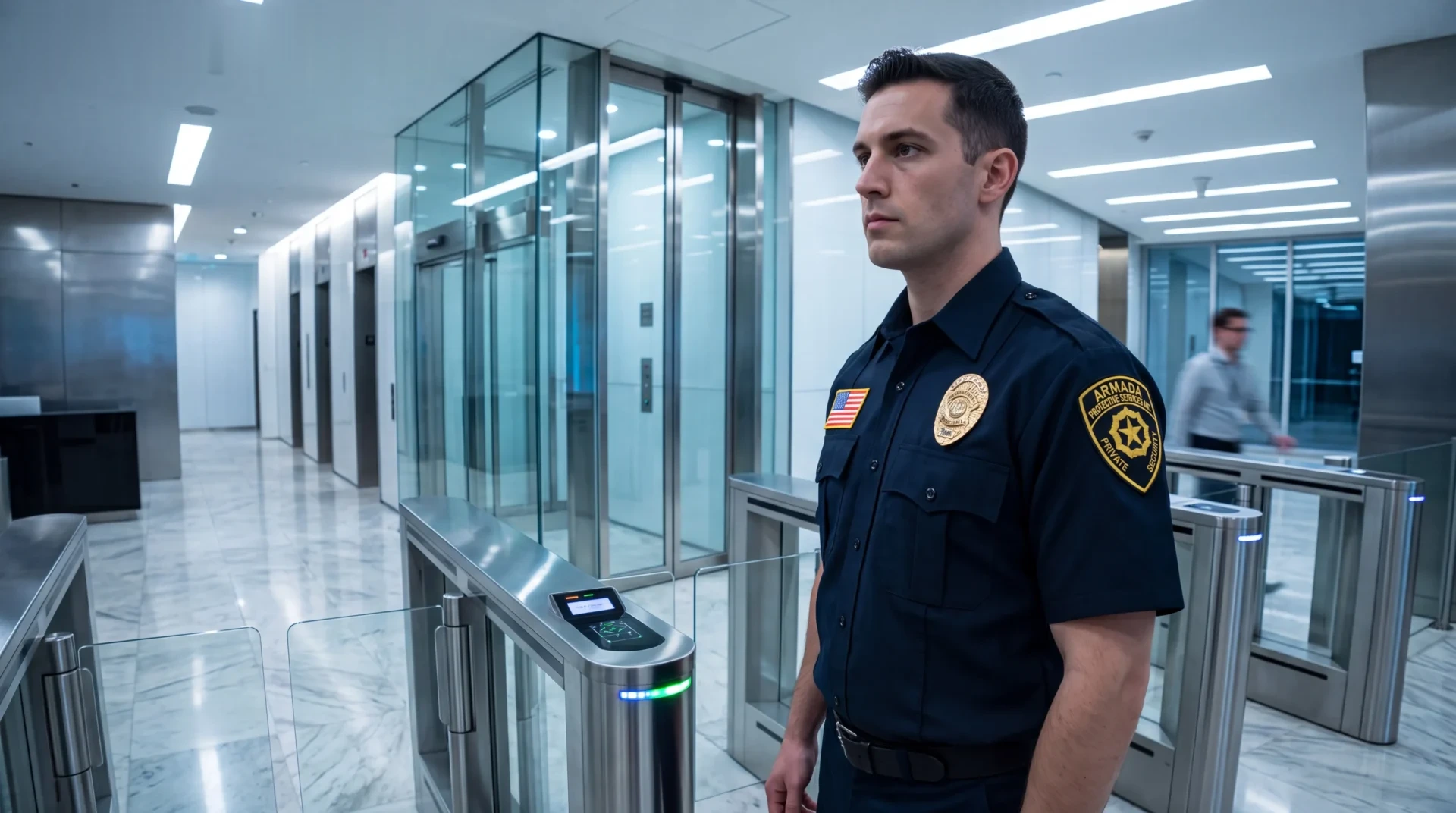
Every officer holds a current California guard card and has been background-checked before a first shift. A plant is staffed out of people who keep returning to the same address, because the value of a gate officer here is knowing that the tanker on Tuesday is the usual one and the flatbed at the side gate has never been on the property. Where a site wants an officer who has worked production before, that is specialized security guards.
Contractors, agency crews and the shutdown week
A shutdown turns the access list over in a day: a crew that has never been on the property arrives with its own tools, and the gatehouse cannot vouch for a single face. So the gate works from the day’s work orders instead of memory, a contractor signs in by name against the job he was called for, and anybody not on that list waits until the engineer who booked him picks up. When the week ends, the passes die with it.
Finished goods, and the door they leave by
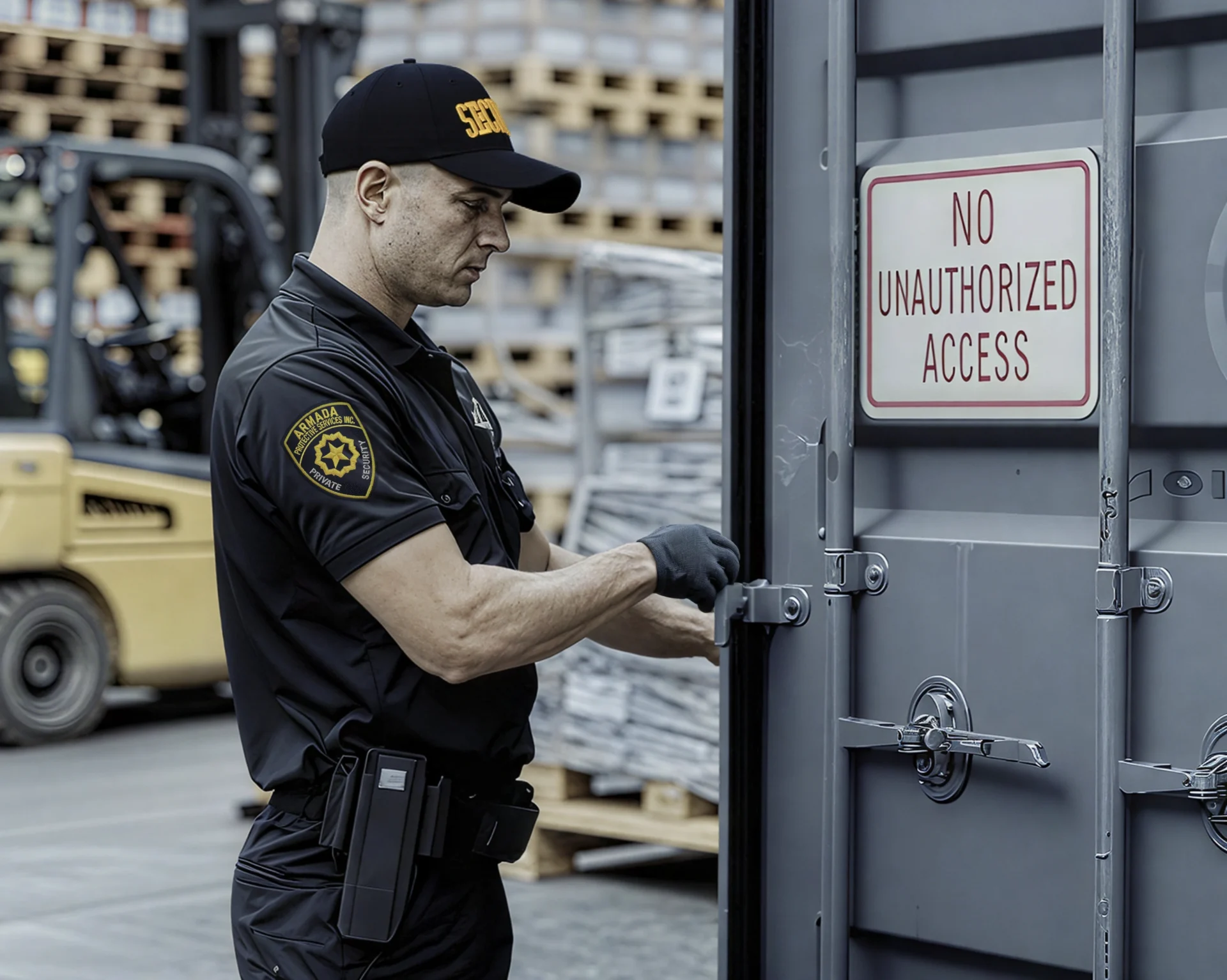
The finished goods store behaves like a warehouse and fails the same way: a pallet on the wrong trailer, a load built while the driver wanders, a return that goes back out unseen. The officer stands the shipping door while high-value loads are built and sealed, reads the seal against the paperwork before the tractor rolls, and keeps the scrap and recycling runs in sight while they are tipped. A site that does nothing else is warehouse security.
Once the line stops, the round is the record
The hour the last line shuts down, the site turns into a boundary with lighting on it. Checkpoints are scanned where each one stands, and the visit lands at a different time every night, because a round that always arrives at eleven is a timetable for whoever watches from the street. The hand-checked list on a plant is its own: the scrap area and the non-ferrous bin, the compressor and tank yards, the roll-up doors of the finished goods store, and every gate a contractor used that day. It reaches the plant manager about an hour after the shift closes, with the time of each round and the photographs, and it is filed on nights when nothing happened, because that is the version an insurer asks for a year later. Anything that will not keep is called out at once. A quiet night reads like the patrol report specimen.
The office block and the floor are two different posts
The administrative building is a lobby problem: visitors who sign in, couriers, interviews, a reception desk that empties at five. The floor behind it is an access problem: hearing protection, marked walkways, forklift traffic, and areas an officer does not enter without an escort from your side. One plant can need both, written as two sets of post orders, because checking a visitor against a diary is nothing like holding the door between the office corridor and production.
Our Statistics. Your Guarantee.
Before a plant manager signs, four questions settle it: how soon an officer is at the gatehouse, whether guarded sites report fewer incidents, who answers when a line trips at three in the morning, and whether the license stands up to a search. Each figure below carries what it rests on. Armada has been the top-rated San Francisco security company since 2021 according to SFist1.

- 2x
Faster to your gate than a police response
Under contract an Armada officer reaches a client address in 15 to 30 minutes, measured from our own dispatch log. The median SFPD publishes for a low-priority call is longer, which is why SFPD itself points businesses to private security for anything short of a crime in progress.
- 80%
Fewer incidents at monitored properties
Weighted average across the 12 client sites, banks and hotels among them, that kept incident records both before Armada covered them and after. Source: Armada annual client survey, 2025.
- 24/7
The officer on your site is the one you call
At three in the morning a plant contact rings the officer standing at the gate, not a call center in another state. Clients hold those numbers from the first shift, and the app carries the messages, the photographs and the log.
- 100%
Licensed and insured
Every officer individually BSIS licensed and background-checked under California private patrol operator PPO 120526, and the company carries $5M in aggregate liability. Look the number up yourself in the state license record2, checked November 2026. The guard card itself is issued by BSIS3.
Related Security Services
The other industrial properties Armada covers, for a company whose plant is not the only address it owns.

Officers on the gate and the dock, driver checks at receiving and night rounds of the yard for warehouses and distribution centers.
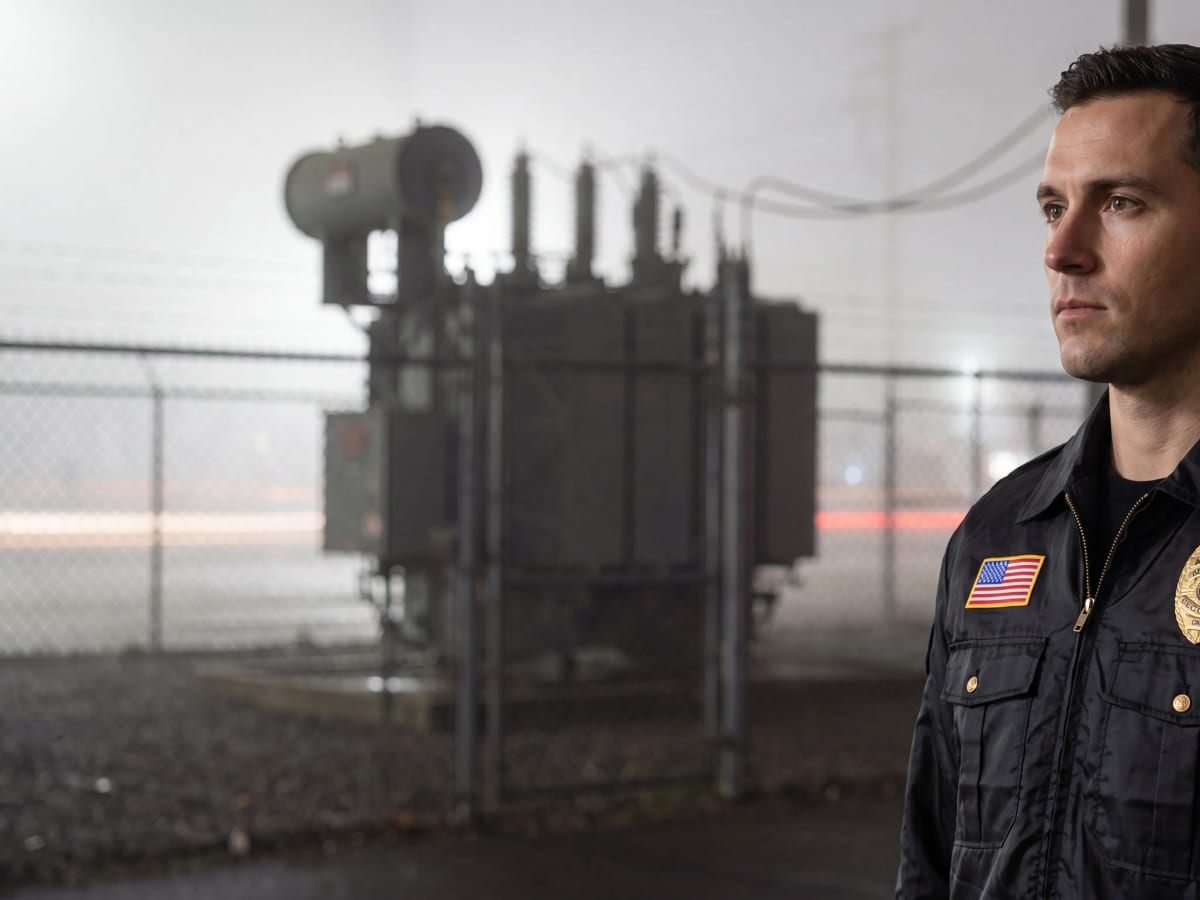
Security for power plants, substations and transmission facilities in the Bay Area.
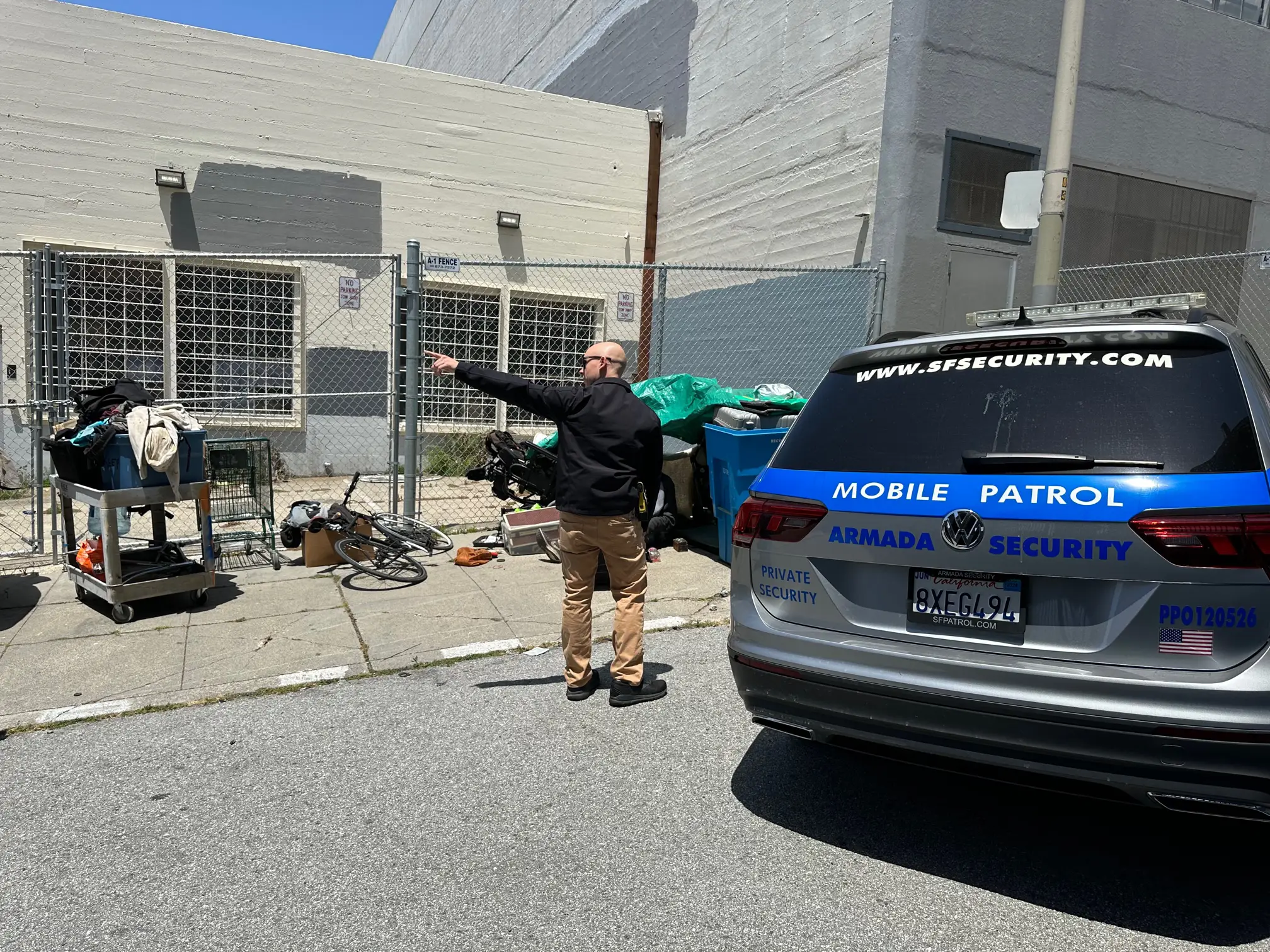
On-site security personnel, mobile patrols and surveillance technology for vacant industrial properties.
Customer testimonials
Professional and Reliable Security Services in the Bay Area
We hired Armada on short notice for a situation we were experiencing in one of our apartment complexes. They responded quickly, set up patrols and a guard service for us very quickly. Guards were professional, prompt and communicated activity at the property to us.

Lana August
Property Manager, San Francisco
We have used Armada for about 10 years. They are an amazing company providing professional personnel consistently. Thank you Armada!

Jesse Leite
Resident Manager, San Francisco
Every Armada employee with whom I've had the pleasure of interacting has been top notch - curteous, efficient, effective, knowledgeable, responsible.

Alex Goretsky
Business Owner, San Francisco
I Manager a portfolio of communities in San Francisco -working with Armada is great. They are flexible, honest and the Guards are always on point. I would recommend this firm to other HOA/Commercial managers.

Christopher Stanley
Owner and Chief Executive Officer, San Francisco
Quoted verbatim from published client reviews, including their original wording.

Walk the plant with us before anything is priced
Pick an hour that covers a shift change and give us the address. Somebody from Armada walks it with your plant manager: the gatehouse, the contractor parking, the shipping door, the stores and the stretch of fence nobody has looked at since the last refit. A free visit, a written assessment you keep either way, and a contract that opens at one month and runs month-to-month.
FAQs
What plant managers and safety leads ask before an officer stands at their gate.
Does your officer go onto the production floor?
Only where your own rules allow it, and never alone into an area you have marked. An Armada officer is not a process operator: he does not break a lockout, open a panel, move a forklift or enter a confined space, and he will not be talked into it at two in the morning. What goes into the post orders before the first shift is the opposite list, written by you: which doors he holds, which areas need an escort from your side, what protective equipment he wears on the floor, and who he calls when something there looks wrong. Everything outside that list is the boundary, the gatehouse, the yard and the stores.
Who has to keep watch after welding or cutting work in a plant, and for how long?
The California Fire Code, section 35044 requires a fire watch during hot work and for not less than 30 minutes after it finishes, and the people on that watch must have extinguishing equipment to hand and training in using it. A maintenance weekend or a contractor’s torch job is exactly when a plant runs out of its own people to stand it, which is why that watch is often the shift we are asked for: see fire watch security.
At what dollar amount does theft by a plant employee become grand theft in California?
At $950 or more taken from the employer within any 12 consecutive months, under Penal Code 487(b)(3)5, which counts everything one employee takes across that period rather than each item on its own. That is why a tool crib log and a dated written record of what the round found matter more than the value of any single drill: repeated small losses only add up to something a prosecutor can use if somebody wrote them down at the time.
Does a hazardous materials business plan make the exact location of our chemicals public?
No. Health and Safety Code 255096 keeps the information specifying the precise place where hazardous materials are stored and handled, site maps included, out of public inspection, while the rest of the plan stays open to it. For the gate that has a plain meaning: the officer works from the access points, shutoffs and staging areas the plan names, and hands a copy of none of it to anybody who asks at the door.
A release happens at two in the morning. Who does the gate let in?
Fire, public health and safety personnel and emergency responders, at once. Health and Safety Code 255107 puts the duty on the handler and on its employees, agents and designees both to report a release or threatened release immediately upon discovery and to give those responders access to the facility. So the post orders name who the officer calls first, which gate is opened for the engines, where they are walked in and who on your side is woken up, and all of that is agreed before a first shift rather than invented on the night.
What will a San Mateo County inspector look at in our hazardous materials plan?
Whether the plan is complete and accurate, plus the emergency response procedures and the training records behind it. San Mateo County Environmental Health8 gives a business with deficiencies a Notice to Comply, typically allowing 30 days to correct them. A guard contract is not a compliance program, but the part an officer evidences is real: who came through the gate and when, which contractor was escorted where, and what the round found.
Ask us directly
If you do not see the answer you need, fill out the form and put the question to us: we answer it ourselves.
Sources
Where the figures, rules and local facts on this page come from. Links reviewed 13 Nov 2026.
- SFist 1 Armada Protective Services — San Francisco’s Top Security Company trade press, used only where no primary source carries the claim
- California Department of Consumer Affairs license search 2 License record PPO 120526 Armada Protective Services, private patrol operator
- California Department of Consumer Affairs 3 BSIS-certified guards
- UpCodes Codebook 4 California Fire Code, section 3504 fire safety requirements for welding and other hot work
- Public.Law, California codes mirror 5 Penal Code 487 grand theft, including theft by an employee, 6 Health and Safety Code 25509 public inspection of a hazardous materials business plan, 7 Health and Safety Code 25510 reporting a release and access for emergency responders
- San Mateo County Environmental Health 8 Hazardous Materials Program business plan inspections and notices to comply