Condominium Security in San Francisco
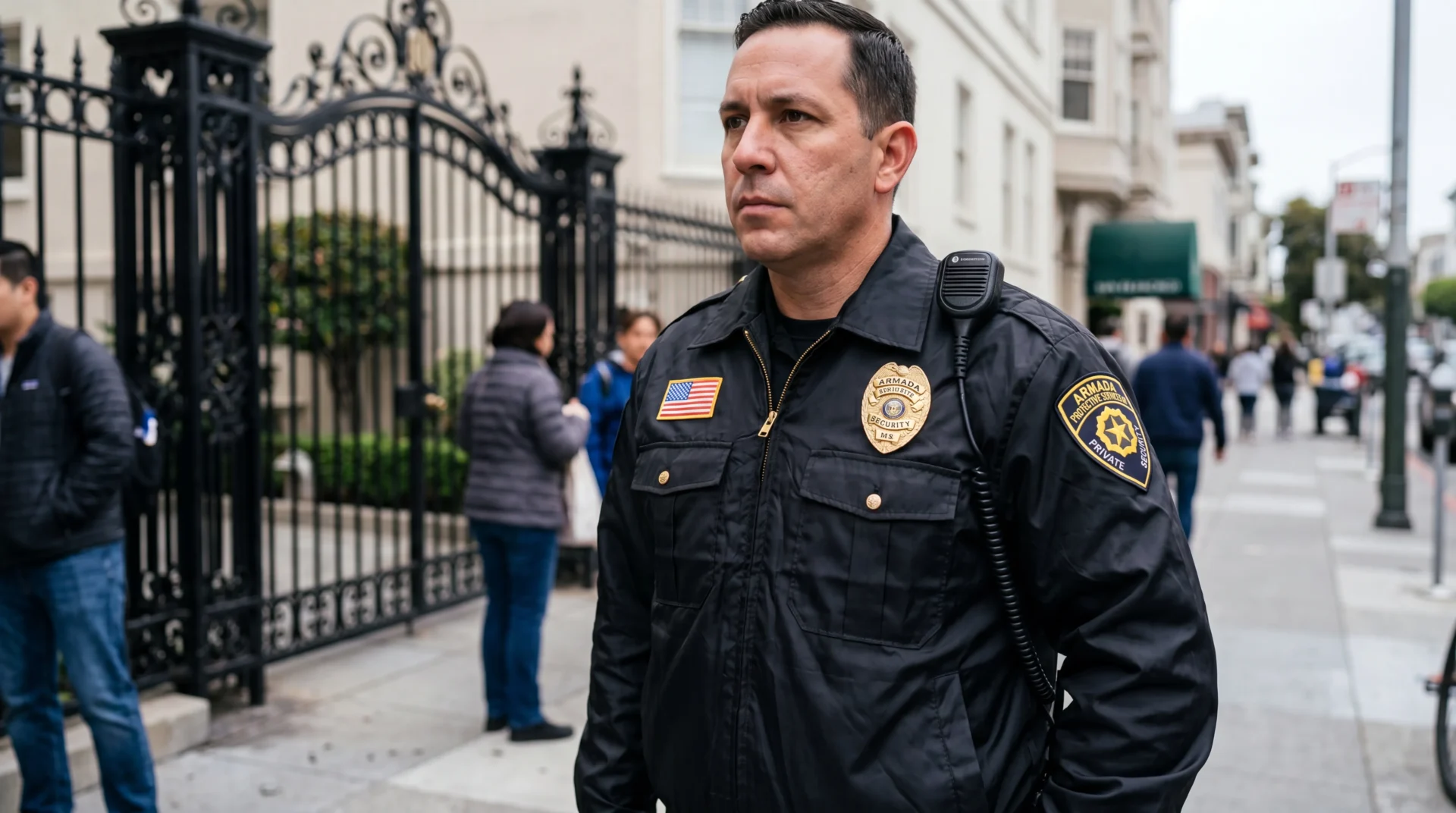
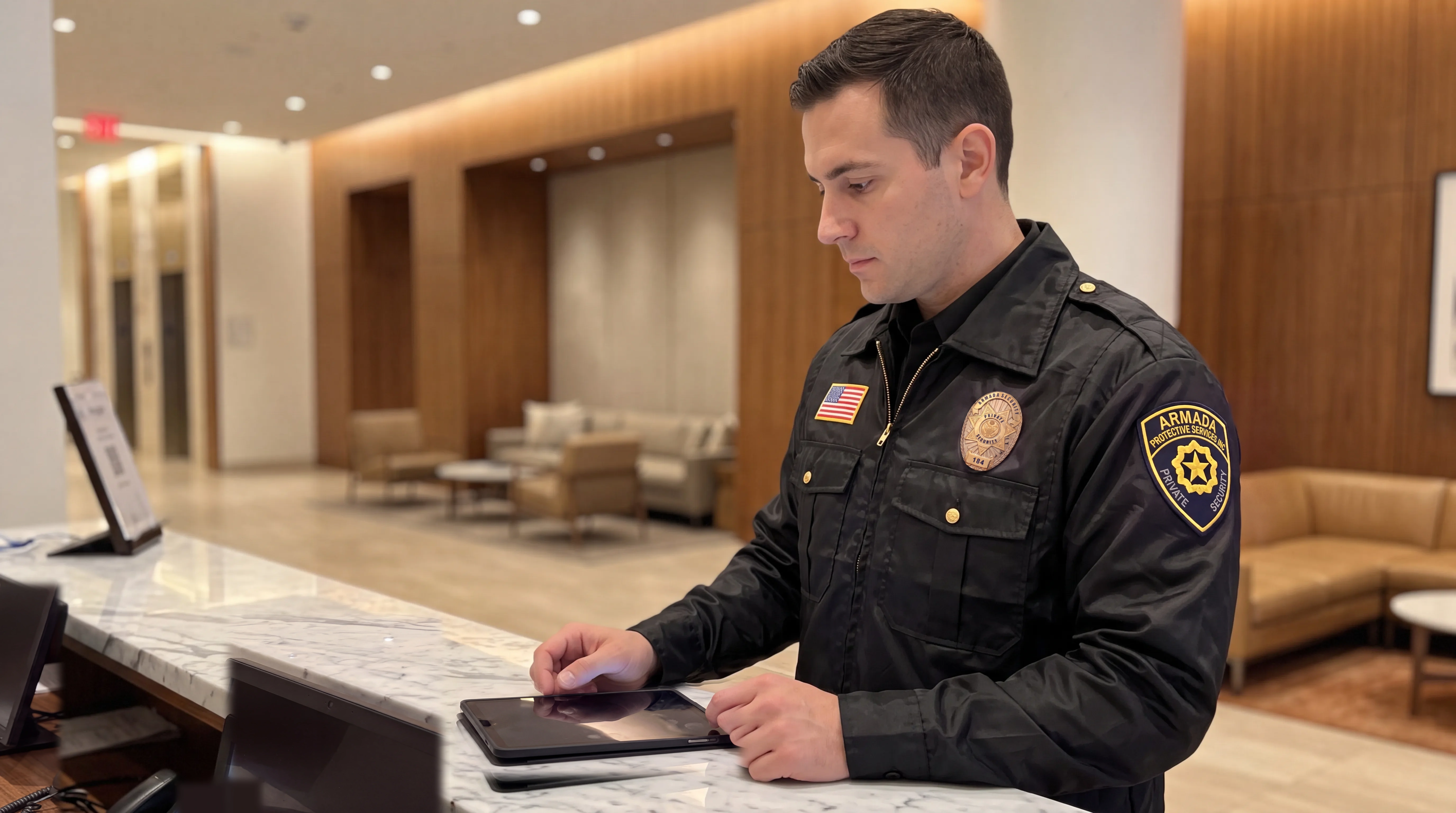
A condominium has two clients in every decision: the board, which answers to the owners once a month, and the management company, which answers to the board every day. Armada puts licensed officers on the parts of the building both of them are responsible for, under post orders the board has read and the manager can change.
- Lobby, garage, pool deck, gym and storage on a written round
- The house rules applied evenly, whoever is at the desk that night
- A shift report to the manager, and a month-end summary a board can put in its packet
The walk of the building before the quote costs nothing, and the written findings stay with the association.
If it is urgent, call (415) 647-8500
The parts of the building nobody owns alone
An owner is responsible as far as the unit door. Past it, the lobby, the elevators, the garage, the storage cages, the gym and the pool deck belong to everyone at once and are run by five volunteers and a manager with a day job. That shared half of the property is what an officer is posted on, and it fails in three places.
Common areas, and who answers for them
An association that controls the common areas is measured against the standard of care of a landlord for the safety of people in them. That is what the California Supreme Court said in Frances T. v. Village Green Owners Assn.1, where the lighting an owner had asked for and then installed herself became the subject of the case. Negligent-security claims against boards have started from that standard ever since, and they are usually built out of what the association knew and left alone: the door that stopped latching in spring, the garage light nobody replaced, the gym nobody locks at the hour the rules say it closes.
- Pool, gym and roof deck checked at the hours your own rules close them
- Garage stairwells, bike room and storage cages walked, not left to a camera
- Dead lights and propped fire doors written up the night they are found
- Every finding dated and photographed, so the board sees a pattern before an attorney does
Guests, renters and the stay nobody registered
Three kinds of person use the same front door: the owner who lives there, the tenant renting from an owner two floors up, and the visitor holding a door code from a unit whose owner is out of the country this week. The short stay is the hard one, because the person arriving has a key, a booking and no idea the house rules exist. An officer settles that at the door. A board settles it in a letter three weeks later, after the party.
- Guests named by the unit before arrival, not argued over afterwards
- Door codes and fobs issued against a unit and switched off the day a tenancy ends
- Repeat short-stay arrivals logged by unit, so the board has a record rather than a rumor
- Moves and furniture deliveries booked for the service elevator instead of discovered in it
Mail, parcels and the contractor on the fourth floor
Parcels are the complaint a board hears most often and can prove least. The Postal Service inspector general counted 802 mail theft complaints from San Francisco ZIP codes in the six months to 31 March 2024, and described how one stolen arrow key opens the cluster boxes and apartment panels of a whole delivery route, which is why a bad night in a mailroom is rarely one building (USPS Office of Inspector General2; complaints are not confirmed thefts). Renovation crews walk in the same door, with the same confidence.
- Couriers walked to the package room and signed in, not buzzed through
- Mailroom and package room on the night round, the door checked latched
- Contractors held at the desk until the unit or the manager answers, and logged out when they leave
- Damaged mailboxes photographed the same day, so the association has the record before the insurer asks
Associations we cover, in the city and down the Peninsula
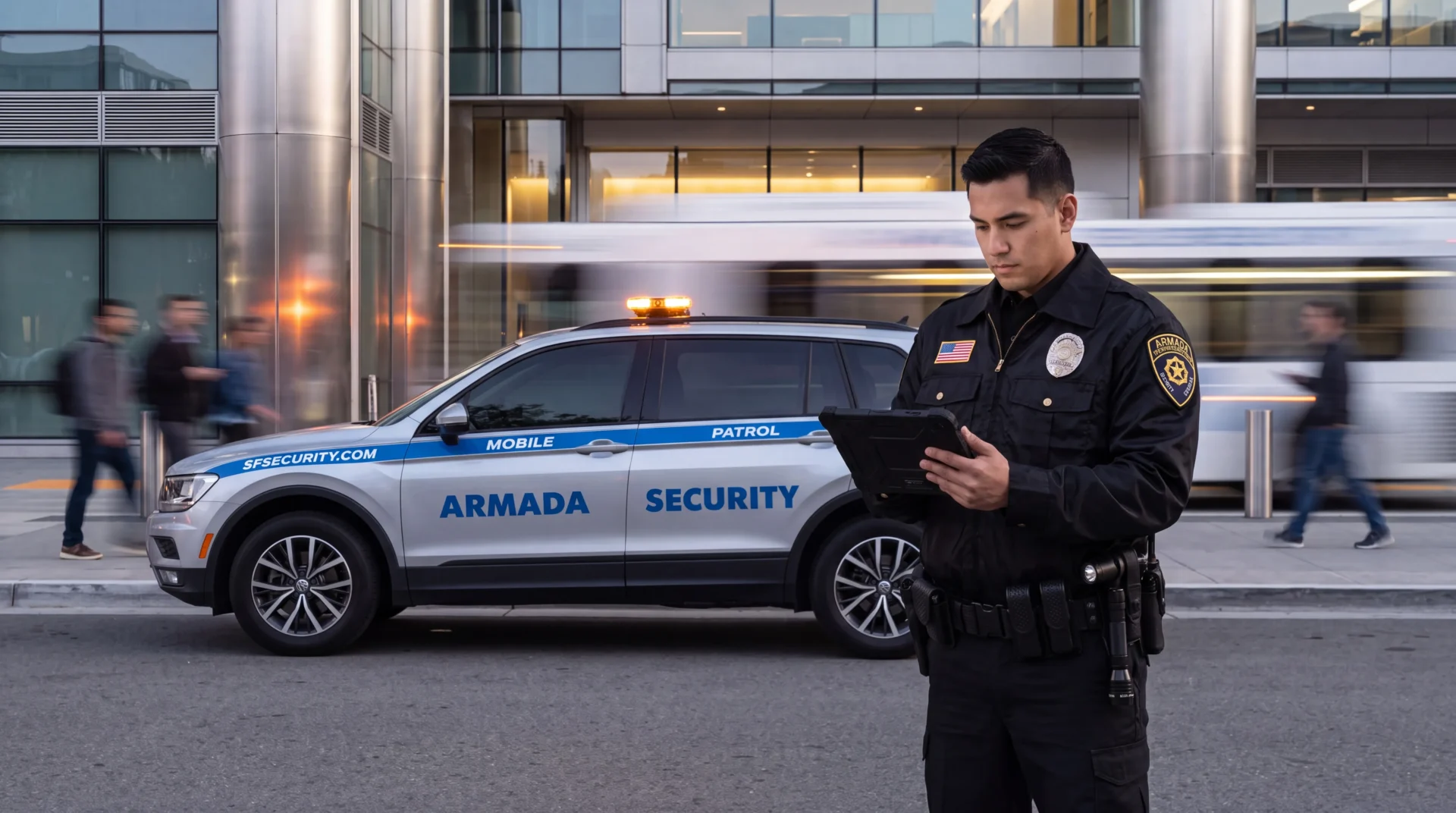
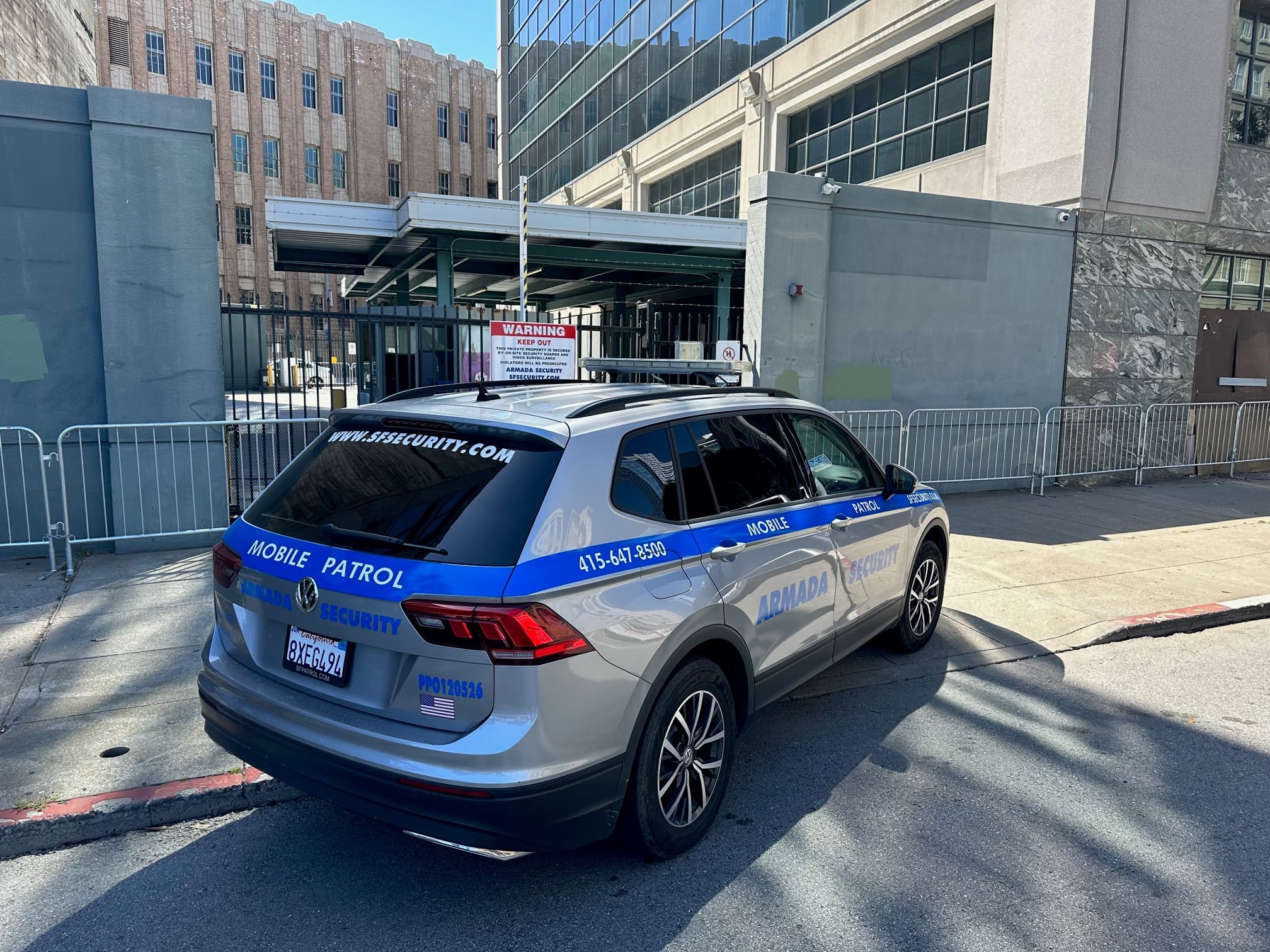
Armada staffs condominium lobbies, locks up common rooms and patrols condominium garages across San Francisco and the Peninsula. A board gets an expert who can stand in its building the same week, not a regional account manager on a call from another state.
We serve: San Francisco, San Mateo, Brisbane and San Jose (see all locations)
How the post is run after the board votes
Guard cover in an association seldom collapses in week one. It thins out by the fourth month, and the board learns about it from an owner at an open meeting rather than from the company it pays. The six cards below are the parts we put in writing so that drift shows up early and in front of the people who signed.
Two of those parts belong in the agreement rather than in a conversation. The term runs a month at a time, one month minimum and month-to-month afterwards, so ending it is a vote and not a fight. And the post orders are a living document: they are reworked out of the shift reports and the manager’s requests as the building changes, instead of being signed once and filed.
Who the board meets, and keeps meeting
Every officer carries a California guard card and clears a background check before a first shift. An association is staffed from a short list of people who already know the address, so the person an owner greets in month eight is the person the board interviewed in month one. A supervisor comes to a board meeting when the agenda has security on it, which is usually the cheapest hour of the contract.
The rules are yours, the application is ours
Pool hours, guest parking, move windows, dogs in the elevator, bikes in the hallway: the house rules are the association’s document, and we do not write them. What we do is apply them the same way to a director, an owner, a renter and a visitor, on the same night, with the same words. An officer who makes exceptions for the loudest unit is worse than no officer, because the board then owns the inconsistency.
When two neighbors disagree
Noise at one in the morning, a dog off the leash, a space that belongs to another unit. The officer records what he saw and heard with the time it happened, the unit involved and nothing about who seems to be in the right. That is what a board needs if it ever has to run a hearing before it fines anybody, and it is the thing a board almost never has when the complaint arrives by email a week later.
Contractors, move-ins and unit renovations
A manager approves the work; the officer checks that the crew at the door matches that approval, that the hours match the house rules, and that the service elevator is padded and booked rather than borrowed. Keys and fobs handed out for a job are logged out and logged back in. When a crew leaves a fire door chocked open or a riser valve closed, that is in the report that closes the shift, not at the end of the job.
What the manager gets, and what the board gets
The shift report is written as the shift closes and reaches the manager within the hour, with what was found, what was done and the photographs. For the board there is a month-end summary short enough to go into the meeting packet: counts by category, the open items, the things we asked for and did not get. A year of those is also the paperwork an insurer or an attorney asks for first.
The hardware stays yours
Armada sells no cameras, no fob readers and no alarm panels, and says so on the first call rather than in month three. Where a building plainly needs equipment we will name an integrator we have worked with and tell them what an officer must be able to see at three in the morning. The purchase, the warranty and the reserve line for replacing it stay with the association.
Our Statistics. Your Guarantee.
A security contract reaches the owners as a line in a meeting packet, so a board is asked four questions about it and has to answer them in public: how fast help arrives, whether the cover changes anything, who picks up the phone at night, and whether the license is real. Armada has been the top-rated San Francisco security company since 2021 according to SFist3.
- 2x
Faster to your site than a police response
Under contract an Armada officer reaches a client address in 15 to 30 minutes. The median SFPD publishes for a low-priority call is longer, which is why SFPD itself points businesses to private security for anything short of a crime in progress.
- 80%
Fewer incidents at monitored properties
Weighted average across the 12 client sites, banks and hotels among them, that kept incident records both before Armada covered them and after. Source: Armada annual client survey, 2025.
- 24/7
Your officer is the one you call
At two in the morning a site contact rings the officer standing on the property, not a call center in another state. Clients hold those numbers from the first shift. New address? (415) 647-8500, Mon to Fri, 9am to 5pm.
- 100%
Licensed & Insured
Every officer individually BSIS licensed and background-checked under California private patrol operator PPO 120526, and the company carries $5M in aggregate liability. Look the number up yourself in the state license record4, checked November 2026. The guard card itself is issued by BSIS5.
Related Security Services
The other kinds of shared-ownership and multi-unit property Armada covers around a condominium.

Patrols, gate cover and rule enforcement for homeowners associations and their shared streets.
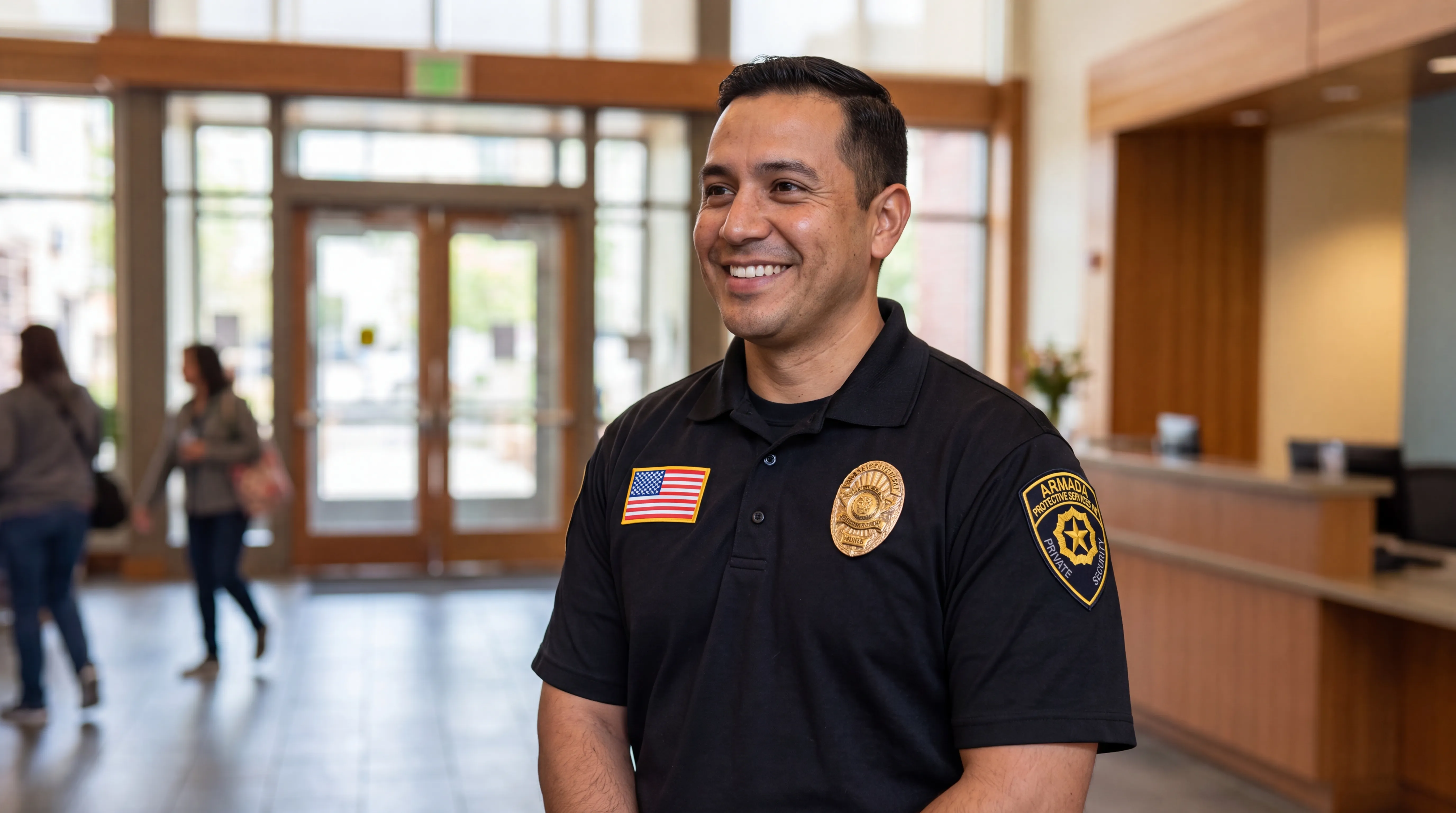
Officers for apartment communities, their lobbies, parking structures and common rooms.
Customer testimonials
Professional and Reliable Security Services in the Bay Area
We hired Armada on short notice for a situation we were experiencing in one of our apartment complexes. They responded quickly, set up patrols and a guard service for us very quickly. Guards were professional, prompt and communicated activity at the property to us.

Lana August
Property Manager, San Francisco
We have used Armada for about 10 years. They are an amazing company providing professional personnel consistently. Thank you Armada!

Jesse Leite
Resident Manager, San Francisco
Every Armada employee with whom I've had the pleasure of interacting has been top notch - curteous, efficient, effective, knowledgeable, responsible.

Alex Goretsky
Business Owner, San Francisco
I Manager a portfolio of communities in San Francisco -working with Armada is great. They are flexible, honest and the Guards are always on point. I would recommend this firm to other HOA/Commercial managers.

Christopher Stanley
Owner and Chief Executive Officer, San Francisco
Quoted verbatim from published client reviews, including their original wording.

Start with a walk of the common areas
Send the address and an hour when the manager or a director can meet. An Armada expert walks the lobby, the garage, the package room, the pool deck and the back doors, says plainly what he would change and what he would leave alone, and prices only the hours the building needs. The written findings are yours whether or not you hire us, and nothing in the walk commits the association to anything.
FAQs
What boards, owners and community managers ask before they put an officer in a condominium building.
Do the city rules for apartment buildings apply to a condominium?
Yes. Section 705 of the San Francisco Housing Code6 says the purpose of sections 705 and 706 is to set minimum standards for the security of existing hotels, motels and apartment houses, condominiums included, with the point of entry into the building as the main concern. Newer stock is also covered by Chapter 10A of the San Francisco Building Code7, which applies to buildings containing more than two residential condominium units and asks for a two-way voice communication system between the common entry door and every unit. None of that requires a guard. It describes the doors, locks, lighting and entry phone an officer has to work with, and it is the list we walk with the manager before we write post orders.
If somebody is hurt in a common area, can the claim reach every owner?
Not while the association is insured to the level the statute names. California Civil Code 58058 says a tort claim that arises solely from a tenant-in-common ownership interest in the common area is brought against the association alone, provided the association carries general liability cover of at least $2,000,000 in a development of 100 or fewer separate interests, or at least $3,000,000 where there are more. That is a question for your counsel and your broker, not for us; we raise it because the answer usually changes how a board reads a lighting or a patrol proposal.
Can the board order an owner to take down security lighting she installed herself?
Be careful with that vote. In Frances T. v. Village Green Owners Assn.1 the board told an owner to disconnect the exterior lighting she had put up for her own unit after the association itself had not improved the lighting; she was attacked at home that night, and the California Supreme Court held that a negligence claim against the individual directors could go forward, while saying the directors may well have acted reasonably. The Court decided that the case could be heard, not that anyone was liable. The working lesson for a board is to answer a security request with a record: what was asked, what the board decided, and the date it decided it.
Can your officers enforce our house rules, and what happens when the person breaking them is on the board?
An officer enforces whatever the governing documents and the house rules already say, and nothing beyond them. The rule about the director is the same rule as for everyone else: the conduct is recorded with the time and the unit, the write-up goes to the management company, and the association decides what to do with it under its own hearing process. We do not hand out fines, we do not keep a private list of favored units, and we do not argue the merits at the desk at midnight. Boards change every year; a post that applies the rules unevenly outlives the board that allowed it.
How quickly can a post start, and what does the board have to settle first?
A standing post in an association usually starts within a week of the signature, and an overnight patrol route faster than that. Four things have to be settled first: the hours you actually want covered, the house rules and governing documents the officer will apply, keys, fobs and codes for the common areas, and the names of the people we may call at night. Everything else can be adjusted once the reports start arriving. The agreement renews by the calendar month, so an association can try the post through one billing cycle before it is asked for anything longer.
Ask us directly
If your board has a question this page does not answer, send it here and we will reply in writing.
Sources
Where the figures, rules and local facts on this page come from. Links reviewed 13 Nov 2026.
- California Supreme Court Resources, Stanford Law School 1 Frances T. v. Village Green Owners Assn. decided 4 September 1986 Demurrer stage: the Court held the negligence claim could be heard, it did not decide liability
- U.S. Postal Service Office of Inspector General 2 Mail theft report 24-099-R24 1 October 2023 to 31 March 2024 Complaints placed by complainant ZIP code; a complaint is not a confirmed theft
- SFist 3 Armada Protective Services — San Francisco’s Top Security Company trade press, used only where no primary source carries the claim
- California Department of Consumer Affairs license search 4 License record PPO 120526 Armada Protective Services, private patrol operator
- California Department of Consumer Affairs 5 BSIS-certified guards
- City and County of San Francisco 6 Housing Code, 2025 edition 2025 edition, operative 1 January 2025
- San Francisco Building Inspection Commission, republished by UpCodes Codebook 7 Building Code, Chapter 10A 2026-08 edition Republication, not the official printing; the Building Code governs construction and alteration
- FindLaw California Code 8 Civil Code 5805 current as of 1 January 2026 Applies where the common area is held by the owners as tenants in common