Unarmed Security Guards in San Francisco
A uniformed officer who stands where people can see him, decides who comes through the door, writes the shift down, and calls the police rather than putting hands on anybody.
An unarmed post is a job description, not a cheaper grade of an armed one. The officer deters by being visible, holds the entrance, keeps the log, and settles what he can while it is still a conversation. Most buildings in this city need that and nothing more. This page says what the post covers, where it is enough on its own, and the short list of sites where we will tell you to buy an armed officer instead.
The visit costs nothing. We walk the building with you and say how many posts it really needs and which hours they should cover, before any price is named.
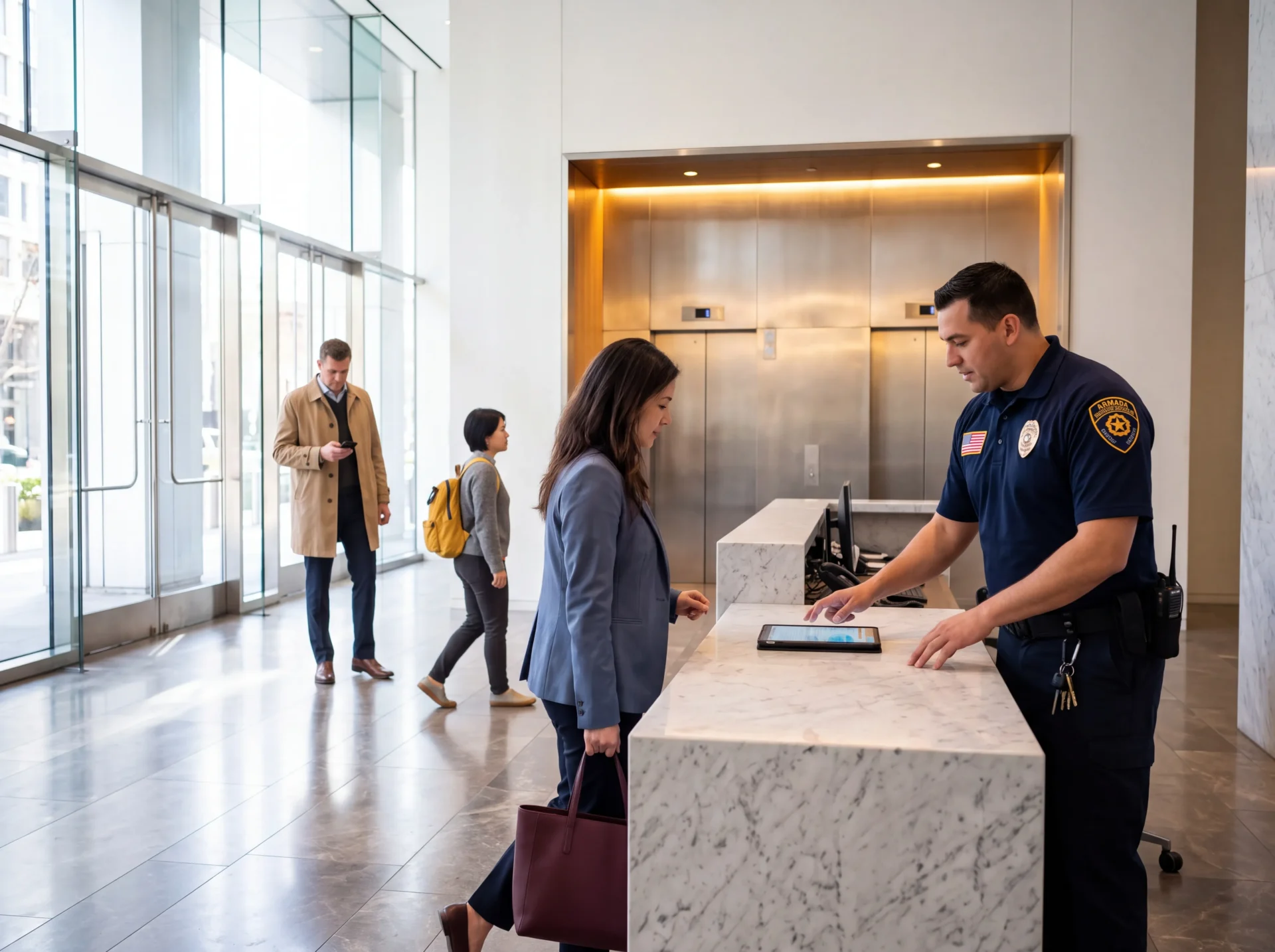
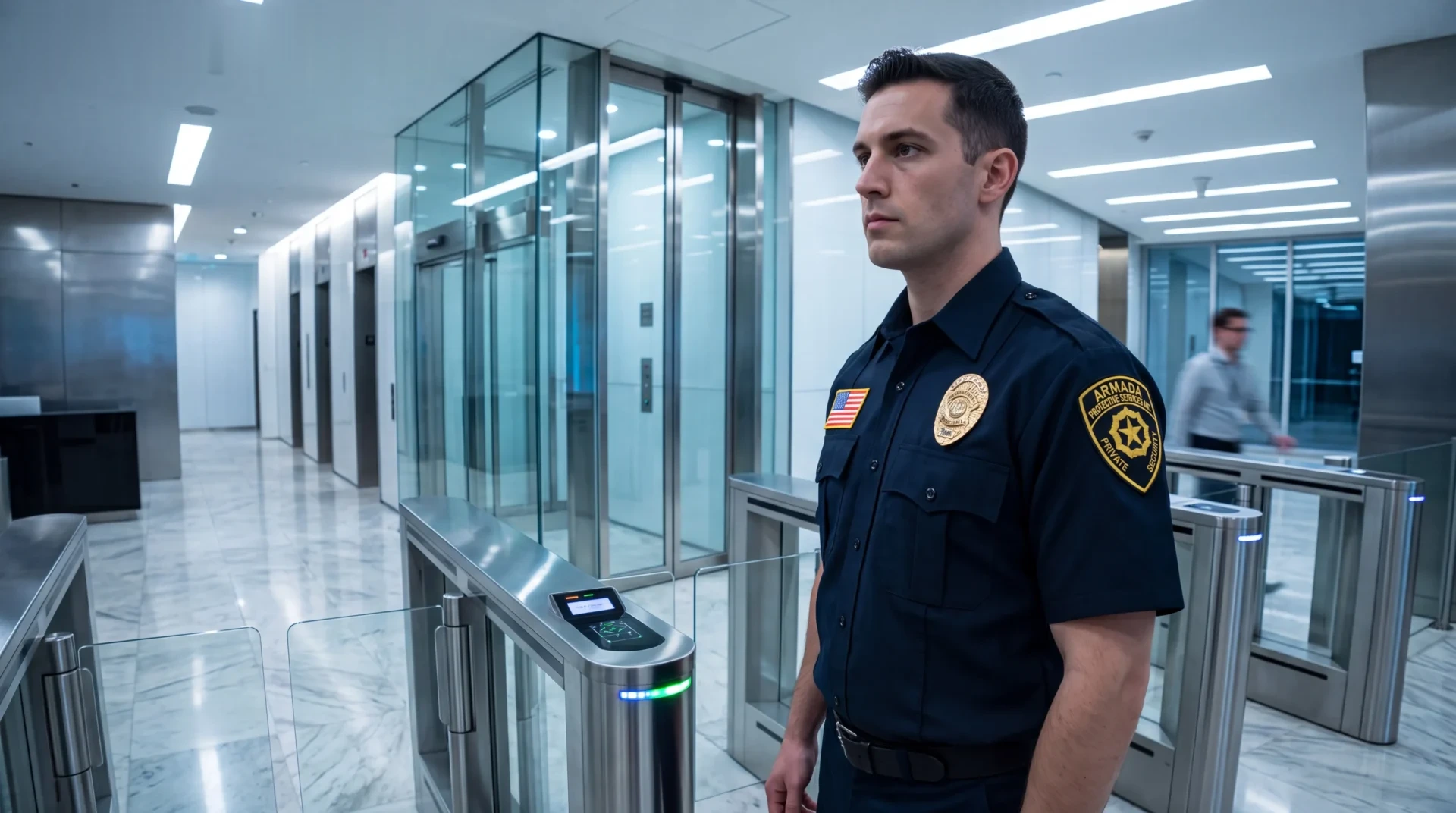
What an unarmed officer does, and what he does not
Four things, and three of them happen before anything has gone wrong: being seen, deciding who comes through the door, writing it down, and talking to the one person who should not be there. The fourth is the call that hands a physical problem to the police. Property crime in San Francisco ran 124 percent above the national rate in 2024 and 91 percent above it in 2025, according to the FBI Crime Data Explorer1.
Standing where he can be seen
An officer in your lobby does not move a city figure. What he changes is the decision taken on your own doorstep, which is why the first half of the job is geography. The post goes where the person weighing up your door can see it from the street, and where the officer can hold the entrance, the elevator bank and the sidewalk in one view. Sitting in a back office is staff, not a post.
- Position agreed on site by line of sight, not picked off a floor plan
- Uniform, shoulder patch and badge worn so he reads as security from the sidewalk
- Walks of the floor at uneven times, so the gap between them cannot be timed
- Doors, locks and lights that have failed since the last shift written down and reported
The door, and the record it leaves
Access control on an unarmed post is a person rather than a turnstile. The officer checks the caller against the list you gave him, signs them in, issues the badge, calls the floor and turns away the ones who do not belong. The value is not in the refusals. It is that every entry still exists in writing a month later.
- Visitors checked against your own list and signed in by name and time
- Contractors and deliveries sent to the door you want them at, not the nearest one
- Badges issued and collected, with any not returned noted on the same shift
- The log written during the shift by the officer standing there, not typed up later
Settling it while it is still words
Most of what reaches an entrance is a person who is angry, lost, drunk, or asleep in a doorway. None of that improves with force and much of it gets worse. The officer is trained to give the person a way to leave with their dignity, and to do it in the first minute rather than the tenth.
- One clear instruction, said calmly, with the reason and the way out in it
- Distance kept, hands visible, nothing standing between the person and the exit
- Your staff and tenants moved out of the argument before it collects an audience
- City outreach called where somebody needs a service rather than a trespass warning
The call that goes out instead of a hand
An unarmed officer carries no firearm and no baton. When a situation turns physical his work is to put distance between it and your people, keep watching, and get the police there with a description worth acting on. California gives a registered guard a narrow power to detain, and our standing instruction on these posts is narrower still: call it in and keep looking.
- No firearm, no baton and no handcuffs on an unarmed post
- Police called early, with a description, a direction and the door number they should come to
- The officer stays as the witness, and his written account reaches you the same shift
- A supervisor is told that night, not in a morning email
Where we can staff a standing post
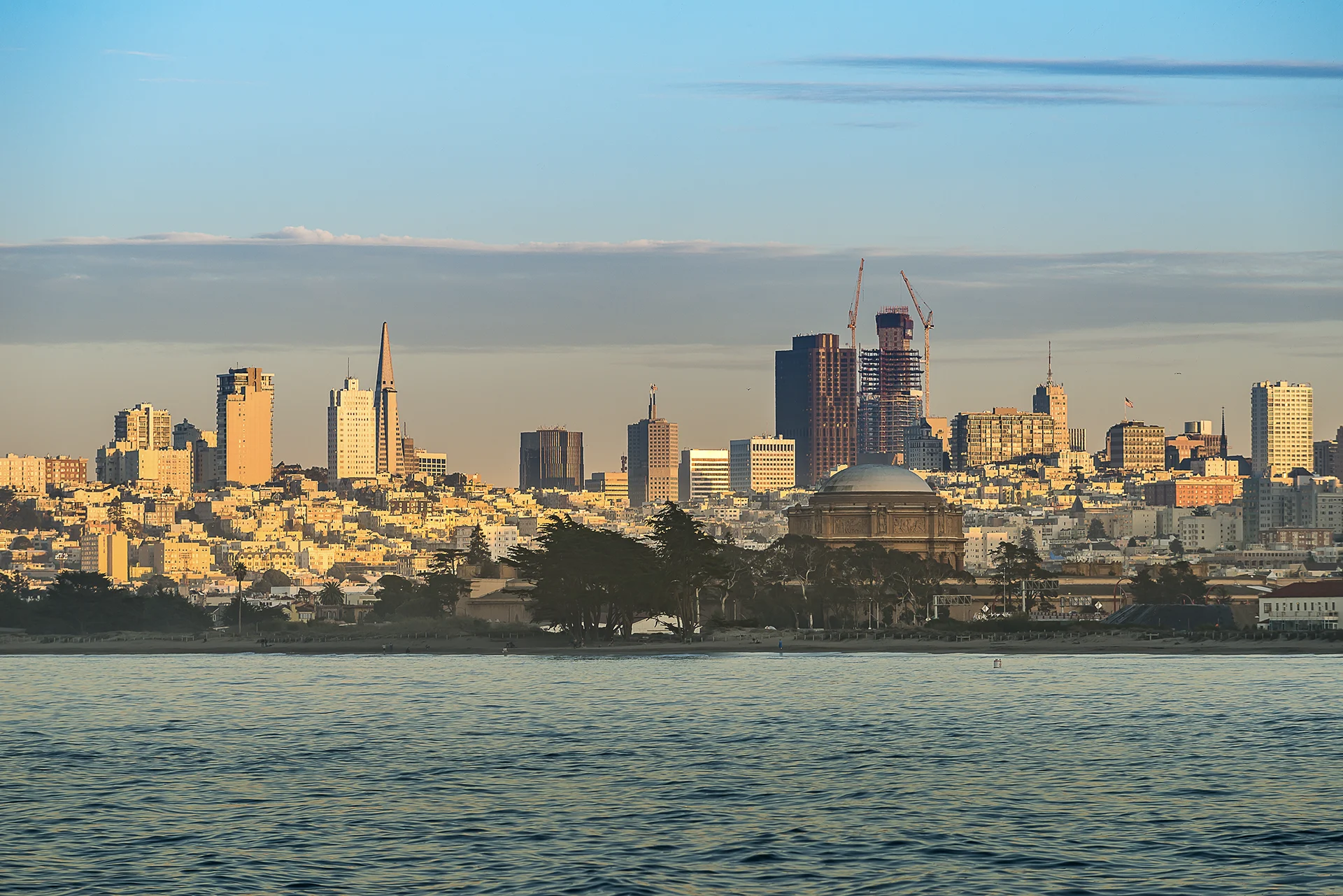
A post stands or falls on relief. Somebody has to reach your address when the officer on shift calls in sick, so we sell posts only where our own roster already reaches: San Francisco first, then down the Peninsula as far as San Jose, and over the bridge to Sausalito.
We serve: San Francisco, San Mateo, Brisbane, San Jose (see all locations)
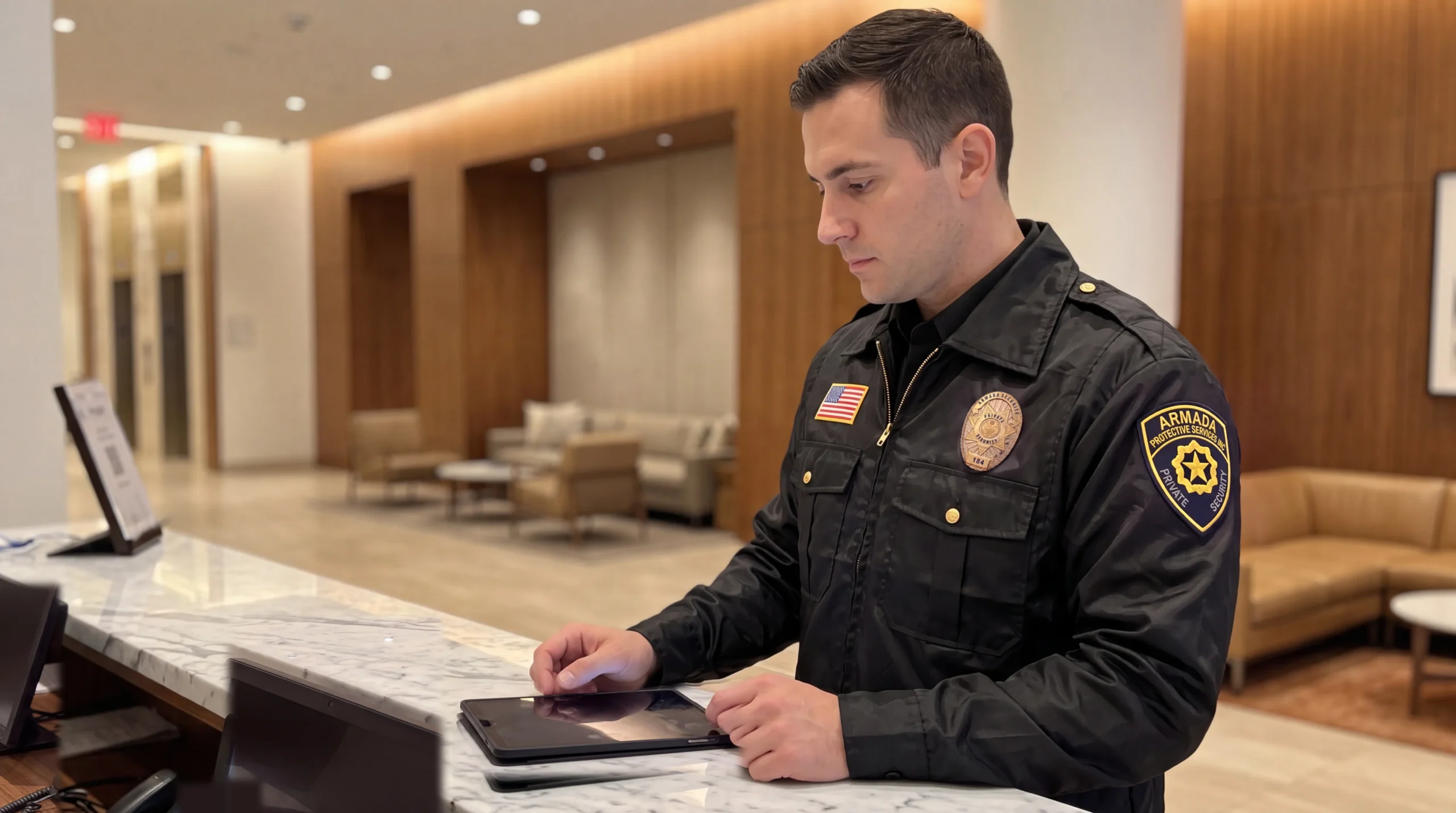
Where an unarmed post is the right answer
This is not settled by how rough the block feels after dark. It is settled by what sits on your floor, who has to walk past the officer to reach it, and what you would want to happen in the worst ten minutes of the year. Four kinds of site where the answer is almost always unarmed, one where it is not, and the license that stands behind the officer either way. Where the answer is not, we say so and point you at an armed post.
Lobbies, receptions and front desks
The work here is mostly greeting people, and a firearm gets in the way of that. Tenants, their guests, couriers and contractors all pass one counter, and what you are buying is somebody who knows which of them belongs, is pleasant to the ones who do, and firm with the ones who do not.
- Tenant and visitor handling, badges, keys and deliveries at one counter
- After-hours access run off the list you maintain, not off who looks plausible
- A face your tenants recognize, because the same officers hold the post
- Incident notes and the daily log in your hands rather than in a filing cabinet of ours
Apartment buildings once the day staff go
Residential buildings get quiet at the wrong hour. Doors get propped, a tailgater walks in behind a resident, the garage gate stays up, somebody settles in the stairwell. A post through the evening and the night closes that window without turning the lobby into a checkpoint.
- Garage gates, lobby doors and mail rooms checked rather than assumed
- Tailgating handled by talking to the resident, not by stopping the resident
- Package and bicycle rooms walked on the same rounds as the doors
- A written handover to the morning staff, so nothing is held in one person’s memory
Retail floors, trespass and encampments
On a shop floor the officer is there so that the staff never have to be. He asks somebody to leave, he does it the same way every time, and nothing is chased out of the door. Tents on private ground are the same work: a request, decently made, and the city called when what the person needs is a service.
- Staff kept out of the confrontation and told what to do instead
- Trespass warnings given and recorded, so a repeat is a different conversation
- Nobody is pursued off the property, and nobody and nothing is searched
- What was found, said and done is in the shift report whether or not it escalated
Construction sites and empty buildings
An empty building needs somebody at the gate far more than it needs a weapon. Material walks out through the entrance it came in by, and the person who stops that is the one checking the trucks and the subcontractors against the day’s schedule.
- Gate held against the day’s delivery and subcontractor schedule
- Vehicles and loads logged on the way in and on the way out
- Perimeter walked for fresh openings in the fence and for anyone settling in overnight
- Machinery, copper and tooling left where the site agreed to leave them, and the rest noted
Where we send you to an armed post instead
A short list, and it is about what you keep rather than how the street feels. Cash and product that turns into money the moment it leaves the room, a dispensary counter, a jewelry case, a yard of copper. Those are the sites where the holster changes the arithmetic, and we will say so on the walkthrough rather than sell you a post that does not fit.
- Rooms holding cash, product or stock that is small, portable and resold easily
- Sites with a standing, named threat rather than a general worry about the area
- A mixed building can run one armed post and leave the rest of the cover unarmed
- Armada does not move money: the carrier does that, and the officer holds the door
Two public records stand behind the shift
The firm holds a California private patrol operator license and each officer holds a guard registration issued to him personally. Neither has to be taken on trust, because both are searchable by anybody: the register is kept by the Bureau of Security and Investigative Services2.
- The registration belongs to the officer, not to the company he works for
- A background check and the state power to arrest course sit behind every registration
- Written post orders for your building exist before anybody stands the post
- The PPO number is in the footer of every page here, ready to paste into the register
Our Statistics. Your Guarantee.
An unarmed post is a person you are handing your front door to, so the firm behind him should be the easy part to check. Armada has been the top-rated San Francisco security company since 2021 according to SFist3. Each figure below says what it is measured against.
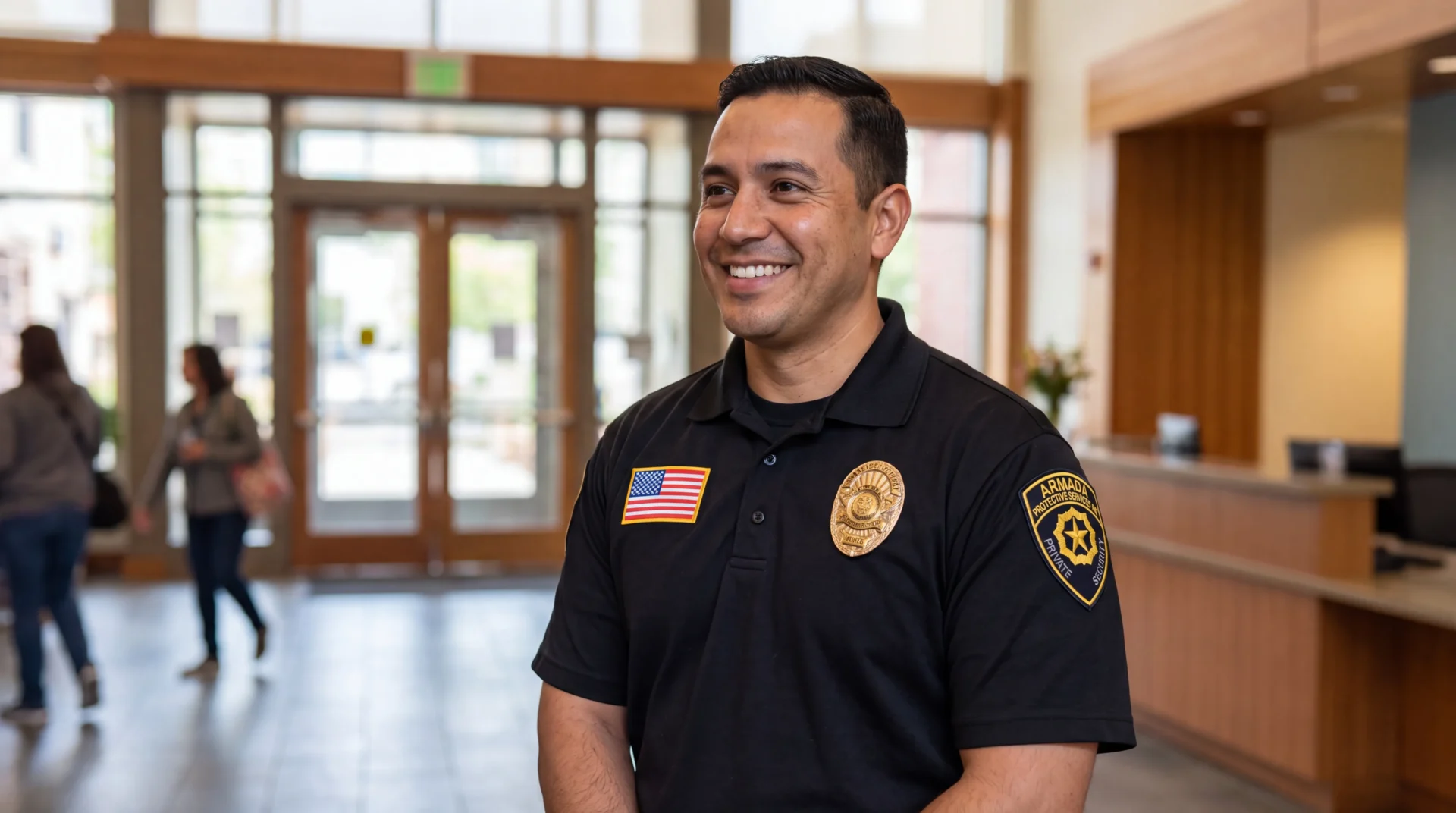
- 2x
At least twice as fast as police arrival
Under contract Armada is on site in 15 to 30 minutes. The median SFPD publishes for a low-priority call is longer, which is why SFPD itself points businesses to private security for anything short of a crime in progress.
- 80%
Fewer incidents at monitored properties
Weighted average across client sites, banks and hotels among them. It compares the incident records those clients kept before Armada covered the site with the records they kept after.
- 24/7
Your officer is the one you call
At two in the morning a client calls the officer who covers them, not a call center in another state. Clients hold those numbers from the first shift, and the app carries the messages, the photographs and the log.
- 100%
Licensed and insured
Every officer individually BSIS licensed and background-checked, under California Private Patrol Operator PPO 120526. Look the number up yourself in the state license record for PPO 1205264. Checked November 2026.
Related Security Services
Three Armada services that sit closest to a standing unarmed post.

An officer who carries an exposed firearm on your post, under a state permit with his own name on it that you can look up before his first shift.

Officers trained for one kind of site, from data centers and laboratories to museums and hospitals, where the building itself sets the rules.
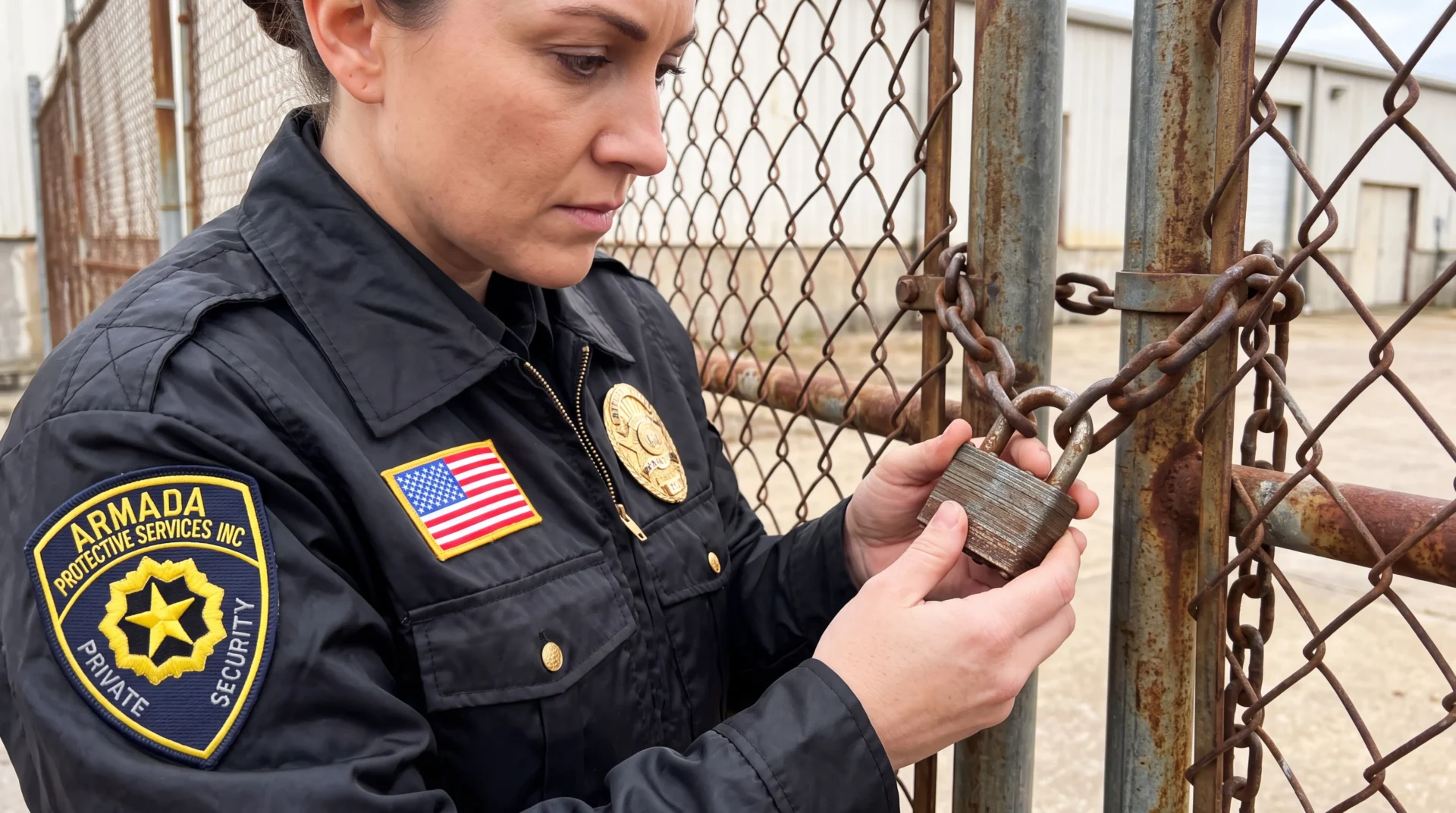
Somebody walks your building, your yard or your lot on an agreed rhythm, checks the points you picked, and writes down what was found.
Customer testimonials
Professional and Reliable Security Services in the Bay Area
We hired Armada on short notice for a situation we were experiencing in one of our apartment complexes. They responded quickly, set up patrols and a guard service for us very quickly. Guards were professional, prompt and communicated activity at the property to us.

Lana August
Property Manager, San Francisco
We have used Armada for about 10 years. They are an amazing company providing professional personnel consistently. Thank you Armada!

Jesse Leite
Resident Manager, San Francisco
Every Armada employee with whom I've had the pleasure of interacting has been top notch - curteous, efficient, effective, knowledgeable, responsible.

Alex Goretsky
Business Owner, San Francisco
I Manager a portfolio of communities in San Francisco -working with Armada is great. They are flexible, honest and the Guards are always on point. I would recommend this firm to other HOA/Commercial managers.

Christopher Stanley
Owner and Chief Executive Officer, San Francisco
Quoted verbatim from published client reviews, including their original wording.
Book the site visit
Send an address and a time rather than a specification. We walk the building with you, say where a post earns its hours and where it would only be furniture, and price what is left. A standing post carries a minimum term of one month and runs month to month after that.
FAQs
What owners and building managers ask us before they put an unarmed officer on a post.
What may an unarmed officer actually do if somebody refuses to leave?
Ask, explain, repeat the ask, and then call the police. He can stand in a doorway and he can refuse entry, because that is your property right exercised by your agent. He does not chase anybody, he does not take hold of anybody to keep them there, and he does not search a person or a bag. California does give a registered guard a power to detain in narrow circumstances, and our standing instruction is still to call it in instead: a trespass that ends with an officer and a stranger wrestling in your lobby is a worse outcome for you than one that ends with a police report.
If he cannot stop anyone, what am I paying for?
For the decision that is made before any of that. Most of what an officer prevents never becomes an event: the door nobody tries, the delivery driver who goes to the right dock, the person who is talked out of the lobby in a minute, the propped fire door found at eleven at night. The part you can read afterwards is the log, and the part you cannot read is the reason the log is dull.
How do I know whether my building needs an armed post instead?
Ask what is on the floor rather than how the street feels. If the site holds cash or stock that turns into money the moment it leaves the room, or if there is a named person who has already threatened somebody there, that conversation is worth having. If the job is greeting people, holding a door and writing the day down, a firearm adds risk and cost and changes nothing. We give you that answer on the walkthrough, and we have talked clients out of armed cover more often than into it.
Will it be the same officer every shift?
The same small group, and you meet them. A post is covered by a handful of officers who have read your post orders and know your tenants, rather than by whoever the roster throws up that morning. When somebody is ill the relief comes off that same list. If nobody on it is free we tell you who is coming and that he is new to the building, instead of letting you find out at the desk.
Do your officers write reports, or do I have to ask?
It arrives without being asked. Every shift produces a log with times against it, and anything physical carries a photograph. Serious things are a phone call on the night from a supervisor. Everything else is in the report that reaches you after the shift closes, and the reports are kept as a run so a month can be read as a month when an insurer or a lawyer asks what cover the building had.
Ask us directly
Send it here. The answer comes from an expert who assesses these posts, not from a sales desk.
Sources
Where the figures, rules and local facts on this page come from. Links reviewed 7 Nov 2026.
- FBI Uniform Crime Reporting 1 FBI Crime Data Explorer Crime Data Explorer; set Location to California and Agency to San Francisco Police Department, agency CA0380100. The tool keeps its filters out of the address, so there is no deeper link to give
- California Department of Consumer Affairs 2 Bureau of Security and Investigative Services guard card and private patrol operator licensing requirements
- SFist 3 Armada Protective Services — San Francisco’s Top Security Company trade press, used only where no primary source carries the claim
- California Department of Consumer Affairs license search 4 License record PPO 120526 Armada Protective Services, private patrol operator