Industrial Security in San Francisco
A plant, a yard and a distribution center are built for different work and they fail in the same three places: a boundary measured in hundreds of feet, a gate that has to stay open for deliveries, and value that stands outdoors all night. Armada covers that with BSIS-licensed officers and a written record of every round.
This is the page for the choice itself: what industrial sites have in common, how an industrial property differs from an office, and how to decide between a posted officer, a patrol round and response on call. The detail for one kind of site lives on its own page below.
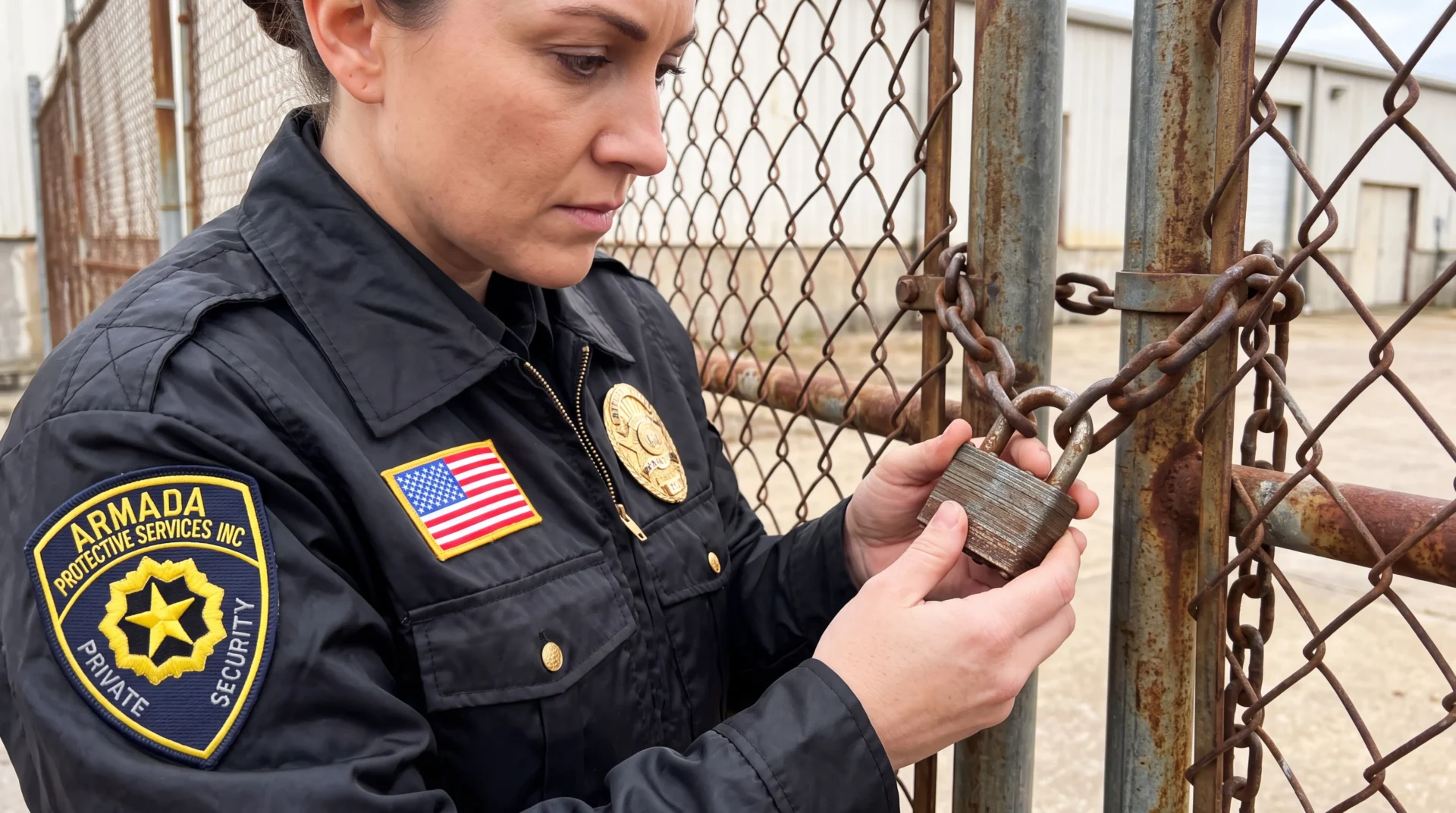
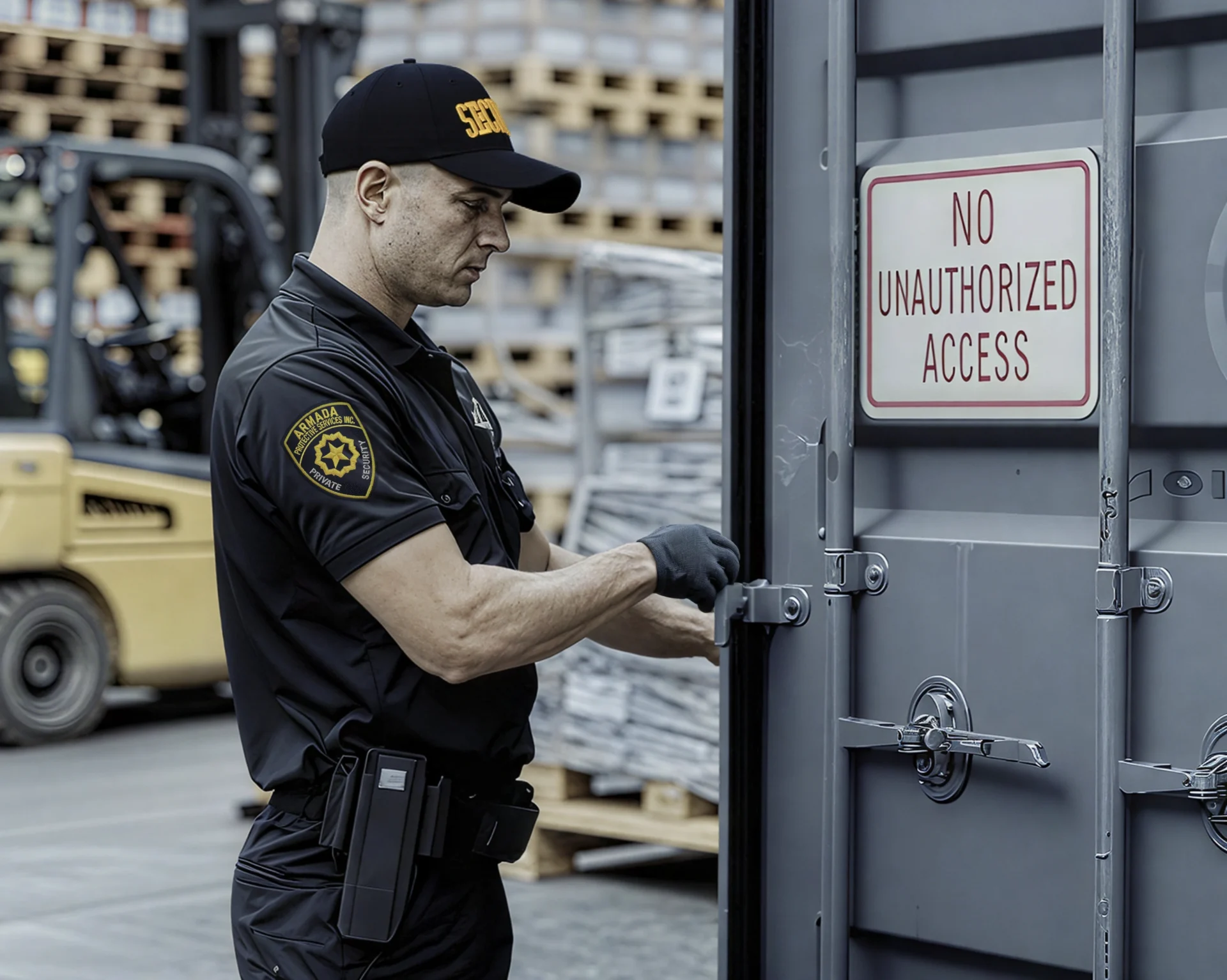
What a plant, a yard and a depot share
Industrial properties differ in what they produce and agree on what they lose. The valuable part sits outside the building, the boundary is a fence rather than a reception desk, and for most of the working day the people on the property are not on your payroll.
Each kind of site has a page of its own below, carrying the part that belongs only there: warehouses and distribution centers, manufacturing plants, energy facilities, construction sites and vacant industrial property. What follows is the ground under all five, and the part a buyer has to settle before any of them.
The boundary is a fence, not a door
An office is held at one desk everyone walks past. An industrial property is held along a line most of which cannot be seen from the building, and the way in is almost never the main gate. It is the delivery gate left on a loose chain, the rail spur, the gap behind the compressor shed, the panel somebody cut last winter and nobody closed.
- The whole fence line walked on the first visit, not only the entrance
- Every opening listed by hand, including the ones nobody uses any more
- Dark stretches and blind corners written down where they are, so they can be priced
Most people on site do not work for you
Drivers, agency crews, contractors and inspectors arrive all day and every one of them belongs there. That is what makes the access list hard: a list that names companies instead of people stops being a control by the second week, because nobody at the gate can tell which four of the nine men in the van were meant to come.
- Arrivals checked against the day list, not against what the gate keeper remembers
- Vendors signed in by name and time, so a second visit after dark is visible
- Anyone not on the list held at the gate until a named site contact answers
The place stands empty longer than it works
A second shift ends and the property is alone for twelve or fourteen hours, which is when most of what goes missing goes. The hour of the round then matters more than the number of rounds: a visit at the same time every night teaches the street exactly when it is safe to come over the fence.
- Round times varied, so the pattern cannot be read from the street
- Checkpoints scanned on site with a time stamp, so the round is evidenced
- Anything changed since the last visit photographed and attached to the report
How to choose the way a site is covered
Three questions settle most of this, and a site manager can answer all three before calling anybody: how long is the boundary, how many hours a day does the place stand empty, and is there anything on it that has to be checked by hand rather than simply watched.
Officers are licensed individually by BSIS and background-checked before a first shift, and the company holds California PPO 120526. A contract opens at one month and runs month-to-month after that, so a plant that shuts for a maintenance window is not paying for a year of cover it cannot use.

A posted officer, when the gate is the problem
Take a post when traffic through the gate never stops and the decision at the gate is the thing being protected: who comes in, whose paperwork matches the load, which trailer leaves and when. A vehicle that passes four times a night cannot make that decision for you.
- Written post orders for that address, agreed before the first shift
- A gate list short enough that the officer knows every face on it
- A report at the end of every shift, whether or not anything happened
A patrol round, when the boundary is the problem
Take rounds when the site is quiet and long: a yard of stored plant, a line that runs one shift, a building between tenants. A marked vehicle and a walked fence cost a fraction of a post and reach far more ground, at the price of not standing there the rest of the night.
- Rounds logged by GPS, each checkpoint scanned on the spot
- Arrival times moved night by night, never a fixed round
- Container seals and interior doors checked, not the perimeter alone
Response on call, when the alarm is the problem
Take response when the property already has sensors and wants somebody to attend them. The officer covering your area answers the call, writes down what was found and escalates to SFPD1 while a crime is in progress. Armada guards and answers; it does not sell or fit cameras, and it will say so before you buy any.
- A named escalation contact per site, agreed before the first call
- A written incident report with photographs when the call closes
- A follow-up round on the next shift after any confirmed incident
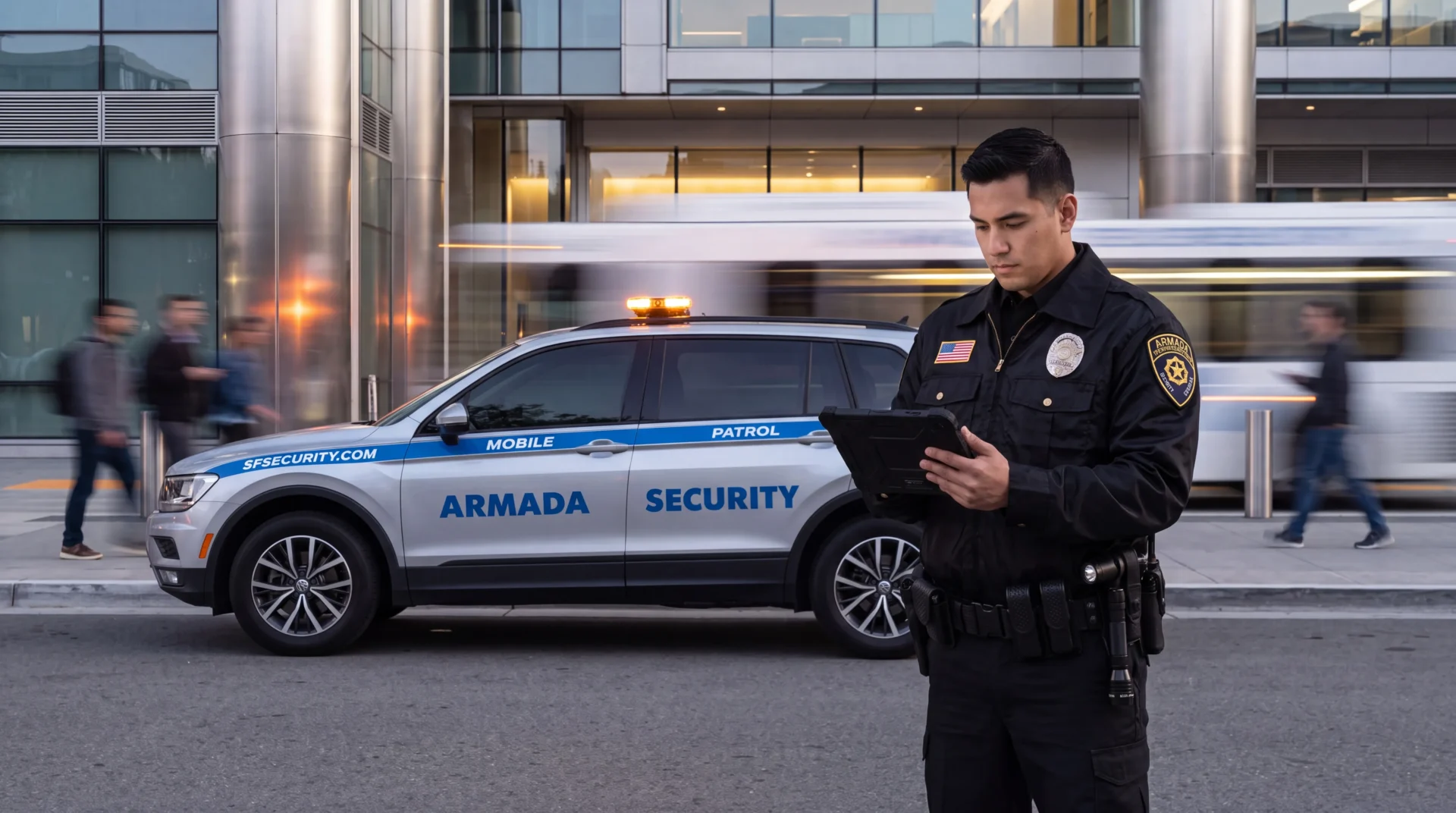
Where the industrial work is
Everything is run out of one San Francisco office, which is why the same crew covers your yard and the next building along the same street, and why the person who answers at night has stood at your gate. An officer reaches a site under contract in 15 to 30 minutes, measured from our own dispatch log.
We serve: San Francisco, Brisbane, San Mateo, San Jose (see all locations)
Our Statistics. Your Guarantee.
Four things are worth checking before a plant manager signs anything, and none of them has to be taken on trust: how fast an officer reaches the gate, whether the cover moves the incident count at all, who answers at three in the morning, and whether the license exists. Armada has been the top-rated San Francisco security company since 2021 according to SFist2.
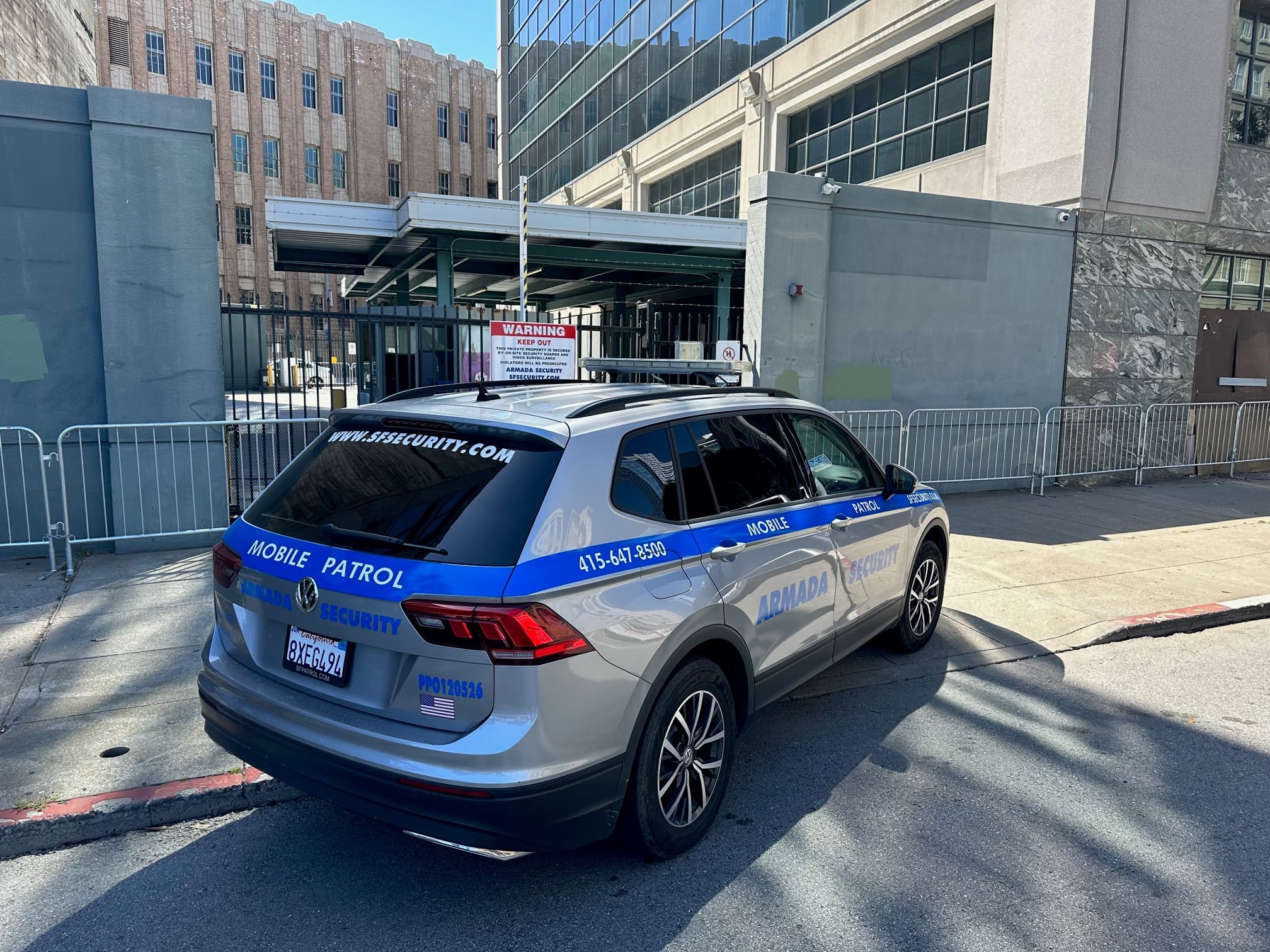
- 2x
At least twice as fast as police arrival
Under contract Armada is on site in 15 to 30 minutes. The median SFPD publishes for a low-priority call is longer, which is why SFPD itself points businesses to private security for anything short of a crime in progress.
- 80%
Fewer incidents at monitored properties
Weighted average across client sites, banks and hotels among them. It compares the incident records those clients kept before Armada covered the site with the records they kept after.
- 24/7
Your officer is the one you call
At two in the morning a site manager calls the officer standing on the site, not a call center in another state. Clients hold those numbers from the first shift, and the app carries the messages, the photos and the log.
- 100%
Licensed and insured
Every officer individually BSIS licensed and background-checked, under California Private Patrol Operator PPO 120526. Look it up yourself: License record PPO 1205263 in the California Department of Consumer Affairs register. Checked November 2026.
Industrial sites we cover in detail
Three of the five pages under this one, for the sites that ask most often.

Protecting your assets and safeguarding your future at warehouses and distribution centers.

Officers, patrols and a written record for a jobsite from the slab stage to handover.
Customer testimonials
Professional and Reliable Security Services in the Bay Area
We hired Armada on short notice for a situation we were experiencing in one of our apartment complexes. They responded quickly, set up patrols and a guard service for us very quickly. Guards were professional, prompt and communicated activity at the property to us.

Lana August
Property Manager, San Francisco
We have used Armada for about 10 years. They are an amazing company providing professional personnel consistently. Thank you Armada!

Jesse Leite
Resident Manager, San Francisco
Every Armada employee with whom I've had the pleasure of interacting has been top notch - curteous, efficient, effective, knowledgeable, responsible.

Alex Goretsky
Business Owner, San Francisco
I Manager a portfolio of communities in San Francisco -working with Armada is great. They are flexible, honest and the Guards are always on point. I would recommend this firm to other HOA/Commercial managers.

Christopher Stanley
Owner and Chief Executive Officer, San Francisco
Quoted verbatim from published client reviews, including their original wording.

See the property the way a stranger sees it
Book an hour and walk the boundary with an Armada expert. You are shown what is open to anybody tonight: the gate that does not latch, the stack visible over the fence from the street, the stretch nobody has lit since the building changed hands, and what to do about each one. The free site visit costs nothing, the written version is yours whether or not you hire us, and a contract after it opens at one month.
FAQs
What plant managers, yard owners and facility directors ask before an industrial contract opens.
How is an industrial site different from an office building for your officers?
An office officer works a lobby and an elevator bank, where almost everybody who walks in is expected and the risk is one person out of place. An industrial officer works a boundary, a gate and a delivery schedule, where almost everybody on the property is a visitor and the risk is a legitimate vehicle leaving with the wrong load. The paperwork is different too: a yard has to be able to show afterwards who was on it and when.
Our site is a plant, not a warehouse. Does that change the cover?
It changes the hours and the hazard, not the method. A plant runs shifts, so the quiet window is short and the shift change is the opening; a warehouse is busy by day and dead by night. A plant also has process areas an officer must not enter without an escort, which has to be written into the post orders before the first shift. The detail sits on manufacturing plants and warehouses and distribution centers.
How many officers does an industrial site actually need?
Start from the gate rather than the acreage. One officer covers one decision point: if deliveries arrive at two gates at once, one officer cannot hold both, and a round cannot be walked by somebody who is standing at a barrier. Most sites we cover run one posted officer on the busy gate and a patrol round over the rest of the boundary, and we will say plainly when a site needs less than it asked for.
Can one contract cover a yard, a plant and a building site at once?
Yes, and each address keeps its own paperwork: its own post orders, its own visit times and its own line on the invoice, so a manager who runs one of the three is not reading the night of a site he never visits. The term opens at one month and runs month-to-month after that.
Do your officers need site-specific safety training before they start?
Yes, and the site gives it. Hearing protection, high-visibility clothing, lockout rules, forklift traffic and the areas that need an escort are yours to brief, and we build them into the post orders rather than leaving them to the individual officer. An officer who has not had that briefing is not posted on your site.
What does an industrial site get in writing after a shift?
A report when the shift closes: what was checked, what was found, the time of each round and photographs of anything that changed. Anything that cannot wait goes out at once to every emergency contact you have given us, on every channel at once. That report is the document your insurer and your contract administrator will ask for, which is why it is filed whether or not the night produced anything.
Ask us directly
If you do not see the information you are looking for, fill out the form and put the question to us: we answer it ourselves.
Sources
Where the figures, rules and local facts on this page come from. Links reviewed 5 Nov 2026.
- San Francisco Police Department 1 SFPD
- SFist 2 Armada Protective Services: San Francisco's Top Security Company trade press, used only where no primary source carries the claim
- California Department of Consumer Affairs license search 3 License record PPO 120526 Armada Protective Services, private patrol operator