Security Coverage in the San Francisco Bay Area: guard, mobile patrol or cameras compared
A standing officer, a patrol route and a camera solve different problems. This page compares them across the factors that actually decide it, including the option of buying no ongoing security at all.
- A standing officer when somebody has to be handled at the point
- Mobile patrol when the site needs checking and a dated record
- What each one costs when the number matters more than the model
A posted officer answers what a camera only records.
An expert sizes the coverage on site at no cost, and the written scope is yours whether you buy or not.
If it is urgent, call (415) 647-8500

What each model actually is
Five answers, and the fifth one is to buy nothing yet. Each is described here in the plainest terms we can manage, before the table below puts them against each other.
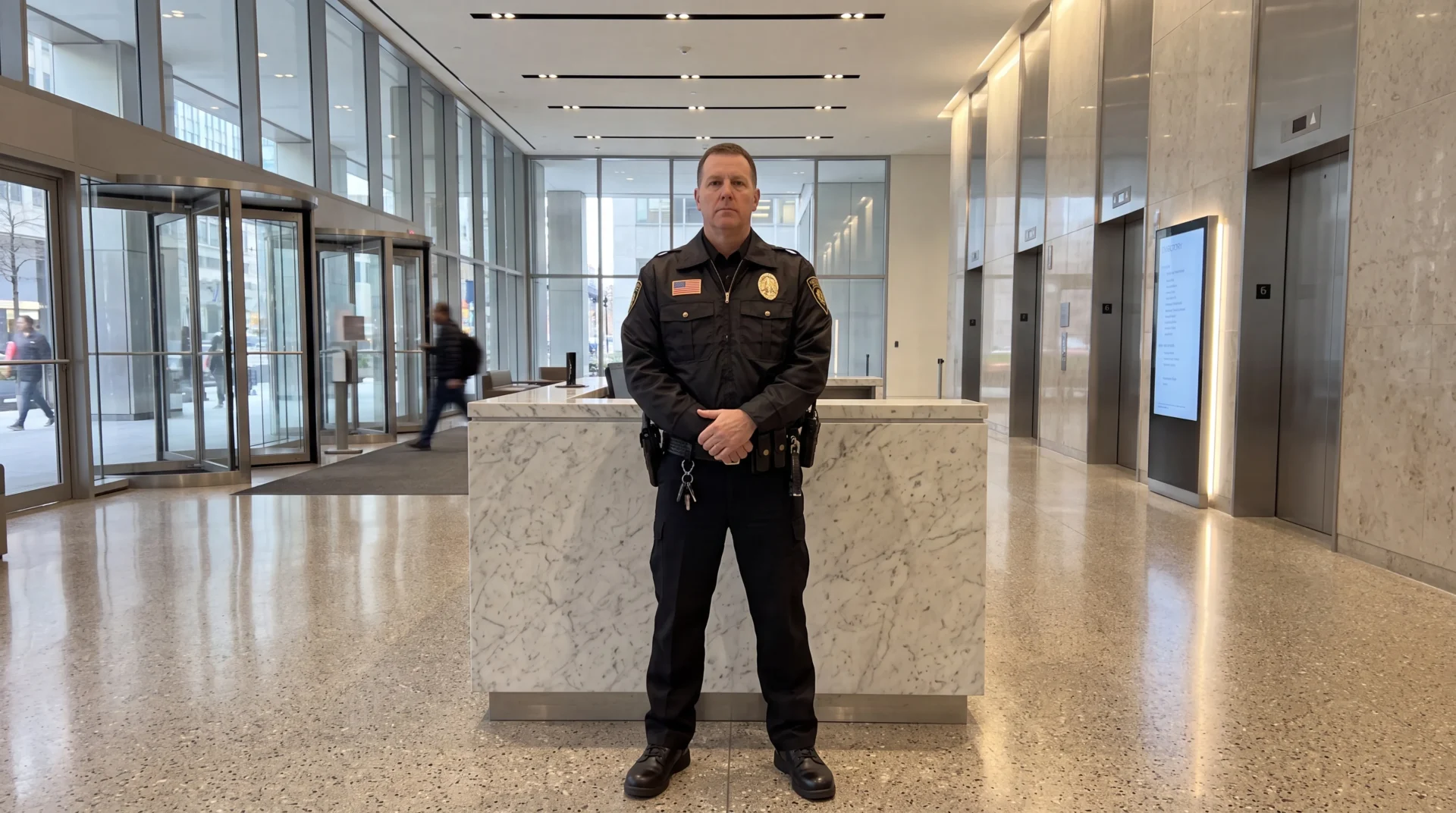
Standing officer
A licensed guard assigned to one post for a defined shift, continuous presence at one location.
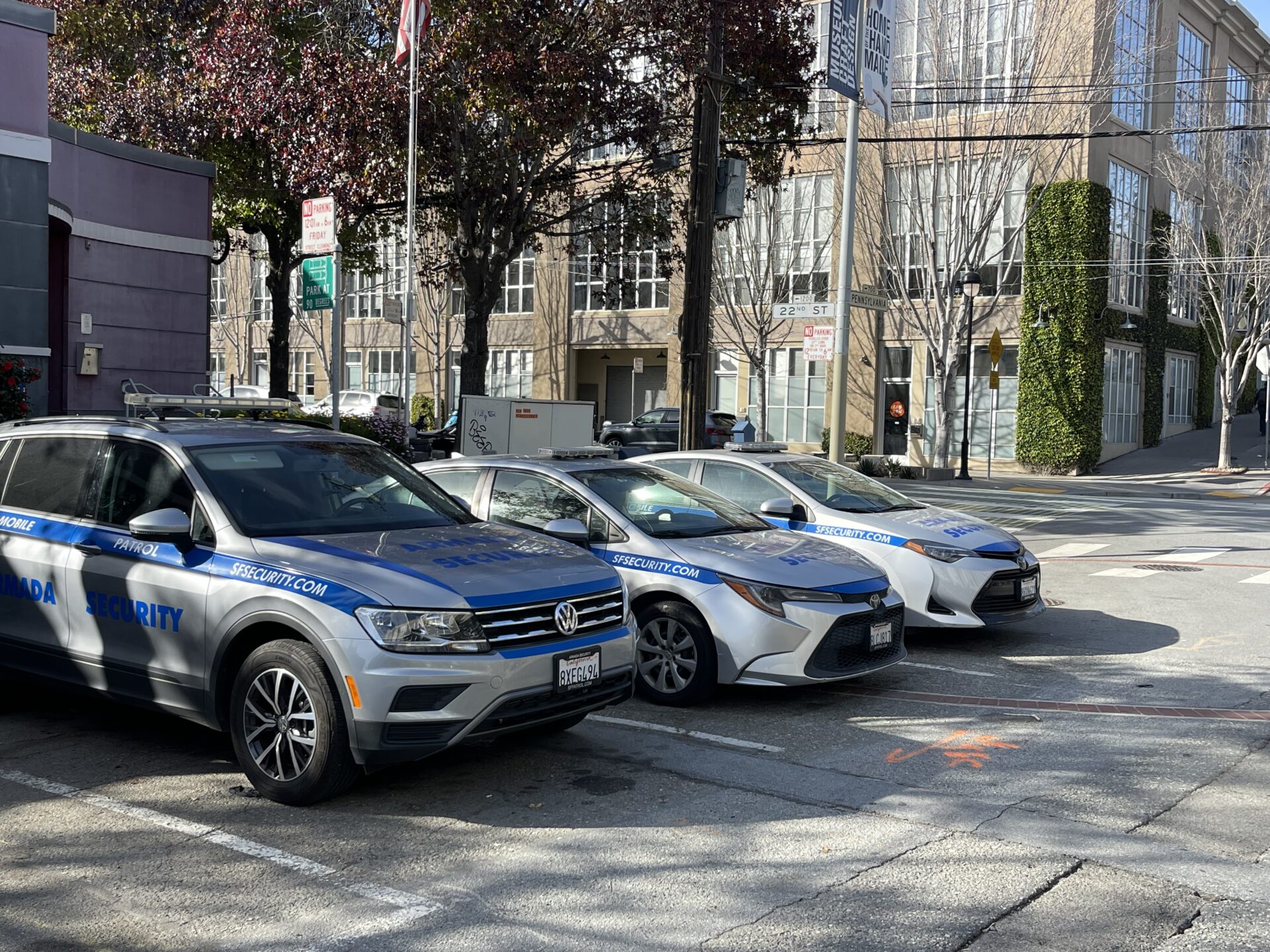
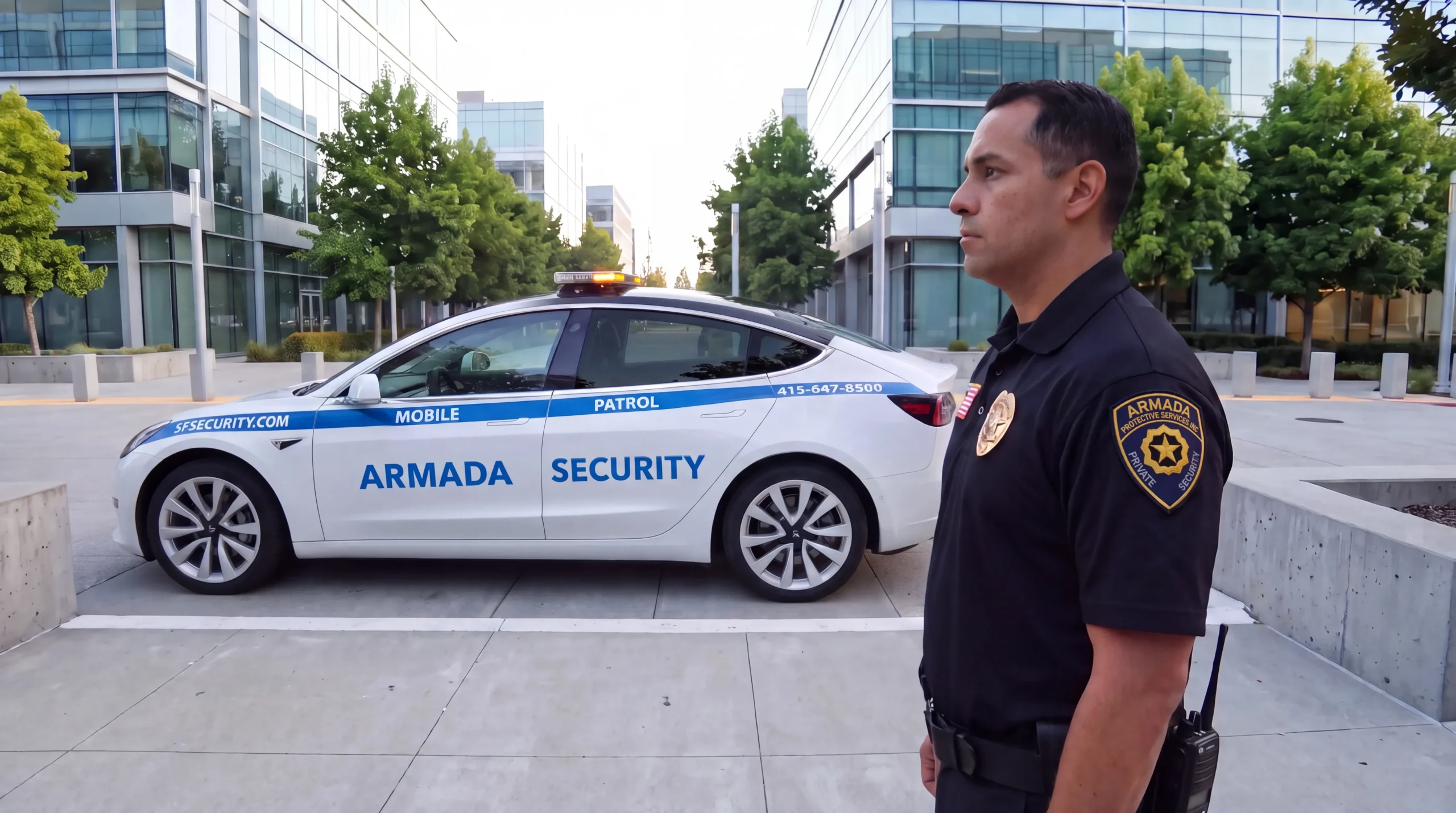
Mobile patrol
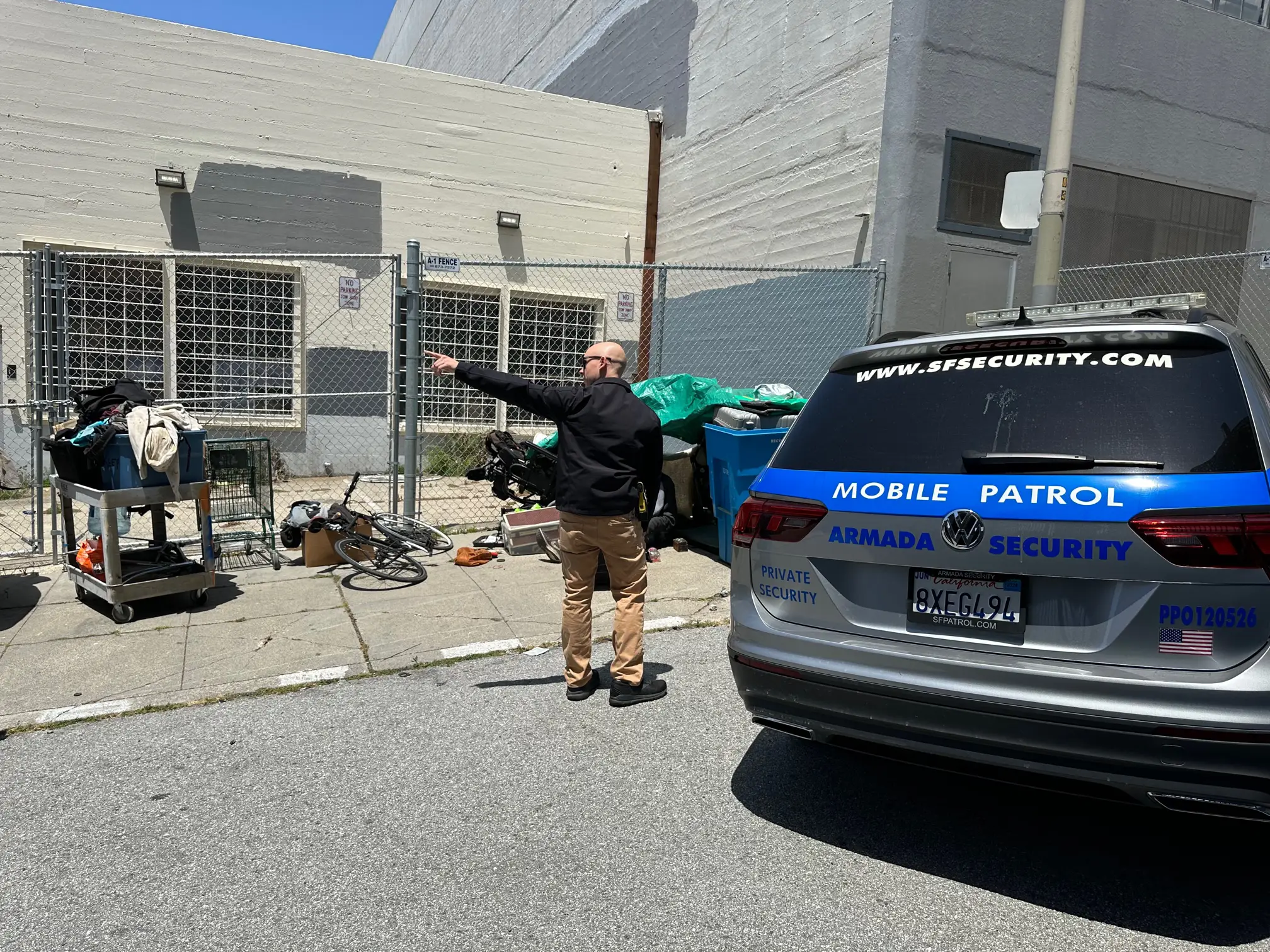
A vehicle unit visiting on a schedule or at randomized intervals, logging GPS-stamped checkpoints each visit. See a specimen patrol report.
Post plus patrol
A short post over the concentrated risk window, with patrol passes covering the remaining hours.
Cameras and access control
Recorded or remotely monitored coverage with no personnel on site. Documents; does not intervene.
No ongoing security
A physical or procedural fix resolves the issue without a recurring security contract.
Compared across the factors that decide it
Eight dimensions, four coverage models. The fifth model, buying nothing yet, is not in the table because it has no column to fill: it is what the other four are measured against.
| Dimension | Standing officer | Mobile patrol | Post plus patrol | Cameras and access control |
|---|---|---|---|---|
| Continuous presenceWhether someone is on site at any given moment. | Yes, for the hours of the shift and at one location only. | No. Coverage is a series of visits; between visits the site is unattended. | Yes during the posted window, visits only outside it. | No presence. Recording only, unless a monitoring service is attached. |
| What it detersDeterrence depends on whether the deterrent is visible when the decision is made. | Opportunistic entry and confrontation at the covered point. | Behavior that depends on a predictable safe window, most repeat trespass, tagging and after-hours entry. | Both, at proportionate cost, when the risk window is known. | Little in the moment. Strongest as after-the-fact evidence. |
| Geographic coverageLarge or multi-point sites cannot be covered from one position. | One post. Additional points need additional officers. | The whole site, and multiple sites, through checkpoint sets. | The critical point continuously, the remainder on rounds. | Wherever cameras are installed and functioning. |
| Documentation producedWhat you can show an insurer, a court, an owner or a board. | Shift attendance records, access log, same-shift incident reports. | GPS-stamped checkpoint completion per visit, route logs, dashcam footage, incident reports. | Both record sets under one account. | Footage, retained for as long as the system stores it. |
| Response to something in progressResponse time is a function of where the responder already is. | Immediate at the post; nothing elsewhere on the property. | Dispatched response; timing depends on unit position and traffic. | Immediate in the window, dispatched outside it. | None. A person still has to be sent. |
| Management burden on youCheap coverage that you have to supervise yourself is not cheap. | Lowest when post orders are written and supervised; highest when they are not. | Low. Coverage is verified from the log rather than by your staff. | Low, with one account and one supervisor across both. | High. Someone on your side must review footage for it to matter. |
| What drives the costUnderstanding the driver is how you change the price. | Hours, officers and rate. Overnight and weekend hours cost more. | Visits per night, number of sites, checkpoints per site, travel distance. | Length of the posted window; patrol frequency outside it. | Capital cost up front, plus monitoring if attached. |
| Typically the right fit for | Lobbies, gated entries, occupied buildings, active access control, confrontation risk, fire watch. | Vacant property, construction sites, portfolios, large lots, overnight deterrence, alarm response. | Properties with a known concentrated risk window and dispersed exposure the rest of the time. | Evidence capture and access records, as a layer alongside personnel rather than instead of them. |
Continuous presence
Whether someone is on site at any given moment.
- Standing officer
- Yes, for the hours of the shift and at one location only.
- Mobile patrol
- No. Coverage is a series of visits; between visits the site is unattended.
- Post plus patrol
- Yes during the posted window, visits only outside it.
- Cameras and access control
- No presence. Recording only, unless a monitoring service is attached.
What it deters
Deterrence depends on whether the deterrent is visible when the decision is made.
- Standing officer
- Opportunistic entry and confrontation at the covered point.
- Mobile patrol
- Behavior that depends on a predictable safe window, most repeat trespass, tagging and after-hours entry.
- Post plus patrol
- Both, at proportionate cost, when the risk window is known.
- Cameras and access control
- Little in the moment. Strongest as after-the-fact evidence.
Geographic coverage
Large or multi-point sites cannot be covered from one position.
- Standing officer
- One post. Additional points need additional officers.
- Mobile patrol
- The whole site, and multiple sites, through checkpoint sets.
- Post plus patrol
- The critical point continuously, the remainder on rounds.
- Cameras and access control
- Wherever cameras are installed and functioning.
Documentation produced
What you can show an insurer, a court, an owner or a board.
- Standing officer
- Shift attendance records, access log, same-shift incident reports.
- Mobile patrol
- GPS-stamped checkpoint completion per visit, route logs, dashcam footage, incident reports.
- Post plus patrol
- Both record sets under one account.
- Cameras and access control
- Footage, retained for as long as the system stores it.
Response to something in progress
Response time is a function of where the responder already is.
- Standing officer
- Immediate at the post; nothing elsewhere on the property.
- Mobile patrol
- Dispatched response; timing depends on unit position and traffic.
- Post plus patrol
- Immediate in the window, dispatched outside it.
- Cameras and access control
- None. A person still has to be sent.
Management burden on you
Cheap coverage that you have to supervise yourself is not cheap.
- Standing officer
- Lowest when post orders are written and supervised; highest when they are not.
- Mobile patrol
- Low. Coverage is verified from the log rather than by your staff.
- Post plus patrol
- Low, with one account and one supervisor across both.
- Cameras and access control
- High. Someone on your side must review footage for it to matter.
What drives the cost
Understanding the driver is how you change the price.
- Standing officer
- Hours, officers and rate. Overnight and weekend hours cost more.
- Mobile patrol
- Visits per night, number of sites, checkpoints per site, travel distance.
- Post plus patrol
- Length of the posted window; patrol frequency outside it.
- Cameras and access control
- Capital cost up front, plus monitoring if attached.
Typically the right fit for
- Standing officer
- Lobbies, gated entries, occupied buildings, active access control, confrontation risk, fire watch.
- Mobile patrol
- Vacant property, construction sites, portfolios, large lots, overnight deterrence, alarm response.
- Post plus patrol
- Properties with a known concentrated risk window and dispersed exposure the rest of the time.
- Cameras and access control
- Evidence capture and access records, as a layer alongside personnel rather than instead of them.
Rather answer questions than read a table?
The selector asks seven questions and shows its reasoning. It will tell you when the honest answer is that no security contract is warranted yet.
Our Statistics. Your Guarantee.
Choosing between a post, a patrol and a camera is only half the decision; the other half is who turns up, so the four figures behind that are set out here with what each was measured against. Officers are licensed one at a time through BSIS and background-checked before a first shift, and Armada Protective Services has held California PPO 120526 since 1994. Armada has been the top-rated San Francisco security company since 2021 according to SFist1. Every outside document named on this page was checked November 2026.
- 2x
At least twice as fast as police arrival
Under contract Armada is on site in 15 to 30 minutes. The median SFPD publishes for a low-priority call is longer, which is why SFPD itself points businesses to private security for anything short of a crime in progress.
- 80%
Fewer incidents at monitored properties
Twelve client sites kept incident records both before and after Armada started. Across them incidents fell by 80 percent. 2025 client survey.
- 24/7
Your officer is the one you call
Clients hold the direct numbers of the officers on their site, and the app carries the messages, the photos and the log. Nothing is relayed through a desk.
- 100%
Licensed and insured
Every officer individually BSIS licensed and background-checked, under California Private Patrol Operator PPO 120526, both verifiable in the state register.
Customer testimonials
Professional and Reliable Security Services in the Bay Area
We hired Armada on short notice for a situation we were experiencing in one of our apartment complexes. They responded quickly, set up patrols and a guard service for us very quickly. Guards were professional, prompt and communicated activity at the property to us.

Lana August
Property Manager, San Francisco
We have used Armada for about 10 years. They are an amazing company providing professional personnel consistently. Thank you Armada!

Jesse Leite
Resident Manager, San Francisco
Every Armada employee with whom I've had the pleasure of interacting has been top notch - curteous, efficient, effective, knowledgeable, responsible.

Alex Goretsky
Business Owner, San Francisco
I Manager a portfolio of communities in San Francisco -working with Armada is great. They are flexible, honest and the Guards are always on point. I would recommend this firm to other HOA/Commercial managers.

Christopher Stanley
Owner and Chief Executive Officer, San Francisco
Quoted verbatim from published client reviews, including their original wording.
Which one fits this site?
The answer depends on the hours that are exposed, what has already happened and how many locations are involved. An assessment sizes it before anyone quotes it: the visit is free, the minimum term is one month and the agreement runs month-to-month after that. If you would rather start from what is happening than from the model, begin with the situation.
FAQs
What buyers ask once they have read the table and still have two columns in play.
Can cameras replace a patrol if the footage is monitored remotely?
They can replace the watching, not the arriving. A remote operator sees the event and then has to send somebody; the table’s response row is the same for a monitored camera as for an unmonitored one until a person is on the way. Cameras earn their place as the record, alongside personnel rather than instead of them.
We have a post already. How do we know whether it is the right size?
Read the hours against the incidents rather than against the opening times. A post that spans twelve hours to cover a two-hour problem is the commonest overspend we find, and it is usually fixed by shortening the post and adding patrol passes across the rest, which is the third column of the table.
Is a patrol with a published schedule worth less than a randomized one?
For deterrence, yes, because a schedule is something that can be learned. For documentation they are the same: each visit produces the same GPS-stamped checkpoint record either way. The specimen report shows what that record contains.
Do you ever tell people to buy none of this?
Regularly, and the fifth model exists on this page for that reason. Where there is no incident pattern and a mechanical gap is open, a latch, a light or a code rotation is cheaper than a month of coverage and does not have to be bought again next month.
What decides the price once the model is chosen?
Hours and visits first, then the number of points, the travel distance and how fast the start has to be. The ten factors are set out, each with the lever available to you, on the pricing page.
Ask us directly
If two of these columns still look equally right for your property, send the address and an expert will say which one he would put on it.
Sources
Where the figures, rules and local facts on this page come from. Links reviewed 5 Nov 2026.
- SFist 1 Armada Protective Services — San Francisco’s Top Security Company trade press, used only where no primary source carries the claim