Property Monitoring Services in San Francisco
Somebody walks your building, your yard or your lot on an agreed rhythm, checks the points you picked, and writes down what was found.
Property monitoring is the part of security that happens while the place is quiet. An officer arrives, walks the route, registers each checkpoint where it stands, tries the doors and gates on the list, photographs anything out of place and files it. You get the record whether the round was dull or not, because a dull round is information too: it is the proof that at that hour the site was as it should be.
The walkthrough costs nothing. The route and the checkpoints are agreed on site, before any price is named.
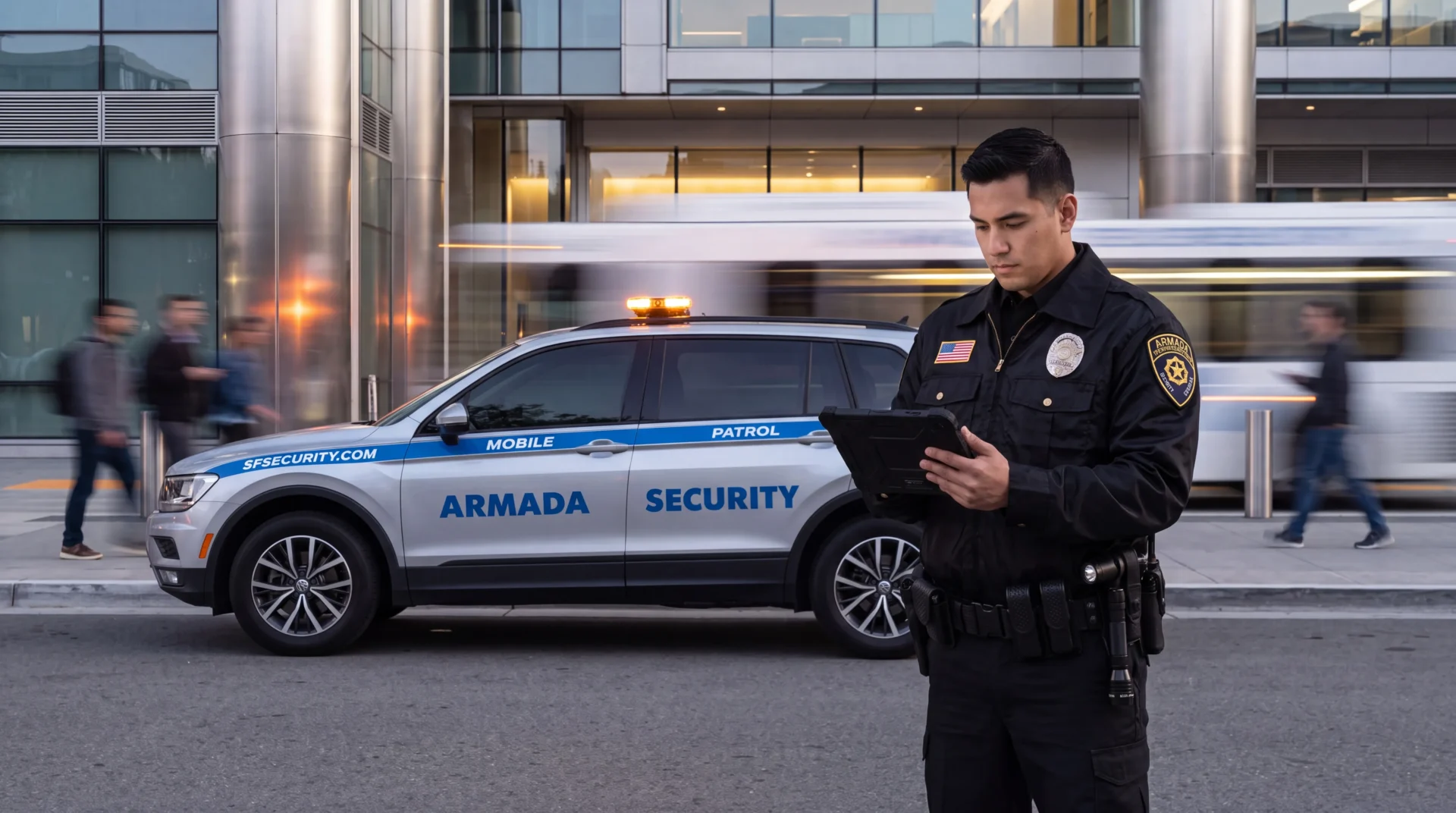
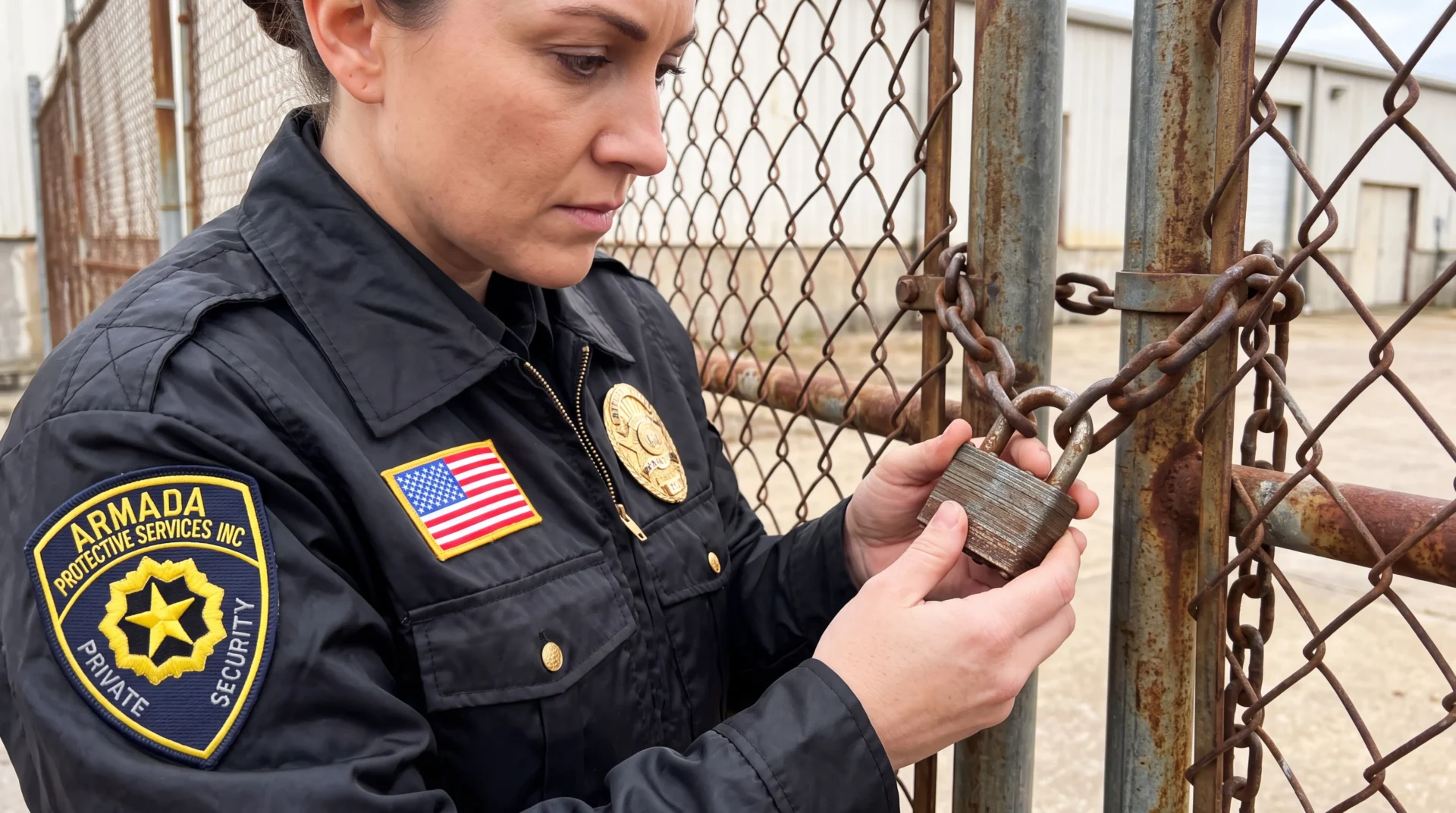
What a property does when nobody looks at it
A property does not announce the moment it stops being secure. The gate was shut at six and standing open at eight, and with no round in between nobody can say which hour it moved. Four gaps show up again and again, and a monitoring route is built to close them.
None of this needs a burglar. Most of it is a building being left to itself for sixty hours over a weekend, and the cost arriving on Monday.
The door that was left open
Most of what a round turns up is not a break-in. It is a side door resting on its latch, a roll-up a foot off the ground, a gate chained but not locked. Each one costs nothing to put right and nothing finds it except a person walking past it.
- Perimeter doors and roll-ups tried by hand, not glanced at from the car
- Padlocks checked for a closed shackle, not a shackle hanging through the hasp
- Gate motors and keypads checked against the hours you set for them
- Anything found open secured on the spot wherever we hold the keys
People settling in out of hours
An empty lot, a loading dock or a stair landing gets used once word gets around that nobody comes by. The first night is a sleeping bag and the fourth is a structure, and by then removing it is slow, legal and expensive. Rounds at uneven times keep the place from being picked in the first place.
- Loading docks, stair landings and setbacks walked, not scanned from the street
- Anything newly brought onto the site photographed and reported the same shift
- You and your property manager told while the situation is still a conversation
- Contact with the police handled by the officer who saw it, not by you
Water, power and fire equipment
The expensive failures on a quiet property are rarely criminal. A valve weeps into a basement all weekend. A fire panel has been in trouble since Friday afternoon. An exit route is blocked by a pallet the day before an inspection. An officer on a fixed route sees all three before Monday does.
- Visible leaks, standing water and running meters noted with a photograph
- Fire panel state and blocked exit routes checked on every round
- Lighting that has failed since the last visit written down with its location
- Findings go to you, and to your contractor as well if you ask us to call them
No record of who came and when
An unwatched property also has no history. When an insurer, a lender or a tenant asks what cover the site had on a given night, a verbal answer is worth nothing. The part of monitoring that survives the year is the part somebody else can read.
- Every round timed and placed, so the gap between visits is visible too
- Photographs filed against the finding, not left on somebody's phone
- Reports kept as a run, so a month can be read as a month
- The same record exists whether anything happened that night or not
Where we run monitoring rounds
Rounds are only worth buying where a car can get back to you quickly, so we keep to ground we genuinely hold: San Francisco, down the Peninsula to San Jose, and over the bridge to Sausalito.
We serve: San Francisco, San Mateo, Brisbane, San Jose (see all locations)
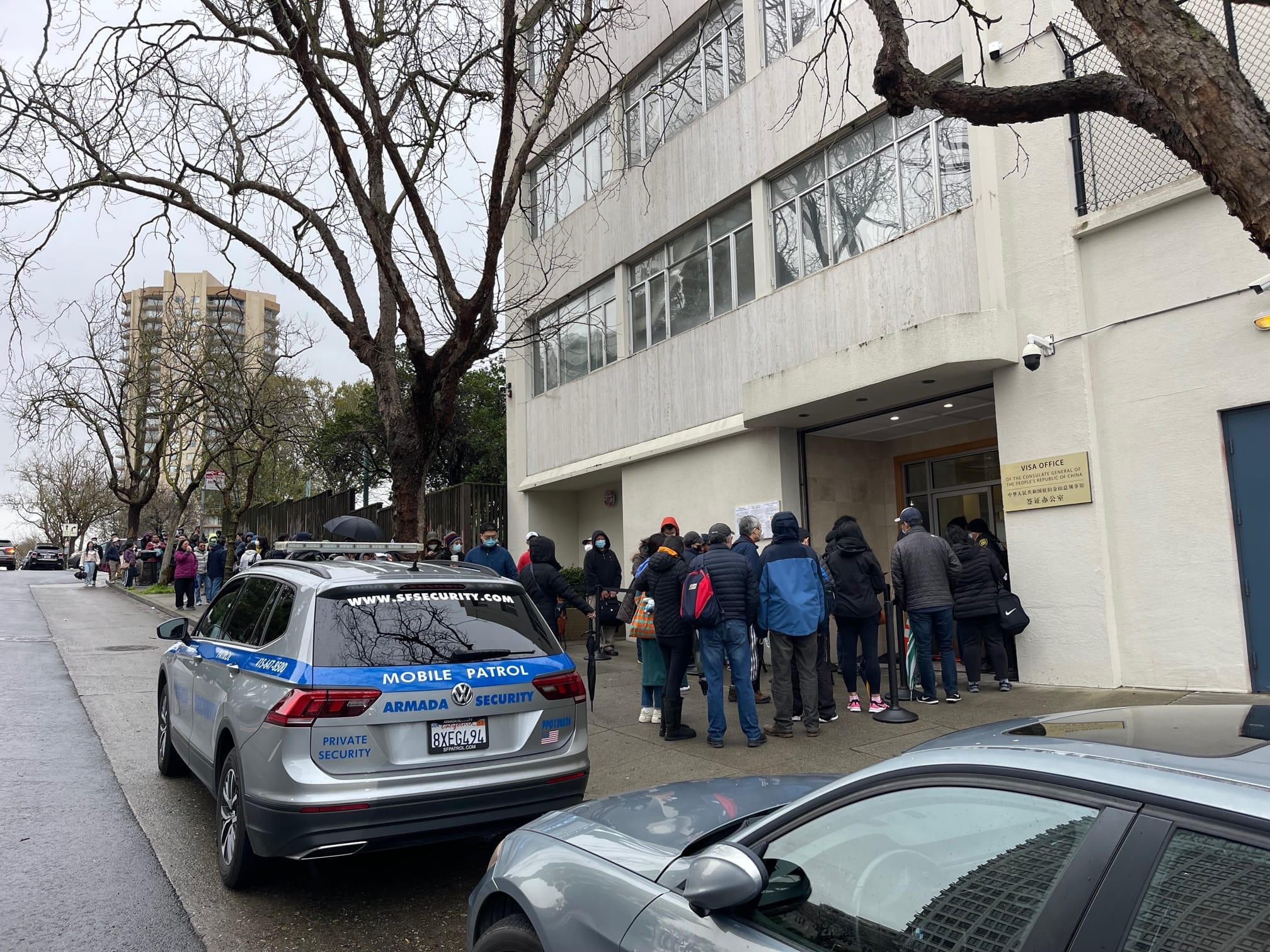
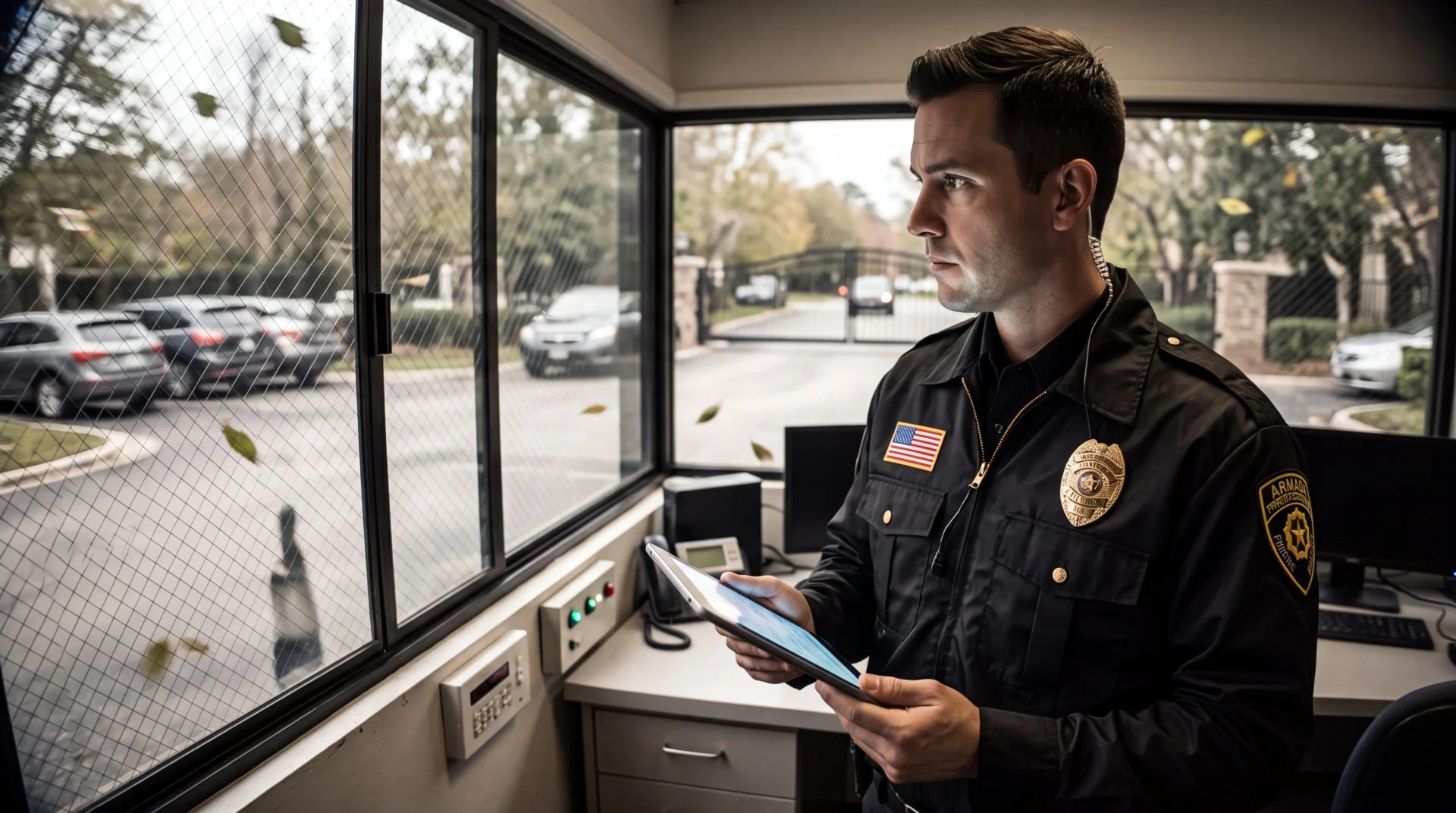
How the rounds are run and how the report reaches you
Monitoring is a rhythm, not a visit. This is what the rhythm is made of, from the route we agree during the free walkthrough to the file that lands in your inbox after the shift closes.
Nothing below is a promise about how fast we are. It is a description of what an officer does on your property and what you get back for it.
A route you agree to, not one we assume
The route comes out of the walkthrough. We walk the property with you, you say what actually matters, and together we fix the order of the points and the reason each one is on the list. Written post orders follow, and they are yours to change when the site changes.
- Points chosen on site, in an order an officer can really walk
- A written reason attached to each point, so a stand-in knows why it exists
- Post orders issued before the first round, not after the first problem
- Route reviewed with you when tenants, building works or opening hours change
Rounds on the schedule and rounds off it
Half of monitoring is being predictable to you and unpredictable to everybody else. The count of rounds in a shift is fixed and agreed with you. The clock times are not, and we do not publish them anywhere. Anyone standing across the street timing the property should not be able to learn the gap.
- An agreed number of rounds per shift, so you know what you bought
- Arrival times moved around inside the shift on purpose
- Patrol timing kept off signage, off shared paperwork and off this website
- Extra rounds added for a stated reason, such as works on site or a long closure
Checkpoints registered where they stand
A checkpoint is a tag fixed at the thing it describes. The officer has to be standing at the roof door to register the roof door. That is the whole difference between a round that happened and a round that was written up afterwards in a car.
- Each point registered on site, carrying its own time and position
- A point that was not reached shows as missed, never as a blank
- The log is written during the round by the officer walking it
- You read the same log we read, not a summary of it
What the officer writes down
Plain description, a photograph, where it was, what time. No scoring, no adjectives, no guesses about who did it. A finding is useful months later only if the person reading it can see exactly what the officer saw.
- A photograph attached to anything physical
- Location given by checkpoint rather than a guessed street address
- Condition noted even when nothing changed, so the run has a baseline
- The name of the officer on the entry
What gets called in at the time
Anything that cannot wait is a call when it happens. Everything else is in the report when the shift closes, which is about an hour after the shift ends. A fire or a break-in is a call. A tent pitched at the back of the lot is not, and treating it as one only teaches you to stop picking up.
- One rule, judged by the size of the thing, not a list of situations to memorize
- In an emergency we go out on every channel at once: calls, email, messenger and the app
- Every emergency contact you gave us is reached, not only the first to answer
- Our clients hold the direct numbers of the officers who cover their site
What monitoring is not
Armada guards and responds. We do not sell or install cameras, alarms or access control, and we will not pretend a round replaces them. What we do is tell you in writing what the site should have, find the contractor and hold the work to our requirements. On open ground with no power and no cabling we also rent out mobile surveillance trailers.
- No camera, alarm or access control system sold or fitted by us
- Written recommendations after the walkthrough, each with its reason
- Contractor found and supervised to Armada requirements when you want that
- Mobile surveillance trailers available to rent where a yard has no services
Our Statistics. Your Guarantee.
Monitoring is bought on the belief that somebody really came. Armada has been the top-rated San Francisco security company since 2021 according to SFist1, and it carries $5M in aggregate liability insurance. That insurance figure comes from our own policy and from no public source, which is worth saying out loud: ask any firm quoting you a route to show you theirs. Each figure below says what it is measured against.
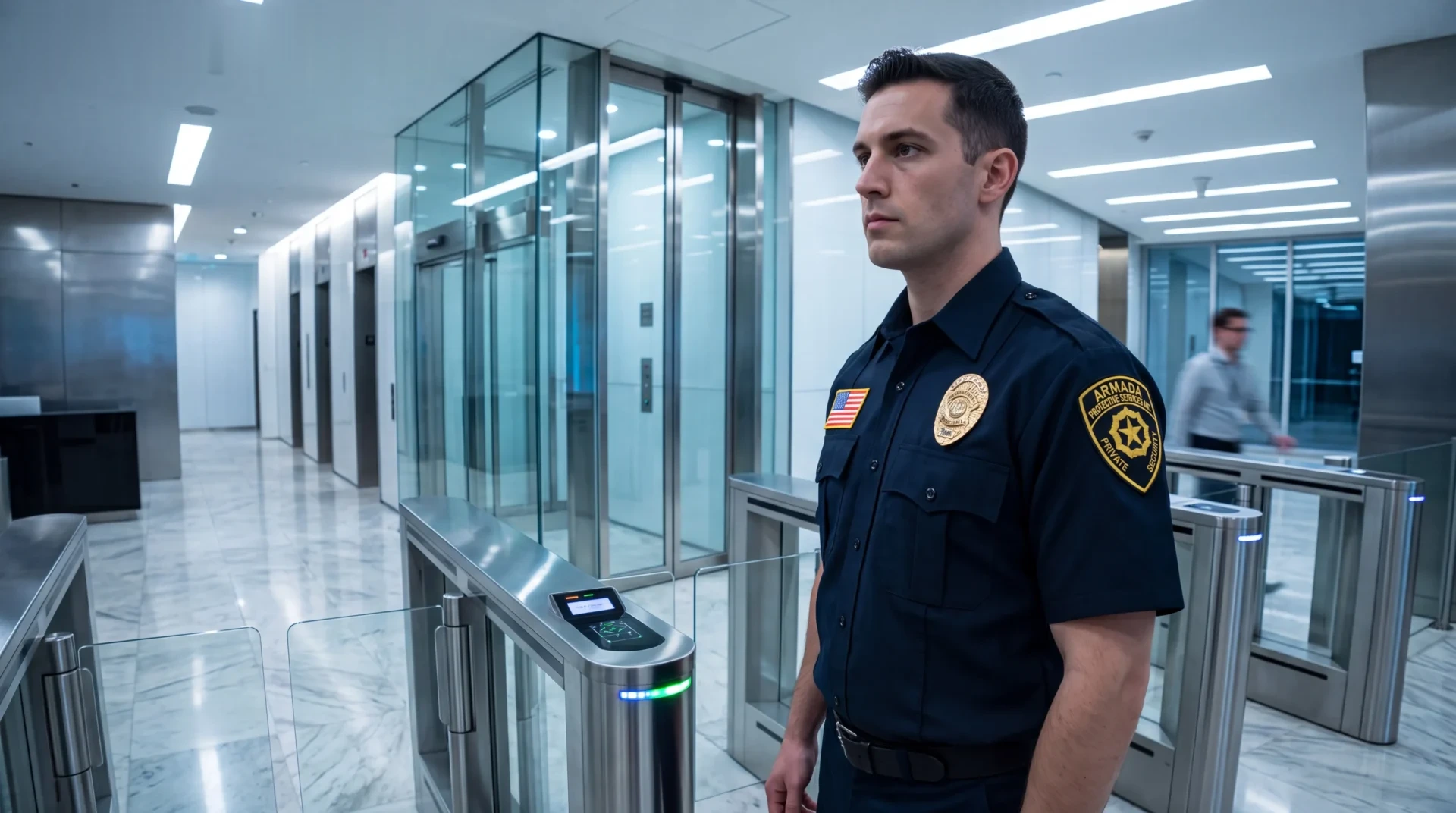
- 2x
At least twice as fast as police arrival
Under contract Armada is on site in 15 to 30 minutes. The median SFPD publishes for a low-priority call is longer, which is why SFPD itself points businesses to private security for anything short of a crime in progress.
- 80%
Fewer incidents at monitored properties
Twelve client sites kept incident records both before and after Armada started. Across them incidents fell by 80 percent. 2025 client survey.
- 24/7
Your officer is the one you call
Clients hold the direct numbers of the officers on their site, and the app carries the messages, the photos and the log. Nothing is relayed through a desk.
- 100%
Licensed and insured
Every officer individually BSIS licensed and background-checked, under California Private Patrol Operator PPO 120526, both verifiable in the state register.
Related Security Services
Three Armada services that sit closest to property monitoring.
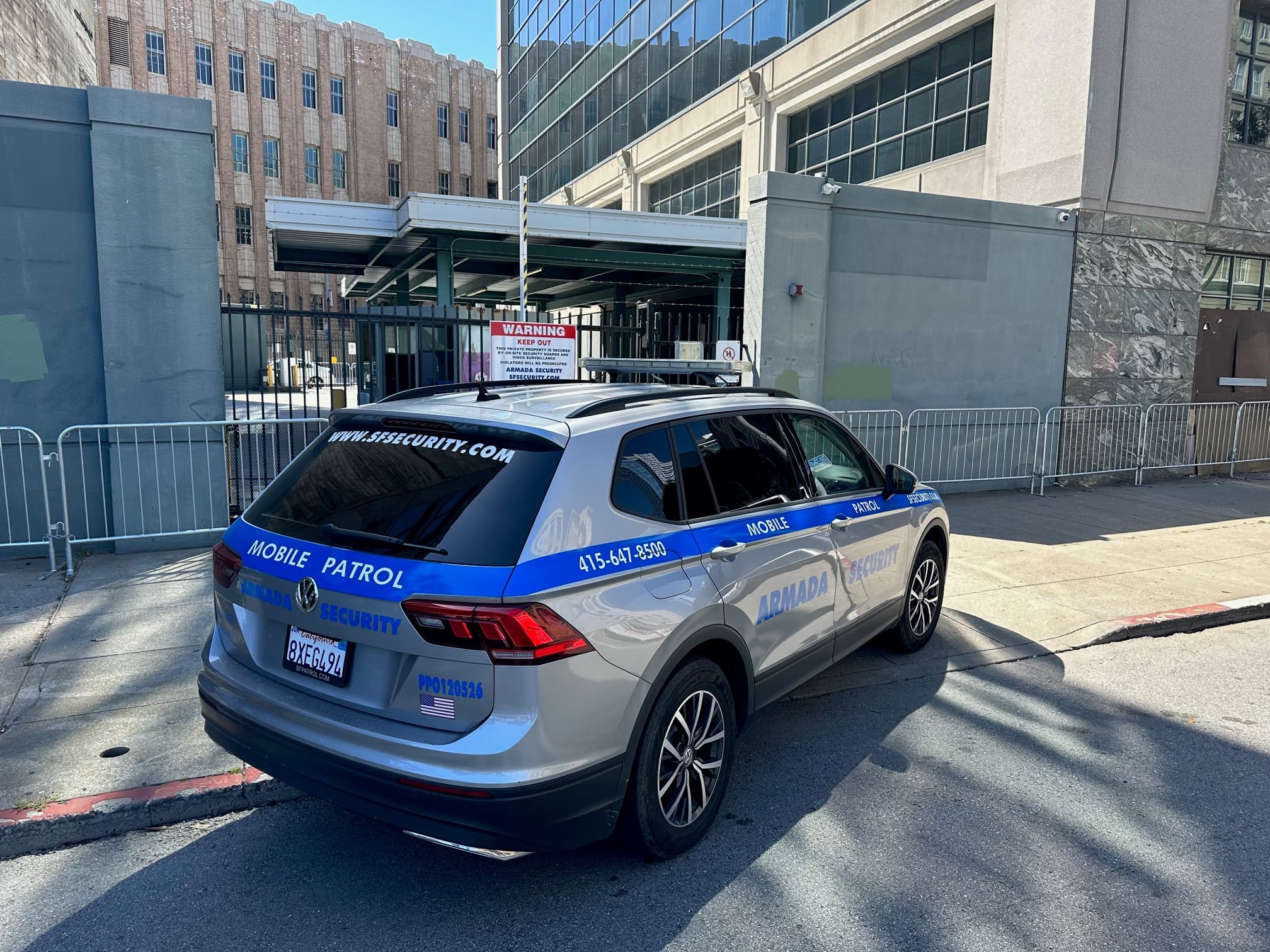
Marked vehicles run scheduled and randomized patrols over exterior areas, access points and perimeters.
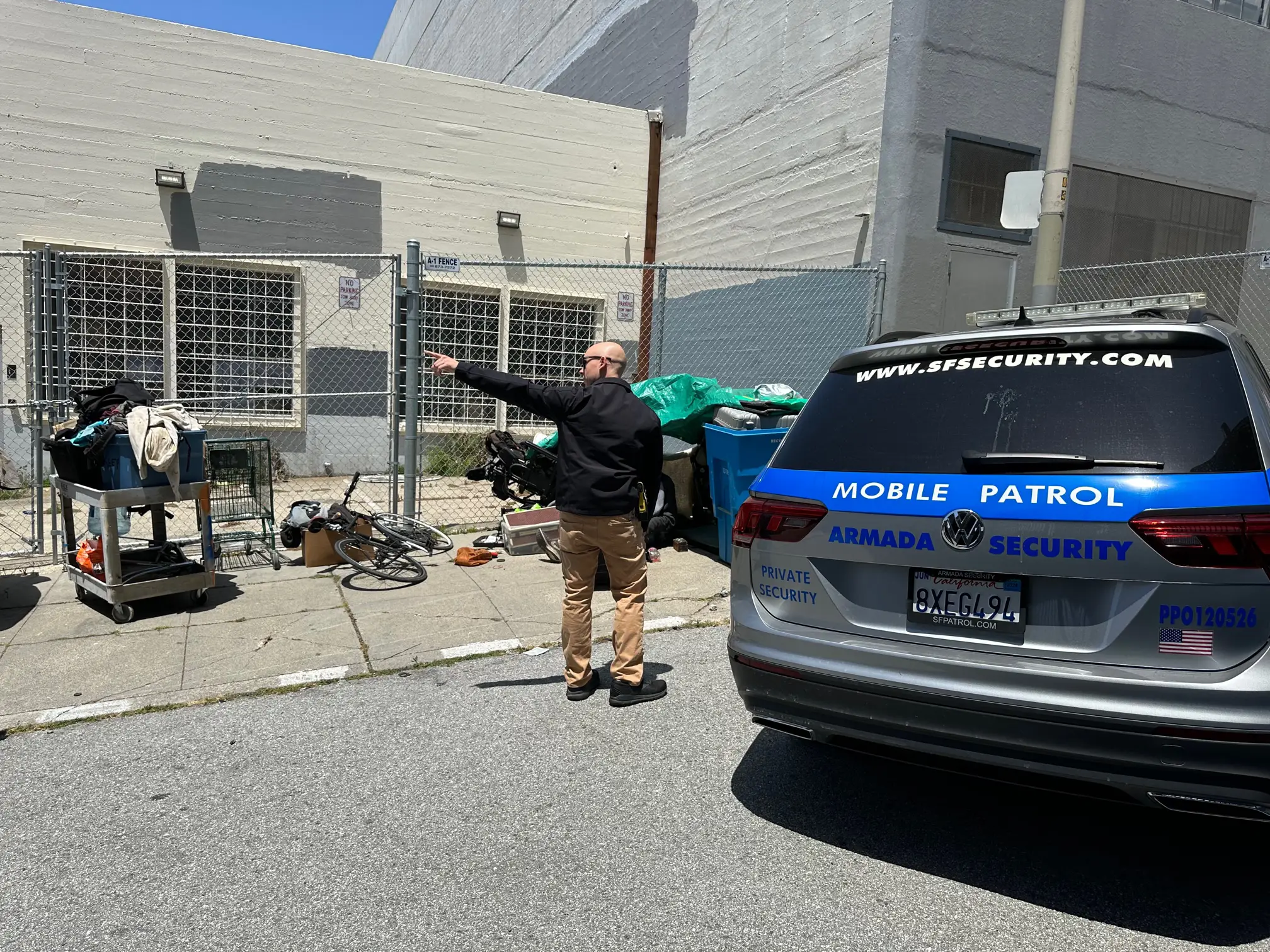
Mobile officers go to the property when an alarm triggers after hours and verify on site what the panel reported.

Trained officers stand between high-value inventory and equipment and the people who would take them.
Customer testimonials
Professional and Reliable Security Services in the Bay Area
We hired Armada on short notice for a situation we were experiencing in one of our apartment complexes. They responded quickly, set up patrols and a guard service for us very quickly. Guards were professional, prompt and communicated activity at the property to us.

Lana August
Property Manager, San Francisco
We have used Armada for about 10 years. They are an amazing company providing professional personnel consistently. Thank you Armada!

Jesse Leite
Resident Manager, San Francisco
Every Armada employee with whom I've had the pleasure of interacting has been top notch - curteous, efficient, effective, knowledgeable, responsible.

Alex Goretsky
Business Owner, San Francisco
I Manager a portfolio of communities in San Francisco -working with Armada is great. They are flexible, honest and the Guards are always on point. I would recommend this firm to other HOA/Commercial managers.

Christopher Stanley
Owner and Chief Executive Officer, San Francisco
Quoted verbatim from published client reviews, including their original wording.
Book the walkthrough
Send the address and a time that suits you. The free site visit comes first, and nothing is priced until the two of us have stood on the property and agreed what a route there has to cover.
FAQs
Questions owners and managers ask us about monitoring rounds before they sign.
How long am I committed for?
One month to begin with, and month to month from there. The minimum term is not there to trap anyone: a route takes a few weeks to bed into a building, the point list gets corrected in that time, and only after that does a run of reports mean anything. Events are the exception and are priced by the evening, but a monitoring route is not an event.
What does the free site visit actually involve?
A booked walkthrough on the property, half an hour to an hour, done on foot with you or with whoever manages the place. What arrives is not a salesman: it is somebody who inspects the site, says out loud what is wrong with it, and recommends only the work that genuinely makes sense there. At the end you keep a written assessment, and you keep it whether or not you hire us.
I phoned in the evening and reached voicemail. Is that normal?
Yes, and it is better that you know now. A new inquiry reaches the office during business hours on weekdays; outside those hours it goes to voicemail and is answered the next working day. Existing clients are in a different position, which is the point of the arrangement: they hold the direct numbers of the officers covering their site and use the app, so a night call lands on the person standing there.
Why is there no price on this page?
Because a figure quoted off a web form is a guess. What the work costs follows the length of the route, how many points are on it, how many rounds a shift carries and what the officer has to do at each stop, and two buildings on the same block rarely come out the same. We name a price after the walkthrough, in writing, against a route you have already seen.
How do I check that Armada is licensed?
Look it up rather than take our word for it. California keeps a public register of private patrol operators and of individual guard registrations, and both the firm and the people who would walk your site are in it. The register is run by the Bureau of Security and Investigative Services2, and the license number you need to search for is printed in the footer of every page on this site.
Ask us directly
If the answer you need is not above, send the question here and an officer who runs these routes will answer it.
Sources
Where the figures, rules and local facts on this page come from. Links reviewed 5 Nov 2026.
- SFist 1 Armada Protective Services: San Francisco's Top Security Company trade press, used only where no primary source carries the claim
- California Department of Consumer Affairs 2 Bureau of Security and Investigative Services guard card and private patrol operator licensing requirements