Hotel Security San Francisco: A Property Operations Guide
Running a hospitality property in this city means balancing an open, welcoming front door against very real operational risk, and effective hotel security San Francisco programs are built precisely on that tension. For general managers and operations directors, the question is rarely whether to invest in security; instead, it is how to deploy it so that guests feel cared for, liability stays contained, and revenue is protected. Because hotels are uniquely exposed — open lobbies, transient occupancy, valuable assets, and round-the-clock activity — a generic guarding contract simply does not address the operational reality. Therefore this guide walks through how a layered, hospitality-specific program actually functions, and why partnering with a dedicated hospitality security provider changes outcomes for your property.
Moreover, the stakes are not abstract. A single incident in a lobby, parking structure, or event space can drive a liability claim, a negative review cycle, and a measurable dip in occupancy. As a result, the most successful operators treat security as an extension of guest experience rather than a separate, grudging line item.
Why Hotels Face Distinct Security Challenges
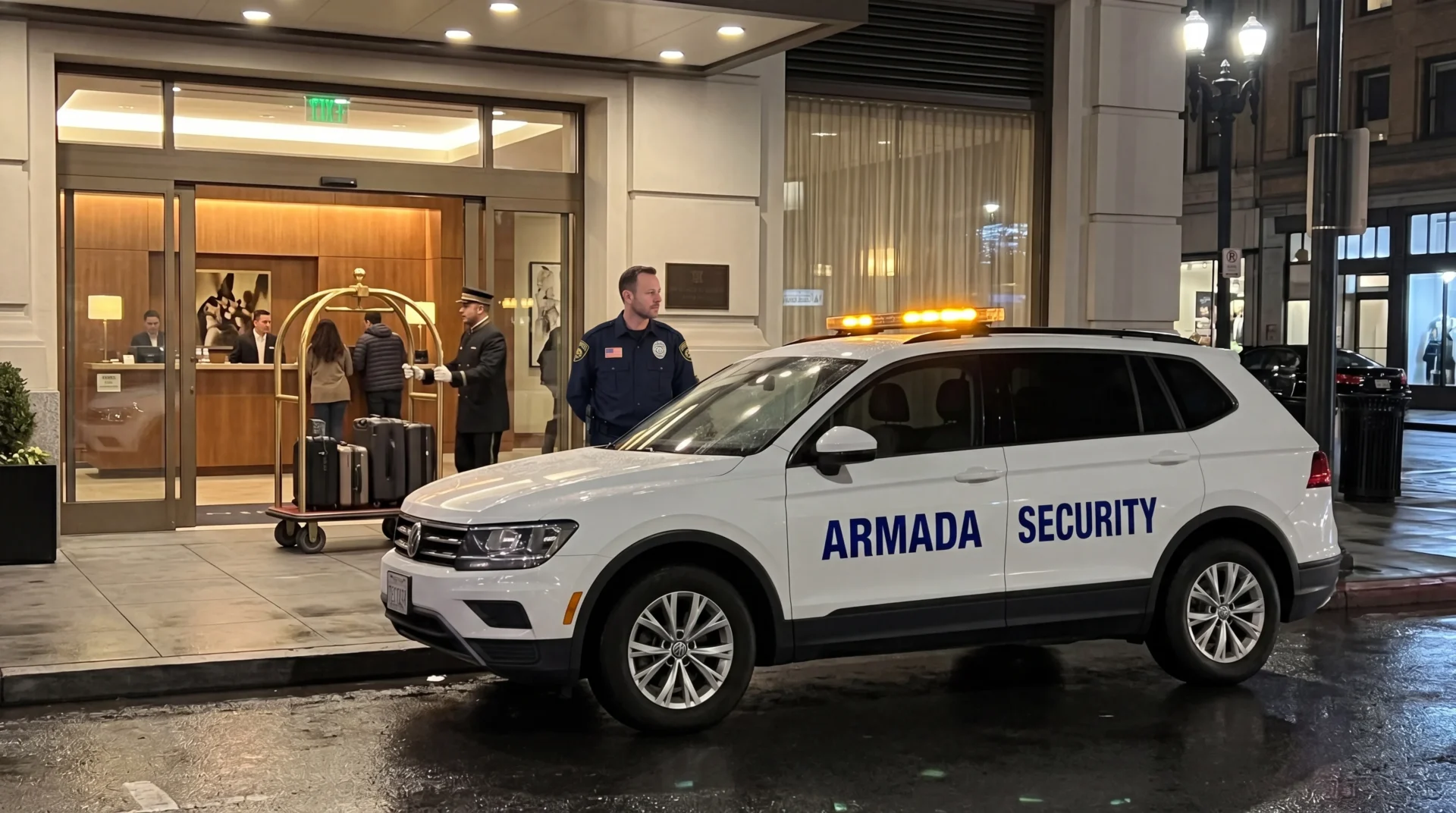
Hotels are not office buildings, and they are not retail stores either. Instead, they are hybrid environments where the public is invited in by design, yet sensitive areas — guest floors, back-of-house, server rooms, cash-handling points — must stay tightly controlled. Because of this duality, threats range widely: trespassing and loitering in the lobby, package and luggage theft, unauthorized floor access, disputes that escalate at the bar, and opportunistic property crime in adjacent garages.
In addition, hospitality operates on a 24/7 clock with constant guest turnover, which means there is no quiet period when controls can relax. For example, the overnight shift often carries the thinnest staffing yet the highest exposure, while a weekday lobby may be calm before a Friday convention surge overwhelms it. Therefore staffing models must flex with demand rather than sit static.
Finally, effective hotel security San Francisco planning must account for local context. Downtown corridors, Union Square, the Wharf, and SoMa each present different street-level conditions, and proximity to public transit increases foot traffic of every kind. Consequently, coordination with local resources — including the San Francisco Police Department for serious incidents and reporting — becomes a practical part of any mature security plan, not an afterthought.
Building a Layered Hotel Security San Francisco Program
The phrase “layered security” gets used loosely, so it is worth being concrete. A strong hotel security San Francisco program stacks several complementary controls so that no single failure leaves the property exposed. Because each layer covers a different gap, the combined effect is far greater than any one measure alone.
Uniformed and Discreet Guard Presence
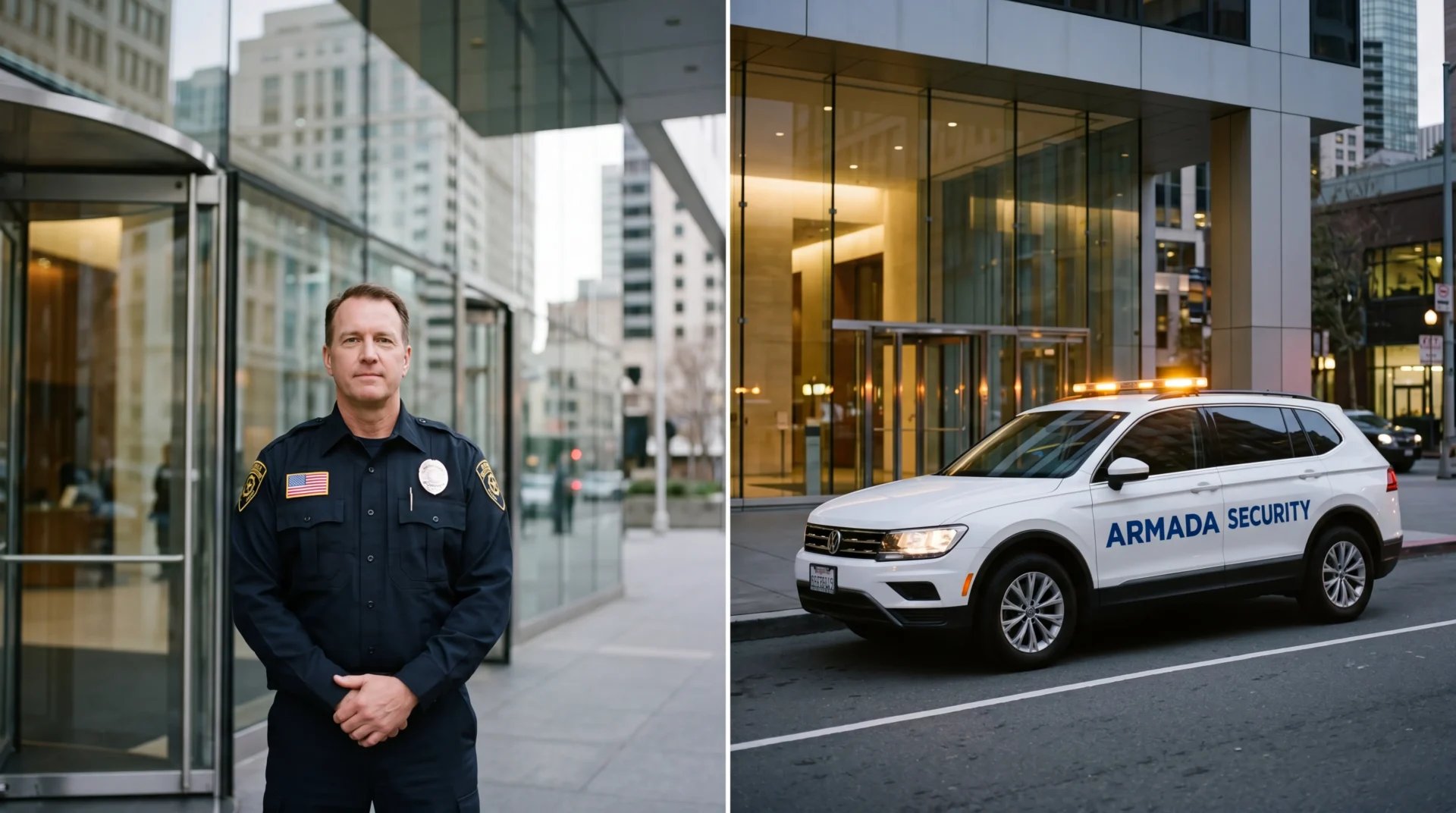
A visible, professional officer in your lobby does two jobs at once: it deters opportunistic crime, and it reassures arriving guests. However, a strong program does not rely on uniforms alone. For example, some properties pair a uniformed front-of-house presence with plainclothes security guards who observe quietly, which is especially valuable for loss prevention and for upscale boutique properties where an overt show of force would clash with the brand. Therefore the right mix depends on your guest profile, your incident history, and the image you want to project.
Moreover, the quality of the individual officer matters enormously in a guest-facing role. Because your guards effectively become part of the hospitality team, they must communicate with the same poise as your front-desk staff while remaining trained to de-escalate, document, and respond when something goes wrong.
Mobile Patrol and Perimeter Coverage
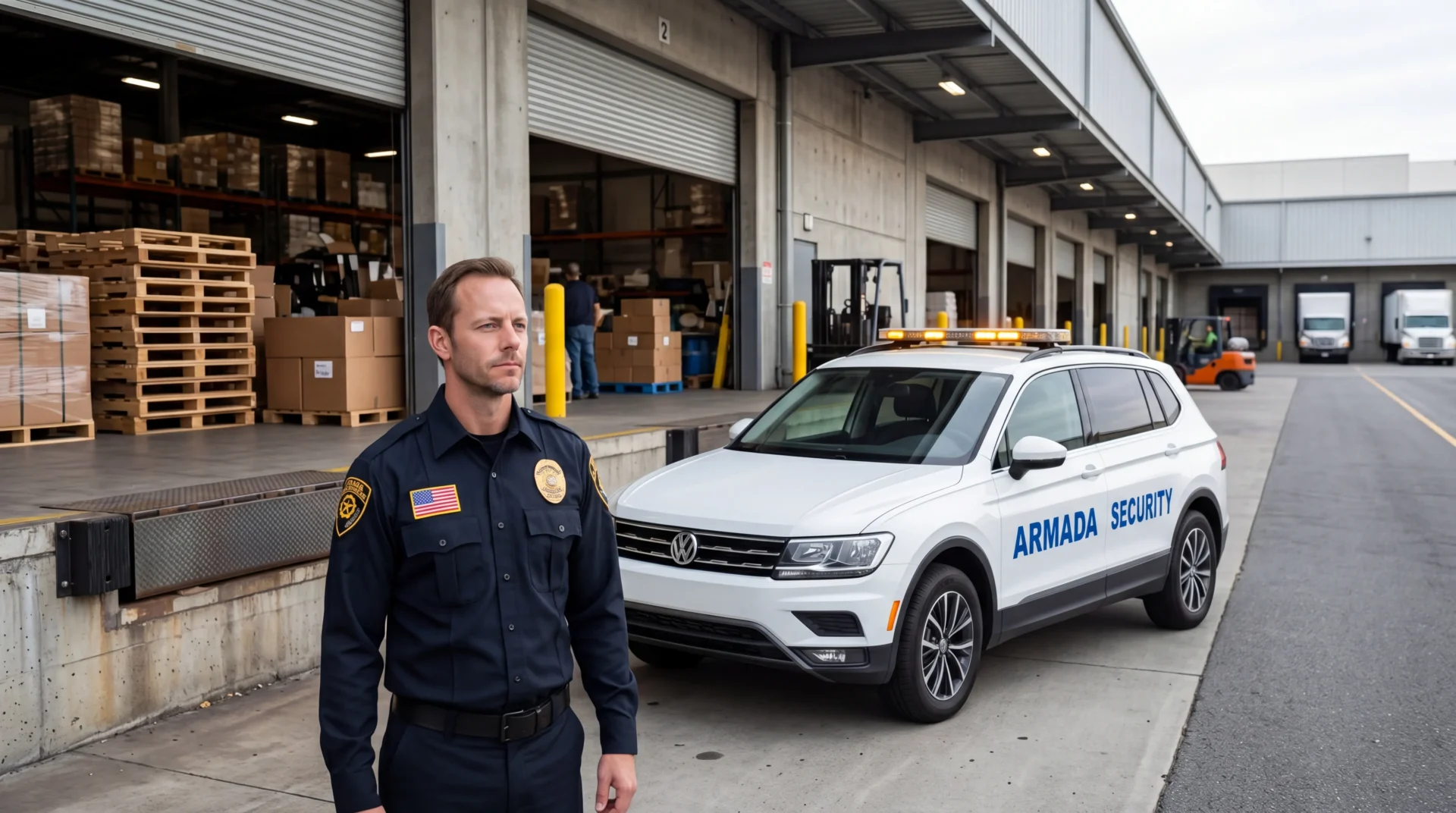
Not every risk lives in the lobby. Parking structures, loading docks, pool decks, and exterior perimeters all need attention, and stationing a guard at each point is rarely cost-effective. Instead, scheduled and randomized mobile patrol provides coverage across these zones, deterring vehicle break-ins and catching issues — a propped fire door, an unsecured access point — before they become incidents. As a result, patrol extends your security footprint without the cost of full-time fixed posts everywhere.
Access Control for Guest and Back-of-House Areas
Controlling who reaches guest floors and restricted areas is foundational. Because elevator access, keycard systems, and monitored entry points define the boundary between public and private space, they deserve deliberate design rather than default settings. In addition, access control must remain ADA-compliant; consulting the ADA standards for public accommodations ensures that entry measures protect the property without creating barriers for guests with disabilities. Therefore the goal is friction for the unauthorized and seamlessness for legitimate guests.
Front-Desk, Lobby, and Loss Prevention
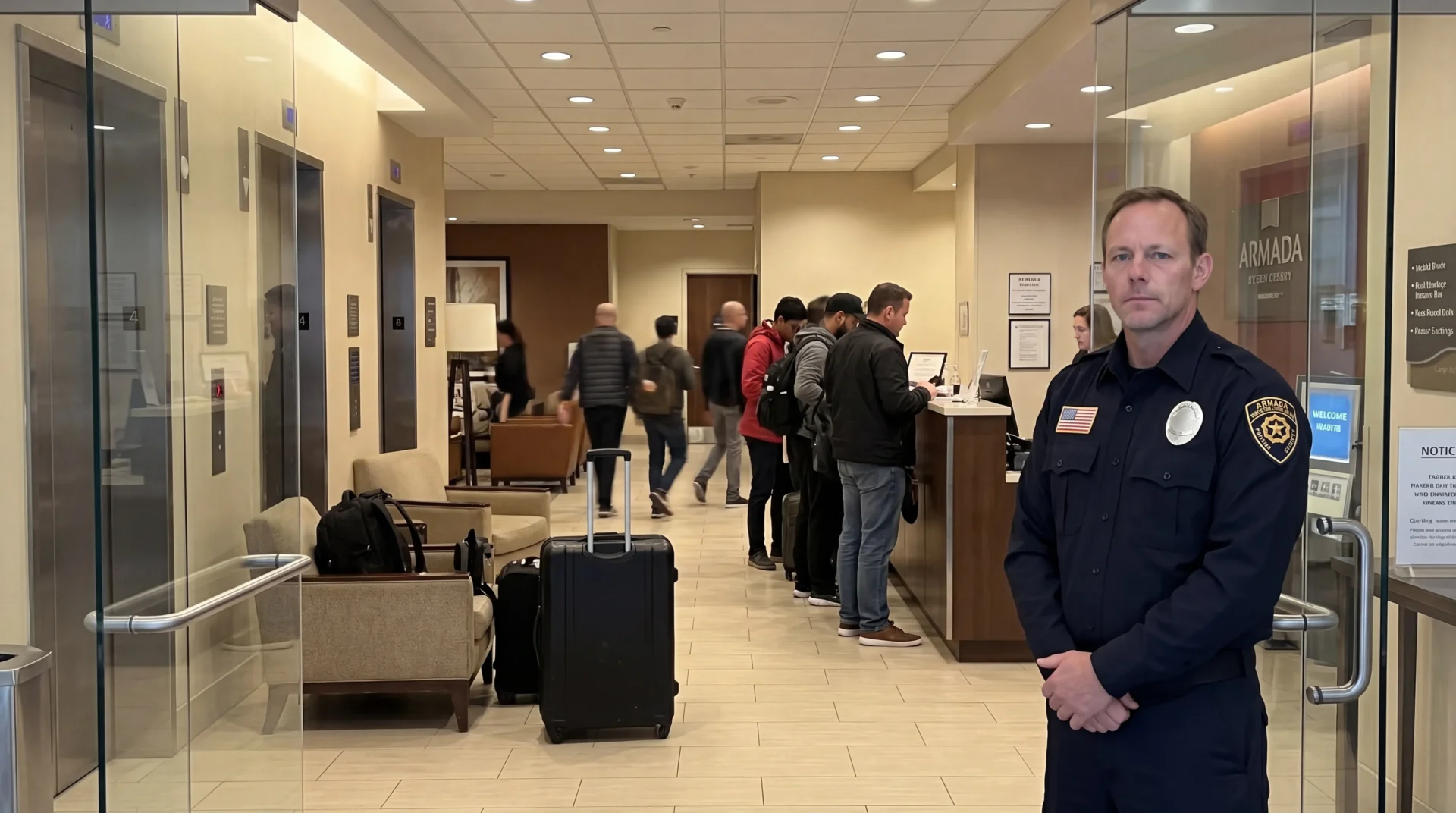
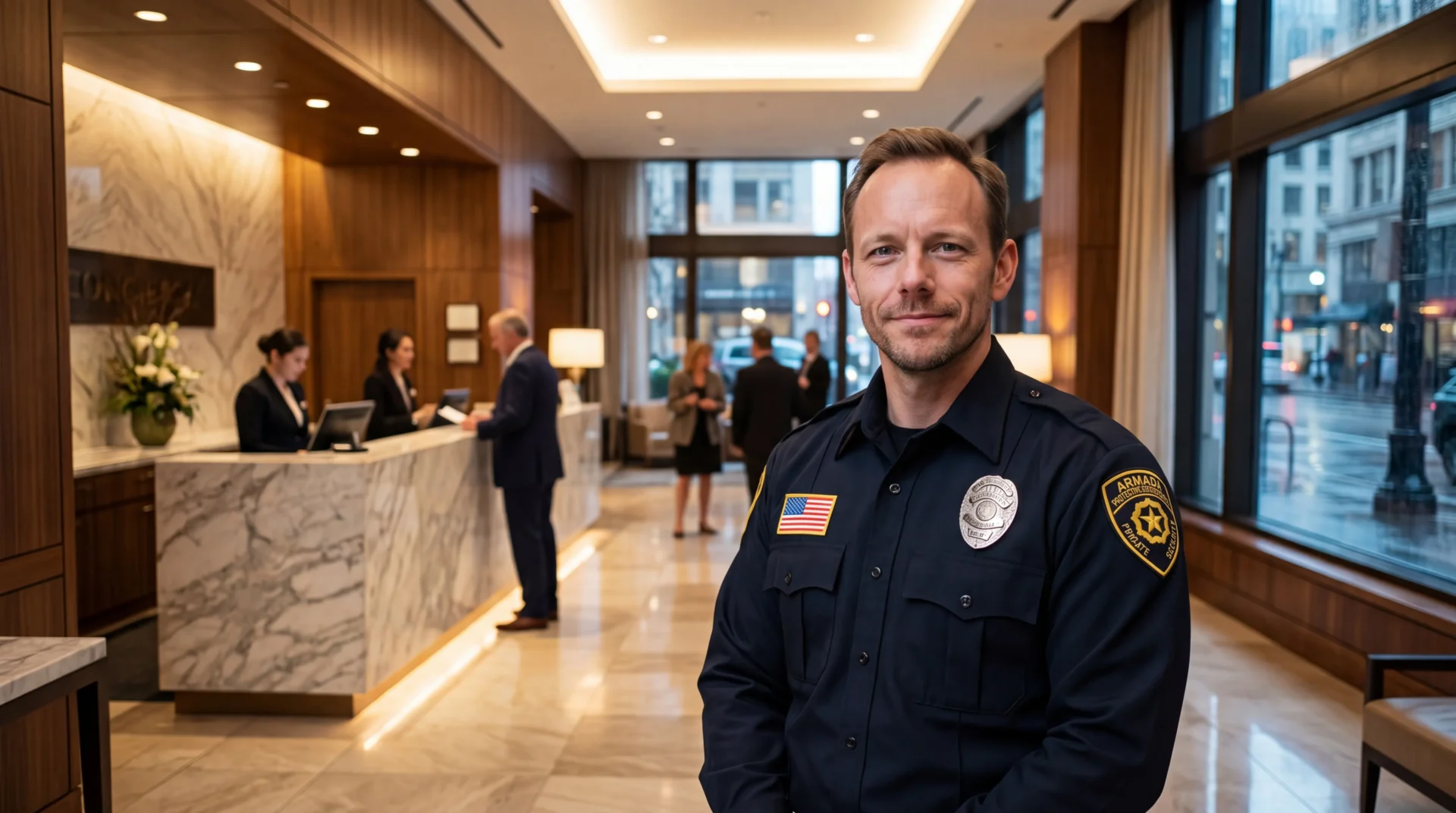
The lobby is the operational heart of any hotel, so it deserves its own dedicated attention. Because it is simultaneously the first impression and the most exposed public zone, lobby and front-desk security must be both welcoming and watchful. For instance, officers positioned near entry points can intercept non-guests attempting to access elevators, monitor for left-behind or suspicious items, and support staff during difficult check-ins or disputes.
Meanwhile, loss prevention protects margin in ways that compound over a year. Theft of linens, electronics, minibar inventory, and back-of-house supplies adds up, and internal shrinkage is a real factor in hospitality. Therefore a program that combines observant officers, sound access control, and clear documentation procedures reduces both external and internal loss. As a result, the security line item frequently pays for a meaningful share of itself through prevented losses and avoided liability — a point worth raising with ownership when budgets are scrutinized.
Additionally, front-desk security supports guest-safety obligations. Because hotels owe a duty of reasonable care to guests, demonstrable, professional security measures matter not only operationally but also in the event of a claim. Consequently, thorough incident reporting and consistent post coverage are as much about defensibility as they are about deterrence.
Event, Conference, and Crowd Security
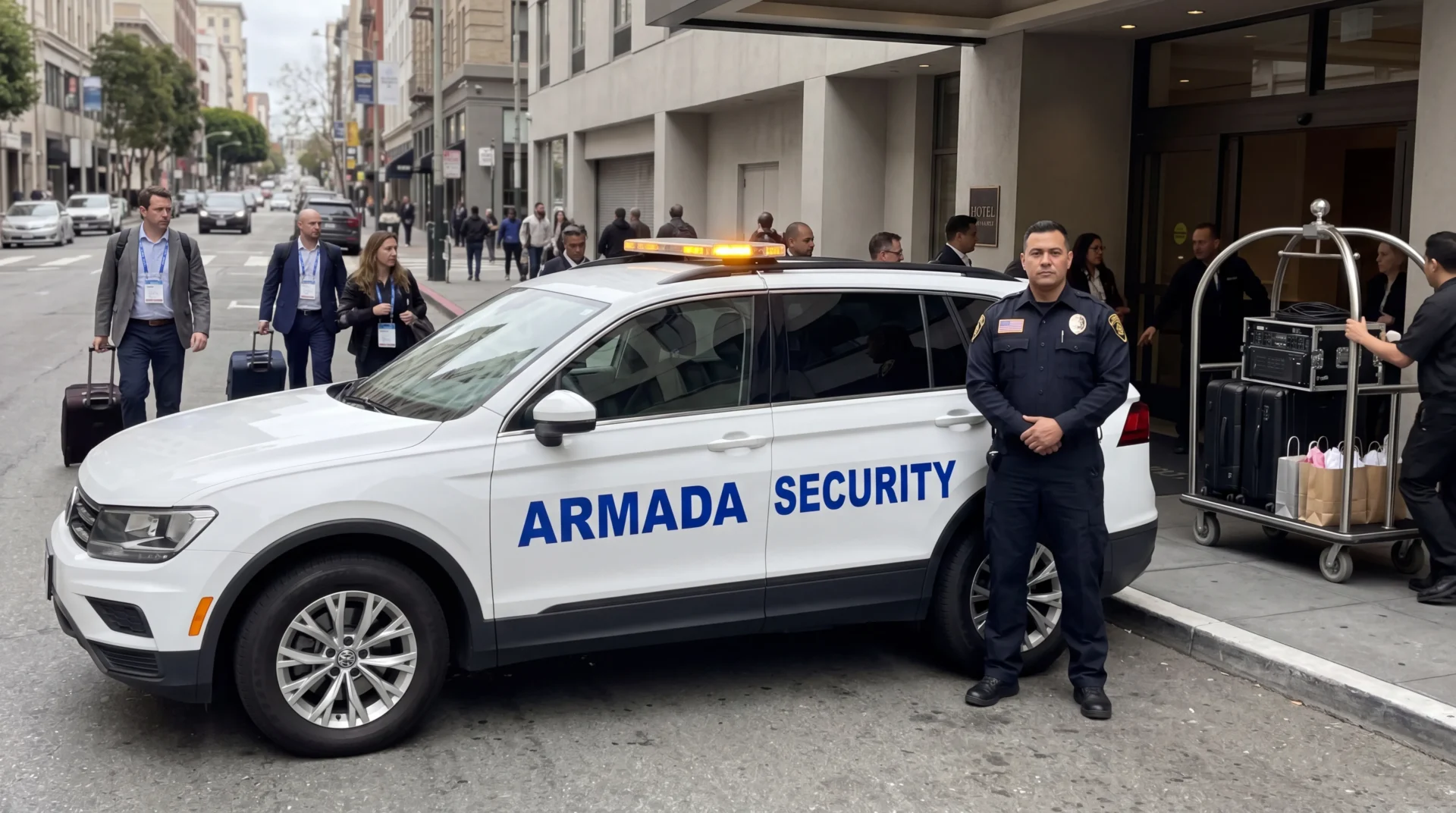
Hospitality properties live and die by their ability to host. Weddings, conferences, galas, and corporate functions drive significant revenue, yet each one introduces a temporary spike in occupancy, alcohol service, and crowd density that routine staffing cannot absorb. Therefore event security must scale up and down with the calendar.
For example, a 600-person conference in your ballroom changes the property’s risk profile for a single day: access points multiply, valuables concentrate, and the potential for disputes rises with the headcount. Because of this, dedicated event security services handle access screening, crowd flow, VIP coverage, and rapid response so that your operations team can focus on delivering the event itself. Moreover, choosing the right partner for these high-stakes occasions is a discipline of its own; this overview on how to choose a security partner for your event venue is a useful reference when you evaluate providers.
Finally, surge planning should be built into the relationship before you need it. As a result, when your sales team books a last-minute corporate buyout, scaling coverage becomes a phone call rather than a scramble.
Alarm Response and 24/7 Coverage
Security does not clock out, and neither should your response capability. Because incidents cluster in the overnight hours when staffing is thinnest, a reliable alarm response arrangement is essential. For example, a triggered alarm at 3 a.m. — whether a fire door, an intrusion sensor, or a panic button at the front desk — demands a trained, fast response rather than a wait until morning. Therefore many San Francisco hotels pair on-site guards with a dedicated alarm response service that dispatches officers to verify and address triggers quickly.
In addition, response time is a metric you should hold your provider accountable to. Because minutes matter during a genuine emergency, ask any prospective partner for concrete target response times and how they staff to meet them. Comprehensive hotel security solutions integrate on-site presence, patrol, and alarm response into one coordinated program, which is the standard a mature hotel security San Francisco program should meet so that coverage never has gaps at the seams between services.
Choosing a Licensed, Hospitality-Ready Partner
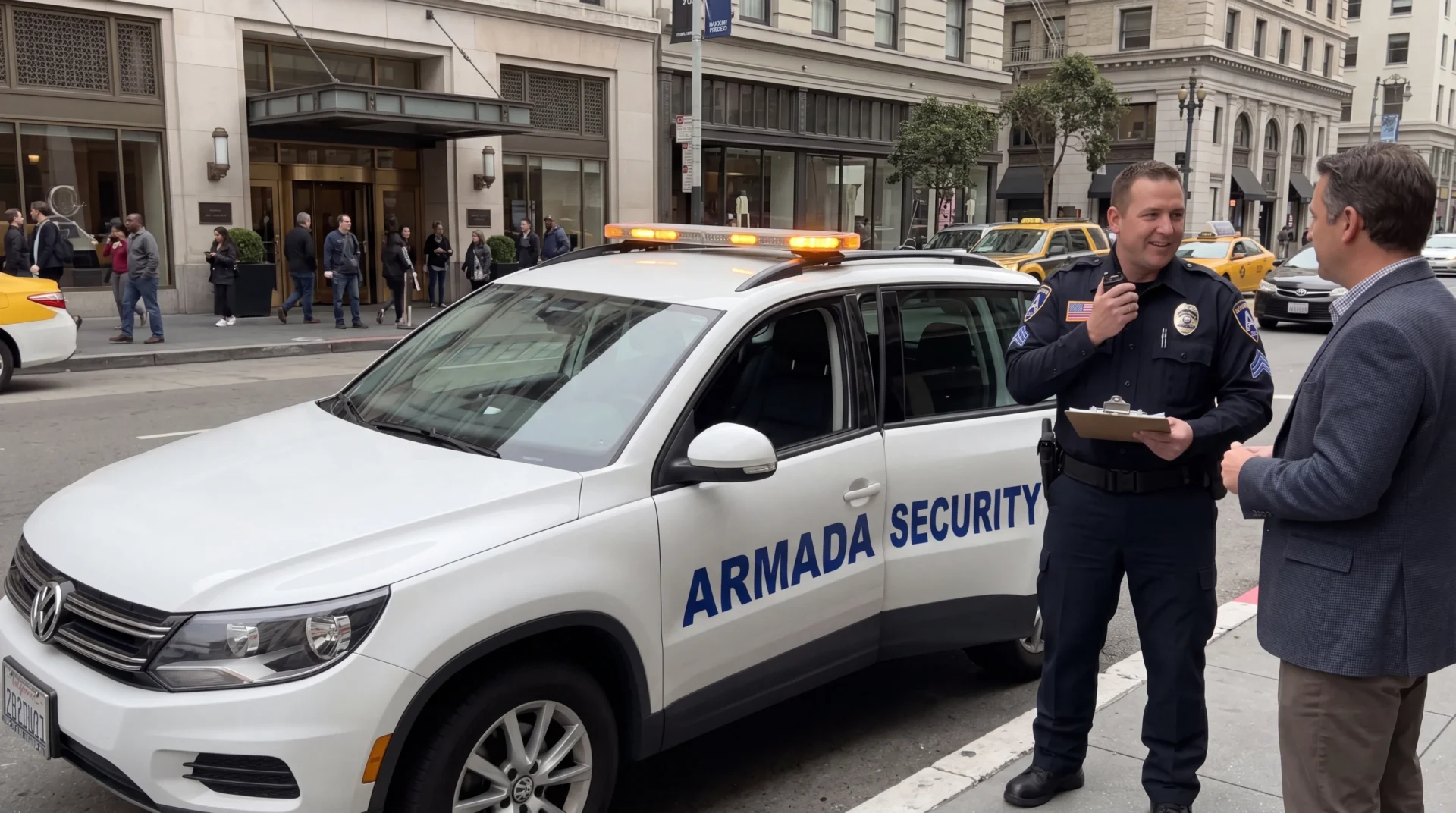
Not all security vendors are equal, and in California the baseline is set by law. Because every officer must be properly licensed, you should verify credentials through the California Bureau of Security and Investigative Services (BSIS), which regulates guard registration and training. Therefore confirming BSIS licensing is the first, non-negotiable filter when you evaluate any provider.
Beyond licensing, however, hospitality fit is what separates an adequate vendor from a true partner. For example, the right firm understands brand standards, trains officers in guest interaction, scales for events, and coordinates with your operations team rather than working in a silo. Moreover, a partner with local San Francisco experience will already understand the neighborhood-specific conditions your property faces. As a result, the evaluation process should weigh hospitality experience and responsiveness as heavily as price.
Finally, treat the relationship as ongoing. Because your risk profile shifts with seasons, events, and street-level conditions, the strongest programs are reviewed and adjusted regularly rather than set once and forgotten.
Frequently Asked Questions
How does hotel security protect us from liability, not just protect guests?
Guest safety and liability protection are two sides of the same coin. Because hotels owe a duty of reasonable care, a documented, professional security program demonstrates that you took reasonable measures, which matters significantly if an incident leads to a claim. Therefore consistent post coverage, trained officers, and thorough incident reporting protect both your guests and your legal position.
Can a security provider scale up for a large event or conference?
Yes, and surge capacity should be built into your agreement in advance. For example, a ballroom conference or wedding can temporarily double a property’s occupancy and risk, so a strong partner adds access screening, crowd management, and additional officers for the day and scales back afterward. As a result, you pay for elevated coverage only when you actually need it.
Are your officers BSIS-licensed?
All professional security officers in California must be registered with the Bureau of Security and Investigative Services (BSIS). Because licensing is a legal requirement and a baseline quality signal, you should always confirm it; a reputable provider staffs your property exclusively with properly licensed, trained officers and can verify credentials on request.
Should our hotel use uniformed or discreet, plainclothes security?
It depends on your brand and your risk profile, and many properties use both. For instance, a uniformed lobby presence maximizes deterrence and reassurance, while plainclothes officers support loss prevention and suit upscale or boutique properties where an overt presence would clash with the guest experience. Therefore the ideal mix is determined by your guest demographics, incident history, and brand standards.
What response times should we expect for alarms and incidents?
Response time depends on whether officers are already on-site or dispatched from mobile patrol, but it should always be a defined, measurable commitment. Because minutes are decisive in a genuine emergency, you should ask any provider for concrete target response times and how their staffing supports them. As a result, on-site coverage combined with a dedicated alarm response arrangement typically delivers the fastest, most reliable outcomes.