
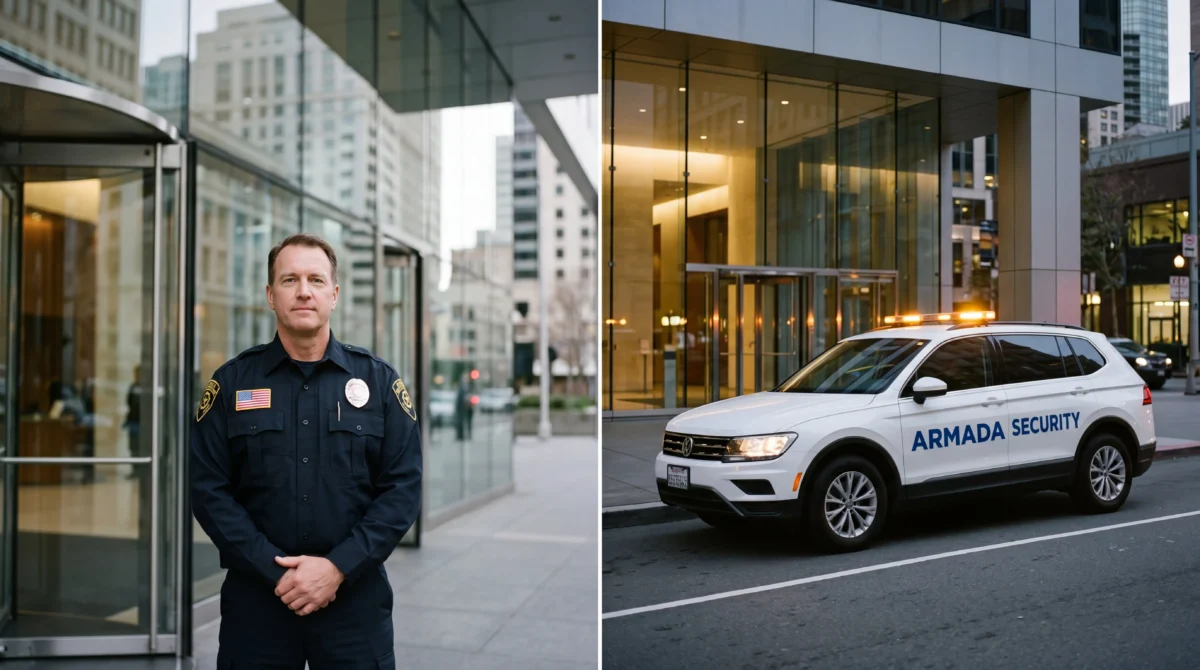
The comparison of security guards vs mobile patrol defines whether a San Francisco business uses a dedicated, stationary officer or a randomized vehicle service to secure its property. Therefore, this choice matters because it directly impacts your security budget, response times, and overall liability protection. Choosing between these options is a key budget decision for an established San Francisco property manager or facilities director. However, finding the right balance rarely has a simple answer. For example, both models stop crime, but they solve different issues and suit different sites. As a result, your choice depends on your specific property, your risk level, and your hours.
First, remember this guide is for B2B organizations, not single-family homeowners. We serve commercial clients, from corporate offices in the Financial District to warehouses in the Bayview and Dogpatch. In addition, we cover multi-family apartment communities. Therefore, we offer this guide on security guards vs mobile patrol to help you choose the right fit for your site. As a top-rated local security provider, we base this guide on years of feedback and 5-star reviews from San Francisco businesses.
What stationary security guards actually deliver
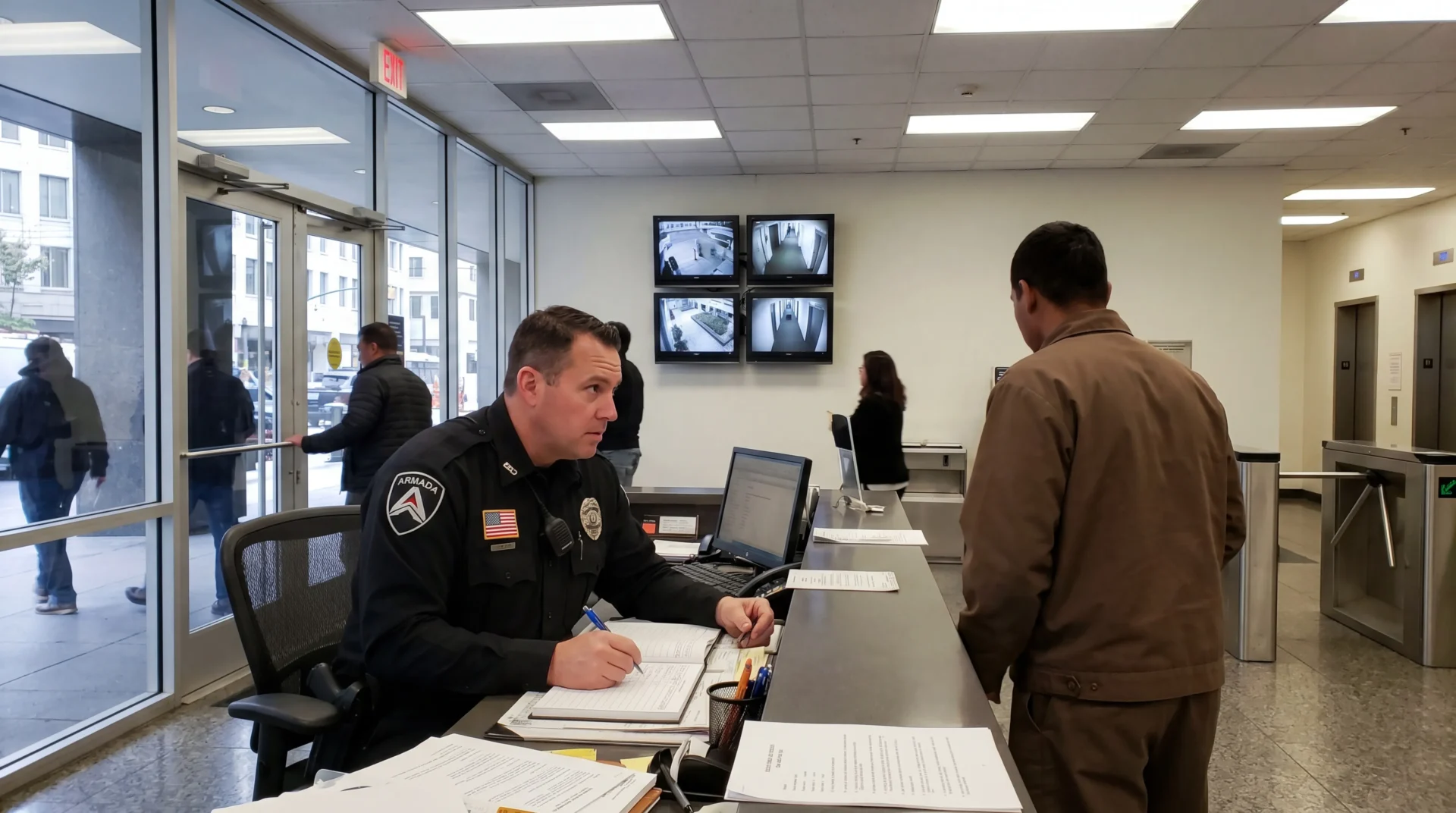
When comparing security guards vs mobile patrol, you must first examine what a dedicated guard provides. A stationary security guard stays on your site for a set shift. As a result, you get constant, highly visible protection at a single point. This is exactly what many properties need. For example, a guard at a lobby desk controls access, logs visitors, and monitors cameras. Therefore, they can respond to on-site issues in seconds.
Moreover, because the guard remains in place, deterrence is continuous. Intruders see a uniform the entire time. In addition, a fixed guard gains deep local knowledge over time. They learn who belongs, recognize tenants, and notice small oddities that others miss. Finally, for high-traffic areas, this knowledge is hard to match.
We ensure your safety by using fully screened, background-checked guards with advanced training certifications. Therefore, we maintain a Private Patrol Operator license (PPO 120526) from the California Bureau of Security and Investigative Services. In addition, we carry comprehensive liability insurance coverage. Meanwhile, we draw on our years of local experience. As a result, we give you total peace of mind.
Where stationary guards fit best
- High-Traffic Lobbies: First, Class A office buildings in the Financial District and busy apartment complexes in SoMa require steady visitor screening.
- High-Asset Sites: For example, data centers and logistics hubs with valuable property inside benefit from a constant presence.
- Constant Risk Areas: In addition, properties where a security delay of even a few minutes is unacceptable need on-site guards.
- Dedicated Access Gates: Finally, entry points where every vehicle and visitor must be checked manually require stationary staff.
What mobile patrol actually delivers
Meanwhile, evaluating security guards vs mobile patrol requires a close look at vehicle-based options. Mobile patrol works on a different model. First, instead of one officer at one post, a marked vehicle checks multiple locations. The officer drives a randomized route near your business. As a result, this trades constant presence for periodic, unpredictable visits. Therefore, it spreads the cost across several B2B clients.
However, this lack of a fixed schedule is actually a major strength. Because patrol times vary, trespassers cannot learn the gaps. In addition, each visit generates a timestamped, GPS-verified report. Therefore, you receive clear proof of coverage. For example, for large or quiet properties, this is strong deterrence at a lower cost.
In addition, our mobile units coordinate with local law enforcement and resources listed on SF.gov to keep your site secure. Finally, we are proud of serving San Francisco for over 32 years.
Where mobile patrol fits best
- Large Warehouses: First, industrial sites in the Bayview need perimeter checks rather than a lobby guard.
- Active Construction Sites: For example, large projects require overnight patrols to protect tools and materials.
- Sprawling Portfolios: In addition, multiple properties in the Mission District or Marina need fast, scheduled checks.
- Empty Corporate Sites: Finally, offices that are vacant at night still face property damage risks and benefit from random checks.
Security guards vs mobile patrol: cost in San Francisco
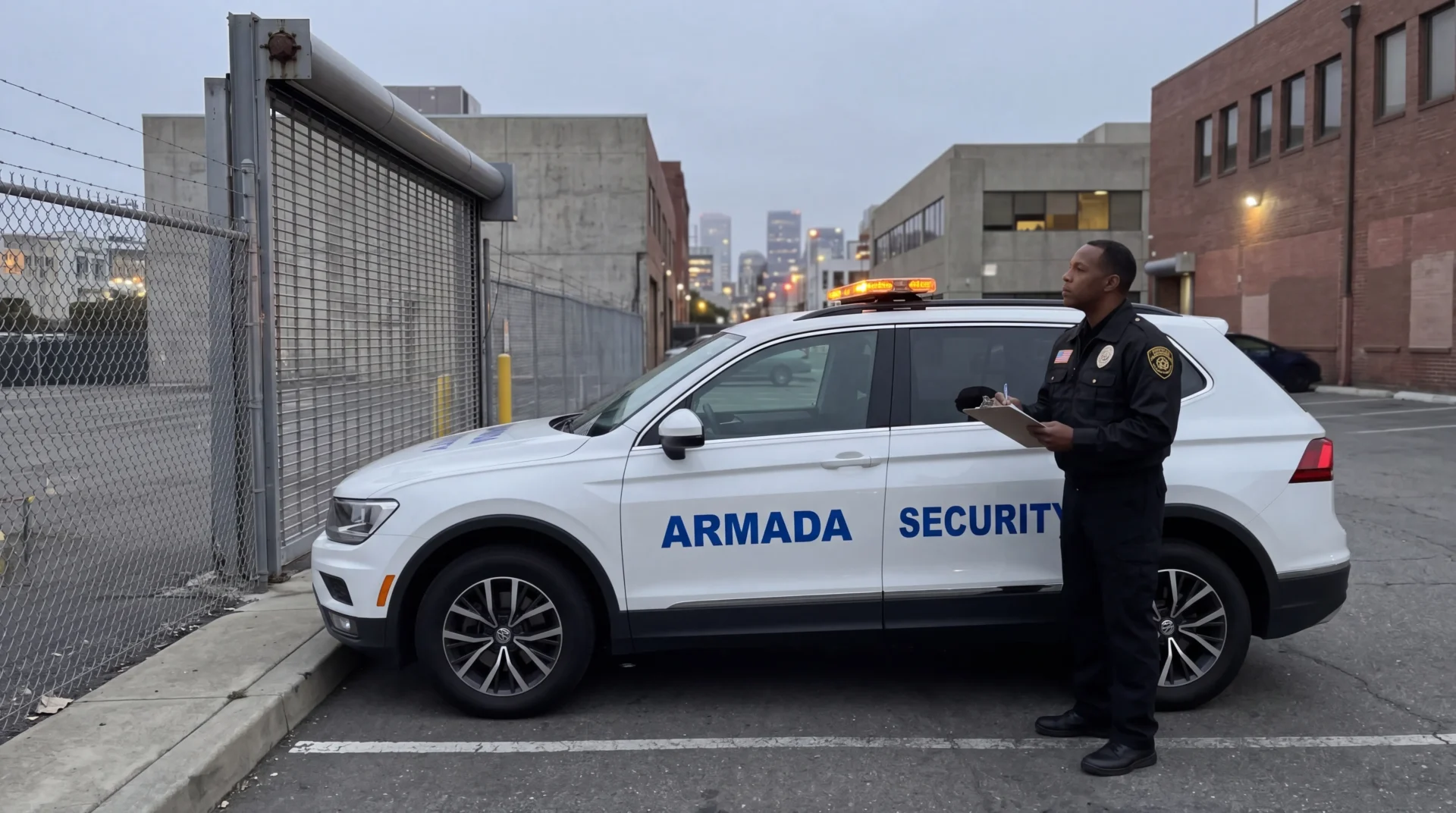
In addition, analyzing the costs of security guards vs mobile patrol reveals significant budget differences. Cost is often the main factor in this decision. Therefore, let us look at realistic local prices. These figures represent typical ranges in the Bay Area. However, they depend on officer experience, training, and shift patterns.
For example, in most cases, a stationary unarmed guard in San Francisco costs $28 to $45 per hour. Armed posts are higher, often ranging from $40 to $60+ per hour. Because you pay for every hour, a 24/7 post can cost $20,000 to $30,000 per month. Therefore, this is a significant investment. However, for a high-risk site, it buys unmatched protection.
Meanwhile, mobile patrol is billed per check or as a shared route. First, each brief stop might cost $30 to $60. As a result, a property with several checks per night might spend $1,000 to $4,000 per month. Therefore, the savings are clear. Finally, patrol is much cheaper because you do not pay for idle time.
However, cheaper is not always better. For example, if your threat is constant, patrol will leave too many gaps. If your risk only occurs at night, a 24/7 guard is a waste of budget. Therefore, you must align your security spend with your real risk.
When stationary security guards win
First, you must look at when stationary options win in the security guards vs mobile patrol debate. Stationary guards win when you need continuous eyes on your property. For example, choose a fixed guard when:
- Steady Traffic: First, your site has steady foot traffic that needs active entry management.
- High Value: In addition, your assets are highly valuable, making any delay in response costly.
- Customer Service: Moreover, your tenants and guests expect a friendly, familiar face as a point of contact.
- Compliance: Finally, your insurance policy or local rules demand a physical presence on-site.
As a result, in these cases, the higher cost is worth it. However, patrol cannot manage a front desk or check badges. Therefore, it only checks the property at intervals. Finally, for busy sites, you need a dedicated officer.
When mobile patrol wins
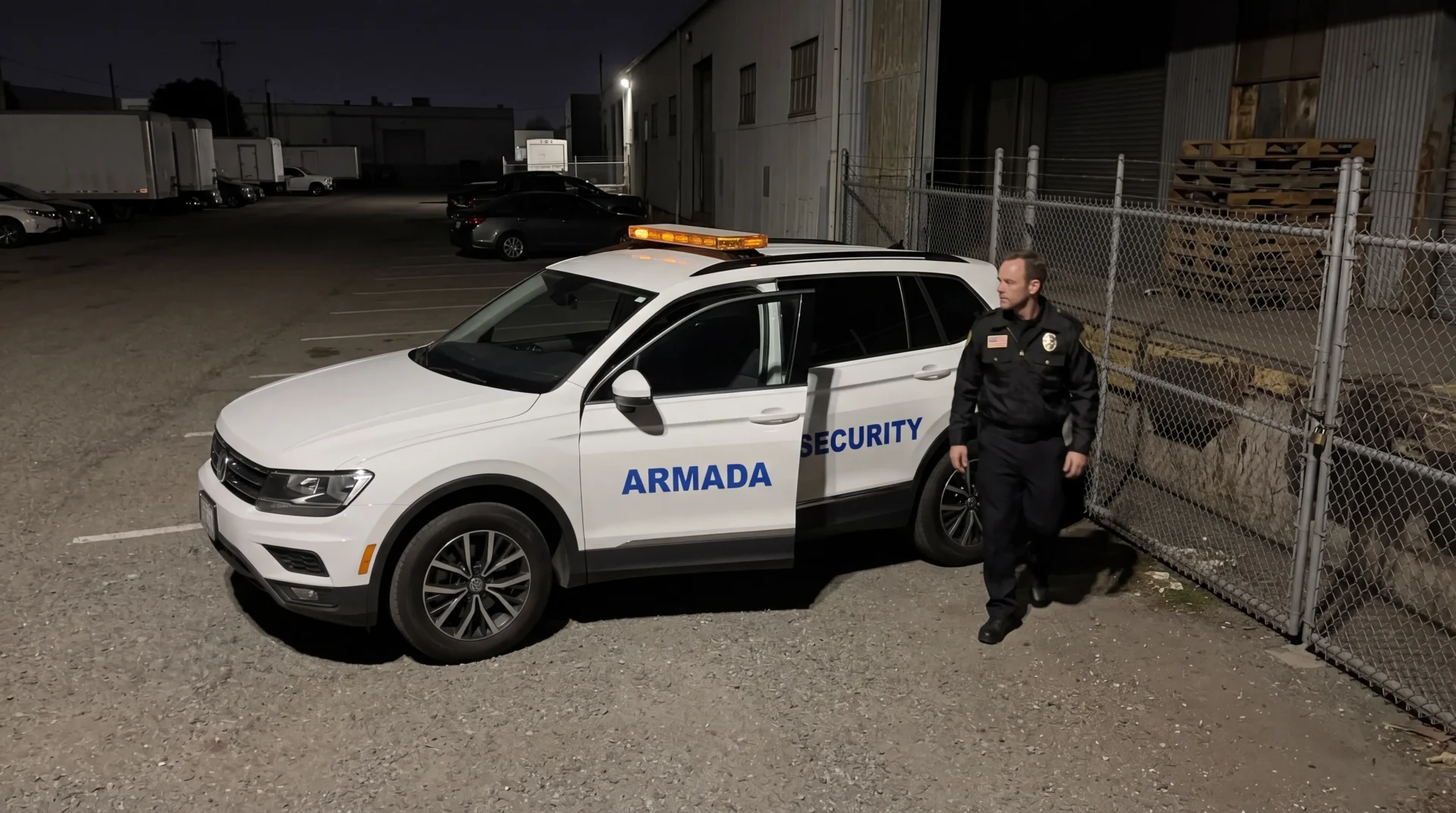
Finally, understanding security guards vs mobile patrol means looking at where mobile units succeed. Mobile patrol wins when your site has low foot traffic and a large footprint. Therefore, choose patrol when:
- After-Hours Risk: First, your property is empty during the night and weekends.
- Multiple Buildings: For example, you manage several buildings and want a single, cohesive patrol route.
- Low-Level Threats: In addition, your main threats are opportunistic, like vandalism, dumping, or trespass.
- Budget Limits: Finally, your budget cannot support a full-time, stationary guard contract.
Meanwhile, patrol gives you strong deterrent value for a fraction of the cost. However, the unpredictable routes make it hard for criminals to plan. Therefore, combined with fast response times, it is a highly effective shield.
The hybrid model
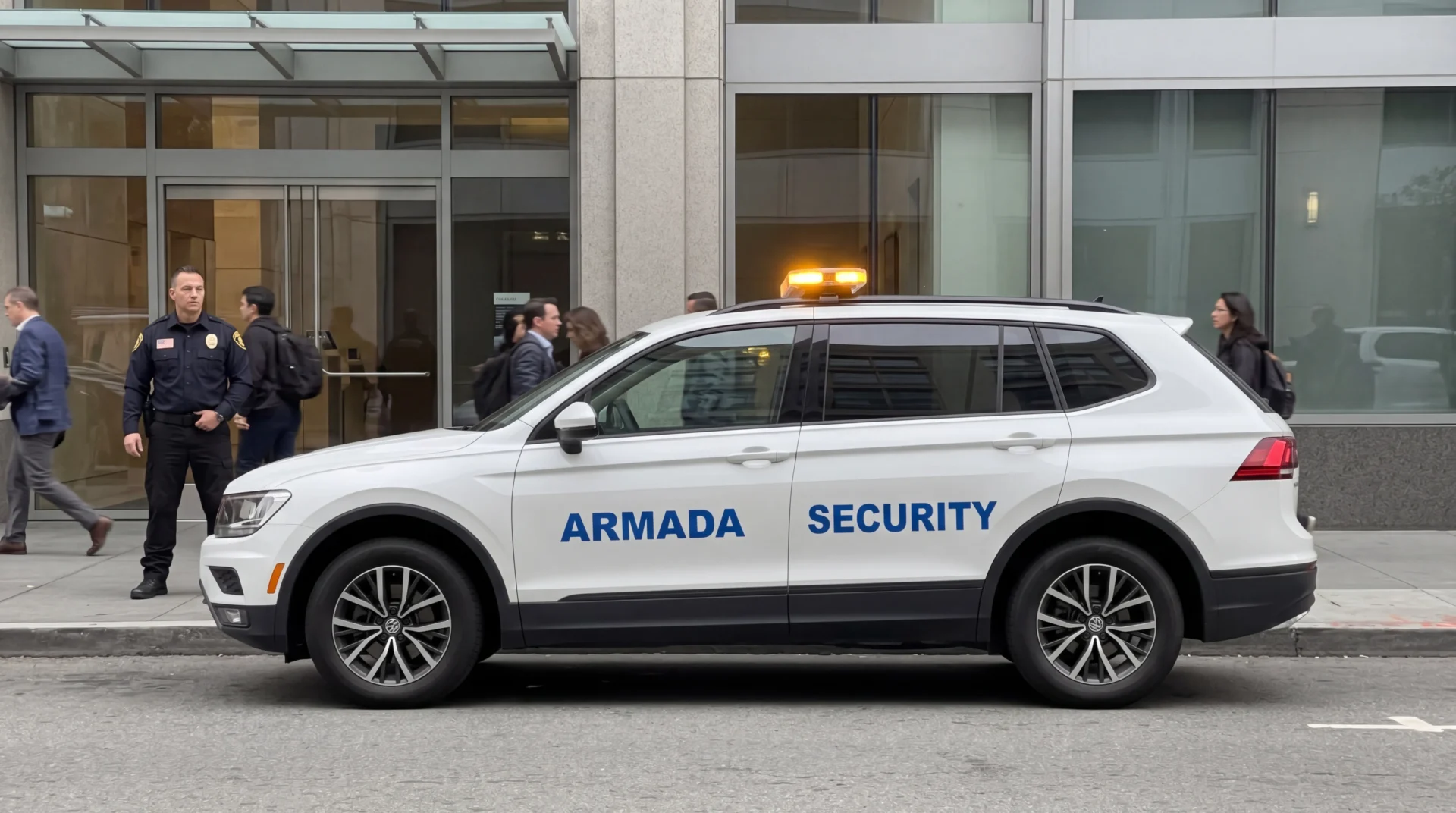
Moreover, the best solution is often a hybrid approach. For example, many San Francisco properties use a stationary guard during the day. They then switch to mobile patrol overnight. As a result, you pay for a physical presence when the building is full. Then, you use cost-effective patrols when the site is empty.
In addition, this model can change by season or project phase. For example, a construction site might use patrol during early excavation. However, they can add a fixed guard when expensive tools arrive. Finally, once the project is done, they return to patrol. Therefore, we can help you adjust your coverage as your risks change.
How to choose for your property
To find the right fit, ask yourself five key questions:
- Threat Timing: First, when is your threat level highest? Is it during business hours or overnight?
- Property Size: In addition, how large is your site? Do you need to cover a single lobby or a large industrial yard?
- Site Management: For example, do you need active site management like checking badges?
- Response Speed: Meanwhile, how fast must a response be? Do you need an officer on-site in seconds or minutes?
- Budget Fit: Finally, what is your realistic budget? Does it match your actual exposure?
As a result, a reliable security partner should assess your site before giving a quote. For example, our clients trust our advice, as shown by our stellar client testimonials. Therefore, we never oversell. In addition, our BSIS-licensed guards are trained to the highest standards. We are fully insured, locally owned, and proud of serving San Francisco for over 32 years.
FAQ
How much does stationary security guard service cost in San Francisco?
In San Francisco, a stationary guard costs between $28 and $45 per hour. Moreover, armed guards cost between $40 and $60+ per hour. Because you pay for every hour, a full-time, 24/7 post can cost up to $30,000 per month. Therefore, this cost depends on your site size, risk level, and required training.
What is the cost of mobile patrol near your business in the Bay Area?
Mobile patrol checks near your business typically cost $30 to $60 per visit. For example, if you get a few checks each night, your monthly cost is usually $1,000 to $4,000. Therefore, this is a very cost-effective choice for larger sites in the Bay Area.
Why choose Armada Security as your local security provider in San Francisco?
First, we are a top-rated local security provider. We are locally owned and operated, serving San Francisco for over 32 years. Therefore, our guards are BSIS-licensed, background-checked, and highly trained. In addition, we carry full insurance coverage and maintain strong coordination with local police. Finally, our 5-star reviews and client testimonials show our dedication to protecting commercial properties.
The bottom line
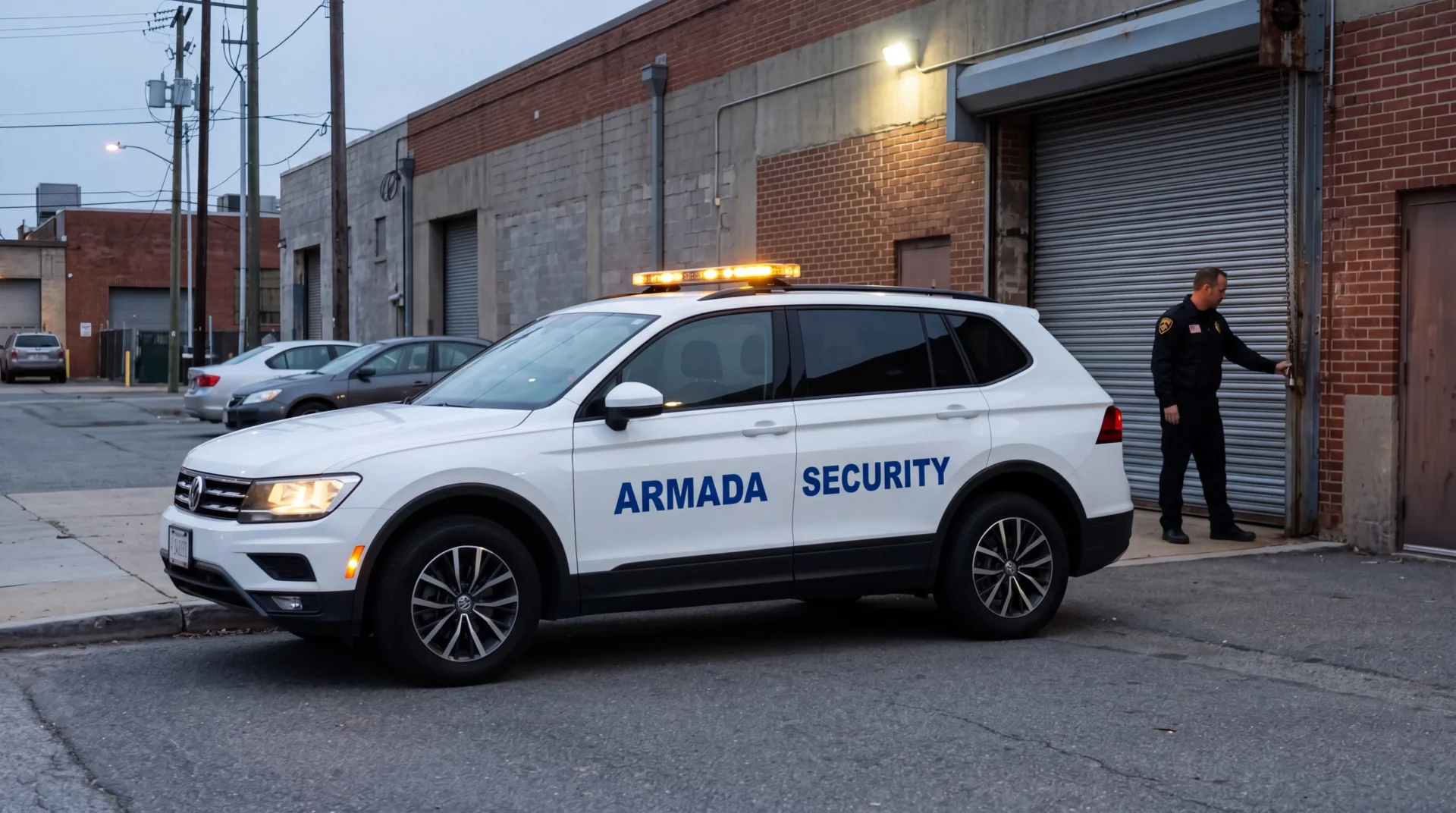
There is no single winner in the security guards vs mobile patrol debate. However, the right choice depends on your property, your hours, and your budget. For example, stationary guards buy constant eyes on-site. Meanwhile, mobile patrol buys cost-effective, random checks across large areas. Finally, a hybrid model gives you the best of both options.
In addition, Armada Security provides all three options. Our services are available throughout San Francisco, from SoMa to the Richmond District. First, we will assess your property. Then, we will recommend the right plan. Therefore, we focus on long-term B2B commercial security contracts. However, we do not offer short-term security or residential home services. Our goal is to protect your business with licensed, insured officers. Finally, contact us today to set up your consultation.
Armada Security
701 Pennsylvania Avenue, STE 108, San Francisco, CA 94107
San Francisco, CA 94107
Phone: (415) 647-8500
BSIS Licensed
