Warehouse security san francisco is a professional B2B protection service designed to safeguard local industrial yards, logistics hubs, and distribution centers from cargo theft and intrusion. For Bay Area facility managers, this specialized defense is critical to secure your supply chain, reduce inventory loss, and ensure regulatory compliance.
Warehouse security in San Francisco is no longer a detail you can defer. For property managers and facilities directors running distribution centers, the risks have changed. Cargo theft, trailer break-ins, and overnight intrusions have climbed. The cost of a single loss event now routinely exceeds the cost of a long-term security contract. Therefore, you must find a way to build a reliable program for warehouse security san francisco.
We are a top-rated local security provider. Our team has served San Francisco for over 30 years. We are locally owned and operated. We focus entirely on commercial and B2B security contracts. Our team does not offer temporary security or home security systems. Instead, we build lasting partnerships with logistics firms and facility managers near your business.
Our service area covers all of San Francisco. We provide coverage from the industrial yards of Bayview and Dogpatch to commercial sites in SoMa, the Mission District, the Marina, and the Financial District. We are 5-star rated by San Francisco businesses. Our clients value our commitment to compliance, experience, and proof.
Why Warehouse Security in San Francisco Demands a Different Playbook
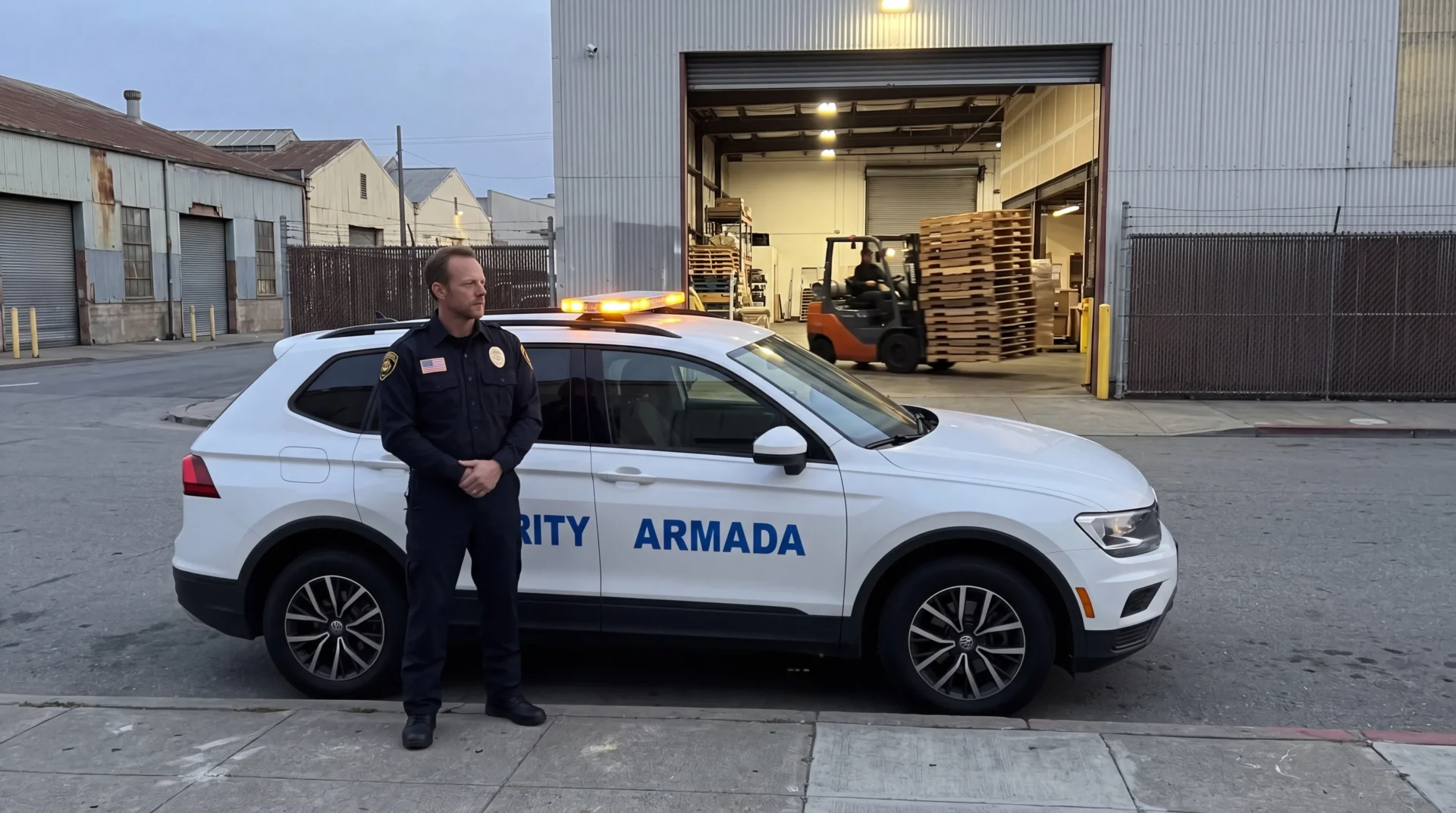
A downtown office tower and a 200,000-square-foot distribution center face very different risks. Warehouses concentrate massive value in a single footprint. Many sit in quiet industrial zones that empty out after dark. The same isolation that keeps land costs low also exposes your site to crime. This is why warehouse security san francisco requires a unique physical setup.
The people moving through your warehouse change constantly. Drivers, contractors, and vendors all need access. Each entry point is a potential vulnerability. Turn rates in logistics are high. Credential security can slip unless we manage it daily. A strong program treats access as an ongoing task.
Safety and rules add more weight. The Federal Occupational Safety and Health Administration outlines clear rules for site safety. You can read more about these standards on the OSHA warehousing safety portal. Worker safety and physical site control overlap heavily. A great program supports your safety goals while stopping crime.
We are fully insured and carry comprehensive liability coverage. Every guard we deploy is background-checked and vetted. We train our officers to meet strict local standards. This training ensures we protect your staff and assets safely.
The Real Threats: Cargo Theft, Asset Protection, and After-Hours Intrusion
You must be honest about what you are defending against. For most San Francisco logistics hubs, three main threats stand out:
- Cargo Theft: Organized crime rings target high-value loads using fake papers and cargo staging.
- Inventory Tampering: Internal access issues and poor record-keeping lead to unaccounted inventory loss.
- Overnight Intrusions: Empty yards invite copper theft, property damage, and trespassing.
Cargo Theft and Organized Crime
Cargo theft is now a highly organized business. Criminals use fake carrier papers to steal whole trailers. They watch your loading schedules to time their hits. Crime trends change fast across the Bay Area. Local intelligence is critical to stop these crimes and build effective warehouse security san francisco.
Our security officers check driver credentials at the gate. We verify every inbound and outbound load. This visible presence stops organized cargo theft before it starts.
Asset Protection and Inventory Control
Not all threats come from outside. Weak access controls can lead to inventory gaps. This is why we focus on strict facility tracking.
We offer logistics and warehousing clients comprehensive inventory security. Our officers log entries and exits. We monitor high-value storage areas. This process creates a clean audit trail for your records. It deters internal issues and keeps your supply chain secure.
After-Hours Intrusion and Vandalism
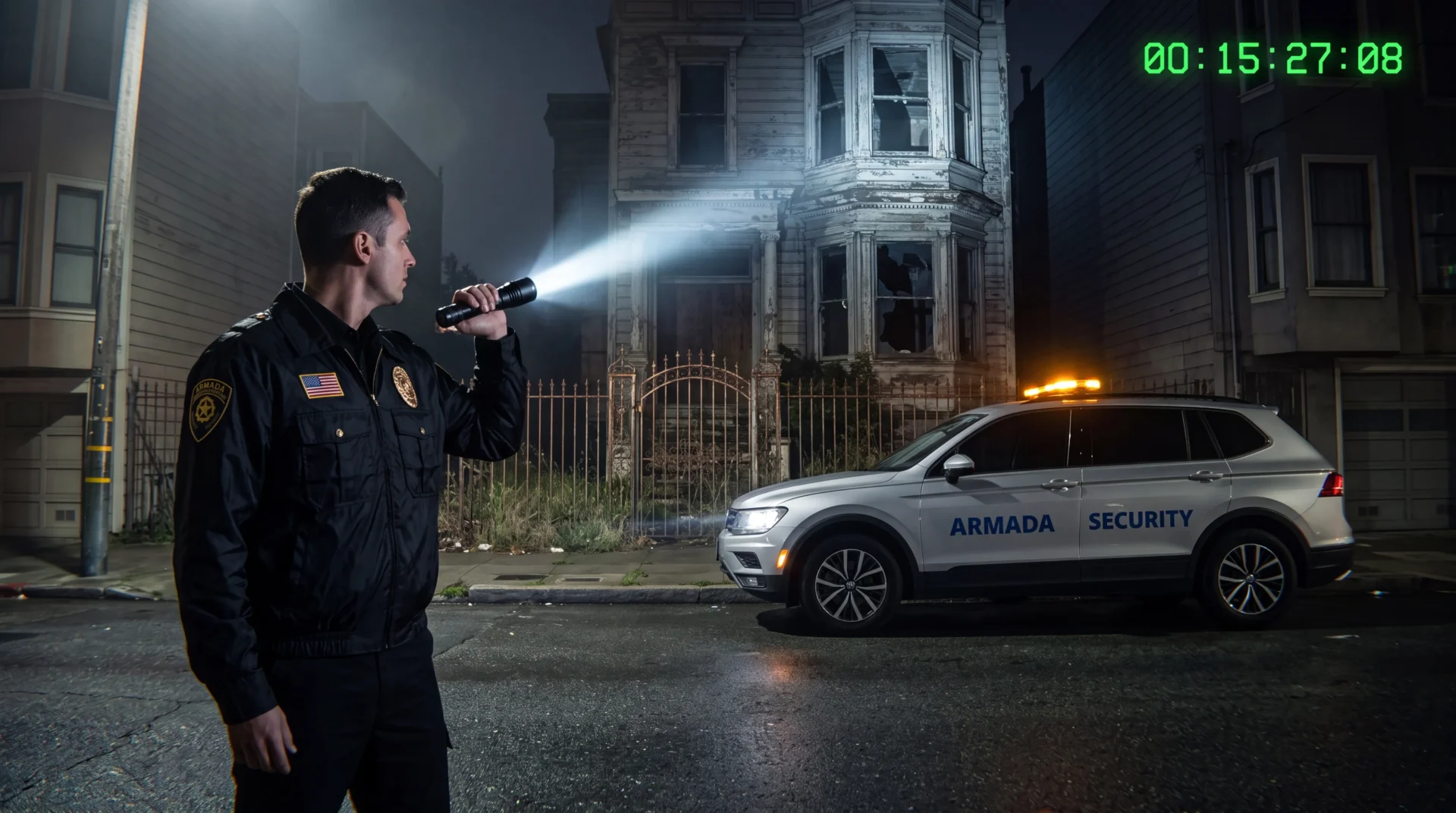
The overnight window is the highest-risk period for logistics hubs. Empty yards and dark gates invite break-ins. We deploy layered after-hours coverage to close these gaps.
Our officers conduct random checks to keep intruders guessing. We prevent copper theft, fence cutting, and vandalism. We keep your yard safe while your team is away.
Building a Layered Warehouse Security San Francisco Program
No single tool can protect a large logistics facility. Instead, we use multiple layers of protection. If a threat passes one layer, the next layer stops it.
We use a proven mix of services to manage your warehouse security san francisco:
- BSIS-Licensed Security Guards: Uniformed, fully vetted officers stationed at key access points.
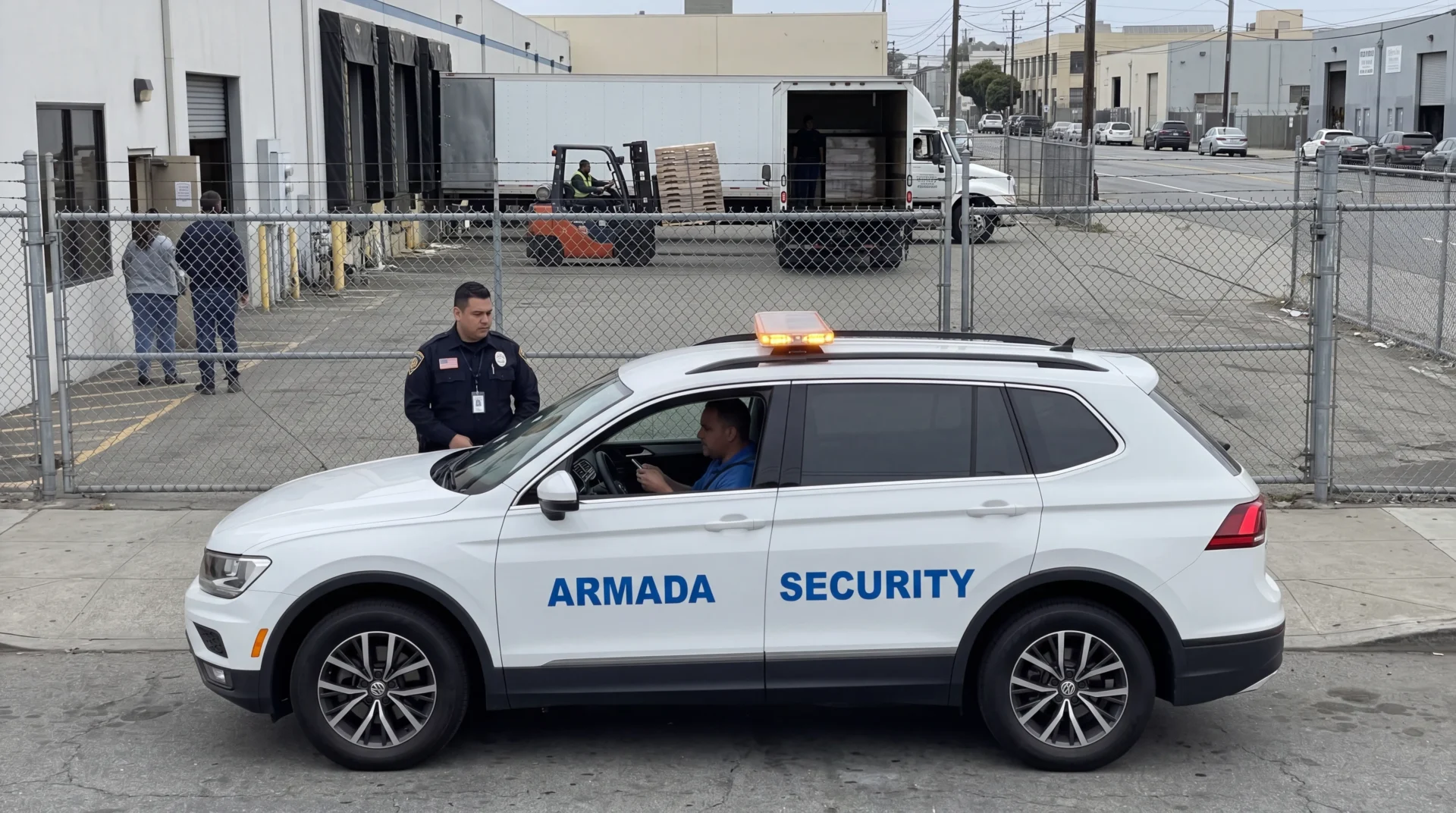
- Mobile Patrol Sweeps: Scheduled and random vehicle checks of fences, gates, and trailer seals.
- Access Control Monitoring: Active oversight of badges, visitor logs, and keycard systems.
- 24/7 Alarm Response: Fast local dispatch to verify alarms and secure the premises.
- Fire Watch Services: Critical safety monitoring when alarms or sprinkler systems are down.
Uniformed Security Officers
A professional officer is the core of warehouse defense. Our officers verify driver papers, monitor docks, and escort visitors. Every officer we hire holds a valid state card from the Bureau of Security and Investigative Services (BSIS).
We conduct thorough background checks and drug screens on all staff. Our training program covers fire watch, emergency response, and conflict resolution. We ensure our team is ready for any scenario near your business.
Mobile Patrol and Yard Sweeps
Your site may not need a full-time guard. If so, our mobile patrol offers a flexible choice. Patrol officers drive through your property at varied times. They check trailer seals and test gates.
We document every sweep with electronic tracking. You receive digital proof of every patrol visit. This active presence deters trespassers and keeps costs manageable.
Access Control and Credentialing
Warehouses host many different workers. This makes access management a major challenge. We help you set up and run clear access rules.
We restrict entry by role. We log all badge scans and review keycard data. When a badge is used at an odd hour, we find out why. This step merges technology with human oversight.
Alarm Response and Fire Watch
A silent alarm does no good if nobody responds. We provide a swift alarm response service in San Francisco.
Our local dispatch team operates 24/7. When an alarm triggers, we send a mobile unit immediately. Our average response time is under 30 minutes. We also provide compliant fire watch. This service keeps your site safe and insurable during system upgrades.
Loading Docks, Yards, and Perimeter: Securing the Highest-Risk Zones
Some areas of a warehouse carry much higher risks. We focus our training on these hot spots.
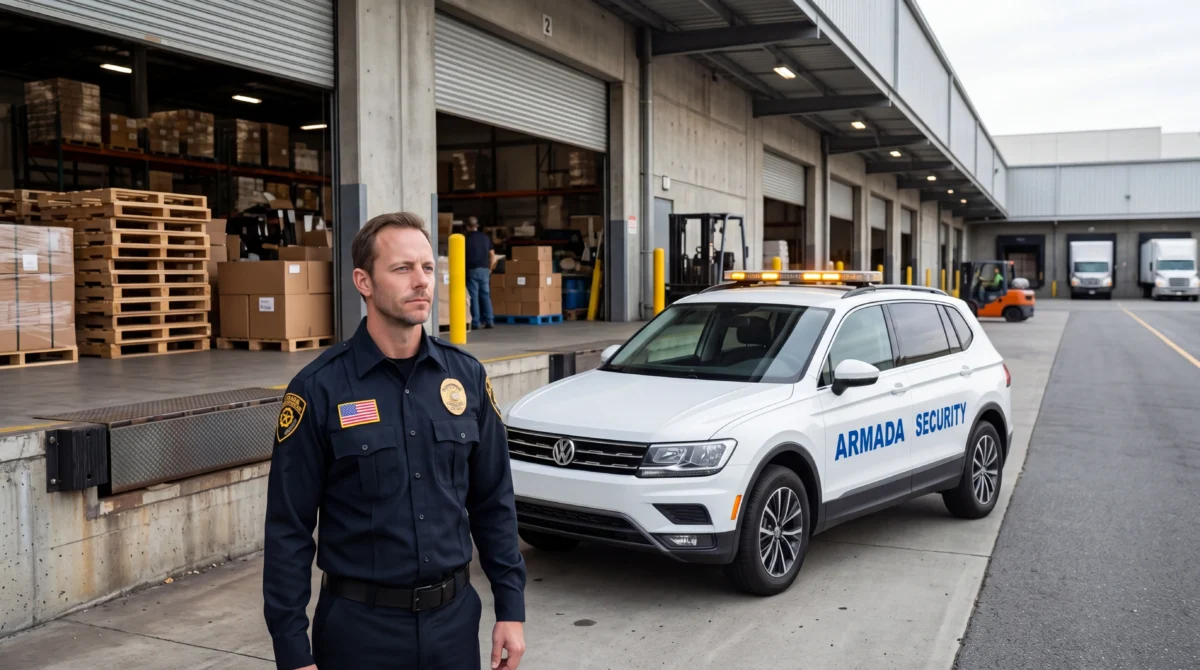
- The Loading Dock: This is where your building opens to the outside. We match drivers to schedule sheets and check trailer seals.
- The Trailer Yard: Staged trailers are easy targets. We perform physical checks of locks and seals on every round.
- The Property Fence: Intruders look for weak spots in your fence. We check gates, perimeter lines, and lighting.
We use these focus areas to build a tight defense. Our officers work in close coordination with the SFPD. This teamwork helps us share local intelligence and respond to active threats quickly.
We use similar methods for other high-risk sites. For example, we apply these perimeter rules to construction projects. You can read our tips on construction site security in San Francisco to see how we secure active properties. We also offer specialized industrial yard security to protect large outdoor yards.
How Armada Security Tailors Coverage to Your Facility
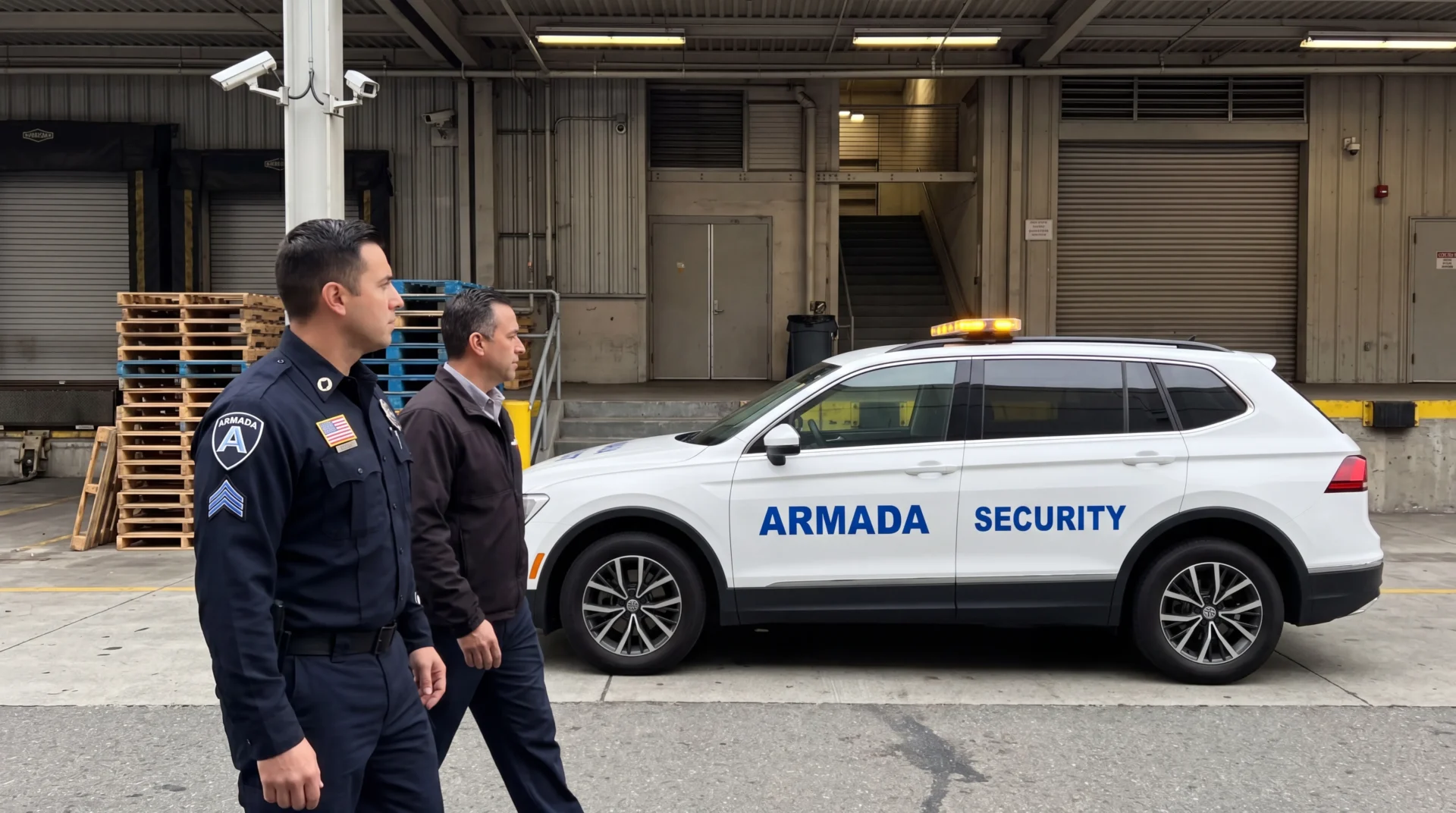
Every distribution center is different. We do not offer cookie-cutter plans. We start with a full site survey. We walk your property to find blind spots and weak links.
We review your dock schedules and yard layout. We check your existing camera setups and lighting. Then, we build a custom security plan. We scale our services to match your actual risk. This helps you get the best protection without waste.
We are proud of our positive client testimonials. Local firms trust our 14 years of experience. We provide detailed digital reports for every shift. This gives your risk team the proof they need for audits.
Our office is located right here in the city. We coordinate with local law enforcement to ensure quick support. We are the trusted choice for warehouse security san francisco.
FAQ
How much does warehouse security cost in San Francisco?
The cost depends on your facility size and needs. We offer customizable security contracts to fit your budget. We can combine full-time officers with mobile patrol to keep costs low. Contact our local office for a precise quote.
Are your security guards licensed to work in San Francisco?
Yes. Every guard we employ holds a BSIS license in California, and our company holds California BSIS Private Patrol Operator license PPO 120526. We are fully insured and bonded. We verify every officer through rigorous background checks. Our team has served the Bay Area for over 30 years.
How do your guards coordinate with the SFPD in San Francisco?
We maintain active coordination with the SFPD. Our local dispatch center is online 24/7. If an incident occurs, we provide clear records and video logs to the police. This relationship ensures a fast response to active crimes.
Can we hire Armada Security for a one-night warehouse event?
No. We focus exclusively on long-term commercial contracts. We do not offer short-term or temporary security services. This focus allows us to provide consistent, high-quality protection for our B2B clients.
What San Francisco neighborhoods do you serve?
We serve all neighborhoods in San Francisco. Our officers protect logistics and industrial sites in Bayview, Dogpatch, and SoMa. We also cover commercial buildings in the Mission District, the Marina, and the Financial District.
***
Armada Security
701 Pennsylvania Avenue, STE 108, San Francisco, CA 94107
Phone: (415) 647-8500
BSIS Licensed