
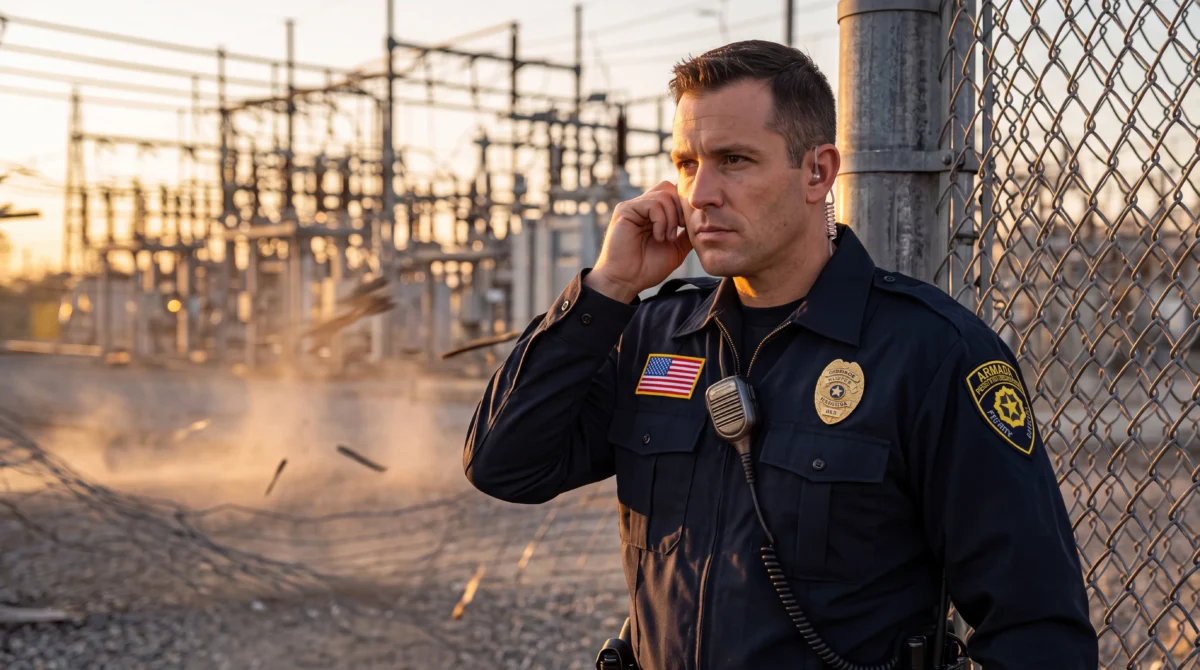
A Guide to Utility Security Services: Protecting Critical Infrastructure
Utility security services protect key systems like water, power, and gas from physical threats and vandalism. These specialized solutions use patrols, access control, and strict compliance checks to secure vital assets. As a result, they help keep operations steady and protect public health across essential regional networks.
Managing these sites also takes a clear grasp of local, state, and federal rules. Because utilities keep our cities running, even a short outage can do major harm. Therefore, choosing the right physical protection plan is a key step for directors and managers.
—
The Role of Utility Security Services in Modern Infrastructure
Our modern world depends on steady power, clean water, and safe gas systems. Because these systems are vital, they face constant risk from trespassers, metal thieves, and vandals. Therefore, professional utility security services act as a shield for these assets.
These sites are often large and open, which makes them hard to watch. For example, a water treatment plant may cover many acres. As a result, standard fences alone cannot stop a determined intruder.
Trained security officers know how to watch these complex areas. They do not just guard gates. Instead, they run regular checks to stop issues before they start. So, a trained presence on site can deter criminal acts. In addition, this service helps you keep daily work on track.
For more details on our specific options, you can visit our utility security services page. We help regional providers secure critical sites with long-term, contracted protection programs.
—
Key Threats Facing Local Utility Facilities
Utility sites are prime targets because they hold valuable assets. Consequently, managers must prepare for several key threats.
Metal and Equipment Theft
For example, copper wire and high-value tools draw thieves. Because utilities store these items in open or easy-to-reach areas, thieves often target sub-stations. As a result, one break-in can cause thousands of dollars in damage.
Vandalism and Sabotage
In addition, some intruders want to disrupt public services. They may cut fences, damage valves, or spray paint sensitive gear. Consequently, these acts can affect service for thousands of homes and businesses.
Unauthorized Access
Open perimeters also invite dangerous trespass. Because water reservoirs and high-voltage zones are hazardous, keeping people out is a major safety duty. So, clear boundaries and active patrols are necessary to protect the public.
—
Compliance and Regulatory Standards for Utility Physical Security
State and federal rules require strict protection for public utility sites. For example, the Cybersecurity and Infrastructure Security Agency (CISA) gives clear guidance on physical asset protection. In addition, the U.S. Environmental Protection Agency (EPA) sets strict safety rules for water utility sites. Therefore, failing to meet these rules can lead to heavy fines.
First, your security team must know these standards. Because we hold California BSIS Private Patrol Operator License PPO 120526, we focus on high-compliance settings. Our team knows how to align our work with state rules.
Second, detailed logs are vital for audits. As a result, guards must record every event, patrol, and incident. In addition, these records show that your site stays ready for inspection. So, you can have confidence in your audit trail.
—
Key Elements of an Effective Utility Security Plan
A strong defense plan needs layers. Because no single tool can stop every threat, you must combine several tactics.
- Physical Patrols: Regular patrols keep intruders from finding blind spots. For example, guard tours should follow varied paths and times.
- Access Control: You must verify every person who enters the property. Therefore, strict gate control helps stop unauthorized vehicles from entering the site.
- Perimeter Monitoring: Officers check fence lines for signs of cutting or digging. Consequently, they catch breach points early.
- Emergency Response: If a breach occurs, guards must act fast. Next, they contact local police and management to limit damage.
Furthermore, we work under long-term B2B contracts to deliver steady, reliable site coverage. We do not provide one-off or temporary event security. Instead, we focus on lasting relationships with local utility providers.
—
Selecting the Right Partner for Your Critical Facilities
When you select a security partner, experience and credentials matter most. Because utilities are sensitive sites, you cannot rely on general patrol companies.
First, check their licensing. Our team operates under California BSIS Private Patrol Operator License PPO 120526. As a result, this license shows we meet the state’s high standards for commercial safety and security.
Second, make sure they cover your full service area. We serve 12 cities across San Francisco, the Peninsula, and San Jose:
- San Francisco
- San Jose
- San Mateo
- Daly City
- South San Francisco
- Hillsborough
- Sausalito
- Burlingame
- Colma
- San Bruno
- Brisbane
- Millbrae
Because we cover these local zones, we can manage multi-site contracts with ease. Furthermore, our team is strictly B2B. We do not work with individual homeowners. Consequently, we focus all our effort on commercial clients, facilities, and critical infrastructure.
Frequently Asked Questions
What should a Bay Area utility site expect from a security provider before we let them onto critical infrastructure property?
We should be able to show that we serve commercial and institutional sites across San Francisco and the Bay Area, not homeowners or consumer jobs. For utility security, look for a vendor that is licensed by the State of California, can explain site rules in plain terms, and knows how to work with property managers, operations teams, and board-led sites. Armada Security holds BSIS Private Patrol Operator License PPO 120526.
How do we judge response time for a utility facility in San Francisco without being sold a fake promise?
Start with coverage and dispatch reach, not a slogan. We serve 12 cities across San Francisco, the Peninsula, and San Jose, so the right question is whether your site falls inside that service area and how fast the team can move within it. Ask for their normal check-in process, who answers after hours, and how they handle route changes or site escalation.
What liability or compliance risks should we ask about before hiring utility security in California?
Ask for the active California license number and confirm the firm is B2B only, since utility and infrastructure sites need a provider that works with organizations, not consumers. You should also ask how they document post orders, incident reports, and site access, because poor records create risk even when the patrol is present. The goal is clear chain of custody and clear accountability.
If our utility property spans multiple locations, how do we know the security plan will work across all of them?
Use one standard for all sites, then adjust for each location’s access points, hours, and risk profile. Armada Security serves San Francisco, San Jose, San Mateo, Daly City, South San Francisco, Hillsborough, Sausalito, Burlingame, Colma, San Bruno, Brisbane, and Millbrae, so a multi-site plan should be built for that local mix. Ask how reports are shared, how supervisors review field work, and how changes are rolled out site by site.
What should we ask if our utility site is in a mixed-use or multi-family property managed by a board or property manager?
Make sure the vendor treats that site as a commercial assignment, even if the location is called residential. In our work, “residential” means multi-family and apartment communities, condos, and HOAs contracted through property managers or boards, never a single-family home. Ask how they coordinate with management, control access, and document issues without disrupting tenants or staff.
Utility infrastructure security | FAQs
How can I hire security services for utility facilities?
How do security patrols help utility facilities?
What types of security services does Armada Security provide?
What roles do security officers play in utility security?
