
Strategic Guidance for Professional Nonprofit Security
Strong nonprofit security starts with matching coverage to the real risks at your site, not a generic package.
Professional nonprofit security protects your staff, visitors, and assets. It also helps you keep an open, welcoming setting. Community groups face risks that call for clear safety steps. Licensed staff help keep your site secure and aligned with California rules.
—
Understanding the Compliance Landscape of Nonprofit Security
Nonprofit groups must balance public access with strict safety rules. Your sites may host programs, admin offices, and public events. That makes access control a key task for directors. You must protect private data and property without creating a hostile feel.
A formal risk review is the first step. Federal resources like the Federal Emergency Management Agency offer templates for basic site threat reviews. When you spot weak points early, you can use your resources better. You also need clear safety steps for your staff. Train your team to spot possible hazards. That helps lower overall risk. Your risk plan should be updated every year so it stays useful.
—
Key Risk Areas for Bay Area Nonprofits
Sites across the San Francisco Bay Area face clear local risks. Multi-family housing managed by nonprofits often needs steady access control. Corporate offices and community centers also hold key tech and private donor records.
These sites often work with tight budgets. So losses from damage can hit hard. You must secure all entry points and watch perimeter lines. Parking garages and shared outdoor courtyards are common entry points for trespass. If you manage sites in San Jose or Daly City, local rules also apply. Your safety plan must fit both city codes and state law. A visible security presence can also deter vandalism before it starts.
—
Developing a Comprehensive Physical Protection Strategy
A strong safety plan combines barriers with trained staff. Start by securing your building perimeter with solid locks and lighting. Then use electronic access control to manage who enters private offices.
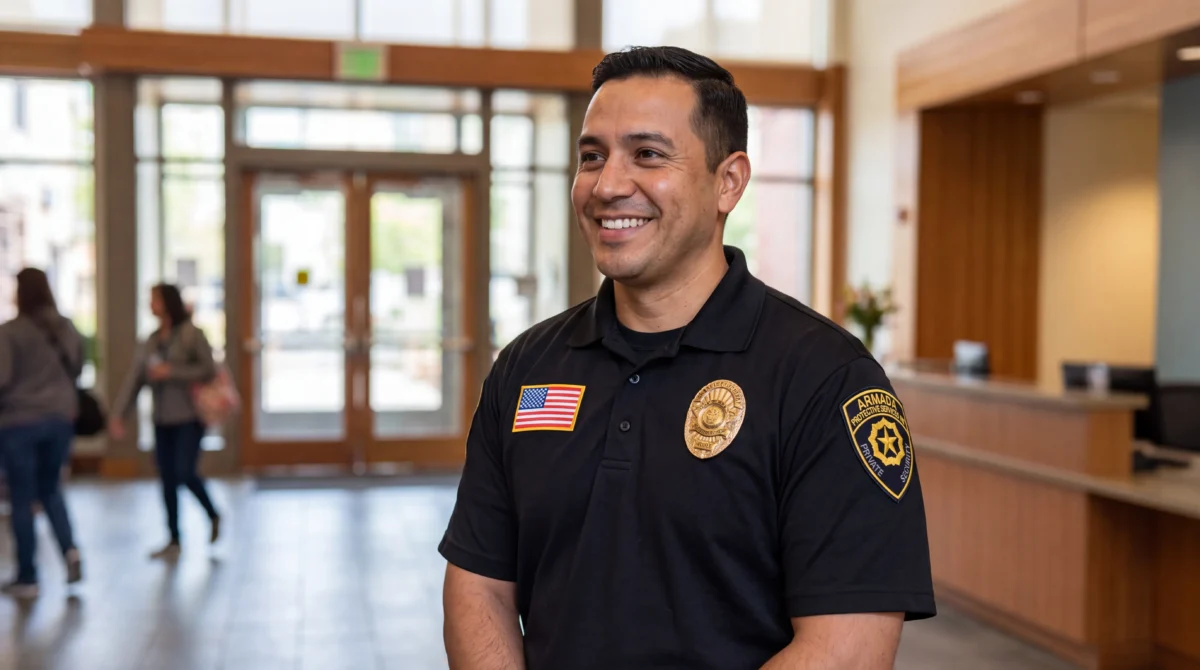
But tech alone cannot replace on-site oversight. Professional officers provide watchful monitoring and fast response. Your visitors still expect a welcoming space, so officers must act with calm authority. They also need the skill to handle hard moments with care. This helps your group keep a safe site while honoring its mission. Routine mobile patrols can also cover larger campuses with more than one building.
—
State Licensing and Compliance Standards
When you hire a guard service, state licensing is your main shield against risk. The State of California sets strict rules for private patrol operators. Our team works under BSIS Private Patrol Operator License PPO 120526.
This credential shows that we meet state rules for insurance and training. Licensed operators must run background checks on all field staff. They also must provide ongoing professional training. We serve 12 cities across the Peninsula, so we keep local compliance in mind everywhere we work. These cities include San Francisco, San Jose, San Mateo, and Daly City. We also cover South San Francisco, Hillsborough, Sausalito, Burlingame, Colma, San Bruno, Brisbane, and Millbrae. That means we understand the city codes that affect your sites.
—
Evaluating Security Partners for Long-Term Contracts
One-night watch services often miss the needs of daily operations. Nonprofits gain more from stable, long-term service agreements. Your staff and visitors also trust familiar faces more over time.
Choose a partner that works only in B2B commercial settings. Your agreement should spell out duties, patrol routes, and emergency contacts. You should also check for experience with multi-family housing and corporate sites. Avoid agencies that promise fast, cheap fixes without proper licensing. Pick a partner that values compliance and clear proof of service. That choice helps protect your group from risk while keeping your community safe.
Frequently Asked Questions
What is a realistic way to cut nonprofit security costs in San Francisco without lowering site safety?
The best savings come from matching coverage to the site, the hours, and the risk level. For many nonprofits, that means using a clear post plan, limiting guard time to the hours that need eyes on site, and covering access points that matter most. We serve commercial and institutional clients across San Francisco and the Bay Area, so we focus on recurring site needs rather than short-term fixes.
How do I know if a security provider is licensed for nonprofit and property work in California?
Ask for the BSIS Private Patrol Operator license number before you review a proposal. Armada Security is licensed by the State of California under PPO 120526, and that is the basic proof you should expect from any firm working on your site. If a provider cannot show current state licensing, that is a clear risk for your board and your insurer.
What should our board ask about liability before bringing security onto a nonprofit property?
Ask who is trained to report incidents, who writes the daily log, and how the provider documents issues that could affect safety or claims. For nonprofit sites, the risk is often not only what happens on the property, but what gets missed, delayed, or left out of the record. You should also confirm that the firm works with commercial and institutional clients, not individual homeowners, because your needs are different from consumer service.
How fast can a Bay Area security team respond if our nonprofit has a problem after hours?
Do not accept vague promises. Ask which of your cities are covered, what the post orders are, and how the team handles access, incident reports, and supervisor contact after hours. Armada Security serves 12 Bay Area cities, including San Francisco, San Jose, San Mateo, Daly City, South San Francisco, Hillsborough, Sausalito, Burlingame, Colma, San Bruno, Brisbane, and Millbrae, so local coverage should be part of the planning.
What kind of nonprofit sites does Armada Security actually work with, and what do you not serve?
We work with organizations such as property managers, construction firms, event venues, warehouses and logistics sites, and corporate or institutional properties. In the nonprofit space, that includes multi-family and apartment communities, condos, and HOAs when they are managed through property managers or boards. We do not serve individual homeowners, and we do not offer consumer home security or DIY products.
For professional help, see our security guard services in San Francisco.
Nonprofit security. FAQs
What are the security guard duties and responsibilities for nonprofits?
How can I find a security guard agency near me for my nonprofit?
