
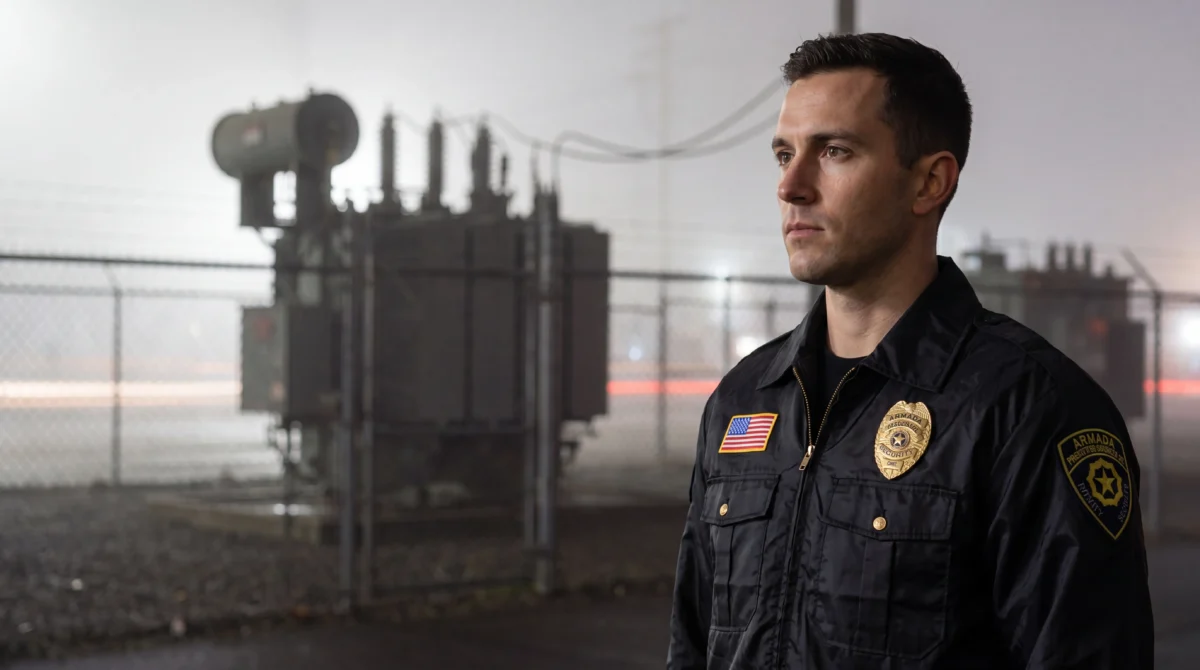
Secure energy facilities require strict physical controls, constant monitoring, and trained personnel to prevent unauthorized access and disruptions. Because these sites face ongoing physical threats, strong energy facility security is a vital shield for utility providers. For that reason, facility directors must use licensed officers to protect these critical assets.
Strong energy facility security starts with matching coverage to the real risks at your site, not a generic package.
Understanding the Risks to Modern Power Infrastructure
Energy sites are prime targets for physical attack and vandalism. For example, remote substations often sit in isolated areas with little natural watch. As a result, criminals can target fencing and key equipment.
In addition, physical breaches can lead to major outages and costly repairs. Therefore, facility directors must look beyond basic alarms. Because any delay in response can affect whole communities, active deterrence is essential.
Moreover, the threat picture keeps changing. For instance, coordinated attacks on power grids have risen nationwide. Consequently, protecting these utilities calls for special skill and constant watch.
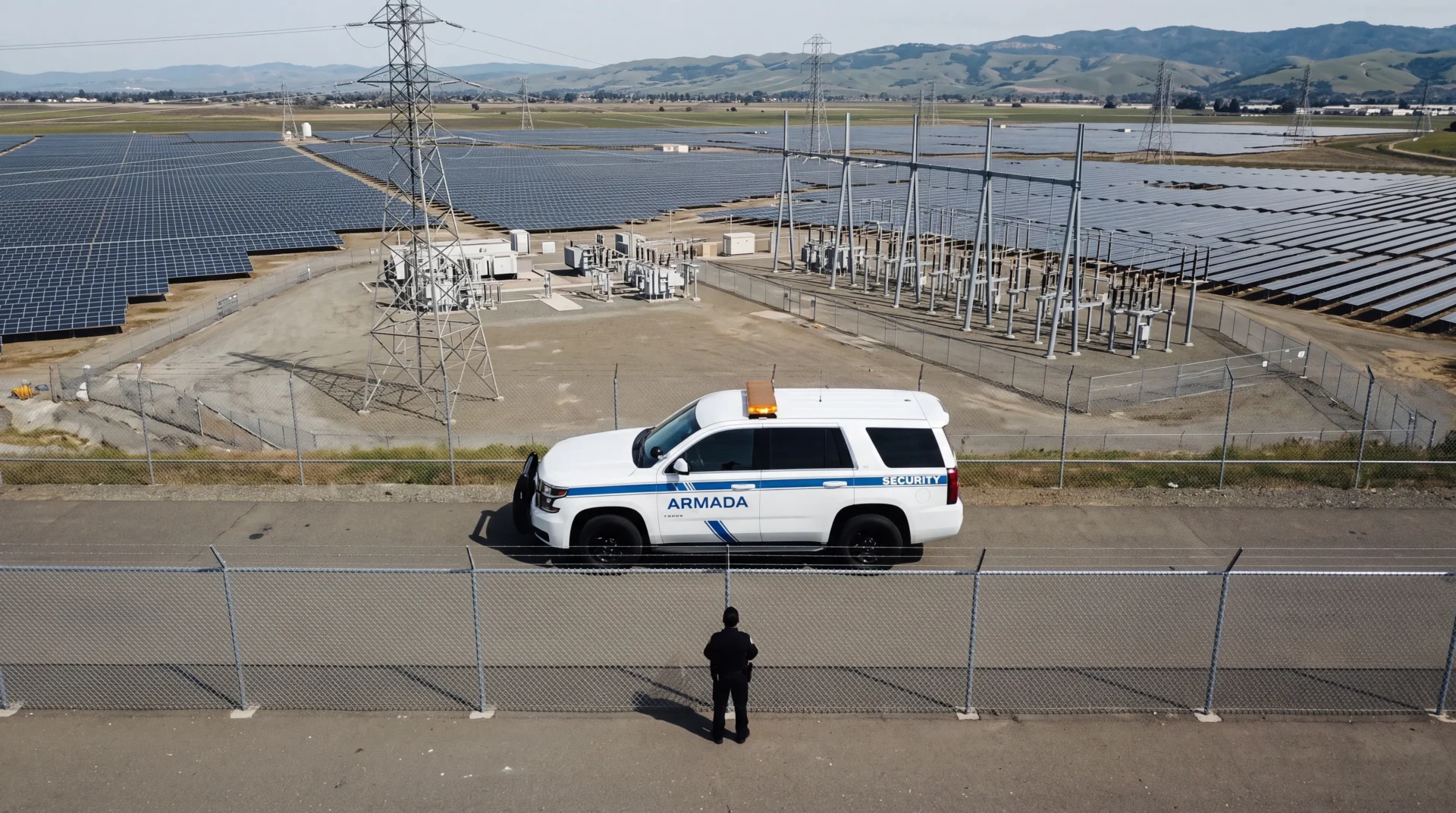
Key Components of Effective Energy Facility Security
Protecting critical sites requires a layered approach. First, strong perimeter barriers must surround the full site. However, fences alone cannot stop determined intruders.
For this reason, we recommend pairing physical barriers with visible patrols. In addition, access control systems must manage every entry point. Because only approved staff should enter, your team must check every credential.
Furthermore, high-resolution cameras must watch blind spots around the clock. If an alarm sounds, officers must respond at once. Therefore, real-time communication between guards and facility managers is vital.
To build a strong defense, your plan should include:
- Strict access control at all entry gates.
- Regular and random perimeter patrols.
- Clear signs that warn trespassers of active watch.
- Secure storage for tools, backup generators, and hazardous materials.
- Emergency response steps coordinated with local police.
Regulatory Compliance and Industry Standards
Compliance is not optional when you manage utility sites. For instance, the federal government enforces strict standards through the Federal Energy Regulatory Commission. You can review these physical security rules on the Federal Energy Regulatory Commission website to understand your legal duties.
Because failure to comply can bring heavy fines, your security plan must meet these rules. In addition, the State of California has strict license laws for private patrol operators. Therefore, you must verify that your security provider holds an active license.
For example, Armada Security operates under BSIS Private Patrol Operator License PPO 120526. As a result, our team meets the state’s training standards. Ultimately, this compliance helps protect your organization from liability.
Designing a Multi-Layered Security Protocol
Technology plays a major role in modern defense. However, technology alone cannot stop an intruder. For this reason, physical officers remain the core of any reliable plan.
By using trained guards, you add a flexible layer of defense. For example, guards can check camera alerts right away. In addition, they can inspect locks and valves that sensors may miss.
Consequently, we combine physical patrols with your existing surveillance systems. To learn more about our approach, you can explore our energy facility security services.
Ultimately, this mix cuts false alarms. Because our officers verify threats on site, local authorities can respond much faster.
Selecting a Licensed Partner for Long-Term Protection
Selecting a partner is a long-term choice for your facility. Therefore, you need a provider that understands the demands of commercial operations. Because we focus only on B2B contracts, we do not offer residential home security.
Instead, we direct our resources to protecting major assets, warehouses, and utility sites. For instance, we serve twelve key cities across San Francisco, the Peninsula, and San Jose. Specifically, our coverage area includes:
- San Francisco and South San Francisco.
- San Jose, San Mateo, and Daly City.
- Hillsborough, Sausalito, and Burlingame.
- Colma, San Bruno, Brisbane, and Millbrae.
Because we operate locally, we can deploy resources quickly. Furthermore, we do not offer temporary, one-night services. Instead, we build long-term, contract-based partnerships. Consequently, your facility benefits from steady, highly trained guards who know your site layout.
Choosing the right energy facility security in San Francisco comes down to a licensed provider, clear post orders, and reporting your team can actually audit.
Frequently Asked Questions
What should a San Francisco energy or utility site require from a security firm before they let anyone on the property?
Start with proof of California licensing. Armada Security is licensed by the State of California as PPO 120526, and that license should be easy to verify before any site walk or staffing plan. For an energy or utility site, ask how the firm handles access control, post orders, incident logs, and coordination with your site rules and any required safety steps.
How do we know if our facility needs security for the gate, the yard, the control room, or all three?
Map the risk by area, not by guess. The gate controls who gets in, the yard protects assets and vehicles, and the control room needs the tightest access rules because it can affect operations. A good plan should match the site layout, the level of public exposure, and the parts of the facility where a mistake would create the most harm.
What are the biggest security gaps at Bay Area energy facilities that property managers usually miss?
The most common gaps are weak access checks, unclear visitor rules, and poor handoff between day and night coverage. Sites also miss problems at perimeter points, loading areas, and shared spaces where vendors, staff, and outside crews cross paths. The fix is not more guesswork; it is clear rules, trained staff, and regular review of where people and vehicles actually move.
What should our board or operations team ask about liability before we hire a security provider?
Ask who writes the site rules, who trains the guards, and who documents incidents. You want a provider that can show a clear chain of reporting and a process for escalation when something looks off. For boards and managers, the key issue is not a promise of zero risk; it is whether the team can prove what happened and respond in a way that supports compliance and review.
Can Armada Security cover our Bay Area facilities if we have sites in more than one city?
Yes. We serve 12 cities across San Francisco, the Peninsula, and San Jose, including San Francisco, San Jose, San Mateo, Daly City, South San Francisco, Hillsborough, Sausalito, Burlingame, Colma, San Bruno, Brisbane, and Millbrae. For multi-site clients, that matters because your security standards, reporting, and site rules can stay aligned across all locations.
Related reading
- San Francisco Security Services
- Manufacturing Facility Security: Theft & Safety Risks
- How Remote Monitoring Enhances Security Team Efficiency
