
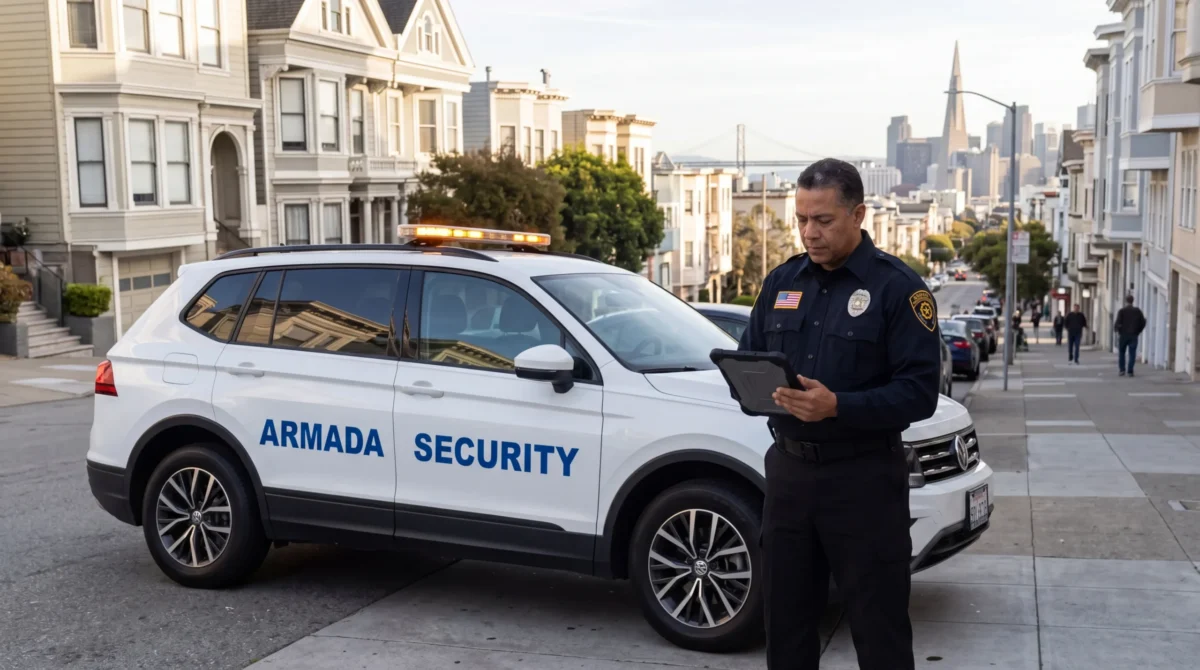
How Remote Monitoring Boosts Security Team Efficiency with Real‑Time Surveillance and AI
Remote monitoring blends live video, sensor telemetry, and cloud analytics to extend what on-site security teams can see and decide. By delivering instant alerts, verified video, and AI-driven event prioritization, remote monitoring shortens response times, lowers operating expense, and stretches effective coverage across multiple sites. This guide explains how remote monitoring works for security teams, which technologies deliver measurable efficiency gains, and when hybrid models—virtual monitoring plus targeted physical response—produce the best results. You’ll find concrete verification workflows, practical technology choices such as AI video analytics and drone patrols, and industry-focused examples for commercial properties, HOAs, and construction sites across the San Francisco Bay Area. We also review real-world outcomes, offer implementation checklists, and show how modern digital operations systems improve patrol reporting and evidence collection for coordinated responses.
What Are the Key Benefits of Remote Security Monitoring for Businesses?
Remote security monitoring uses continuous or event-based video and sensor feeds to verify incidents and guide focused responses. By combining automated detection, operator triage, and time-stamped media, teams act on confirmed events instead of raw alarms—cutting false dispatches and making guard deployment more efficient. The net effect is faster, more accurate responses and stronger documentation for incident review and insurance claims. Below we unpack the operational benefits and contrast them with on-site-only approaches so you can see the ROI and strategic value.
Remote monitoring delivers several operational advantages:
- Faster, Verified Responses: Live video verification lets teams escalate only confirmed incidents, reducing wasted dispatches.
- Broader Coverage: Cameras, sensors, and drones extend visibility beyond a single guard’s patrol route.
- Lower Operational Cost: Virtual guarding plus prioritized physical dispatch cuts on-site hours without sacrificing safety.
- Stronger Evidence & Reporting: Time-stamped video, patrol logs, and dashcam footage produce auditable incident records.
Those advantages feed directly into smarter resource allocation and lower losses. Next, we look at how remote workflows shorten incident response times in practice.
How Does Remote Monitoring Improve Incident Response Times?
Remote monitoring speeds response by verifying alarms with live video and by triaging events before dispatch. When an alarm trips, an operator—or AI—reviews footage, confirms whether it’s a real threat, and issues a targeted dispatch with precise location and media. That sequence shortens detection‑to‑action intervals and cuts false alarms and unnecessary patrol detours. With clearer situational awareness, teams hand off efficiently to emergency responders and spend less time investigating non‑events, improving overall security team performance.
In What Ways Does Remote Monitoring Reduce Security Costs?
Remote monitoring lowers costs through fewer required on-site hours, reduced false-alarm responses, and smaller incident losses thanks to faster verification. Organizations can adopt hybrid staffing—mixing virtual guarding, scheduled mobile patrols, and targeted physical interventions—to match risk more cost-effectively than placing full-time guards everywhere. Verified monitoring records can also reduce insurance exposure and premiums. Savings scale across multi‑site portfolios as centralized monitoring spreads fixed costs and gives property managers clearer visibility.
| Benefit | Mechanism | Typical Operational Impact |
|---|---|---|
| Faster Response | Live video verification + operator triage | Shorter detection‑to‑action time; fewer false dispatches |
| Cost Reduction | Virtual guarding + prioritized dispatch | Lower on‑site hours and labor costs while keeping coverage |
| Coverage Expansion | Drones, remote cameras, cloud access | Covers rooftops, lots, and remote perimeters quickly |
This comparison shows how remote monitoring converts detections into verified, actionable intelligence—reducing wasted resources and improving outcomes. Next, we review the technologies that enable those gains.
Which Technologies Drive Efficiency in Remote Security Monitoring?
Core technologies—AI video analytics, cloud platforms, thermal drones, and unified digital operations systems—work together to automate detection, give operators context, and share time‑stamped evidence. AI lowers operator load by flagging abnormal behavior and cutting false positives. Cloud platforms enable centralized, mobile oversight across sites. Drones provide fast perimeter sweeps. Together these tools produce prioritized alerts, GPS‑verified patrol reporting, and dashcam footage that speeds decisions and post‑incident analysis, delivering measurable efficiency improvements across security teams.
- AI video analytics for motion, loitering, and behavior recognition
- Drone surveillance and thermal imaging for wide‑area sweeps
- Cloud platforms and mobile apps for centralized monitoring and multi‑site control
| Technology | Primary Function | Operational Benefit |
|---|---|---|
| AI Video Analytics | Event detection and prioritization | Fewer false positives; quicker operator triage |
| Drone with Thermal Camera | Rapid perimeter inspection | Finds heat signatures and covers large areas fast |
| Cloud Surveillance Platform | Centralized feeds and mobile access | Multi‑site oversight and coordinated dispatching |
AI, drones, and cloud connectivity form a knowledge‑driven security stack that reduces manual monitoring and raises the signal‑to‑noise ratio for operators. The sections below explain how AI and drone workflows operate day‑to‑day.
How Do AI and Video Analytics Enhance Threat Detection?
AI and video analytics improve threat detection by spotting anomalous objects and behaviors—loitering, perimeter breaches, or unusual vehicle movement—and surfacing only relevant events to human operators. Machine learning filters routine motion (wind, animals, falling debris) from suspicious patterns, cutting false alarms and letting operators focus on high‑risk events. That triage shortens verification time, reduces operator fatigue, and sustains monitoring quality over long shifts. The result: higher‑fidelity alerts that lead to faster, more targeted interventions and smarter use of on‑site resources.
Integrating AI into video surveillance brings clear safety benefits, but it also requires deliberate safeguards for privacy and ethical use.
AI‑Enabled Smart Video Surveillance for Public Safety and Privacy
Recent advances in AI have driven the rise of smart video surveillance for urban safety, allowing systems to identify objects, recognize actions, and detect anomalies for operational insight. Designing these systems requires careful attention to ethical and privacy concerns—especially the handling and storage of personally identifiable information (PII). This paper outlines privacy requirements for AI‑enabled surveillance and proposes a privacy‑preserving approach that blends computer vision, statistical analytics, cloud services, and end‑user apps. It also proposes metrics for evaluating performance. The authors note privacy‑focused choices can trade off some accuracy—in their tests, pose‑based methods lowered detection accuracy compared with pixel‑based approaches—while system latency and throughput remain important engineering considerations.
What Role Do Drones and Thermal Cameras Play in Mobile Patrols?
Drones with thermal cameras amplify a patrol unit’s situational awareness by quickly scanning roofs, parking lots, and perimeters that are slow or risky for foot patrols. Thermal imaging reveals heat signatures behind visual obstructions and during nighttime operations, helping operators localize people or running equipment regardless of light. Integrated with remote monitoring, drones can launch after initial verification to confirm a suspect location, provide continuous tracking, and guide responding officers or mobile patrols. That rapid coverage and objective media reduce time‑to‑resolution and improve safety for responders.
How Does Armada Protective Services Integrate Remote Monitoring with On‑Site Security?
Armada Protective Services pairs trained on‑site teams with remote monitoring tools to build accountable, evidence‑based security workflows. We educate property managers about professional guard services in San Francisco, lean on local expertise, and convert trust into reliable protection. Armada uses a digital operations system that records patrols, posts activity, and files incident reports in real time to ensure transparency and fast coordination. Drone‑enabled mobile patrols and dashcams capture objective media while GPS‑verified patrol reporting confirms guard presence and handoffs—enabling rapid escalation and clear incident trails.
| Service Component | How Armada Uses It | Client Outcome |
|---|---|---|
| Digital Operations System | Time‑stamped patrol logs and incident reporting | Clear audit trail and faster post‑incident review |
| Drone‑Enabled Mobile Patrols | Thermal perimeter scans and rapid sweeps | Faster suspect localization and stronger evidence |
| Dashcams & GPS Verification | Continuous recording and verified patrol routes | Accountability and improved coordination with responders |
In this hybrid model, virtual verification complements physical response: confirmed incidents limit unnecessary patrol diversions and let on‑site teams act decisively. The next sections describe measurable impacts from blending virtual and physical resources and the reporting features that support them.
What Is the Impact of Combining Virtual Guarding with Physical Security Teams?
Pairing virtual guarding with on‑site teams shifts guards from constant surveillance to focused response, expanding their effective coverage and improving decision quality. Virtual operators verify alarms, stream live footage, and provide real‑time guidance so guards arrive with context—not blind. That collaboration reduces unnecessary patrol hours, sharpens response targeting, and lowers liability for property owners. It also strengthens documentation and accountability, improving incident narratives for stakeholders and law enforcement handoffs.
How Does Real‑Time Digital Reporting Improve Security Team Coordination?
Real‑time digital reporting centralizes time‑stamped logs, GPS‑verified checkpoints, and attached media so stakeholders share a single source of truth during incidents. Standardized reports cut ambiguity in handoffs between virtual operators, on‑site guards, property managers, and emergency services, while embedded video and photos speed evidence‑based decisions. This transparency shortens investigations, supports after‑action reviews, and helps tune patrol patterns and alarm rules. Clear documentation also helps property managers and insurers assess risk and track performance over time.
What Are the Industry‑Specific Applications of Remote Monitoring in the Bay Area?
Armada helps Bay Area property managers and business owners adopt practical remote monitoring strategies tailored to their sites. Remote monitoring adapts across sectors—from retail and office parks to residential HOAs and construction sites—by adjusting patrol cadence, sensor placement, and response rules to fit each environment. In dense urban areas and multi‑site portfolios, centralized monitoring enforces consistent policies, speeds verification, and allocates mobile patrols cost‑effectively. Below are common applications and ROI considerations for typical property types.
- Commercial Properties: Cuts shrink and vandalism with verified video and consolidated dashboards.
- Residential HOAs: Provides documented patrols and incident trails that reassure residents.
- Construction Sites: Prevents material theft with after‑hours drone sweeps and targeted alarm verification.
Selecting the right blend of virtual guarding, mobile patrols, and sensors depends on each site’s risk profile; the following sections expand on commercial and residential use cases.
How Does Remote Monitoring Benefit Commercial Properties and Business Owners?
For commercial properties, remote monitoring reduces theft, supports loss‑prevention programs, and centralizes multi‑site management on a single operations dashboard. Verified video speeds insurance claims and police work, while prioritized alerts stop problems before they grow by enabling immediate, targeted responses. Multi‑site managers save by consolidating monitoring and dispatching mobile patrols only when verification calls for it—leading to lower shrinkage, better uptime for retail, and clearer security performance metrics.
Why Is Remote Security Essential for Residential HOAs and Property Managers?
Residential HOAs and property managers use remote monitoring to balance resident safety with tight budgets—monitoring common areas, entry points, and perimeters without constant on‑site staffing. Time‑stamped patrol logs and incident media provide transparency for board reviews and resident communication, while prioritized alerts ensure teams respond to confirmed issues rather than routine noise. Integration with access control and maintenance workflows helps detect unauthorized activity and coordinate fixes quickly. These capabilities boost resident confidence and reduce liability through consistent documentation and clear escalation paths.
What Are Common Questions About Remote Monitoring and Security Team Efficiency?
Short, practical answers to common buyer questions explain how remote monitoring works, when it’s cost‑effective, and what operational changes to expect. This FAQ is optimized for quick scanning and featured snippets, helping property managers evaluate fit and next steps. Each answer focuses on mechanisms, outcomes, and adoption considerations.
- How Does Remote Monitoring Enhance Security Team Efficiency? Remote monitoring combines automated detection, operator verification, and prioritized dispatch so guards focus on verified incidents instead of continuous observation. That cuts false alarms, shortens response times, and improves allocation of on‑site resources—delivering measurable time and cost savings.
- Is Remote Security Monitoring Cost‑Effective for Small and Large Businesses? Yes. Remote monitoring scales across site counts: it lowers marginal monitoring costs for large portfolios and lets small businesses use mixed models—virtual verification plus scheduled mobile patrols—to control budgets while keeping coverage effective.
- What Technologies Should I Prioritize for Maximum Efficiency? Start with AI video analytics to reduce false alarms, a cloud operations platform for centralized oversight, and drone/thermal patrols for large or obstructed areas. Together they balance automation with actionable intelligence.
How Does Remote Monitoring Enhance Security Team Efficiency?
Remote monitoring converts sensor data into verified, time‑stamped intelligence that guides targeted interventions and eliminates wasted patrol effort. Automated analytics surface likely threats, operators filter noise, and verified video enables precise dispatching so on‑site teams focus on high‑value tasks. That detection→verification→action chain optimizes labor, speeds resolution, and preserves an evidence trail for post‑event review—raising throughput for security operations while lowering marginal cost.
Is Remote Security Monitoring Cost‑Effective for Small and Large Businesses?
Remote monitoring is cost‑effective for multi‑site enterprises by spreading fixed costs across locations, and for small businesses by offering flexible, pay‑for‑what‑you‑need models that replace some full‑time posts with virtual verification. Small operators can pair scheduled mobile patrols with event‑driven verification to align spend with risk, while larger portfolios gain economies of scale through centralized platforms and standardized response playbooks. Both models reduce false‑dispatch costs and improve incident prevention through proactive monitoring.
What Real‑World Results Demonstrate the Effectiveness of Remote Monitoring?
Hybrid remote monitoring programs report shorter response times, fewer false alarms, and reductions in theft and vandalism where verification and quick follow‑up are present. Drone‑assisted patrols provide fast area assessments that localize suspects or hazards, while dashcam footage and time‑stamped reports improve the quality of police handoffs and insurance claims. Typical metrics show measurable drops in routine false calls and gains in actionable incident resolution—supporting the operational case for hybrid deployments that combine remote verification with on‑site response.
How Has Drone Surveillance Reduced Crime in San Francisco Properties?
In urban properties, drone patrols enable fast perimeter checks and rooftop scans that would otherwise demand lengthy foot patrols or special access. Launched after alarm verification, drones can find heat signatures, track movement, and maintain visual contact until responders arrive—reducing search time and increasing evidence capture. These capabilities are especially valuable at night or on complex sites with limited line‑of‑sight, helping teams contain incidents faster and deliver precise, time‑stamped media to police.
What Industry Data Supports Efficiency Gains from Remote Monitoring?
Industry trends show growing AI adoption and tighter integration of remote monitoring tools into security operations, with organizations reporting fewer false alarms and faster verification cycles after adding analytics and centralized reporting. Data‑driven programs typically record improved response metrics and reduced reactive patrol time as verified‑event workflows replace broad routine sweeps. Those outcomes validate the shift toward hybrid models that pair virtual verification with targeted on‑site intervention, producing measurable ROI through lower labor hours and better incident outcomes.
Get a free quote or contact Armada by visiting Armada Protective Services and using the website contact form or requesting a consultation with our local Bay Area operations team.
This connects property managers with a firm that combines a digital operations system, drone‑enabled mobile patrols, GPS‑verified patrol reporting, dashcam evidence capture, and flexible service options to deliver accountable hybrid security solutions across the San Francisco Bay Area.
Frequently Asked Questions
What are the privacy concerns associated with remote monitoring technologies?
Privacy risks center on collecting and storing personally identifiable information (PII). Video and sensor systems can capture bystanders and sensitive activity, so organizations must control access, encrypt data, and set clear retention policies. Transparency with tenants, employees, and residents about how footage is used—and following local privacy rules—builds trust and reduces legal risk.
How can businesses ensure compliance with regulations when using remote monitoring?
To stay compliant, review local, state, and federal laws on surveillance and data protection and map those requirements to your operations. Implement written policies for data handling, train staff on legal and privacy obligations, and run regular audits of monitoring practices. When needed, consult privacy or legal experts to tailor practices to your jurisdiction and site specifics.
What types of incidents can remote monitoring effectively address?
Remote monitoring addresses theft, vandalism, unauthorized access, and safety hazards effectively. Real‑time video and alerts let teams confirm incidents quickly and respond appropriately. It also supports workplace safety monitoring—documenting accidents or unsafe behavior—and is adaptable across environments from retail to construction.
How does remote monitoring integrate with existing security systems?
Remote monitoring integrates with existing systems through cloud platforms and APIs that centralize video, alarms, and access controls. That makes it possible to synchronize feeds and events for a single operational view. Leveraging current infrastructure reduces installation overhead and accelerates deployment while improving overall security posture.
What training is required for staff to effectively use remote monitoring systems?
Training should cover technology basics, operational protocols, and incident response. Teach staff how to interpret alerts, verify events using video, and document incidents consistently. Include privacy and ethics training, and run regular hands‑on refreshers so personnel stay proficient as systems and rules change.
What are the best practices for implementing remote monitoring in a business?
Best practices include conducting a risk assessment to prioritize vulnerabilities, choosing technologies that match those risks, and setting clear policies for data governance and privacy. Involve stakeholders early, test response playbooks, and measure system performance regularly to refine rules and patrol cadence. Ongoing training and periodic reviews keep the program effective over time.
Conclusion
Remote monitoring improves security team efficiency by delivering real‑time surveillance and actionable intelligence that reduces response times and operating costs. When paired with technologies like AI and drones, it enables faster, verified responses and consistent coverage across multiple sites. Beyond efficiency, the approach strengthens documentation and accountability for incident management. Reach out to learn how a tailored remote monitoring program can raise your security operations.

