
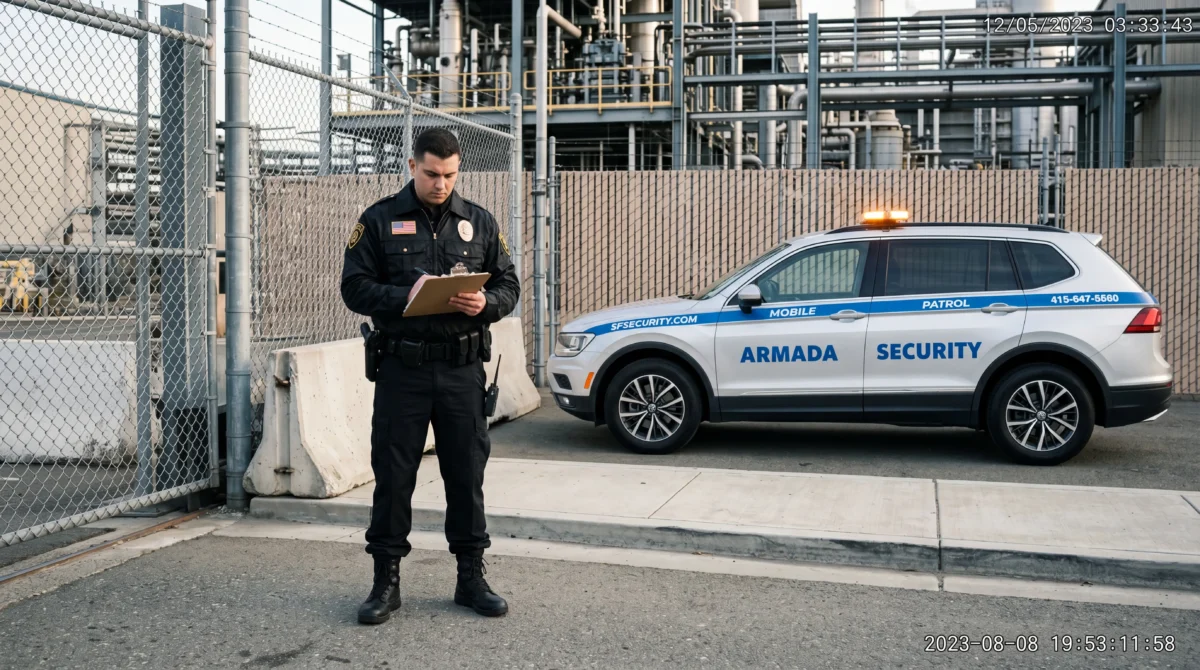
Effective manufacturing facility security protects high-value inventory, physical assets, and personnel through structured access control and licensed physical patrols. By managing entry points and watching daily operations, a professional security program helps meet compliance needs and reduce costly downtime. This approach supports safe, secure, and steady business operations for commercial sites.
Strong manufacturing facility security starts with matching coverage to the real risks at your site, not a generic package.
The Core Risks in Modern Industrial Sites
Manufacturing plants hold high-value raw materials and complex machinery. Because of this, they can draw trespassers and cargo theft. Thieves often target copper wiring, bulk metals, and expensive tools. In addition, unauthorized entry can create major safety risks and liability issues on the plant floor.
As a result, downtime becomes a major financial risk for your business. When key machinery is vandalized, production can stop at once. Therefore, protecting the outer perimeter is your first line of defense. A single breach can delay shipments for weeks and harm your brand’s reputation.
Meanwhile, internal inventory diversion remains a challenge for logistics managers. So, tracking the movement of people and products is vital. However, managing these risks takes a clear plan rather than quick fixes.
Implementing a Layered Physical Security Strategy
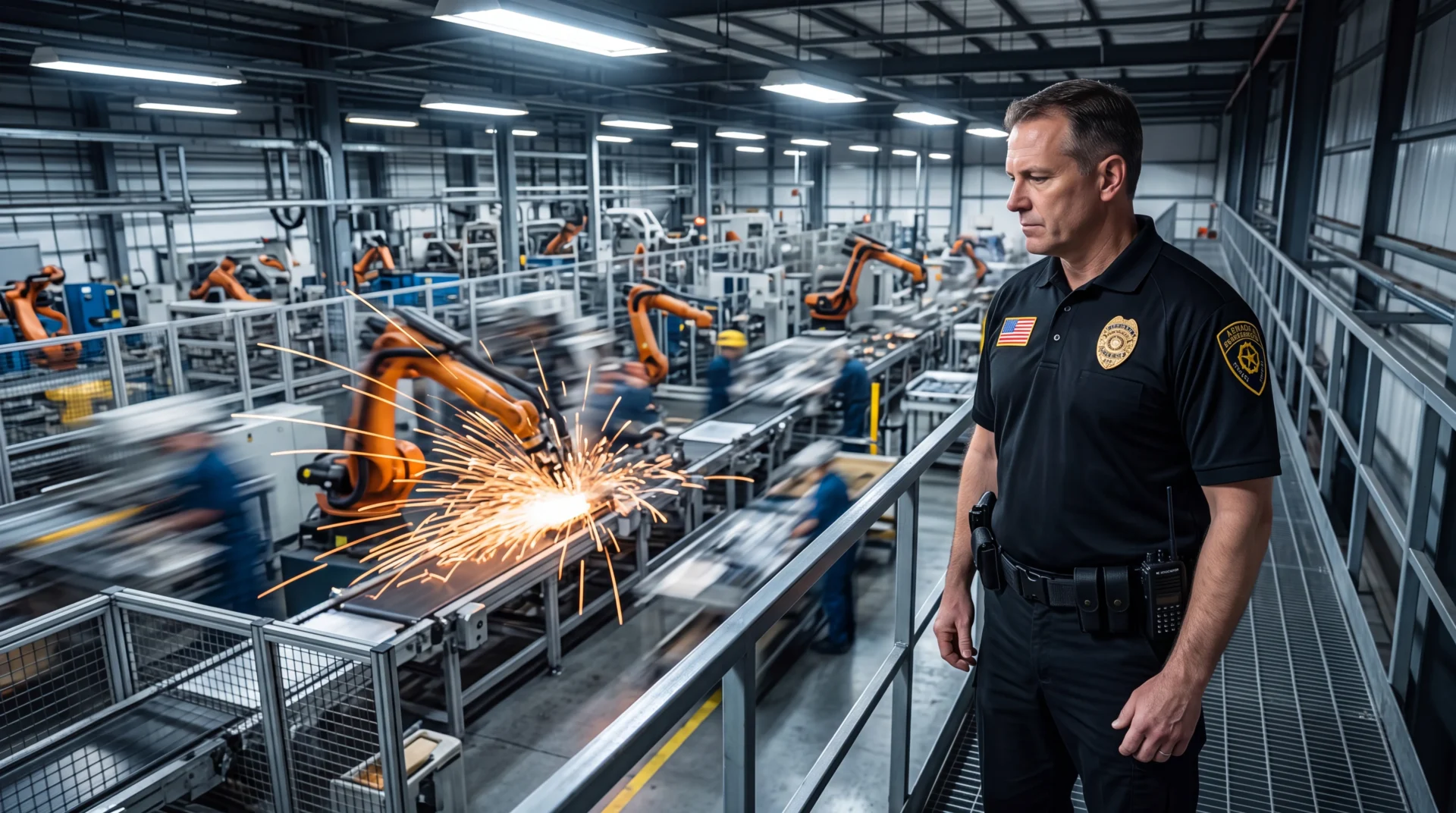
A strong defense relies on several layers of protection. First, secure the outer boundary with fencing and clear warning signs. Next, control all access points for employees, visitors, and delivery trucks. By doing this, you help ensure only authorized personnel enter the production areas.
For example, visitor logs and badge systems help track everyone on site. In addition, physical patrols should monitor blind spots around loading docks and warehouses. Because these areas stay busy, they are often open to intrusion.
However, technology alone cannot stop a trespasser. As a result, trained personnel on site are crucial when alarms sound. The human element works with locks and gates to create a secure setting. Let us examine the specific areas that need your focus:
- Outer Perimeter: Fencing, gates, and lighting to deter unauthorized entry.
- Access Control: Guarded entryways, badges, and visitor logs.
- Inner Zones: Monitoring of high-value inventory cages and tool cribs.
- Loading Docks: Constant surveillance of incoming and outgoing shipments.
In addition, the U.S. Department of Homeland Security offers guidance on securing critical infrastructure against physical threats. To explore more detail on these zones, you can review industrial best practices through the Federal Emergency Management Agency resources on critical infrastructure protection.
Compliance and State Licensing for Manufacturing Facility Security
Compliance is a non-negotiable factor when you choose a commercial partner. Because California has strict rules, your security provider must hold the right state credentials. Armada Security is fully licensed by the State of California. Our BSIS Private Patrol Operator License is PPO 120526.
In addition, working with a licensed provider helps protect your firm from liability. If an incident occurs, regulatory agencies will review your security standards. Therefore, a credentialed team helps you meet state requirements.
As a result, your insurance premiums may also decrease over time. However, choosing an unlicensed or unverified provider can lead to severe fines. So, always verify the state credentials of any vendor before you sign a contract. Professional compliance is the base of a reliable partnership.
Integrating Human Patrols with Facility Technology
Modern facilities use smart technology to monitor large properties. However, cameras can only record events, not stop them. Therefore, you must pair digital tools with active physical patrols. For example, when an alarm triggers, an officer can investigate the scene at once.
In addition, visible patrols act as a strong deterrent to potential intruders. Because criminals look for easy targets, a visible physical presence can discourage break-ins. Meanwhile, officers can inspect gates, doors, and fences for wear or damage.
So, technology and human oversight must work together. Next, consider how this integration improves your incident reporting. Officers can log daily activity and report maintenance issues in real time. Thus, your facility management team stays informed and can respond fast to problems.
Best Practices for High-Value Inventory Protection
High-value assets need extra safeguards within your facility. First, store finished goods and raw materials in restricted access zones. Because these items are highly liquid, they face the greatest risk of theft. For example, copper, electronics, and precision parts should be locked in secure cages.
In addition, use strict key control policies for these sensitive areas. Only a select group of managers should have access to these keys. As a result, you can track who entered a secure zone if items go missing.
Next, schedule regular audits of your high-value inventory. If you notice gaps, you can adjust your patrol routes right away. However, remember to monitor your loading docks during shipping hours. Because these areas are busy, they can hide unauthorized movement of goods. Therefore, constant attention in logistics zones is vital to your bottom line.
Selecting a Long-Term Commercial Security Partner
Managing a large industrial site takes steady, long-term commitment. Therefore, you need a commercial partner that understands the local landscape. For example, we serve 12 cities across San Francisco, the Peninsula, and San Jose. Our coverage includes San Francisco, San Jose, San Mateo, Daly City, and South San Francisco. In addition, we serve Hillsborough, Sausalito, Burlingame, Colma, San Bruno, Brisbane, and Millbrae.
Because we focus entirely on B2B contracts, we do not offer home security or DIY products. Instead, our team works with property managers and facility directors who need dedicated commercial solutions. So, we design recurring service agreements that fit your specific operational needs.
As a result, you receive steady, professional service from a team that knows your region. However, a successful partnership also requires open communication and regular reviews. Thus, we focus on lasting relationships based on trust, performance, and proof.
Choosing the right manufacturing facility security in San Francisco comes down to a licensed provider, clear post orders, and reporting your team can actually audit.
The right approach to manufacturing facility security balances cost, on-site presence, and reporting your team can verify.
Frequently Asked Questions
How do we know a security plan for our Bay Area manufacturing site will fit our actual risk, not just look good on paper?
Start with a site walk that maps your doors, docks, yard, storage, and after-hours access points. For a manufacturing site, the plan should address theft of tools or materials, unsafe entry, parking lot checks, visitor control, and incident reporting. We serve commercial sites across San Francisco, the Peninsula, and San Jose, so we can size the plan to your real use and layout.
What should we ask about licensing and compliance before we let a guard work at our facility?
Ask for a current California license and proof that the firm is set up for commercial work, not consumer home service. Armada Security is licensed by the State of California as a Private Patrol Operator, PPO 120526. You should also ask how reports are handled, who supervises the site, and how the team supports your own safety rules and access controls.
How fast can security respond if there is an alarm, an after-hours break-in, or a safety issue at our plant?
Do not ask for a promise without a process behind it. Ask what sites the team covers in your area, how dispatch works, and how often a supervisor checks in. Armada Security serves 12 Bay Area cities, including San Francisco, San Mateo, San Bruno, Burlingame, and San Jose, which helps make response planning more practical.
What are the biggest ways a manufacturing site gets exposed to liability if security is weak?
The common risks are uncontrolled entry, poor visitor logs, weak access to yards and loading areas, and gaps in incident records. Those gaps can make it harder to show you used reasonable care after a theft, injury, or trespass event. A strong plan uses clear rules, trained posts, and written reports that your management team can review.
We manage a multi-building industrial property. How do we tell whether we need patrol coverage, fixed posts, or both?
Use the site layout and risk pattern to decide. Fixed posts help at gates, lobbies, and access points where people must be checked in, while patrols help cover yards, docks, and larger grounds. For multi-tenant industrial sites, the right mix depends on where people enter, where materials sit, and which areas create the most risk after hours.
For professional help, see our security guard services in San Francisco.
