
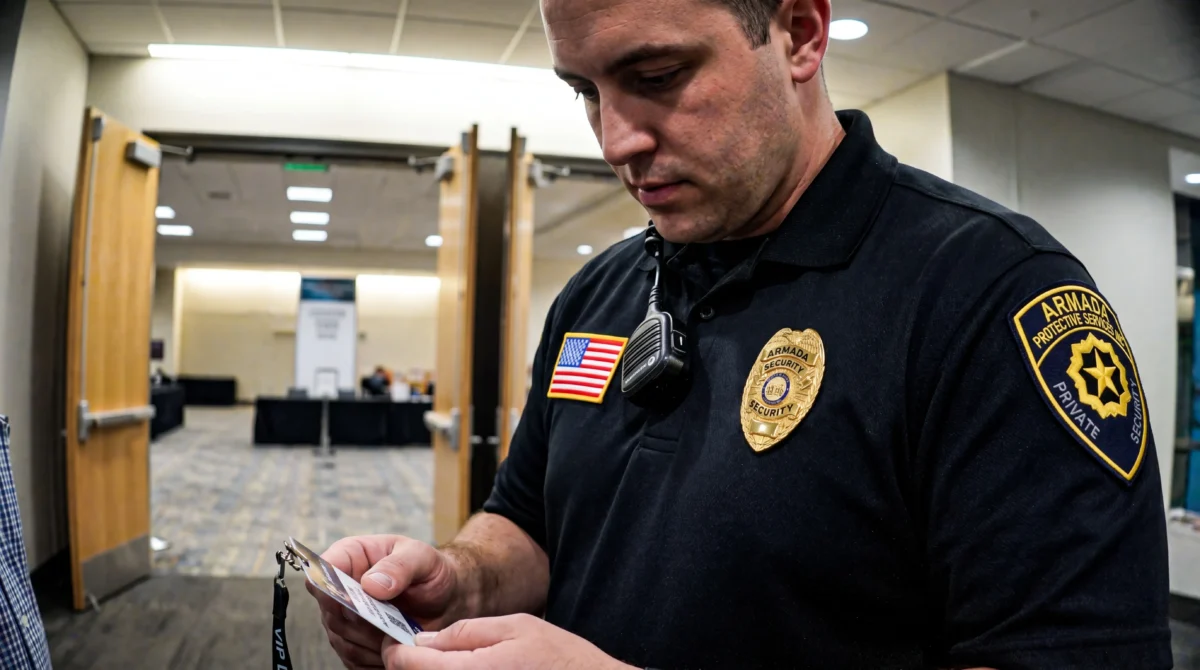
Effective corporate event security planning protects your assets, guests, and brand image through clear risk review and tight coordination. For commercial groups, this work helps meet local rules while keeping the site calm and orderly. Good planning calls for verified licensing, trained staff, and strict access rules that fit your venue.
Strong corporate event security planning starts with matching coverage to the real risks at your site, not a generic package.
Understanding Corporate Event Security Planning
Corporate events are major investments for Bay Area organizations. For that reason, corporate event security planning should be a top task for any facility director or property manager. Whether you run a large commercial venue or host annual business summits, protecting your perimeter matters. Still, planning is more than placing staff at doors. It means a full plan that matches your company rules and California state law.
As a commercial-only provider, we know the demands of protecting business assets. We focus only on B2B work. As a result, your property gets dedicated and professional oversight.
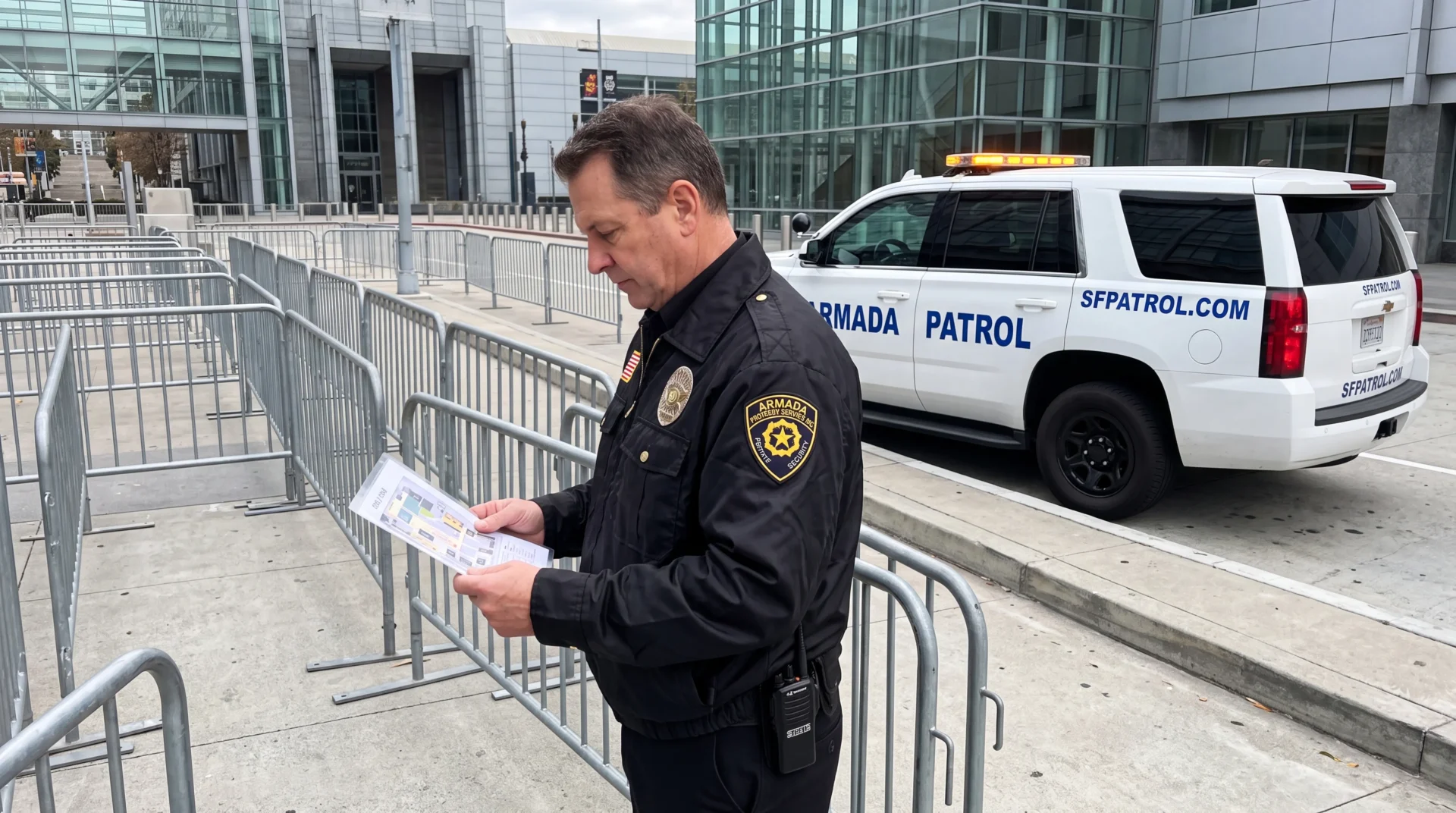
The Foundations of Corporate Event Risk Assessment
First, strong security planning starts with a detailed risk review. Because every venue has its own weak points, you should study the site before any event begins. For example, a corporate campus in San Jose has different perimeter needs than a historic building in San Francisco. So your plan must fit the site’s layout and setting.
Next, you need to identify the key assets on site. These can include private tech, executive staff, and sensitive records. In addition, you must assess outside risks such as unwanted entry or crowd issues. By reviewing these points early, you can build a solid plan that lowers risk before it grows. This proactive step also helps limit liability and protect your organization’s name.
Designing a Comprehensive Access Control Strategy
Access control is the first line of defense during any major corporate gathering. As a result, managing entry points is a key part of your security plan. For example, you should set clear perimeters with marked check-in areas for all guests. In addition, staff must check credentials carefully to stop unauthorized entry.
However, access control is not just about keeping people out. It also helps approved guests move through the venue in a safe and smooth way. Because crowd build-up at entrances can create safety risks, you must plan traffic flow with care. Therefore, your security partner should work with venue managers to balance strong screening with easy entry.
Next, consider how you will manage vendor access before, during, and after the event. Limit vendor entry to set times and gates to reduce confusion. In addition, this step improves overall site control.
California Compliance and Licensing Standards
When planning security, compliance is not optional for California businesses. The state requires strict licensing for all private security providers. In California, security firms must be licensed by the Bureau of Security and Investigative Services (BSIS). Armada Security operates under BSIS Private Patrol Operator License PPO 120526. Working with an unlicensed provider can expose your organization to serious legal and financial risk.
So, you should verify your security partner’s credentials before you sign any agreement. In addition, compliant providers make sure all deployed staff meet state training and background check rules. Because corporate compliance standards are more demanding each year, working with a fully licensed B2B partner protects your leadership team. As a result, you can give your board and stakeholders clear proof that your operation meets legal standards.
Coordinating with Local Emergency Services
Effective planning also requires clear communication with local public safety agencies. For example, your security plan should match city emergency rules in your area. Whether your site is in San Mateo, South San Francisco, or Daly City, local police and fire teams should know your event footprint.
Because emergencies can happen without warning, you need a clear line of contact. For instance, your on-site security leads should have direct contact details for local dispatchers. In addition, you should share your venue map and medical response plan with local emergency medical services. To learn more about national standards for incident management, you can review the guidelines provided by the Federal Emergency Management Agency. By using these federal standards in your local plan, you support stronger safety and faster response.
Strategic Security Management Across the Bay Area
Commercial properties need a security partner with deep local knowledge. Because conditions vary across the region, your planning must reflect local realities. Armada Security serves 12 cities across San Francisco, the Peninsula, and San Jose. Specifically, our service area includes San Francisco, San Jose, San Mateo, Daly City, South San Francisco, Hillsborough, Sausalito, Burlingame, Colma, San Bruno, Brisbane, and Millbrae.
As a result, we understand the city rules and site needs that shape work across these areas. For example, managing a corporate gathering in Sausalito requires different logistics than coordinating an event in Brisbane or Millbrae. By working with an established regional provider, you gain local insight and reliable commercial support. This regional focus helps keep coverage steady and compliance clear across all your Bay Area properties.
Choosing the right corporate event security planning in San Francisco comes down to a licensed provider, clear post orders, and reporting your team can actually audit.
Frequently Asked Questions
How do I know if an event security company is actually licensed for corporate events in San Francisco and the Bay Area?
Start with the California BSIS Private Patrol Operator license, and ask for the license number in writing. Armada Security is licensed by the State of California as PPO 120526, and we serve B2B sites across San Francisco, the Peninsula, and San Jose. For a corporate event, also confirm they work only with organizations, not homeowners or consumer jobs, so the team you hire understands venue rules, access control, and site duty.
What should a property manager or event planner ask before hiring security for a corporate event at a venue or office site?
Ask how they handle entry control, guest check-in, badge checks, loading dock traffic, and late arrivals. Ask who supervises the team, how they report incidents, and how they work with your venue staff, site lead, or facilities team. You want a vendor that can support recurring B2B sites, since corporate events often share the same risks as offices, mixed-use sites, and campuses.
What can go wrong at a corporate event if security planning is too light?
The common failures are weak door control, confused guest flow, poor vendor access, and no clear response when an issue starts. That can lead to trespass, crowd trouble, missed sign-in steps, or delays that put your staff and guests at risk. Good planning sets clear rules before doors open and gives your team one point of contact if the site needs help.
How far in advance should we bring in security for a corporate event in San Francisco or the Bay Area?
Bring security in before final site plans are set, not after the run sheet is done. The earlier we review the venue layout, guest count, entry points, and any shared building rules, the easier it is to place staff where risk is highest. That matters across our service area, from San Francisco and San Mateo to San Jose and the Peninsula cities we cover.
Is event security just for the night of the event, or should we plan for wider site coverage?
For corporate events, the right plan often starts before guests arrive and ends after the last vendor leaves. That may include pre-open checks, access control during the event, and support for load-out or post-event close-down, all within a B2B site plan. If your site also includes apartments, condos, or an HOA component, make sure the provider understands that “residential” work in this space means multi-family settings managed through boards or property teams, not single-family homes.
For professional help, see our security guard services in San Francisco.
Related reading
- Office Building Security San Francisco
- Event Security at the SF Art Book Fair 2025
- How to Ensure Top-Notch Event Security Services
