

Mastering Event Security Services: Practical Excellence for Planners
Event security is the coordinated combination of people, processes, and tools that protect attendees, staff, assets, and reputation before, during, and after an event. Thoughtful planning reduces risk, speeds emergency response, ensures legal compliance, and preserves the attendee experience.
This guide walks planners through risk assessment, crowd-management design, staffing models, technology choices, and post‑event analysis to improve future performance. It includes venue-and city-specific notes for San Francisco and the Bay Area and provides practical criteria for evaluating security partners. You’ll find step-by-step checklists, operational mappings of entities to risk attributes, crowd-control tactics, technology comparisons, regulatory checkpoints, and access control questions to use when engaging professional support.
What Are the Essential Steps in Event Security Planning?
Event security planning unfolds in phases: assess risk, allocate resources, execute operations, and review outcomes. A disciplined plan defines roles, communications, access-control layers, emergency protocols, and data collection points that feed continuous improvement. Effective planning prioritizes controls by likelihood and impact, aligns staffing and technology to the identified risks, and integrates with venue operations and local emergency services. The checklist below converts assessment into an actionable workflow.
- Perform a comprehensive risk assessment to identify assets, threats, vulnerabilities, and cyber exposure.
- Develop an operational security plan with a clear command structure, communications protocols, and escalation paths.
- Specify staffing models and checkpoint layouts, then assign equipment and technology for detection and accountability.
- Conduct drills, confirm permits and liaison contacts, and finalize a post‑event analytics plan to capture lessons learned.
This stepwise framework enforces discipline in planning and sets up the methods used to score and prioritize risks for each venue.
How Do You Conduct a Comprehensive Event Security Risk Assessment?
A thorough risk assessment reviews the venue, audience, activities, third‑party systems, and external conditions to produce prioritized mitigations. Start by listing assets (people, equipment, reputation), identify credible threats (crowd surges, unauthorized access, ticketing cyber‑attacks), and map vulnerabilities such as constrained egress or weak perimeter control.
Rate each threat by likelihood and impact to build a risk matrix that guides resource allocation and procedural changes.
Include cybersecurity checks for ticketing platforms, point‑of‑sale systems, and event Wi‑Fi — digital gaps can quickly create physical‑security consequences.
The assessment defines staffing requirements, technology choices, and coordination needs with local emergency services for the event.
What Are the Key Components of an Effective Event Security Plan?
An effective plan spells out a command structure, role responsibilities, access‑control layers, communications protocols, emergency response actions, and documentation standards.
Designate an incident commander, on‑site supervisors, and liaisons for medical, venue, and law‑enforcement coordination to eliminate ambiguity during incidents.
Define credential tiers, checkpoint procedures, and chain‑of‑custody rules for evidence handling.
Provide redundant communications and an incident log that timestamps events for accountability.
Include post‑event metrics and reporting that feed a continuous improvement loop so lessons learned reduce future risk.
Before the table below, a brief note: the mapping converts venue, audience, and event characteristics into measurable risk attributes you can score during assessment. Use each row to set mitigation priorities and resource allocations.
| Venue Type | Key Attribute | Assessment Value |
|---|---|---|
| Waterfront park | Egress complexity | High — staged exits and dedicated water‑safety protocols required |
| Indoor theater | Fixed seating / limited egress | Medium‑High — clear evacuation routes and choke‑point monitoring recommended |
| Outdoor festival | Open perimeter | High — perimeter control, roving patrols, and aerial oversight advised |
This venue‑to‑attribute mapping clarifies how site characteristics drive operational choices and helps focus mitigations where they reduce the most risk.
How Can Advanced Crowd Control Improve Event Security Management?
Advanced crowd control manages movement, sightlines, and staffing to reduce congestion, lower crowd‑crush risk, and enable fast incident response. Smart entry/exit design, barrier placement, and staging prevent bottlenecks and keep sightlines clear for staff and cameras. Staffing ratios and positioning determine visibility and reaction times; technology can boost situational awareness but must be paired with trained people who act on alerts. The techniques below are practical across venue types to improve safety and the attendee experience.
- Create one‑way flows and funneling at entries to cut cross‑traffic and density spikes.
- Use modular barriers to define pathways and protect high‑risk zones like stages and back‑of‑house.
- Position roving and fixed staff at chokepoints to monitor behavior and guide crowd movement.
- Combine human observation with density analytics to trigger proactive interventions before situations escalate.
These measures work together to steady flow and minimize rapid density increases, and they naturally lead into checkpoint and access‑control strategies that safeguard restricted areas.
What Are Proven Crowd Control Techniques for Large Events?
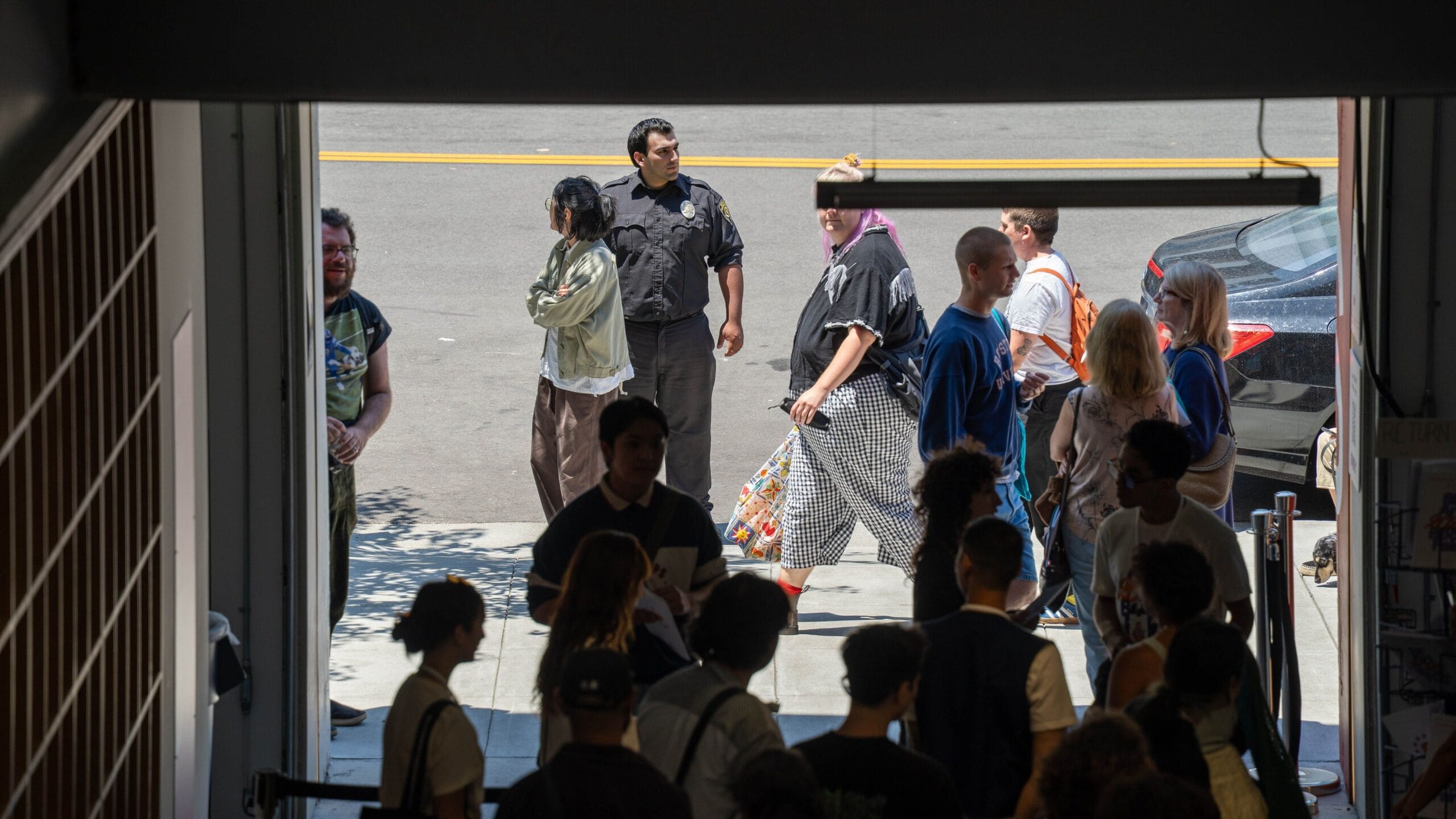
Techniques for large events center on managing density, avoiding bottlenecks, and ensuring predictable egress. Start with a site layout that offers multiple ingress points, staggered arrivals by time or ticket tier, and clear routing to reduce simultaneous arrivals. Place staff at sightline‑critical locations for early detection of agitation or surges and faster intervention. Use temporary structures and clear signage to channel movement and keep lanes separated. Pair physical controls with monitoring systems that detect density increases so teams can de‑escalate or redirect before incidents occur.
These operational tactics inform staffing ratios so planners can determine the right mix of fixed and roving officers for reliable coverage.
How Does Access Control Enhance Safety at Event Venues?
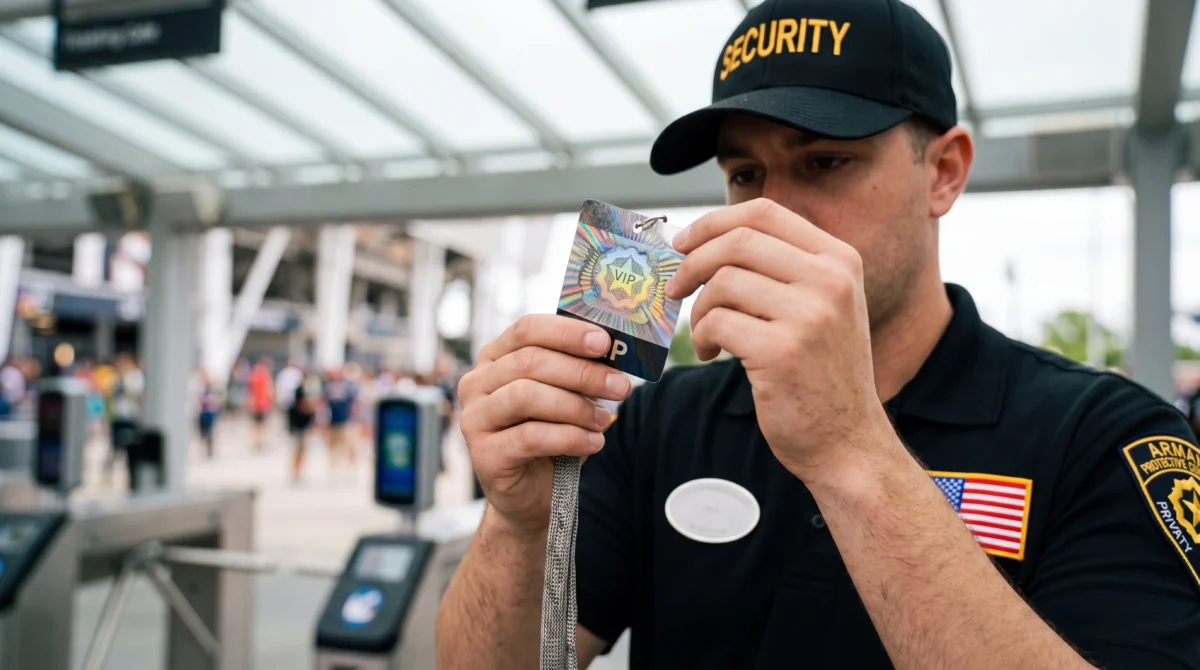
Layered access control separates public, credentialed, and restricted zones to block unauthorized entry while preserving throughput for attendees.
Begin with ticket and credential checks at the primary perimeter, escalate to bag checks or metal detection for higher‑risk events, and enforce a secure perimeter around backstage and equipment areas.
Technology such as RFID wristbands and integrated ticket scanners speeds entry while producing an auditable access log.
Staff checkpoints in proportion to expected throughput to maintain security without creating hazardous queues.
A combined manual and technical access strategy protects critical areas, supports crowd flow objectives, and feeds data for post‑event refinements.

Why Is Hiring Professional Event Security Guards Crucial in San Francisco?
Professional event guards matter because trained, licensed personnel reduce incidents, ensure compliance, and coordinate effectively with local emergency services.
Professional teams bring de‑escalation skills, emergency response training, and situational awareness that go beyond volunteer or ad‑hoc staffing.
In San Francisco’s diverse venues and regulatory environment, local experience and formal supervision are especially valuable for permitting and municipal liaison.
When choosing a provider, verify licensing, training, and accountability systems so the team performs reliably under pressure.
To compare guard qualifications for hiring, the table below lists key attributes planners should expect and the operational value they deliver.
| Personnel Role | Qualification/Attribute | Operational Value |
|---|---|---|
| Guard | BSIS certification and background checks | Baseline compliance and competency |
| Supervisor | Regular audits and digital oversight | Quality control and escalation capability |
| Roving patrol | GPS‑logged rounds and rapid‑response training | Faster incident response and documented coverage |
This comparison shows why training, supervision, and accountability mechanisms are essential to a resilient event security program and leads into qualification and training details.
What Qualifications and Training Should Event Security Guards Have?
Guards should hold the jurisdiction’s required licenses, formal training in crowd de‑escalation, emergency response (including basic first aid), and a venue‑specific induction covering site risks and procedures.
In the Bay Area, verifying BSIS certification and documented background checks is a baseline compliance step.
Ongoing supervision, performance audits, and scenario‑based drills ensure training converts to dependable on‑shift behavior.
Include training and audit requirements in contracts to maintain consistent standards across events.
What Roles and Responsibilities Do Event Security Teams Perform?
Event teams commonly include checkpoint officers, roving patrols, site supervisors, an incident commander, and a medical liaison to coordinate care.
Checkpoint officers handle access and screening while roving patrols monitor crowd flow and respond to incidents.
Supervisors manage reporting, run audits, and liaise with venue and emergency services so escalations follow protocol.
Staffing ratios should reflect event size, audience profile, and risk level so responsibilities are clearly distributed for coverage and swift response.
Clear role definitions reduce confusion during incidents, support accountability, and let planners align resources with the risk matrix from the corporate event security assessment.
How Does Technology Elevate Event Security Services?
Technology expands visibility, accelerates response, and creates verifiable audit trails for incident review.
AI‑enabled cameras can flag crowd anomalies and unattended items, while drones extend observation across large perimeters and hard‑to‑reach areas.
Body‑worn cameras and digital reporting systems produce timestamped, GPS‑logged evidence that supports investigations and contractual transparency.
Together, these tools move security from reactive supervision to proactive risk management by turning observations into actionable alerts and analytics.
The table below compares common technologies, their attributes, and practical benefits to help planners choose the right mix for each event.
| Technology | Key Attribute | Primary Benefit |
|---|---|---|
| Drone | Thermal / visual range | Extends perimeter visibility, useful at night and over large sites |
| AI Camera | Crowd anomaly detection | Early warning for density spikes or suspicious behavior |
| Body-worn camera | Timestamped video | Evidence capture and operational accountability |
Integrating these systems into a single command‑and‑control workflow amplifies human teams and enables data‑driven post‑event improvements described below.
What Are the Benefits of AI-Powered Surveillance and Drone Monitoring?
AI surveillance speeds detection of unusual patterns by analyzing density, motion vectors, and persistent objects in real time, allowing teams to intervene before situations escalate.
Drones with thermal and visual sensors give overhead perspectives to cover blind spots and large outdoor footprints without continuous ground deployment.
Both solutions carry regulatory and privacy duties in San Francisco; planners must confirm drone approvals and publish appropriate privacy notices.
When used responsibly, these tools broaden situational awareness and preserve evidence for post‑event review.
Technology is most effective when paired with human judgment and defined escalation paths so alerts lead to measured, appropriate responses.
How Do Body-Worn Cameras and Digital Reporting Improve Accountability?
Body‑worn cameras and digital reporting produce time‑stamped, geolocated records that document incidents, verify response times, and support transparent post‑event analysis.
GPS‑logged patrols and checkpoint timestamps provide objective data supervisors can audit, enabling measurable performance reviews and client transparency.
Aggregated incident data feeds analytics that reveal recurring risk patterns and guide updates to procedures, staffing, and site layout.
This evidence‑driven loop turns each event into a learning opportunity to refine mitigations and reduce future incidents.
What Unique Challenges Affect Event Security in San Francisco and the Bay Area?
San Francisco’s dense urban layout, varied venue types, and specific regulations create planning and operational constraints for event security. Transit hubs concentrate arrivals and departures, complicating ingress/egress and requiring coordinated crowd flow at transport interfaces. Waterfront parks raise water‑safety and perimeter concerns, while historic theaters often have fixed egress that demand special evacuation planning. Planners must also account for city permits, noise rules, and crowd control restrictions when selecting equipment and scheduling approvals.
Below is a short checklist of regulatory and coordination touchpoints planners should confirm early to avoid last‑minute compliance issues.
- Confirm required city permits and venue‑specific conditions with municipal authorities.
- Check drone restrictions and approval processes, including no‑fly zones and waiver timelines.
- Establish formal liaison contacts with local police, fire, and EMS for coordinated response.
These local considerations shape staffing, layout, and technology choices and inform the regulatory checks in the next section.
How Do Local Regulations Impact Event Security Planning?
Local rules set permit requirements, maximum crowd sizes, noise limits, and operational constraints like drone use and amplified sound curfews. Early coordination with city agencies secures necessary approvals and ensures first responders are briefed on event plans and egress maps. Drone operations often need advance notice or waivers, so include approval timelines in the schedule. Regulatory compliance is both a legal requirement and an operational enabler — it reduces shutdown risk and improves on‑the‑day coordination with emergency services.
Addressing regulatory touchpoints early prevents surprises and smooths operational coordination on event day.
What Are Common Security Risks at Popular San Francisco Venues?
Frequent risks include transit‑linked bottlenecks near stations, water‑access hazards at waterfront parks, and constrained egress in historic theaters that complicate evacuation. Outdoor festivals can face perimeter breaches and unauthorized vendor activity, while indoor sites may see line‑stacking at entries that creates density spikes.
Mitigations include improved lighting and staging, temporary fencing and secure perimeters, dedicated water‑safety teams at waterfront sites, and simulated evacuations to validate egress plans.
Venue‑specific rehearsals and targeted mitigations turn generic security plans into ready‑to‑execute site operations.
These practical measures help planners adapt best practices to Bay Area realities and prepare staff for predictable local challenges.
How Do You Choose the Right Event Security Partner Like Armada Protective Services?
Choosing the right partner means evaluating experience, licensing, technology, transparency, and local knowledge so the provider meets your event’s operational needs.
Ask about training standards, audit routines, and digital reporting capabilities to verify accountability.
Confirm the vendor can integrate with your incident‑command structure, supply references from similar San Francisco venues, and demonstrate rapid‑response procedures.
Below is a practical selection checklist and key procurement questions.
- Licensing and Compliance: Verify BSIS certification and documented background checks for personnel.
- Technology and Reporting: Confirm GPS‑logged patrols, body‑camera use, and time‑stamped digital reporting.
- Local Operations: Ensure experience with San Francisco venues and established coordination with local emergency services.
- Transparency and Audits: Request supervisor audit examples and sample reports to evaluate quality control.
This checklist gives an objective framework for comparing proposals and guides you toward a pilot or trial deployment for final validation.
What Makes Armada Protective Services Stand Out in Event Security?
Armada Protective Services is a San Francisco‑based security firm offering professional guard services and mobile patrols across the Bay Area.
Armada uses a digital operations platform for real‑time reporting and supervisor audits, GPS‑logged patrols, time‑stamped checkpoints, and evidence capture via dashcams and body cams.
The company provides a range of event services — armed and unarmed security, mobile patrols, fire watch, and alarm response — tailored to corporate, private, and public events.
These capabilities reflect the transparency and technology focus planners should prioritize when selecting an event security partner.
The summary above highlights operational features to request in proposals and leads into examples showing how integrated systems improve responsiveness.
How Have Armada’s Event Security Solutions Delivered Success?
Armada’s local presence and integrated reporting increase incident visibility and accountability at events and properties.
With GPS‑logged patrols and time‑stamped reports, Armada produces an auditable trail clients can review for post‑event analysis and continuous improvement.
The company’s use of drone monitoring, body cams, and digital reporting supports faster response and clearer investigations when incidents occur.
Planners seeking a quote or assessment can evaluate Armada on these concrete capabilities to confirm fit with their event’s risk profile and reporting needs.
For a tailored assessment, request a site survey to map risk, recommend staffing ratios, and preview a reporting sample that demonstrates the provider’s operational fit.
Frequently Asked Questions
What are the common challenges in event security planning?
Common challenges include venue‑specific risks, regulatory compliance, and crowd management. Historic buildings with limited egress, high‑density urban sites, and complex transport interfaces each require tailored controls. Navigating permits and local safety requirements is often time‑sensitive. Planners must design flexible strategies that account for attendee diversity, operational constraints, and evolving threats.
How can technology be integrated into event security?
Integrate technology by selecting complementary tools — AI cameras for anomaly detection, drones for wide‑area observation, and body cams for evidence capture — and tying them into a centralized command‑and‑control system. Ensure data flows to operators in real time and that clear procedures govern when and how teams act on alerts. Proper integration improves response times, supports audits, and feeds analytics for post‑event improvements.
What role does communication play in event security?
Clear communication is essential. Establish designated channels, reporting formats, and escalation paths so security staff, event teams, and first responders share a common picture. Regular briefings and documented handoffs keep teams aligned and reduce confusion during incidents. A structured communications plan also provides useful inputs for post‑event debriefs and continuous improvement.
How do you assess the effectiveness of an event security plan?
Evaluate a plan by reviewing incident reports, measuring response times, and collecting feedback from attendees and staff. Conduct a formal debrief with security personnel to identify what worked and what didn’t. Track metrics such as incident count, resolution time, and attendee satisfaction, and compare outcomes to the original risk assessment to refine future plans.
What are the benefits of hiring local security professionals?
Local professionals bring familiarity with venues, municipal rules, and community dynamics. They often have established contacts with local law enforcement and emergency services, which speeds coordination during incidents. Local experience also provides practical insights into traffic flows, neighborhood considerations, and venue quirks that improve planning and on‑site execution.
What should planners consider when selecting a security partner?
When selecting a partner, verify experience, licensing, and training standards. Confirm certifications and background checks, evaluate technology and digital reporting capabilities, and review audit practices and sample reports. Ensure the provider understands your venue type and can integrate with your incident‑command structure. References from similar security conference san francisco events are especially valuable.
Conclusion
Robust event security starts with a clear risk assessment, thoughtful crowd‑management design, qualified staffing, and the right technology — all aligned with local regulations. Combining these elements with rigorous reporting and post‑event analysis reduces risk and improves the attendee experience. For tailored guidance and operational support, reach out to a trusted local provider to arrange a site assessment and pilot deployment.

