
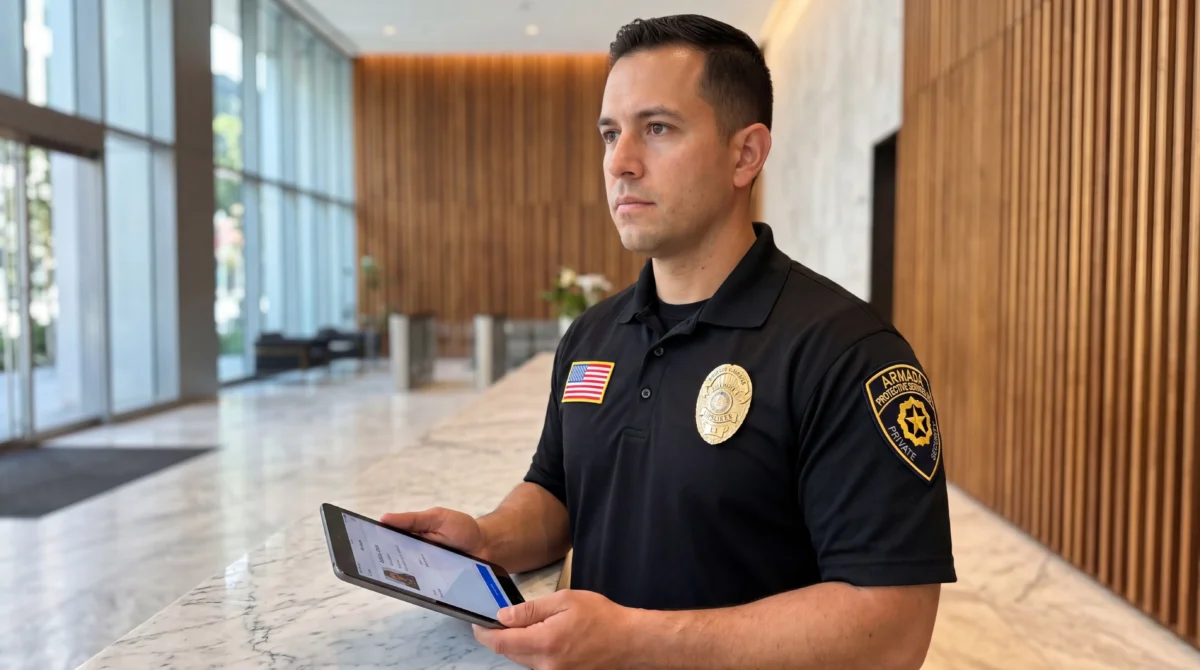
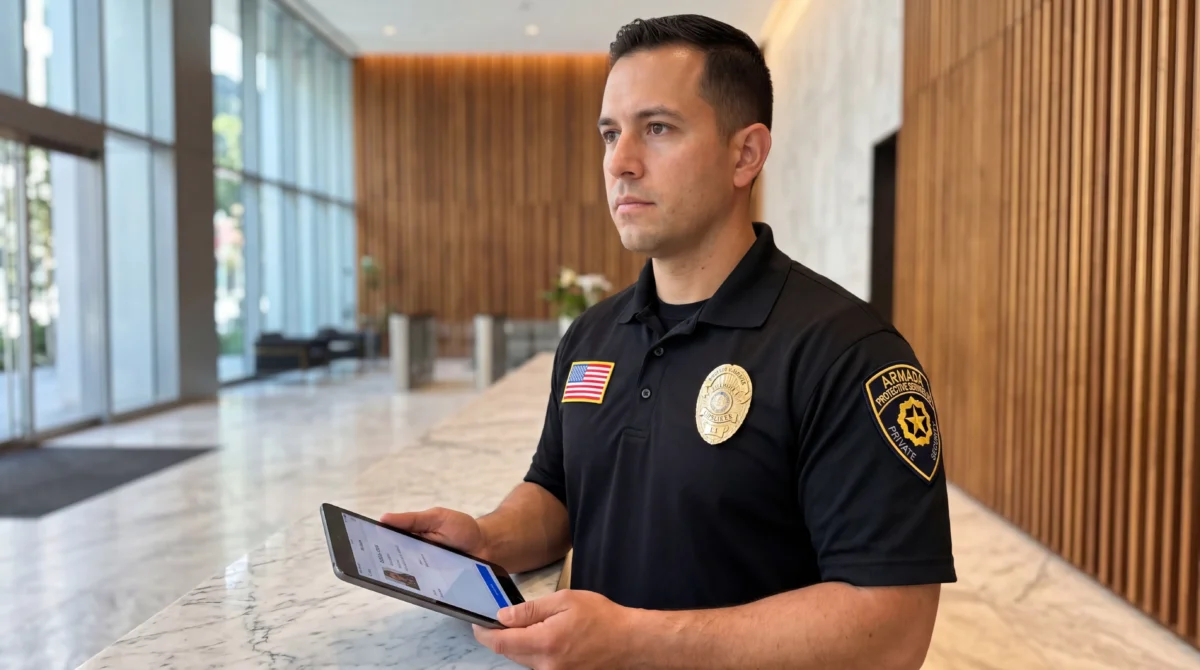
Office building security in San Francisco is a staffing and process problem before it is a technology problem: someone has to control the lobby, walk the floors after hours, meet the alarm, and leave a record your property manager can rely on. Armada Security has run that playbook for commercial buildings since 1994. Officers are BSIS-licensed (Private Patrol Operator license PPO 120526), armed or unarmed to match your site, on long-term contracts rather than one-off shifts.
This page covers what a real office-building program includes, where buildings in the Financial District, SoMa and Mission Street corridors actually get hit, and how to judge any provider you are comparing, including us.
Where office buildings actually get hit
The incident pattern in San Francisco office properties is consistent, and most of it happens at the edges of the business day:
- Street-level doors propped or forced during early-morning cleaning windows.
- Tailgating into secured floors behind badge-holders (the most common access failure in multi-tenant towers).
- Package and mail theft from lobbies and mail rooms.
- After-hours break-ins into vacant suites, especially during tenant turnover.
- Escalating disputes involving visitors or former employees.
San Francisco context matters here: SFPD deprioritizes petty theft and minor incidents, so in practice the security contractor responds first and hands off to police afterwards. Our own operational data shows our officers typically reach an incident about twice as fast as police, sometimes faster. That order of response is the reality your program has to be designed around.
What a full program includes
We build each contract around the building’s footprint, not a fixed package:
- Lobby and access control: visitor intake against the tenant guest list, badge issue, digital entry logs.
- After-hours interior rounds: floors, stairwells, garage levels and fire exits, on a schedule your team defines.
- Alarm response: an officer meets the triggered alarm instead of your property manager driving in at 3 AM.
- Loading dock and delivery monitoring during business hours.
- Daily written shift logs delivered to your team every morning, plus monthly summaries of patrol activity and access issues.
Every patrol round is GPS-tracked and guard presence is verified through TrackTik, so you see proof of coverage, not a promise of it. Our guarantee to property managers is simple: no missed shifts, with rapid officer replacement when someone is out.
Single-tenant vs multi-tenant buildings
The two building types fail differently. Single-tenant buildings mostly need perimeter discipline and after-hours coverage; the risk window is the vacant building. Multi-tenant buildings add the harder problem: enforcing one set of access rules across tenants who each have their own visitors, vendors and move-in schedules. For multi-tenant sites we put the emphasis on documented post orders (who can enter, when, through which door, and how exceptions get logged), because inconsistent enforcement is what turns a lobby desk into a liability.
What it costs and how fast it starts
Pricing depends on post hours, number of access points, and whether your site needs standing guards, mobile patrol rounds, or both. A tower with lobby control, dock checks and garage rounds is a different program than a single office floor. We quote after a walk-through rather than from a rate card. New coverage can typically start within 48 hours of a signed agreement. We serve office properties across 12 cities in San Francisco, the Peninsula and San Jose.
How to vet any provider (including us)
Before you sign with anyone, check three things:
- License: verify the provider’s California BSIS Private Patrol Operator license in the BSIS public lookup. Ours is PPO 120526.
- Reporting: ask to see a sample daily log and incident report. If record-keeping is weak before you sign, it will be weak after a claim.
- Staffing model: ask how absences are covered. A provider without a replacement guarantee passes its staffing problem to your building.
Industry standards from ASIS International are a useful reference point for post orders and program design.
Frequently Asked Questions
What drives the cost of office building security in San Francisco?
Cost is shaped by site size, post hours, number of access points, patrol scope, after-hours coverage, and the level of reporting you need. A tower with lobby control, loading dock checks, and garage rounds will need more coverage than a small office floor. For a fair quote, we look at your peak risk times, building rules, and whether your site needs daily guards, patrols, or both.
How do you reduce liability when you bring security into an office building?
Start with a licensed provider. Armada Security is licensed by the State of California under BSIS PPO 120526, and that matters when you need proof of due care. You also want clear post orders, incident logs, site rules, and guard training that matches your building, since weak records can create trouble after a claim or dispute.
How fast can security respond to an issue at an SF office site?
Response time depends on where the site is, how many posts are active nearby, and whether the issue is handled by a guard already on site or by a mobile patrol. In the Bay Area, we serve 12 cities across San Francisco, the Peninsula, and San Jose, which helps us place coverage closer to your property. The key is to plan for the most likely events, such as access issues, trespass, or after-hours alarms, before they happen.
What compliance issues matter most for office building security?
You should confirm state licensing, clear scope of service, and written procedures for access control, visitor checks, and incident reports. For multi-tenant offices, the bigger risk is not just the guard on duty, but whether the building rules are documented and enforced the same way every day. If your site has loading docks, garages, or mixed use areas, the post orders should spell out who can enter, when, and how events are logged.
What usually goes wrong when office security is poorly managed?
The common failures are weak coverage at the front desk, poor handoff between shifts, and guards who do not know the site rules. That can lead to missed access checks, bad reports, and gaps in record keeping when an incident must be reviewed. The fix is a defined plan, regular supervision, and a provider that works B2B only, with service set for property managers, facility teams, and commercial sites, not single-family homes.
