
Lab Security Best Practices: A Guide for Facility Directors and Property Managers
Strong lab security best practices starts with matching coverage to the real risks at your site, not a generic package.
Effective lab security best practices call for layered defense. That means physical access control, active monitoring, and strict compliance working together. For property managers, the goal is to protect both research and hazardous materials. These steps help stop unauthorized entry, lower risk, and support safe operations.
—
Implementing Lab Security Best Practices for Access Control
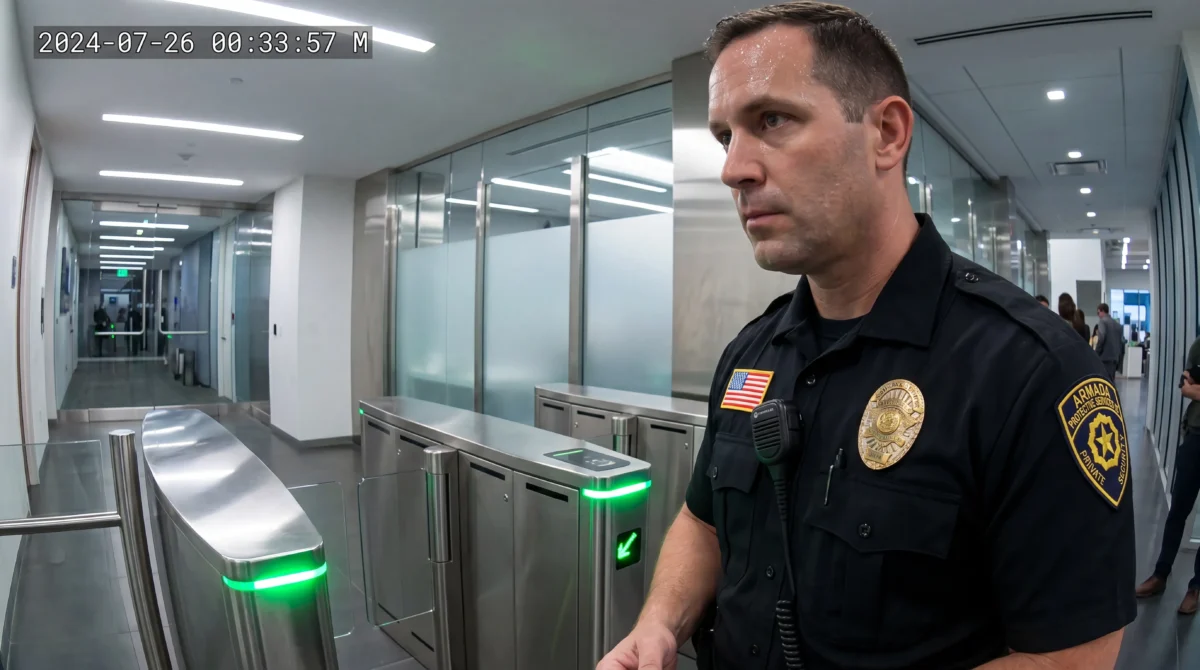
Access control is the base of modern lab defense. Laboratories hold sensitive data, so simple locks are not enough. Property managers must set clear limits between public space and research areas.
For example, require multi-factor authentication at every key entry point. Use biometric scanners or smart cards. As a result, only authorized staff can enter high-risk areas. In addition, log all entry and exit times automatically.
Next, put a formal visitor system in place. Unescorted guests create risk, so every visitor must register. They should wear visible badges at all times. However, badges alone are not enough. Trained staff must also escort visitors.
So, you must set a fast key card revocation policy. When an employee leaves your organization, deactivate access right away. As a result, your system should sync with human resources records in real time.
—
Securing the Physical Perimeter and Critical Infrastructure
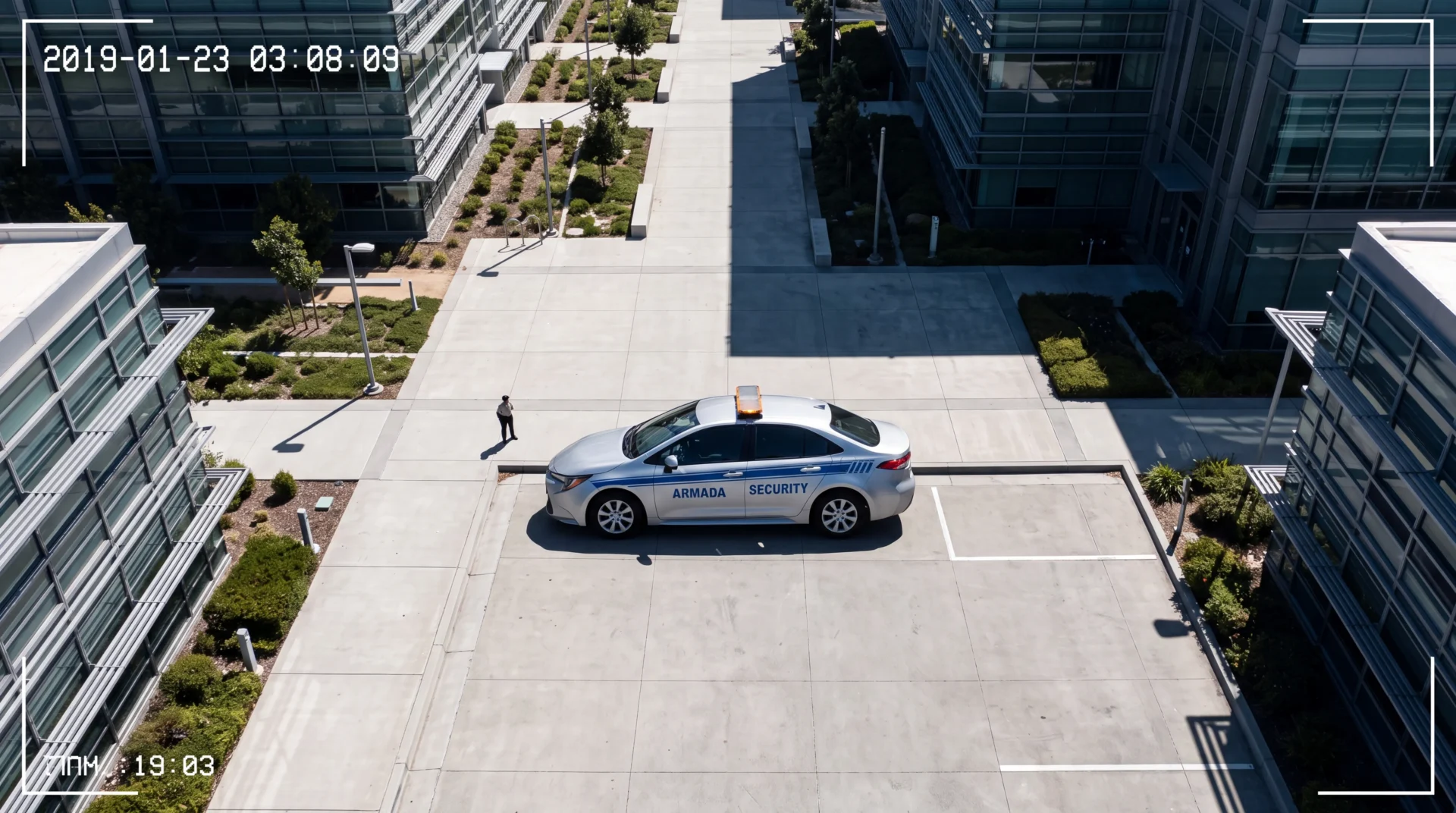
Securing the outer perimeter is your next line of defense. Many Bay Area facilities operate in busy areas, so outside threats need close attention. You must protect the main lobby, as well as loading docks.
For example, install heavy-duty locks and impact-resistant glass on ground-floor windows. In addition, use motion-activated lighting around the full building exterior. As a result, you can deter intruders before they reach your entry doors.
Next, focus on critical infrastructure. This includes backup generators, HVAC systems, and server rooms. Because laboratories depend on stable temperature control, any utility failure can damage valuable research. So, these utility areas need the same level of protection as the labs themselves.
However, physical barriers work only when you test them often. Inspect fences, gates, and locks each week. If you find any weak point, repair it right away to keep safety in place.
—
Integrating Electronic Surveillance with Trained Patrols
Electronic surveillance acts as the eyes of your security program. High-definition cameras should cover every hallway, exit, and high-value storage area. Because cameras only record events, you must pair them with active monitoring.
For example, modern video analytics can detect unusual activity after hours. If a camera detects movement in a restricted zone, it alerts your team at once. As a result, you can send a rapid response to the exact location.
However, technology alone cannot replace a visible presence. Professional patrol officers provide a clear deterrent that cameras cannot match. Next, you must use an unpredictable patrol schedule. Officers should check doors, inspect emergency exits, and confirm that sensitive rooms are locked.
Because your facility has unique needs, choose partners who understand commercial security. In the Bay Area, organizations rely on licensed security professionals to keep sites safe. For example, Armada Security holds BSIS Private Patrol Operator License PPO 120526. Our teams serve key cities including San Francisco, San Jose, and South San Francisco. In addition, we serve San Mateo, Daly City, Hillsborough, Sausalito, Burlingame, Colma, San Bruno, Brisbane, and Millbrae.
Learn more about our dedicated solutions for R&D and laboratory facilities.
—
Compliance and Regulatory Standards for Laboratories
Compliance is a top concern for laboratory directors and property managers. Because labs handle biological, chemical, or radiological materials, they must follow strict rules. Failing to meet those rules can lead to fines or shutdown.
For example, the Centers for Disease Control and Prevention (CDC) lists specific security rules for biological agents. These rules explain how you must store and secure dangerous pathogens. As a result, your physical security plan must match these guidelines.
In addition, regulatory agencies require clear labels on hazardous materials. You must store these agents in locked, climate-controlled cabinets. Next, make sure your security staff knows where those materials are kept. Because guards must help emergency responders, they need to know what hazards exist inside.
However, compliance is not a one-time task. You must audit your security protocols at least once a year. So, detailed records are vital for passing official inspections.
—
Developing Emergency Response and Incident Protocols
Even the best security systems can face emergencies. Because the Bay Area is prone to seismic activity, your plan must cover natural disasters. In addition, you must prepare for power outages, hazardous spills, and security breaches.
For example, create a clear written emergency response plan for your facility. This plan must outline the exact steps for safe evacuation. As a result, employees will know how to react with calm and speed during a crisis.
Next, run regular safety drills with all laboratory staff. Because practice builds confidence, these drills help reduce panic during real events. In addition, coordinate your emergency plans with local police and fire departments.
However, communication is your most important tool during an emergency. Install a reliable mass-notification system to alert everyone at once. So, if a breach occurs, staff can secure their materials and shelter in place.
Choosing the right lab security best practices in San Francisco comes down to a licensed provider, clear post orders, and reporting your team can actually audit.
Frequently Asked Questions
How do we secure a lab without slowing down scientists, vendors, and after-hours work?
Start with layered access control, clear badge rules, and written visitor steps for every entry point. For labs in San Francisco and the Bay Area, we build the site plan around your real flow, not a generic guard post, so approved staff can move while unapproved access is stopped. The goal is tight control at doors, docks, and shared halls without creating bottlenecks.
What should we ask a security firm about compliance before they protect R&D space?
Ask for proof of California licensing and ask who will manage site rules, reports, and incident logs. Armada Security is licensed by the State of California under BSIS Private Patrol Operator License PPO 120526, which gives you a clear compliance base for commercial sites. For labs, you should also confirm how the team handles access records, escort rules, and any site-specific privacy or safety limits.
How do we reduce the risk of IP leaks from contractors, visitors, and building staff?
Use role-based access, escort rules for non-cleared people, and a strict sign-in process for all visitors and vendors. Your weakest point is often not the lab bench, but the shared space where people, badges, and deliveries pass through the same door. A good security plan keeps that traffic visible, recorded, and limited to what each person needs to do.
If something goes wrong after hours, what should a lab security plan actually do first?
It should give your team a fast path to detect, contain, and report the issue without guesswork. That means clear call trees, known points of contact, and patrol or on-site coverage that can check doors, alarms, and unusual access right away. In a Bay Area lab, speed matters, but so does clean documentation for management and any later review.
How do we judge whether a security provider is right for a multi-site Bay Area lab portfolio?
Look for a provider that already serves commercial clients across your footprint and can keep the same rules from site to site. Armada Security serves 12 cities across San Francisco, the Peninsula, and San Jose, including San Francisco, San Mateo, Burlingame, San Bruno, and San Jose. For a portfolio, consistency in post orders, reporting, and supervision is often more important than a long sales pitch.
