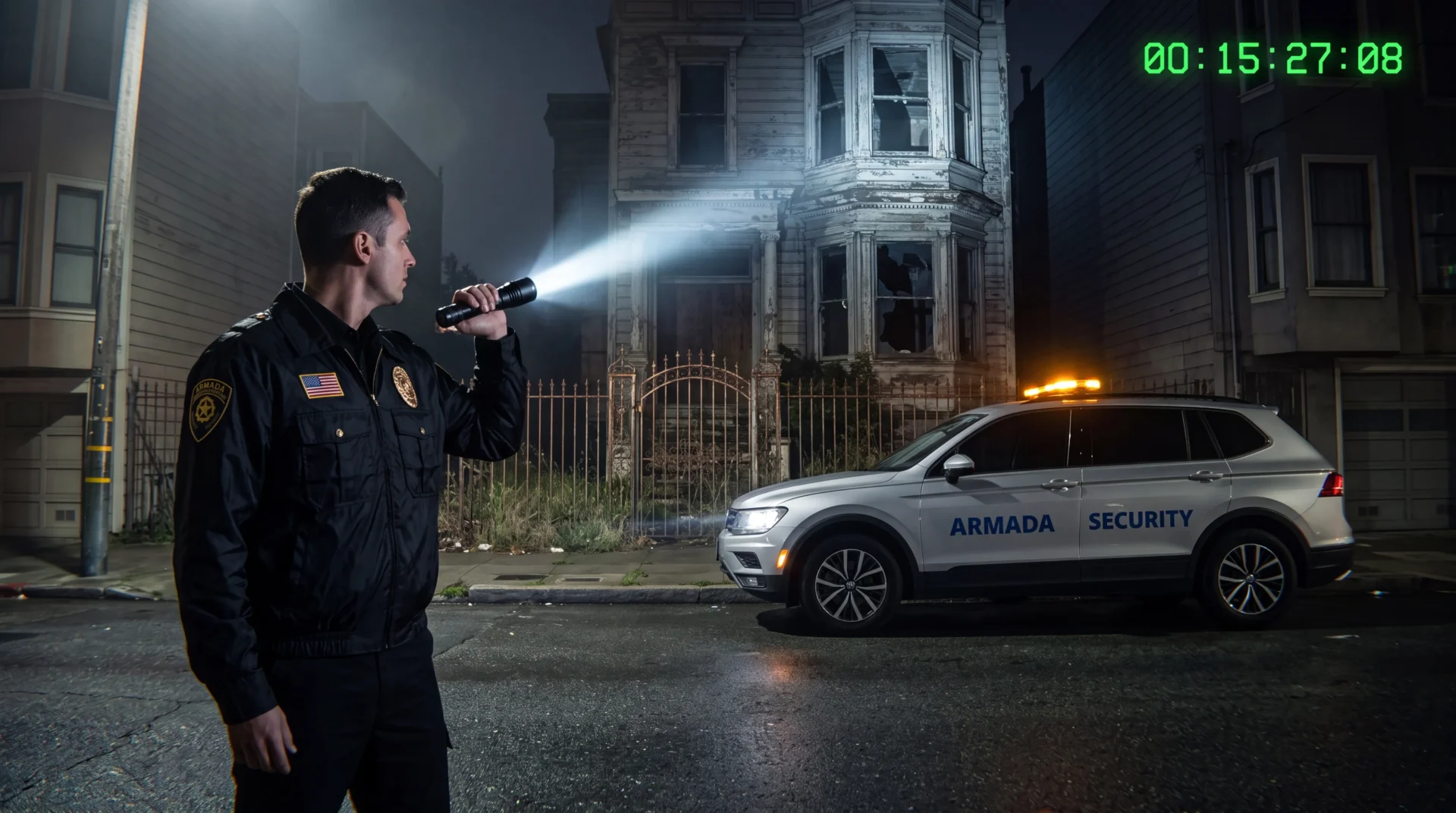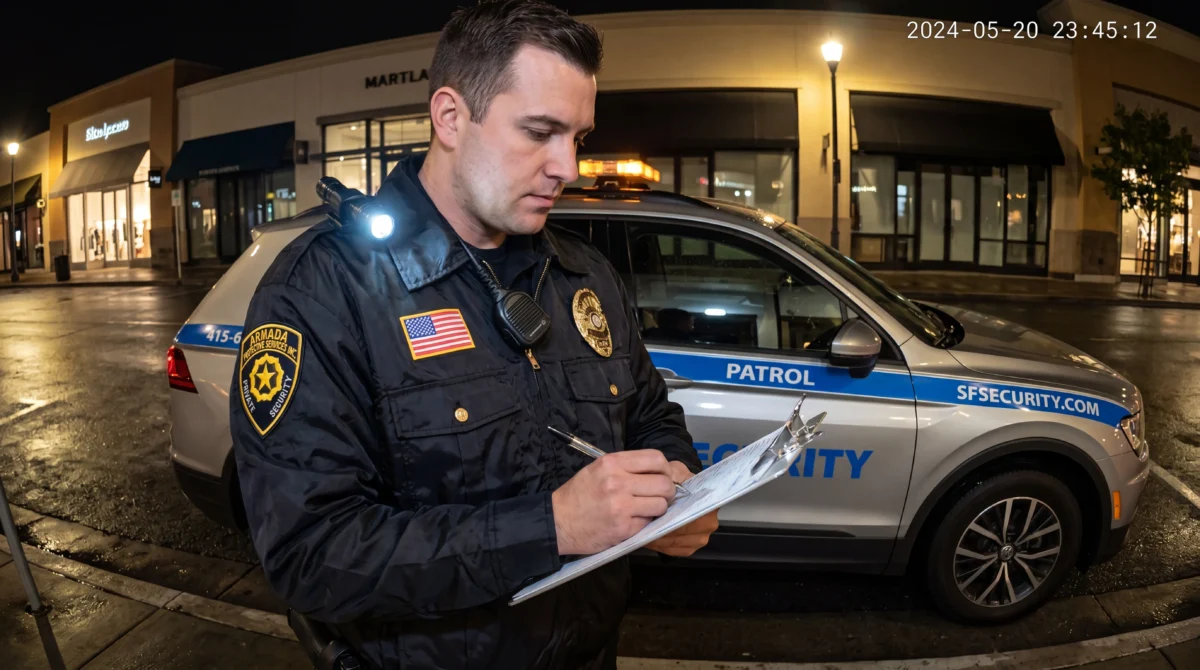
Choosing between foot patrol vs vehicle patrol depends on your property layout, size, and risk points. Foot patrols allow close checks of tight spaces. Vehicle patrols cover large areas fast. In many cases, a blend of both gives the most complete protection for commercial and multi-family properties.
Strong foot patrol vs vehicle patrol starts with matching coverage to the real risks at your site, not a generic package.
Understanding the Core Differences of Foot Patrol vs Vehicle Patrol
To secure a commercial site, decision-makers must review the site layout. Some properties have narrow halls. Others span acres of open land. These differences shape your security plan.
We should also look at how guards move through your space. Foot patrol means officers walk halls, stairwells, and courtyards. Vehicle patrol uses marked cars to cover large perimeters and long roads.
As a licensed provider under California BSIS License PPO 120526, Armada Security helps managers find the right balance. We serve twelve Bay Area cities, including San Francisco, San Jose, and San Mateo. Below, we break down each patrol type so you can make a clear choice.

When to Choose Foot Patrol Services
Foot officers provide a deep level of inspection. For example, they can check door locks, test window latches, and walk interior corridors. Because they are close to the site, they notice small issues a driver might miss.
To learn more about these ground-based services, read our guide on on-foot security patrols.
Foot patrols are a strong fit for multi-family housing, corporate offices, and construction sites. These sites often have access points that cars cannot reach. For instance, a guard may need to walk down narrow halls to check utility rooms. If there is a water leak or fire risk, a foot guard will see it fast. This can help limit property damage before it spreads.
Here are the main benefits of on-foot patrols:
- Deep Inspection: Officers can check access points, gates, and interior doors.
- Tenant Reassurance: Regular walking patrols build trust with residents in apartment communities.
- Quiet Operation: Foot guards can move through courtyards without disturbing tenants.
- Immediate Action: An officer on foot can respond fast to issues inside a building.
This method works best for properties with heavy foot traffic or complex interior layouts.
When to Deploy Vehicle Patrol Services
Vehicle patrols offer fast response and wide coverage. For instance, a vehicle can cover large industrial parks, warehouses, and broad parking lots in minutes. As a result, this method serves as a strong visual deterrent to trespassers.
If your facility has a wide perimeter, driving is often the better choice. Vehicles let guards cover miles of fencing quickly. A marked security vehicle also sends a clear warning signal to outsiders.
Vehicle patrols are highly visible. That visibility matters in dark or remote areas. For example, a marked vehicle with flashing lights can stop vandalism before it starts. When bad actors see active mobile units, they often move on to easier targets.
Vehicle patrols are ideal for:
- Large Parking Structures: Drivers can monitor multi-level garages quickly.
- Industrial and Logistics Parks: Vehicles cover wide gaps between warehouses.
- Fenced Construction Yards: Officers can check perimeter fences during off-hours.
- Multi-Site Runs: Drivers can visit multiple locations in South San Francisco, Daly City, or San Bruno on a schedule.
Vehicle operations work best for large, open properties where distance is the main issue.
Foot Patrol vs Vehicle Patrol: Key Differences Compared
To help you decide, we can compare these two options directly.
- Coverage Speed: Vehicles move much faster than officers on foot. However, they cannot enter buildings.
- Level of Detail: Foot patrols allow physical checks of locks and valves. Vehicle patrols focus on visual checks from a distance.
- Access Limits: Foot guards can climb stairs and enter narrow alleys. Vehicles are limited to paved roads and open driveways.
- Cost Efficiency: Vehicle patrols can check several distant sites during one shift. Foot patrols require dedicated time on one property.
Because each site has unique risks, the choice is rarely simple. For example, a vacant warehouse in Brisbane needs different care than a luxury HOA in Hillsborough.
We can also compare response times during incidents. A vehicle officer can cross a mile-long fence line in seconds to inspect a breach. Once on scene, the officer may need to get out and secure the area. This is why foot patrol vs vehicle patrol is often a team choice on large commercial properties.
How Hybrid Patrol Strategies Protect Commercial Assets
Often, the best solution is not choosing one over the other. Many property managers use a hybrid security model. For instance, a vehicle can secure the outer fence while a walking guard checks the interior doors.
By combining both methods, you close security gaps. The vehicle helps deter trespassers at the property edge. The foot officer helps confirm that building entries stay locked.
We provide these custom plans across our service area. This includes Brisbane, Colma, Millbrae, Sausalito, and Burlingame. Because we focus only on B2B contracts, we understand the compliance needs of commercial sites. For safety standards, you can review the guidelines on the California Bureau of Security and Investigative Services website.
We also build patrol routes around your operating hours. This helps keep your site protected during higher-risk times.
Frequently Asked Questions
For a San Francisco property, when does foot patrol make more sense than vehicle patrol, and when is a car the better choice?
Foot patrol fits places that need close watch, direct tenant contact, and eyes on doors, gates, loading areas, and foot paths. Vehicle patrol fits larger or spread-out sites where we need to cover more ground fast, move between posts, and check several points in one round. For many Bay Area sites, the right answer is a mix of both, tied to the site plan and risk points.
If we hire patrols for our site, what service gaps usually show up when the wrong patrol type is chosen?
The most common gap is missed detail. A vehicle can cover distance, but it may miss small signs of forced entry, propped doors, blocked exits, or access issues that a foot patrol would catch sooner. A foot team can spot those issues well, but it may be too slow for wide sites, remote lots, or campuses with many check points.
How do foot patrol and vehicle patrol compare on response time for a Bay Area commercial property?
Vehicle patrol usually gives faster movement across a large site or between nearby properties, which helps when the issue is not at one fixed point. Foot patrol is slower to move, but it can reach a problem inside a building, on a stairwell, or in a tight area with more care. The right measure is not just speed; it is how fast we can get the right person to the right place.
What should we ask to avoid compliance or liability problems when choosing a patrol model in California?
Ask who is licensed, under what license, and how the patrol is documented. Armada Security is licensed by the State of California under BSIS Private Patrol Operator License PPO 120526, and our work is B2B only for sites such as property managers, construction firms, venues, warehouses, and corporate or institutional sites. You should also ask how incidents are logged, how access issues are reported, and how patrols are tied to your site rules.
For apartment communities, condos, and HOAs in San Francisco or the Peninsula, which patrol type is usually the safer choice for residents and boards?
For multi-family sites, foot patrol often gives better contact at entries, garages, common areas, and resident paths where detail matters. Vehicle patrol can still add value for perimeter checks, late-night coverage, and larger communities spread across several buildings or blocks. Boards should look for a patrol plan built for the site, not a generic round that ignores how people actually move through the property.
Related reading
- Lab Security Best Practices: Protecting R&D and IP
- Armed vs Unarmed Security Guards: How to Choose
- Healthcare Security San Francisco: Protecting Patients, Staff & Facilities