

Effective apartment building security depends on a layered plan. It combines access control, regular patrols, and clear emergency steps. Property managers must balance open access with firm limits. Our professional apartment complex security programs help you manage risk across your multi-family community.
Strong apartment building security starts with coverage that fits your site’s real risks, not a generic package.
Why Apartment Building Security Requires a Strategic Approach
Managing a multi-family property involves many moving parts. Residents share common areas, so risk can rise fast. Unsecured entry points can let in unwanted visitors and lead to property damage. You need a clear plan before these problems grow.
First, clear rules help protect your investment and support low vacancy. When prospects see active security, they feel more confident signing longer leases. That trust depends on a steady presence and firm rule enforcement.
Second, property managers face strict liability standards under state rules. To learn more about basic safety guidance, you can review the National Crime Prevention Council resources on community safety. Good risk reviews can help lower insurance costs over time. For these reasons, a casual approach to safety is no longer enough.
Essential Elements of Apartment Building Security
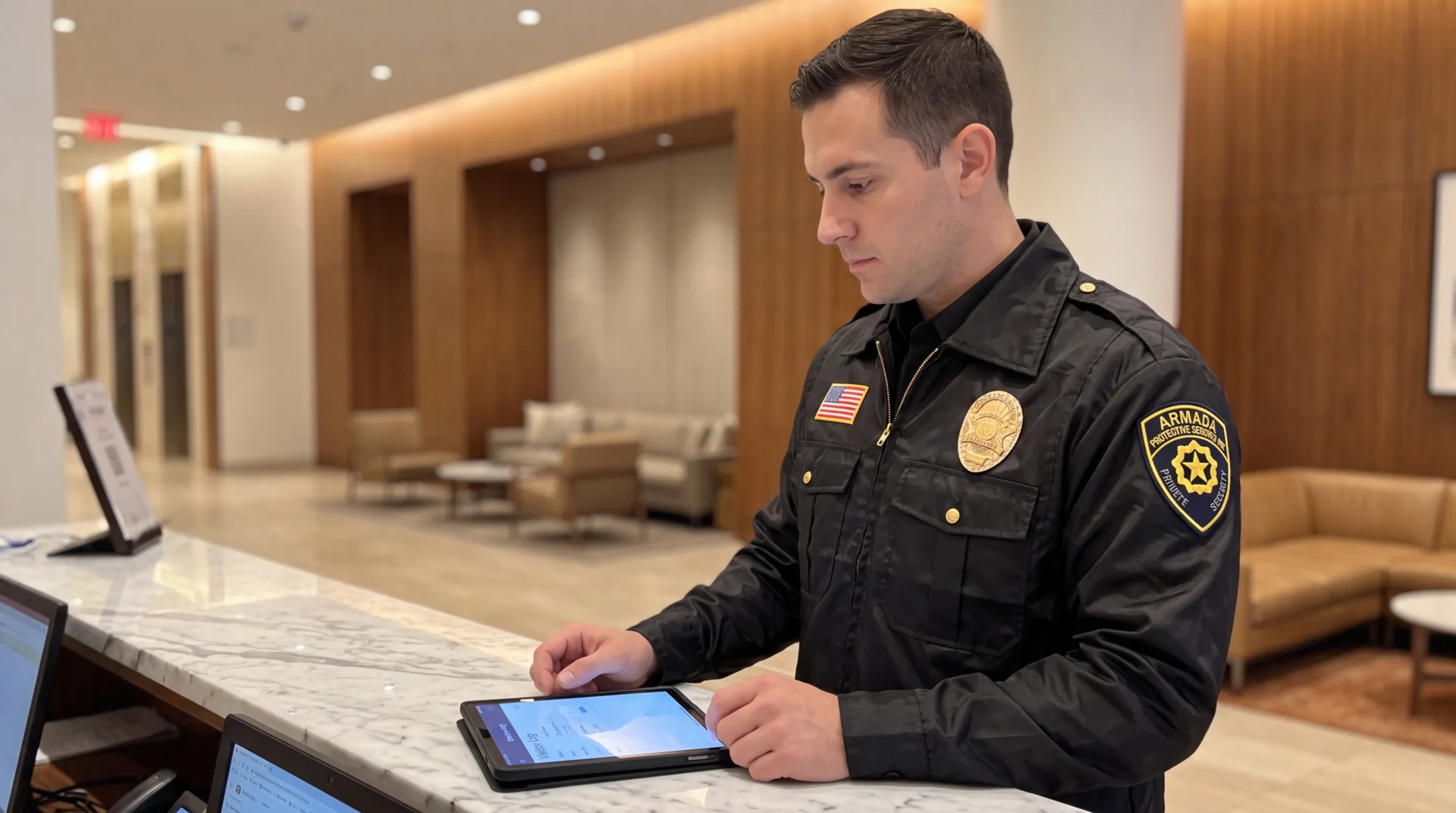
A strong plan does not depend on one tool. You need to combine tech with trained staff to build a secure setting. These are the key parts of modern apartment safety:
- Physical Access Control: Secure your edge with key fobs, gates, and automated locks.
- Regular Patrols: Visible patrols deter unwanted activity and reassure residents.
- Lighting and Signage: Well-lit paths and clear signs reduce dark spots.
- Incident Reporting: Structured logs help you track patterns and address repeat issues.
For example, pairing physical locks with evening patrols creates a strong deterrent. You must also train staff to notice and report suspicious activity. Each team member plays a role in keeping the community safe. Next, we will look at how to manage access across your property.
Managing Access and Restricting Common Areas
Controlling who enters your building is your first line of defense. Yet access can be hard to manage in busy apartment complexes. Residents have guests, delivery drivers, and service workers arriving each day. Entry points face constant use.
First, set clear rules for guest entry and package delivery. For example, you can use a secure lobby area or a package locker system. This keeps delivery staff from moving through residential halls.
Second, give close attention to shared spaces like gyms, pools, and parking garages. These areas are often isolated, so they need regular watch. Automated keycard access for these amenities is highly effective. If someone loses a keycard, you can deactivate it at once to protect the site.
Finally, keep your gates and perimeter fences in good repair. A broken latch or propped door invites unauthorized entry. Routine maintenance checks must remain a priority for your operations team.
Compliance and Licensing Standards in California
When you hire a security provider, compliance must be your top priority. California law sets strict rules to support public safety and professionalism. All security firms must hold a valid state license.
We are licensed by the State of California under BSIS Private Patrol Operator License PPO 120526. Because of this, our operations meet strong state compliance standards. Working with a fully licensed provider helps protect your organization from liability risk.
Licensed officers also undergo background checks and training. This process helps them handle complex situations with poise. As a result, your residents receive professional, steady support at all times. Always verify a provider’s license before you sign a service contract.
You can verify licensing status directly through the California Bureau of Security and Investigative Services. This step confirms that your partner operates legally and ethically. Next, look for a provider that understands your local area.
Selecting a Long-Term Bay Area Security Partner
Managing property in Northern California requires local knowledge. Different neighborhoods face different issues, so a one-size-fits-all approach does not work. You need a partner with deep roots in the region.
Armada Security provides dedicated commercial security across 12 Bay Area cities. Our coverage area includes:
- San Francisco
- San Jose
- San Mateo
- Daly City
- South San Francisco
- Hillsborough
- Sausalito
- Burlingame
- Colma
- San Bruno
- Brisbane
- Millbrae
We focus only on B2B contracts, so we understand the needs of property managers and corporate boards. We do not provide home security systems or consumer products. Instead, we build long-term partnerships with established organizations.
If you manage a multi-family community, we can tailor a plan for your site. Our leadership team also provides regular updates to keep you informed. As a result, you always know what is happening on your property.
Frequently Asked Questions
How do I know if an apartment security vendor is set up for multi-family properties in San Francisco, not just general patrol work?
Look for a B2B provider that works with property managers, boards, and site teams, not with single-family homeowners. For Armada Security, “residential” means multi-family and apartment communities, condos, and HOAs contracted through property managers or boards. You should also confirm the vendor serves your area directly, since local coverage affects route planning, site checks, and response consistency.
What should I ask about licensing and compliance before we hire security for an apartment building?
Ask for the California state license and verify it before you move forward. Armada Security is licensed by the State of California as a BSIS Private Patrol Operator, PPO 120526. That is the basic proof you want, along with a clear scope for how the team will work on your site and report issues back to your staff.
What usually goes wrong when apartment building security is weak, and how do we prevent it without overpaying?
The most common failures are gaps in coverage, weak handoff between staff and security, and poor follow-up on repeat issues. The right plan starts with a site review, clear post orders, and a reporting line that reaches your manager or board quickly. For cost control, focus on the hours, posts, and problem areas that matter most, rather than adding broad coverage you do not need.
How fast can a San Francisco Bay Area security team realistically cover an apartment site across multiple buildings or shifts?
Speed depends on where the site is and how the routes are built, so local coverage matters. Armada Security serves 12 cities across San Francisco, the Peninsula, and San Jose, including San Francisco, San Mateo, Daly City, South San Francisco, Burlingame, San Bruno, Brisbane, Millbrae, Colma, Hillsborough, Sausalito, and San Jose. When you compare vendors, ask how they handle coverage in your city, who responds after hours, and how they document each visit.
What evidence should we ask for before trusting a security firm with tenant safety and liability risk?
Ask for proof of license, a written scope, and a clear report process for incidents, patrols, and site issues. You want a provider that can explain how it works with property managers, facility leads, and board members, not just how it walks a site. For multi-family properties, the key is clean records, clear communication, and a plan that fits your building rules and access needs.
Related reading
- Property Security Patrol San Francisco
- Residential Security Services in San Francisco: Protect Your Home
- Emergency Response Security Guards: Why They Matter for Your Business
