
Bank security requirements are strict federal and state standards that protect assets, customer data, and physical branches. These rules call for a mix of physical barriers, video surveillance, and trained staff. For commercial sites, compliance supports safe daily operations. So managers must put in place strong, ongoing protection to meet these legal duties.
Strong bank security requirements starts with matching coverage to the real risks at your site, not a generic package.
Federal Regulations and the Bank Protection Act
In the United States, federal law guides how financial firms protect their assets. The Bank Protection Act of 1968 sets the base line for physical security. Under these federal rules, every bank must appoint a dedicated security officer. They must also develop a written security plan approved by their board of directors.
For property managers who lease space to financial firms, compliance is not optional. Because these rules are federal, they apply to every branch across the country. For example, the Federal Deposit Insurance Corporation (FDIC) checks compliance during regular audits. As a result, facility directors must keep exact records of all safety steps.
The board of directors must review and approve the security plan once a year. This yearly review helps keep the bank aligned with national standards. For example, federal examiners check camera quality and alarm response times. Because of this, property managers must help tenants maintain physical safety assets.
Core Components of Bank Security Requirements
Meeting federal standards calls for layers of physical defense. First, you must secure all entry points. Because banks handle physical cash, standard commercial locks are not enough. Instead, you need heavy access control systems and reinforced glass.
This includes heavy vault doors, secure teller counters, and safe deposit boxes. Because thieves target cash and valuables, your physical assets must resist forced entry. Next, electronic locks must control who enters the building. For instance, staff must use encrypted keycards to access the main vault area.
In addition, modern bank security requirements call for nonstop electronic monitoring. This includes high-definition security cameras that run twenty-four hours a day. These cameras must cover teller lines, automated teller machines, and vault entrances. You must also store video feeds securely for the required legal period.
Silent alarms are also critical. For instance, tellers must have easy access to panic buttons under their desks. If an emergency occurs, these buttons send an instant signal to local law enforcement. Regular testing is vital to make sure these alarm systems work when needed.
The Crucial Role of Trained Personnel
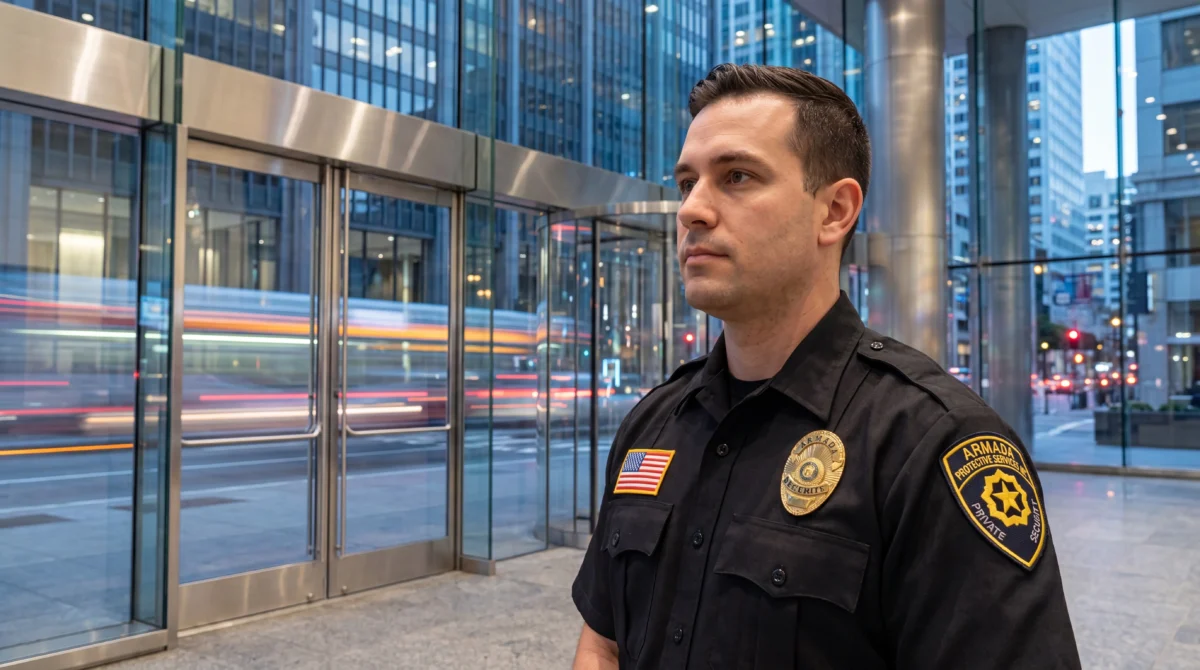
Technology provides strong monitoring, but physical guards offer active deterrence. Still, not all security services meet the high standards needed in banking settings. For this reason, professional officers must receive specialized training. They need to know how to manage crowds and handle emergencies with calm control.
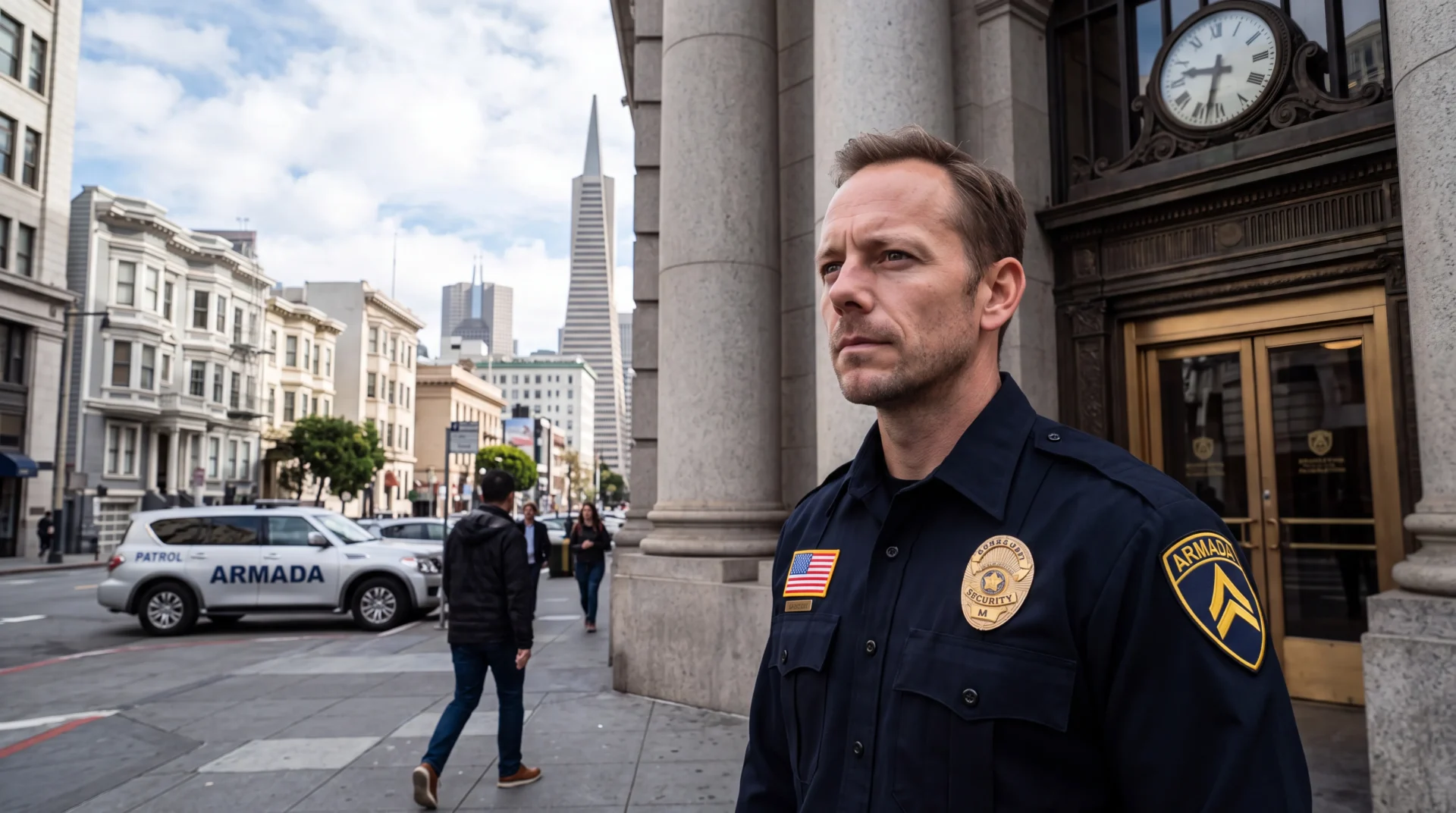
Because bank lobbies can be high-risk areas, a visible officer reassures both staff and customers. An officer can also spot suspicious behavior before it escalates. For example, they may watch the perimeter for people who seem to be casing the building. This active presence lowers the risk of robbery or vandalism.
Our company holds BSIS Private Patrol Operator License PPO 120526, issued by the State of California. So our team understands the strict legal standards that apply to your commercial assets. We work with property managers to provide dedicated, long-term security contracts that support regulatory demands.
We provide these services through dedicated, long-term contracts. We do not offer temporary, one-night security guards. Because financial settings need steady, ongoing protection, long-term agreements support stability. As a result, our team becomes familiar with your facility’s unique layout and daily operations.
Managing Compliance Across Northern California
Managing a commercial property portfolio in Northern California takes local expertise. Security needs can vary between busy city centers and quiet suburban sites. As a result, your security plan must fit the risk profile of each location.
We serve twelve key cities across San Francisco, the Peninsula, and San Jose. Specifically, our coverage area includes:
- San Francisco
- San Jose
- San Mateo
- Daly City
- South San Francisco
- Hillsborough
- Sausalito
- Burlingame
- Colma
- San Bruno
- Brisbane
- Millbrae
Because we operate locally, we understand the distinct regional threats in these areas. So we can help you align your facilities with modern security compliance standards with less friction. In addition, our managers stay current on local municipal codes that may affect your property. This helps keep your site compliant and secure.
Our operations remain strictly B2B. We do not offer home security systems or consumer services. Instead, we focus on offices, corporate sites, and multi-family residential complexes. So you can trust our team to focus on professional commercial standards.
Mitigating Risks in Shared Commercial Spaces
Many financial offices operate within larger commercial buildings or retail plazas. That shared setting brings unique safety challenges. For example, delivery drivers and office workers move through common areas all day. Because of this foot traffic, keeping a clear security perimeter is difficult.
To address this, you must coordinate security efforts between the bank branch and the larger property. First, set clear boundaries for access control. For instance, visitors should need credentials to enter sensitive back-office zones. Next, coordinate your camera systems to cover shared hallways and parking structures.
We also recommend regular security audits of the full property. This process helps you find blind spots in your coverage. These audits must be thorough to work well. As a result, working with an experienced partner helps you avoid missed weak points.
Frequently Asked Questions
What bank security requirements should a Bay Area property manager verify before we bring a guard team on site?
Start with the basics: a valid California BSIS Private Patrol Operator license, clear post orders, and a written scope that matches your site risks. For our region, you should also confirm the provider has experience with commercial sites in San Francisco, San Jose, and the Peninsula, not just general patrol work. Ask how they document incidents, access control checks, and escalation to your team.
How do we know a security provider is compliant for a bank-adjacent or financial-use property in San Francisco?
Look for a licensed commercial provider, not a consumer or home security company. Armada Security is licensed by the State of California under PPO 120526 and serves only B2B sites such as property managers, corporate offices, warehouses, venues, and multi-family communities. If your building handles cash, sensitive records, or public access, your plan should require clear logs, supervisor review, and a chain of reporting.
What are the most common gaps that cause problems during a bank or high-risk property audit?
The usual failures are vague duties, weak logs, and no proof that guards know the site rules. Another gap is using a provider that cannot show coverage across your locations in the Bay Area, which makes oversight harder. Your audit file should include post orders, incident records, patrol notes, and named points of contact for escalation.
How should we weigh cost against liability when choosing security for a bank-use or mixed-use site?
Do not compare bids on hourly rate alone. A lower quote can cost more if the team lacks training, local coverage, or clean reporting, because those gaps raise exposure when something goes wrong. Review the full risk picture: licensing, supervision, site familiarity, response process, and how well the provider fits your daily operations.
What should we ask if our site spans San Francisco and nearby cities, but we want one security partner?
Ask whether the provider actively serves your exact cities and can keep the same standards across each location. Armada Security covers 12 Bay Area cities, including San Francisco, San Jose, San Mateo, Daly City, South San Francisco, Hillsborough, Sausalito, Burlingame, Colma, San Bruno, Brisbane, and Millbrae. You should also confirm they work only with organizations, since commercial needs and reporting are very different from single-family home service.
Related reading
- San Francisco Security Services
- Are Security Guards First Responders?
- Retail Security San Francisco: Protect Your Store with Armada Security
